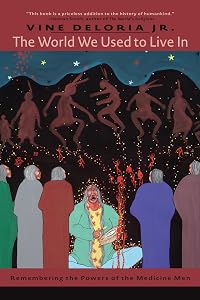
The World We Used to Live In: Remembering the Powers of the Medicine Men
by Jr. Vine Deloria
On This Page
Description
Deloria looks at medicine men, their powers, and the Earth's relation to the cosmos.Tags
Recommendations

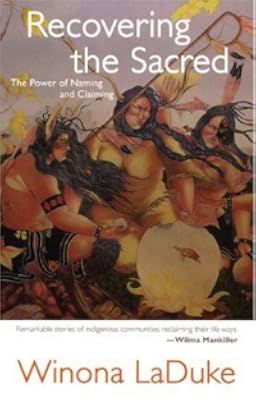
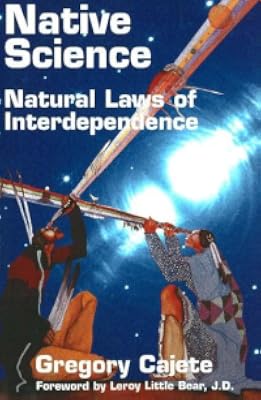
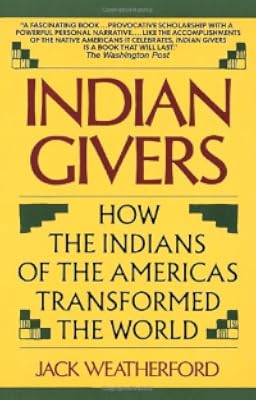
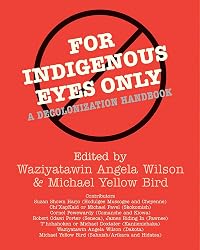



Member Recommendations

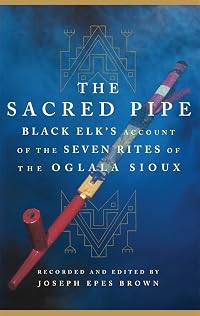
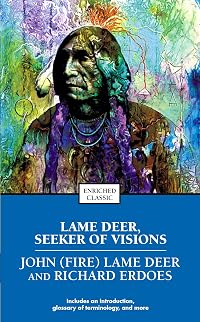
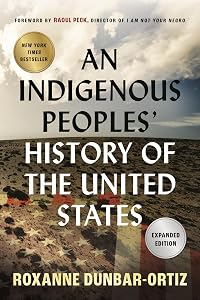
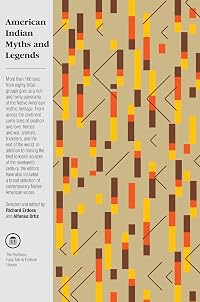
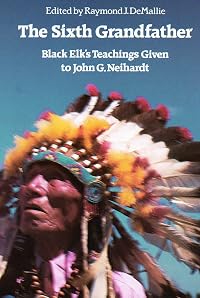
owen1218 Deloria specifically cites this book as "perhaps the best source of accounts of spiritual feats", and quotes from it extensively.
Member Reviews
Drawing heavily on examples in early writings from anthropologists and missionaraies, among others, Deloria builds his case for spiritual abilitie of 'medicine men' (and women) carefully, devoting separate chapters to receiving powers through dreams, healings they conduct, their communications with other species (animals, plants), relations to the land (sacred stones) and universe (eg affecting weather, sun movement). All this leads Deloria to acknowledge their being able to work with space, time, and matter in a manner that fits into the newer physics of quantum energy rather than into Newtonian-based understanding most people have of how the world works in our daily lives.
One aspect the reader may notice upon reading the exerpts which show more range from 1600's to 1900's, tho not explicitly mentioned, is how the attitude of the whites has changed from attributing powers as being from Satan, to suspecting chicanery, to desire to grasp these powers for themselves. show less
One aspect the reader may notice upon reading the exerpts which show more range from 1600's to 1900's, tho not explicitly mentioned, is how the attitude of the whites has changed from attributing powers as being from Satan, to suspecting chicanery, to desire to grasp these powers for themselves. show less
Ratings
Members
- Recently Added By
Lists

Indigenous America Reader
145 works; 12 members
Author Information

39+ Works 4,637 Members
Vine Deloria, Jr. (1933-2005) was born and raised in South Dakota, the son and grandson of Dakota Sioux Indian leaders. In 1965, he began serving as the Executive Director of the National Congress of American Indians, and worked tirelessly to mobilize Indian people toward effective participation in the American political process. A noted scholar show more of American Indian legal, political and religious studies, he is the author of numerous works, including the 1969 bestseller Custer Died for Your Sins: An Indian Manifesto, God is Red (1973) and The Metaphysics of Modern Existence (1979). show less
Common Knowledge
- First words
- Sweat lodges conducted for $50, peyote meetings for $1,500, medicine drums for $300, weekend workshops and vision quests for $500, two do-it-yourself practitioners smothered in their own sweat lodge--the interest in American ... (show all)Indian spirituality only seems to grow and manifests itself in increasingly bizarre behavior--by both Indians and non-Indians.
Preface: Vine Deloria, Jr., like all human beings, was a man of complications and contradictions. - Quotations
- space is critical to the Indian perception of the world...because it can be created by the holy people, and energies and information can be transported from the larger cosmos to the particular location where humans need help ... (show all)and sustenance. [p.205]
Space is found in most tribal traditions, hidden within ceremonies, but certainly occupying a critical place in helping to orient us to our sensory world. ...This [six directions] ritual pays respect to the powers of the univ... (show all)erse and...centers our emotional universe for the purpose of communing with the spirits. The sweat lodge is built in the shape of a sphere and reproduces, as closely as possible, the cosmos as a whole....The power of space is one of relationships, and since the entire cosmos cannot be contained in our daily lives, we learn that sacred places represent the power by showing us that we can become a part of a preexisting set of relationships....When people accommodate themselves to a landscape, they learn the parameters of their spiritual existence. [p. 202]
Is the universe itself subject [to] similar to the boundaries that Wakan Tanka gives to each entity? Do certain sets of circumstances lie ahead of us wherein we change the world radically by the choices we make?...
Do the... (show all) actions of humans, when making decisions, radically change the manner in which the world proceeds? ...chaos theory [gives]...insight into the responsibilities we have in following our best thoughts and sentiments. [p.212]
Unlike other religious traditions, which have an early revelation followed by millenia of critical examination of the premises and substance of the spiritual experience, Indians have access to these spiritual powers here and ... (show all)now. They can be applied in our lives. [p.214] - Last words
- (Click to show. Warning: May contain spoilers.)We would do well to return to those roots.
- Blurbers
- Smith, Huston; Mankiller, Wilma
Classifications
Statistics
- Members
- 195
- Popularity
- 168,051
- Reviews
- 1
- Rating
- (4.57)
- Languages
- English
- Media
- Paper, Ebook
- ISBNs
- 4
- UPCs
- 1
- ASINs
- 1