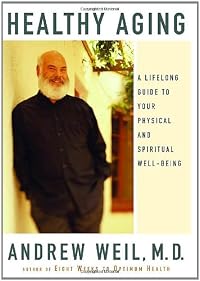
Healthy Aging: A Lifelong Guide to Your Physical and Spiritual Well-Being
by Andrew Weil
On This Page
Description
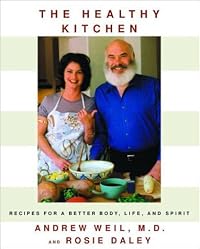
Spontaneous Healing . . . Eight Weeks to Optimum Health . . . Eating Well for Optimum Health . . . The Healthy Kitchen–in each of his widely acclaimed, best-selling books, Dr. Andrew Weil has been an authoritative and companionable guide through a uniquely effective combination of traditional and nontraditional approaches to health and healthy living. Now he gives us a book about aging that is unlike any other in the breadth and depth of its information and understanding. Hugely show more informative, practical, and uplifting, it is infused with the engaging candor and common sense that have been the hallmarks of all his books.At the heart of Healthy Aging is Dr. Weil's belief that although aging is an irreversible process, there are myriad things we can do to keep our minds and bodies in good working order through all phases of life. To that end, he draws on the new science of biogerentology (the biology of aging) as well as on the secrets of healthy longevity– diet, activity, and attitude–that he has gathered firsthand from cultures around the world.
In Part One–"The Science and Philosophy of Healthy Aging"–he explains how the body ages, and he explores the impact of gender, genes, environment, and lifestyle on an individual's experience and perception of the process of aging. He describes the various would-be elixirs of life extension–herbs, hormones, and antiaging "medicines"–separating myth from fact and clearly delineating the difference between the spurious notions of preventing or reversing the process of aging and the real possibilities of inhibiting or delaying the onset of diseases that become more likely as we age. He writes movingly about the ways in which an acceptance of aging can be a significant part of doing it well, and of recognizing and appreciating the great rewards of growing older: depth and richness of experience, complexity of being, serenity, wisdom, and its own kind of power and grace.
In Part Two–"How to Age Gracefully"–Weil details an easy-to-implement Anti-inflammatory Diet that will protect the immune system and aid your body in resisting and adapting to the changes that time brings. And he provides extensive practical advice on exercise; preventive health care; stress management; physical, mental, and emotional flexibility; and spiritual enhancement–all of which can help you achieve and maintain the best health throughout the lifelong process of aging.
Healthy Aging–a book for people of all ages–is Andrew Weil's most important and far-reaching book yet.
From the Hardcover edition.. show less
Tags
Recommendations

Member Reviews
Ah, why is it that it is so hard to accept the voice of balance and moderation? That is what Weil offers here. Good advice. Empathy. But he is also firm on one topic: We must all face growing old, we must all face dying and few (if any?) have much interest in looking in that mirror. Weil is careful to disentangle the anti-aging movement with its dreams of living forever from what can be done to live healthily and independently for as long as possible and that is not going to please everyone. Weil strikes me as unusual in his ability to walk the tightrope between the 'evidence-based' materialists and the spiritualists and dreamers. He believes also in the wisdom of experience and that there is some kind of consciousness in the universe, show more inexplicable and unquantifiable, underlying everything. Not religious, not affiliated with any particular faith, just there to be drawn from if you so choose. The physical goal is to do everything you possibly can to help your body function well as long as it can -- that means eating thoughtfully, exercising, and using your brain in ways that encourage health and discourage decay. The people to envy are the ones who live into their eighties or further in perfect health and die within a few weeks. Lots of low-key practical advice -- if anything grabs the reader there is the internet for follow-up. I've put off reading this for years, thinking, ugh. I'm reading it at the right moment for me. I'm 63 and in the last two years, yes, I am feeling changes of all kinds and I'm ready to deal. Thank you, Andrew! ***** show less
why is it that it is so hard to accept the voice of balance and moderation? That is what Weil offers here. Good advice. Empathy. But he is also firm on one topic: We must all face growing old, we must all face dying and few (if any?) have much interest in looking in that mirror. Weil is careful to disentangle the anti-aging movement with its dreams of living forever from what can be done to live healthily and independently for as long as possible and that is not going to please everyone. Weil strikes me as unusual in his ability to walk the tightrope between the 'evidence-based' materialists and the spiritualists and dreamers. He believes also in the wisdom of experience and that there is some kind of consciousness in the universe, show more inexplicable and unquantifiable, underlying everything. Not religious, not affiliated with any particular faith, just there to be drawn from if you so choose. The physical goal is to do everything you possibly can to help your body function well as long as it can -- that means eating thoughtfully, exercising, and using your brain in ways that encourage health and discourage decay. The people to envy are the ones who live into their eighties or further in perfect health and die within a few weeks. Lots of low-key practical advice -- if anything grabs the reader there is the internet for follow-up. I've put off reading this for years, thinking, ugh. I'm reading it at the right moment for me. I'm 63 and in the last two years, yes, I am feeling changes of all kinds and I'm ready to deal. Thank you, Andrew! show less
The biggest plus for this book is that Dr. Weil doesn't focus on the things you should have been doing for the past thirty or forty years in order to experience healthy aging. His advice in the second part of the book, ‘How to Age Gracefully’, is practical and applicable for just about anyone of any age or economic status. The first part of the book, ‘The Science and Philosophy of Healthy Aging’, is a good introduction to the objective of this book, compressing morbidity, but would have been better without the chapter on the value of aging. Others have said it with far more eloquence and brevity. The book ends with information about resources and supplies, a suggested reading list, and an excellent summarization of the show more anti-inflammatory diet he recommends. show less
This book aims not to extend life or to reverse the aging process but to “compress the morbidity” of aging. “To keep our bodies and minds in good working order” as we age. It urges acceptance of aging. A blend of science, medicine, philosophy, and psychology, it draws on both Western and Eastern medical and philosophical approaches. It offers a twelve-point program for healthy aging, which includes an anti-inflammatory diet.
A good discussion of the role of inflammation in the body and how to keep it in check. And how to keep the parasympathetic nervous system dominant over the sympathetic.
Interesting, but a mixed bag. Some good ideas to consider, some to argue with. They don’t go deep enough to satisfy me. They are not show more especially alternative or progressive. Certainly not radical. The author is very much a medical doctor, albeit an unconventional one. He believes in medicine, pills, dietary supplements, vaccines, etc., plus many other things that I consider best avoided (mushrooms, tea, herbs and culinary spices, soy foods, fish and fish oils). This book is too much science and not enough nature. What do I care if scientific research says that nicotine protects smokers from certain diseases? (page 221). That may be true, but so what? And I balk whenever he says that cooked foods are more nutritious than raw foods. Fact is, I trust Mother Nature more than I trust scientists. More than I trust this book.
A book to be read critically. show less
A good discussion of the role of inflammation in the body and how to keep it in check. And how to keep the parasympathetic nervous system dominant over the sympathetic.
Interesting, but a mixed bag. Some good ideas to consider, some to argue with. They don’t go deep enough to satisfy me. They are not show more especially alternative or progressive. Certainly not radical. The author is very much a medical doctor, albeit an unconventional one. He believes in medicine, pills, dietary supplements, vaccines, etc., plus many other things that I consider best avoided (mushrooms, tea, herbs and culinary spices, soy foods, fish and fish oils). This book is too much science and not enough nature. What do I care if scientific research says that nicotine protects smokers from certain diseases? (page 221). That may be true, but so what? And I balk whenever he says that cooked foods are more nutritious than raw foods. Fact is, I trust Mother Nature more than I trust scientists. More than I trust this book.
A book to be read critically. show less
This was an interesting book and I learned a lot about how our bodies work, use nutrients, what the aging mechanism is, etc. He makes a lot of sense. In fact, he explained a test my mother-in-law just had done and I'm hoping she will listen to it. I am also glad the author was the one reading the book, as he seemed to be explaining rather than reading. I will read more of his books.
Dr. Weil sets up an indepth book exploring matters of modern medicine and how that information relates to personal health. His book is full of recommendations for a healthy lifestyle, and one that promotes physical well being.
a good book for aging people
Members
- Recently Added By
Author Information

126+ Works 6,624 Members
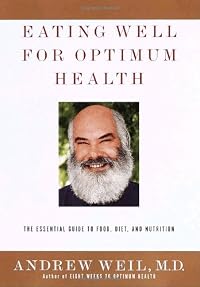
Andrew Weil, one of America's best known advocates of alternative medicine and holistic healing, attended Harvard Medical School. He has worked for the National Institute of Mental Health and the Harvard Botanical Museum. He is the founder of the Program in Integrative Medicine at the University of Arizona Health Sciences Center and Associate show more Director of the Division of Social Perspectives in Medicine, University of Arizona. Weil's books include Spontaneous Healing and Natural Health and Eight Weeks to Optimum Health and Wisdom of Failure: How to Learn the Tough Leadership Lessons Without Paying the Price -which made The New York Times Best Seller List for 2012. (Bowker Author Biography) Dr. Andrew Weil, Dr. Andrew Weil graduated from Harvard University. He has taught at the University of Arizona in Tucson, specializing in alternative medicine, medical botany and mind/body interactions. He is the founder of the Program in Integrative Medicine at the University of Arizona Health Services. Dr. Weil is the author of several books which includes the titles "The Natural Mind" (1972), "From Chocolate to Morphine" (with Winifred Rosen, 1983), "Natural Health, Natural Medicine" (1990), "Spontaneous Healing" (1995), and "Eating Well for Optimum Health: The Essential Guide to Food, Diet, and Nutrition" (2000). (Bowker Author Biography) show less
Awards and Honors
Distinctions
Classifications
Statistics
- Members
- 689
- Popularity
- 41,348
- Reviews
- 6
- Rating
- (3.73)
- Languages
- English, French, German, Spanish
- Media
- Paper, Audiobook, Ebook
- ISBNs
- 15
- ASINs
- 7