On This Page
Description
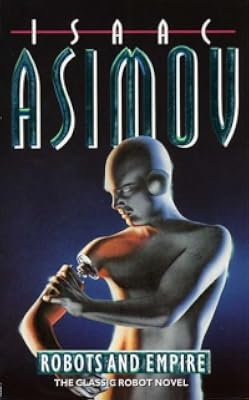
Long ago, Gladia's robots Daneel and Giskard played a vital role in opening the worlds beyond the Solar system to Settlers from Earth. Now the conscience-stricken robots are faced with an even greater challenge. Either the sacred Three Laws of Robotics are in ruins - or a new, superior Law must be established to bring peace to the galaxy. With Madam Gladia and D.G. Baley - the captain of the Settler traders and a descendant of the robots' friend Elijah Baley - Daneel and Giskard travel to show more the robot stronghold of Solaria...where they uncover a sinister Spacer plot to destroy Earth itself. show lessTags
Recommendations


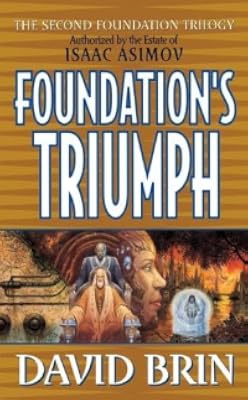

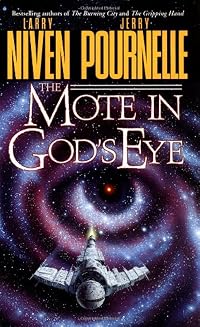
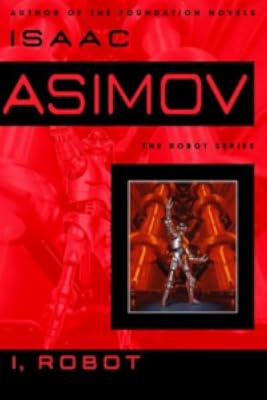
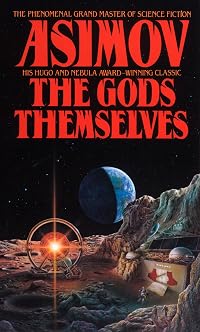

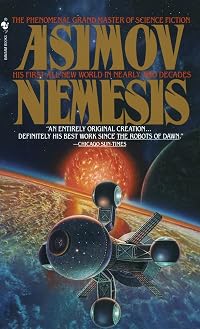


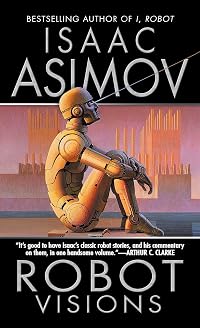
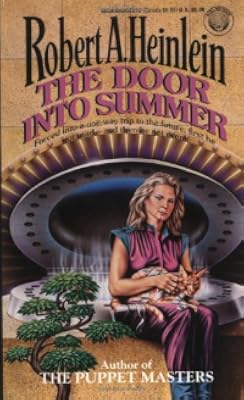
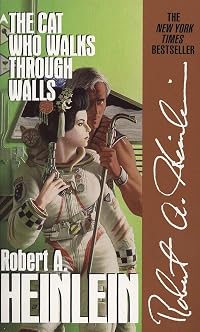


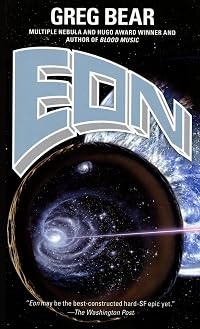
Member Reviews
"Sequel to Robots of Dawn and prequel to Foundation." (Despite contrary publication dates.)
Same source describes Foundation in a way that makes me think I might like them, after all.
--------------
Well, I wound up reading first Foundation before any of these Baley/Daneel novels. And I didn't like it all. Had I read RoD and RoE first, I might have liked it better. But I don't intend to back up and try again. However, I will still look for the Baley book that I missed, [b:The Naked Sun|76685|The Naked Sun (Robot, #2)|Isaac Asimov|https://images.gr-assets.com/books/1439756125s/76685.jpg|1583154], even though it was recapped in these later books to the point of 'spoilers.'
Reading this as a stand-alone probably would not work well at all. And show more I don't know how to rate it objectively. I loved it, because I love watching Asimov's robots in action, talking among themselves, pondering the difference between robot and human, testing the limits of the Three Laws....
Highly recommended to ppl who do like Foundation, to ppl who like Bicentennial Man or other Asimovian robot stories. Asimov did develop his writing by the 80s; these last Baley/Daneel books have actual characters, including females that pass both the Bechdel and the Mako Mori test. The writing itself is more graceful & smooth. The adventures & intrigue are interesting & thoughtful enough that I enjoyed them, even though neither adv. or intr. are things I like in novels. The hard science is probably mostly very far-fetched, but I found that I didn't care, because the discussions of humans and humanity are so thoughtful & thought-provoking.
I do admit, though, that if you're not a fan of classic SF; if you prefer shiny new books, you probably don't need to hunt down a copy of this. show less
Same source describes Foundation in a way that makes me think I might like them, after all.
--------------
Well, I wound up reading first Foundation before any of these Baley/Daneel novels. And I didn't like it all. Had I read RoD and RoE first, I might have liked it better. But I don't intend to back up and try again. However, I will still look for the Baley book that I missed, [b:The Naked Sun|76685|The Naked Sun (Robot, #2)|Isaac Asimov|https://images.gr-assets.com/books/1439756125s/76685.jpg|1583154], even though it was recapped in these later books to the point of 'spoilers.'
Reading this as a stand-alone probably would not work well at all. And show more I don't know how to rate it objectively. I loved it, because I love watching Asimov's robots in action, talking among themselves, pondering the difference between robot and human, testing the limits of the Three Laws....
Highly recommended to ppl who do like Foundation, to ppl who like Bicentennial Man or other Asimovian robot stories. Asimov did develop his writing by the 80s; these last Baley/Daneel books have actual characters, including females that pass both the Bechdel and the Mako Mori test. The writing itself is more graceful & smooth. The adventures & intrigue are interesting & thoughtful enough that I enjoyed them, even though neither adv. or intr. are things I like in novels. The hard science is probably mostly very far-fetched, but I found that I didn't care, because the discussions of humans and humanity are so thoughtful & thought-provoking.
I do admit, though, that if you're not a fan of classic SF; if you prefer shiny new books, you probably don't need to hunt down a copy of this. show less
This is the fourth and final book in Asimov's series of robot novels. This is set 200 Earth years after the action of the previous three so does not feature detective Elijah Bailey, though a distant descendant of his appears, alongside the long lived Solarian/Auroran Gladia, and of course Robots Daneel Olivaw and Giskard Reventlov, the latter of whom has acquired the ability to read human emotions. The whole course of this novel is basically around Giskard and Daneel arriving through stumbling ratiocination at a new Zeroth Law of robotics, that a robot may not harm humanity or, by inaction, allow humanity to come to harm. They arrive at this law in the course of foiling the plans by two Auroran roboticists to wipe out Earth through show more accelerating its natural radioactivity until it gallops out of control and makes the planet unlivable, thus, in their estimation, freeing the galaxy for the Spacer worlds to conquer. This is, as always, a very clever narrative, yet, I felt it suffered without a strong and likeable central human character, so this is probably my least favourite of the robot novels, though still very good. show less
What I love most about this book is the prevalence of Daneel and Giskard, two of my favorite characters in this epic story. There's also a lot of Gladia, and we get to know her better as well as see her come into her own as a person, which I had no desire for before starting this book but I am so glad for it. We meet other interesting characters, too, and get some good mystery and intrigue.
There was a sad part that I'm sure to not get over any time soon, or ever as I continue reading these books. I wish that hadn't happened. Asimov really gets me feeling invested in these characters and situations, and brings out my emotions in both sentimental, touching scenes as well as heartbreaking ones.
I look forward to continuing the saga of the show more Galactic Empire, to see how the future comes about. show less
There was a sad part that I'm sure to not get over any time soon, or ever as I continue reading these books. I wish that hadn't happened. Asimov really gets me feeling invested in these characters and situations, and brings out my emotions in both sentimental, touching scenes as well as heartbreaking ones.
I look forward to continuing the saga of the show more Galactic Empire, to see how the future comes about. show less
This series continues to be among my all time favorites. Reading it for the first time instills so many incredible feelings - humanity's settling of the stars, the psychology behind growing old, nature vs. nurture, class warfare and the future. The callbacks to previous books had enormous emotional impact, Daneel and Giskard are fascinating protagonists, Gladia and DG are magnificent in their own right. I've rarely read a book that so easily painted a picture in my head of what everybody would look like, what every scene felt like. A terrific ending, and a very satisfying conclusion to the Robots Series. Onto Empire!
The individual parts of the book--3 different stories, or rather 3 different time/action episodes of the same story--piece together to complete each other. The problem is that Asimov gets kludgy in trying to tie too many concepts/themes together: namely the links to the Foundation Trilogy are too contrived to be believable (along with the romantic interest). Except for his explanation of how the Earth, in "The Second Foundation", became radioactive. Meanwhile, there are a couple of physical action episodes to offset the main thrust of Asimov's verbal struggles that form his primary source of excitement.
DNF at about 33 percent. It’s dull, sexist, prolix, and incredibly repetitive. The characters are manipulators, narcissists and the people who serve such persons. I read the plot summary on Wikipedia and see that I missed very little.
The notion that Asimov wrote “hard” sci fi when one of his central plot devices is inexplicably telepathic robots (synthetic persons, artificial intelligences) seems laughable to me.
As I’ve said previously even the allegedly big ideas aren’t that big. Big cosmoc space colonialism and exploitation is the big healthy future for humanity ! In fact, it’s the only healthy future ! All others lead to degeneracy and death of the spirit !!!!
I’m beginning to loathe Asimov for the same reasons I show more loathe Heinlein, a situation I did not anticipate at all. That makes me sad and I hope the later books can make me feel more of the wonder and pleasure I felt with “I, Robot” which I still recommend most heartily.
I’ve got a bunch of the rest of the books checked out from the library and I will try the next in the chronology Asimov himself assembled, with hopes for better. show less
The notion that Asimov wrote “hard” sci fi when one of his central plot devices is inexplicably telepathic robots (synthetic persons, artificial intelligences) seems laughable to me.
As I’ve said previously even the allegedly big ideas aren’t that big. Big cosmoc space colonialism and exploitation is the big healthy future for humanity ! In fact, it’s the only healthy future ! All others lead to degeneracy and death of the spirit !!!!
I’m beginning to loathe Asimov for the same reasons I show more loathe Heinlein, a situation I did not anticipate at all. That makes me sad and I hope the later books can make me feel more of the wonder and pleasure I felt with “I, Robot” which I still recommend most heartily.
I’ve got a bunch of the rest of the books checked out from the library and I will try the next in the chronology Asimov himself assembled, with hopes for better. show less
This felt just like the old times. I hesitated a bit when this one fell off the shelves onto my reading pile. It's a long time ago since I read both the Foundation and the Robot Books and I was worried I would not remember. But ten pages in I was back in my twenties and totally immersed in Asimov's greatest creations. I sped through this book, remembering Elijah Baley and becoming re-acquainted with R. Daneel Olivaw. Within the context of a space opera, this book debates the problems that the 3 Laws of Robotics could create and is a worthy successor to both the earlier series. If you've ever enjoyed Asimov, you will enjoy this.
Members
- Recently Added By
Lists

Books Read in 2016
4,666 works; 197 members

Books Read in 2019
4,052 works; 108 members

Books Read in 2008
335 works; 8 members
Author Information

2,400+ Works 293,120 Members
Isaac Asimov was born in Petrovichi, Russia, on January 2, 1920. His family emigrated to the United States in 1923 and settled in Brooklyn, New York, where they owned and operated a candy store. Asimov became a naturalized U.S. citizen at the age of eight. As a youngster he discovered his talent for writing, producing his first original fiction at show more the age of eleven. He went on to become one of the world's most prolific writers, publishing nearly 500 books in his lifetime. Asimov was not only a writer; he also was a biochemist and an educator. He studied chemistry at Columbia University, earning a B.S., M.A. and Ph.D. In 1951, Asimov accepted a position as an instructor of biochemistry at Boston University's School of Medicine even though he had no practical experience in the field. His exceptional intelligence enabled him to master new systems rapidly, and he soon became a successful and distinguished professor at Columbia and even co-authored a biochemistry textbook within a few years. Asimov won numerous awards and honors for his books and stories, and he is considered to be a leading writer of the Golden Age of science fiction. While he did not invent science fiction, he helped to legitimize it by adding the narrative structure that had been missing from the traditional science fiction books of the period. He also introduced several innovative concepts, including the thematic concern for technological progress and its impact on humanity. Asimov is probably best known for his Foundation series, which includes Foundation, Foundation and Empire, and Second Foundation. In 1966, this trilogy won the Hugo award for best all-time science fiction series. In 1983, Asimov wrote an additional Foundation novel, Foundation's Edge, which won the Hugo for best novel of that year. Asimov also wrote a series of robot books that included I, Robot, and eventually he tied the two series together. He won three additional Hugos, including one awarded posthumously for the best non-fiction book of 1995, I. Asimov. "Nightfall" was chosen the best science fiction story of all time by the Science Fiction Writers of America. In 1979, Asimov wrote his autobiography, In Memory Yet Green. He continued writing until just a few years before his death from heart and kidney failure on April 6, 1992. (Bowker Author Biography) show less
Some Editions
Series


Belongs to Publisher Series
Work Relationships
Is contained in
Common Knowledge
- Canonical title
- Robots and Empire
- Original title
- Robots and Empire
- Original publication date
- 1985
- People/Characters
- Elijah Baley; Gladia Delmarre; Daneel Giskard Baley; R. Daneel Olivaw; R. Giskard Reventlov; Han Fastolfe (show all 30); Kelden Amadiro; Vasilia Aliena; Dr. Levular Mandamus; Dr. Kelden Amadiro; Darrell Gremionis; Santirix Gremionis; Jamin Oser; Chandrus Nadirhaba; Eban Kayala; Berto Niss; Landaree; Sindra Lambid; Tomas Bistervan; Genovus Pandaral; Bentley Baley; Nephi Morler; Maloon Cicis; Dr. Maskellnik; Vasilia Fastolfe; R. Nadila; Commander Lisiform; Sophia Quintana; Edgar Andrev; R. Ernett Second
- Important places
- Solaria; Milky Way Galaxy; Earth; Three Mile Island; Aurora; Baleyworld
- Dedication
- To Robyn and Michael
and to the years of happiness
they will continue to enjoy
as they walk the road of life together. - First words
- Gladia felt the lawn lounge to make sure it wasn't too damp and then sat down.
- Quotations
- "I agree and I can only conclude that human beings are not, at all times or in all respects, logical."
- Last words
- (Click to show. Warning: May contain spoilers.)He was alone—and with a Galaxy to care for.
- Original language
- American English
Classifications
Statistics
- Members
- 5,618
- Popularity
- 2,355
- Reviews
- 61
- Rating
- (3.88)
- Languages
- 18 — Catalan, Chinese, Czech, Dutch, English, Estonian, Finnish, French, German, Greek, Hebrew, Hungarian, Italian, Polish, Romanian, Slovak, Spanish, Swedish
- Media
- Paper, Audiobook, Ebook
- ISBNs
- 56
- ASINs
- 34