The Economic Consequences of the Peace
by John Maynard Keynes
On This Page
Description
The Economic Consequences of the Peace was written and published by John Maynard Keynes. After World War I, Keynes attended the Versailles Conference as a delegate of the British Treasury and argued for a much more generous peace. It was a best seller throughout the world and was critical in establishing a general opinion that the Versailles Treaty was a "Carthaginian peace." It helped to consolidate American public opinion against the treaty and involvement in the League of Nations. The show more perception by much of the British public that Germany had been treated unfairly in turn was a crucial factor in public support for appeasement. The success of the book established Keynes' reputation as a leading economist. When Keynes was a key player in establishing the Bretton Woods system in 1944, he remembered the lessons from Versailles as well as the Great Depression. The Marshall Plan after Second World War is a similar system to that proposed by Keynes in The Economic Consequences of the Peace. show lessTags
Recommendations





Member Reviews
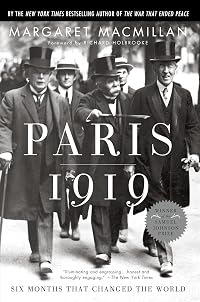
Keynes' The Economic Consequences of the Peace is a good companion piece to Margaret MacMillan's Paris 1919. Keynes participated as an expert in the Paris peace treaty negotiations which were mainly one-sided negotiations among the Allies themselves (mainly the French and Italians vs. the Anglo-Americans). The Germans, the Austrians and the Hungarians (the latter had to wait for the Treaty of Trianon in 1920) were only consulted post factum. Keynes holds Woodrow Wilson to be the main culprit, considering him to be too slow, ignorant and inflexible. One in a long line of US presidents not ready for the international parquet, whose failure, however, had the gravest of consequences. Similar to Bush's crazy adventure in Iraq, Wilson claimed show more the high ground of applying only moral and universal principles while counteracting and undermining these with naked power plays. Either an appeal to naked power or a pure application of principles would have worked. It was the mix that was toxic, applying principles only as long as it was convenient.
Keynes also shows that essential parts of the treaty were not grounded in fact. The restrictions and reparations placed on Germany were counterproductive and self-defeating. Depriving Germany of the necessary coal, ships and rolling stock of its railways crippled the economic recovery. The failure of the Allies (and especially the US) to net the internal war debt obligations meant that the weakest nations were plagued with high interest payments. Keynes also advocated for a sort of Marshall plan which surely would have helped Europe recover. Written in shocked frustration about a clearly unworkable treaty, this lean booklet is a fast and concise read that offers lessons what happens when burdens are placed upon third parties without those parties' involvement in the negotiations. Today's efforts to make the PIIGS pay for the bankers' mistakes run into the same calamities that Keynes foresaw in 1919. show less
Keynes also shows that essential parts of the treaty were not grounded in fact. The restrictions and reparations placed on Germany were counterproductive and self-defeating. Depriving Germany of the necessary coal, ships and rolling stock of its railways crippled the economic recovery. The failure of the Allies (and especially the US) to net the internal war debt obligations meant that the weakest nations were plagued with high interest payments. Keynes also advocated for a sort of Marshall plan which surely would have helped Europe recover. Written in shocked frustration about a clearly unworkable treaty, this lean booklet is a fast and concise read that offers lessons what happens when burdens are placed upon third parties without those parties' involvement in the negotiations. Today's efforts to make the PIIGS pay for the bankers' mistakes run into the same calamities that Keynes foresaw in 1919. show less
The heart of this book is engaging as it argues that provisions of the Versailles Peace Treaty are so blindly harsh and unrealistic as to do great harm not only to Germany and its former allies but to all of Europe and the world. Also of interest are the trenchant sometimes unsparing portraits of the then world leaders: Woodrow Wilson, Loyd George, and Clemenceau. Keynes gives a much clearer insight into Versailles and its participants then the somewhat more famous book on the same subject by Harold Nicholson. Keynes is a bureaucrat and economist so his many numbers though needed and convincing do slow and punish the reading towards the end. If not remedied the future is portrayed as bleak leading to disaster and this has turned out to show more be exactly true.
QUOTES: (page 15) “Thus the extraordinary occurrences of the past two years in Russia, that vast upheaval of Society, which has overturned what seemed most stable—-religion, the basis of property, the ownership of land, as well as forms of government and hierarchy of classes---may owe more to deep influences of expanding numbers than to Lenin or to Nicholas; and the disruptive powers of excessive national fecundity may have played a greater part in bursting the bonds of convention than either the power of ideas or the errors of aristocracy.”
(pages 34-35) “According to this vision of the future, European history is to be a perpetual prizefight, of which France has won this round, but of which this round is certainly not the last. From the belief that essentially the old order does not change, being based on human nature which is always the same, and from consequent skepticism of all that class of doctrine which the League of Nations stands fr, the policy of France and of Clemenceau followed logically. For a Peace of magnanimity or of fair and equal treatment, based on such 'ideology' as the Fourteen Points of the President, could only have the effect of shortening the interval of Germany's recovery and hastening the day when she will once again hurl at France her greater numbers and her superior resources and technical skill. Hence the necessity of 'guarantees'; and each guarantee that was taken, by increasing irritation and thus the probability of a subsequent Revanche by Germany...For Clemenceau made no pretense of considering himself bound by the Fourteen Points and left chiefly to others such concoctions as were necessary form time to time to save the scruples of the face of the President.”
(pages 42-43) “But in fact the President had thought out nothing; when it came to practice his ideas were nebulous and incomplete. He had no plan, no scheme, no constructive ideas whatever for clothing with the flesh of life the commandments which he had thundered for the White House.”
(page 146) “Apart from others aspects of the transaction, I believe that the campaign for securing out of Germany the general costs of the war was one of the most serious acts of political unwisdom for which our statesmen have ever been responsible. To what a different future Europe might have looked forward if either Mr. Lloyd George or Mr. Wilson had apprehended that the most serious of the problems which claimed their attention were not political or territorial but financial and economic, and that the perils of the future lay not in frontiers or sovereignties but in food, coal, and transport....But in any event the atmosphere for wise and reasonable consideration of them was hopelessly befogged by the commitments of the British delegation on the question of Indemnities.” show less
QUOTES: (page 15) “Thus the extraordinary occurrences of the past two years in Russia, that vast upheaval of Society, which has overturned what seemed most stable—-religion, the basis of property, the ownership of land, as well as forms of government and hierarchy of classes---may owe more to deep influences of expanding numbers than to Lenin or to Nicholas; and the disruptive powers of excessive national fecundity may have played a greater part in bursting the bonds of convention than either the power of ideas or the errors of aristocracy.”
(pages 34-35) “According to this vision of the future, European history is to be a perpetual prizefight, of which France has won this round, but of which this round is certainly not the last. From the belief that essentially the old order does not change, being based on human nature which is always the same, and from consequent skepticism of all that class of doctrine which the League of Nations stands fr, the policy of France and of Clemenceau followed logically. For a Peace of magnanimity or of fair and equal treatment, based on such 'ideology' as the Fourteen Points of the President, could only have the effect of shortening the interval of Germany's recovery and hastening the day when she will once again hurl at France her greater numbers and her superior resources and technical skill. Hence the necessity of 'guarantees'; and each guarantee that was taken, by increasing irritation and thus the probability of a subsequent Revanche by Germany...For Clemenceau made no pretense of considering himself bound by the Fourteen Points and left chiefly to others such concoctions as were necessary form time to time to save the scruples of the face of the President.”
(pages 42-43) “But in fact the President had thought out nothing; when it came to practice his ideas were nebulous and incomplete. He had no plan, no scheme, no constructive ideas whatever for clothing with the flesh of life the commandments which he had thundered for the White House.”
(page 146) “Apart from others aspects of the transaction, I believe that the campaign for securing out of Germany the general costs of the war was one of the most serious acts of political unwisdom for which our statesmen have ever been responsible. To what a different future Europe might have looked forward if either Mr. Lloyd George or Mr. Wilson had apprehended that the most serious of the problems which claimed their attention were not political or territorial but financial and economic, and that the perils of the future lay not in frontiers or sovereignties but in food, coal, and transport....But in any event the atmosphere for wise and reasonable consideration of them was hopelessly befogged by the commitments of the British delegation on the question of Indemnities.” show less
Needed to get more acquainted with Keynes, so I'm starting at the beginning.
This is one of those classics which have permeated modern thought so thoroughly that you feel as though you've read it already. The Treaty of Versailles was Bad. It focused too much on Reparations and Economic Sanctions and the Guilt Clause. Germany had to pay for all of the costs of the rest of the central powers. The conditions imposed by the victors, this Carthaginian Peace, were incredibly dangerous. Keynes feared further mass starvation, which is one of the few things he got wrong here. Instead, there is the chaos of the Weimar years, hyperinflation, Hitler, and so on. You've likely heard this story already.
Keynes tells it clearly. If the rest of his stuff show more is this lucid, I'll be mighty impressed.
The last of the reparations, by the way, were only paid off two years ago (2010). show less
This is one of those classics which have permeated modern thought so thoroughly that you feel as though you've read it already. The Treaty of Versailles was Bad. It focused too much on Reparations and Economic Sanctions and the Guilt Clause. Germany had to pay for all of the costs of the rest of the central powers. The conditions imposed by the victors, this Carthaginian Peace, were incredibly dangerous. Keynes feared further mass starvation, which is one of the few things he got wrong here. Instead, there is the chaos of the Weimar years, hyperinflation, Hitler, and so on. You've likely heard this story already.
Keynes tells it clearly. If the rest of his stuff show more is this lucid, I'll be mighty impressed.
The last of the reparations, by the way, were only paid off two years ago (2010). show less
En este libro, Keynes nos ofrece una visión del estado en el que se encuentra Europa tras la Primera Guerra Mundial y crítica el Tratado de Paz que se alcanzó tras esta. En general, me parece un libro muy interesante y recomendable.
Amazing book. It's like reading Kinsley in 2002, talking about what a disaster Iraq was going to be. Utterly prescient; utterly correct.
A brilliant polemic - and quite often accurate inits prophecies.
After WWI, England and France made sure that Germany paid war reparations for the consequences of WWI. The USA was a little less enthusiastic, and Keynes was against the idea, for the reasons that we now know. German economic meltdown created the climate for Hitler to rise and create WWII. This text, as well as any text by Keynes, is must have in your Classic Science and Economic Library.
Members
- Recently Added By
Lists

Books Read in 2019
4,052 works; 110 members

Publisher's Weekly NON-Fiction list - 1912 - 1975
486 works; 4 members

2024-2025 Ezra Klein Guest Recommendations
213 works; 6 members

In Our Time books
4,934 works; 2 members
Author Information

98+ Works 4,049 Members
John Maynard Keynes, an English economist, is regarded as the most important and influential economist of the twentieth century, if not of all time. A brilliant child, he wrestled with the economic meaning of interest before he was 5 years old. He excelled both as a student and as a member of the debating team at Eton. His reputation at King's show more College at Cambridge University was such that he was invited to weekly breakfasts with economist A. C. Pigou, and even Alfred Marshall begged him to become a professional economist. He was elected president of the Union, the most important nongovernmental debating society in the world, and his close friends included the intellectual members of the Bloomsbury group. Keynes was described as a phenomenon---and all of this took place before he graduated from Cambridge. After graduating in 1905, Keynes took a civil service post in India. Bored with his job, he resigned and returned to Cambridge to teach. In 1912 he assumed the editorship of the Economic Journal, the leading journal in Britain at the time, continuing in the post for 33 years. His first major book, Indian Currency and Finance (1913), was an immediate success. He took part in the Paris Peace Conference as a representative of the Treasury. Later he held several other government advisory posts, served as a director of the Bank of England, and was president of an insurance company. In addition, Keynes was a noted patron of the arts and married the most beautiful and popular ballerina of his era. As if this weren't enough, he managed to amass a small fortune by investing in stocks and foreign currencies in his spare time. At the Paris Peace Conference, Keynes became so dismayed by the harsh terms imposed on Germany in the Treaty of Versailles that he resigned in anger several days before the treaty was signed. He then wrote The Economic Consequences of the Peace (1919), which outlined the folly of the treaty. Being a man of many interests, Keynes next took a brief break from economics to publish A Treatise on Probability (1921), which Bertrand Russell (see Vols. 4 and 5) described as "impossible to praise too highly." Keynes's A Tract on Monetary Reform (1923) was a rather technical book that questioned the value of the gold standard over a managed paper currency. A Treatise on Money (1930), which explored the business cycle, was followed by Essays in Persuasion (1931) and Essays in Biography (1933). The General Theory of Employment, Interest and Money, published in 1936, was Keynes's crowning achievement, and it took the world by storm. According to Keynes, the economy could be thought of as being divided into consumer, investment (or business), government, and foreign sectors. This was hardly a novel idea, but Keynes went on to postulate the exact nature of expenditures in each sector, especially the spending patterns of the consumer sector, which he portrayed by using a graph he called a "consumption function." He reasoned that fluctuations in total economic activity could be traced to instability in the business sector, which had a multiplier effect on the rest of the economy. The relationship specified in The General Theory were tantalizing to economists, because they could be tested and empirically verified. Subsequent research largely confirmed Keynes's propositions. Soon governments, including that of the United States, began to develop a set of national income accounts to provide estimates of gross national product and national income. The General Theory was also popular because it offered policy prescriptions to help deal with the problems of depression, recession, and unemployment. Today the term "Keynesian" is used to describe individuals or policies that use taxation and government spending to affect aggregate economic performance. (Bowker Author Biography) show less
Some Editions
Awards and Honors
Series
Belongs to Publisher Series
Work Relationships
Common Knowledge
- Original publication date
- 1919
- People/Characters
- Georges Clemenceau; David Lloyd George; Woodrow Wilson
- Important places
- Paris, France
- Important events
- Treaty of Versailles (1919); World War I (1914 | 1918)
- First words
- The power to become habituated to his surroundings is a marked characteristic of mankind.
- Last words
- (Click to show. Warning: May contain spoilers.)To the formation of the general opinion of the future I dedicate this book.
Classifications
Statistics
- Members
- 675
- Popularity
- 42,572
- Reviews
- 11
- Rating
- (4.00)
- Languages
- 8 — English, French, German, Galician, Hungarian, Italian, Portuguese, Spanish
- Media
- Paper, Audiobook, Ebook
- ISBNs
- 116
- UPCs
- 1
- ASINs
- 24