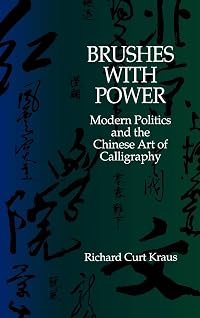
Brushes with Power: Modern Politics and the Chinese Art of Calligraphy
by Richard Curt Kraus
On This Page
Description
Chinese calligraphy has traditionally been an emblem of the ruling class and its authority. After a century of mass revolution, what is the fate of this elite art? Richard Kraus explores the relationship beween politics and the art of writing in China today to explicate the complex relationship between tradition and modernity in Chinese culture. His study draws upon a wide range of sources, from political documents, memoirs, and interviews with Chinese intellectuals to art exhibitions and show more television melodramas.Mao Zedong and other Communist leaders gave calligraphy a revolutionary role, believing that their beloved art reflected the luster of authoritative words and deeds. Calligraphy was joined with new propagandistic mass media to become less a private art and more a public performance. It provided politically engaged citizens with subtle cues to changing power relationships in the People's Republic.Claiming neither that the Communists obliterated traditional culture nor that revolution failed to relieve the burden of China's past, this study subtly examines the changing uses of tradition in a modernizing society. show lessTags
Member Reviews
Members
- Recently Added By
Lists

Works cited in Palimpsest: A History of the Written Word by Matthew Battles
79 works; 2 members
Author Information

5 Works 120 Members
Richard Curt Kraus is director of the Robert D. Clark Honors College and professor of political science at the University of Oregon.
Awards and Honors
Awards
Classifications
- Genres
- Nonfiction, Art & Design, History
- DDC/MDS
- 745.6 — Arts & recreation Drawing & decorative arts Decorations & Handicrafts / Calligraphy Calligraphy, illumination, heraldic design
- LCC
- NK3634 .A2 .K73 — Fine Arts 3600-(9990) Other arts and art industries Decorative arts Other arts and art industries
- BISAC
Statistics
- Members
- 14
- Popularity
- 1,672,726
- Rating
- (4.50)
- Languages
- English
- Media
- Paper, Ebook
- ISBNs
- 3