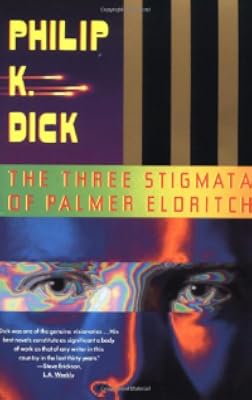
The Three Stigmata of Palmer Eldritch
by Philip K. Dick
On This Page
Description
On Mars, the harsh climate could make any colonist turn to drugs to escape a dead-end existence. Especially when the drug is Can-D, which translates its users into the idyllic world of a Barbie-esque character named Perky Pat. When the mysterious Palmer Eldritch arrives with a new drug called Chew-Z, he offers a more addictive experience, one that might bring the user closer to God. But in a world where everyone is tripping, no promises can be taken at face value. The Three Stigmata of show more Palmer Eldritch is one of Philip K. Dick's enduring classics, at once a deep character study, a dark mystery, and a tightrope walk along the edge of reality and illusion. show lessTags
Recommendations





















Member Recommendations
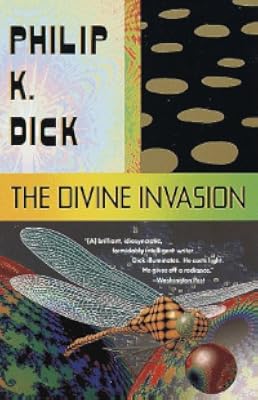
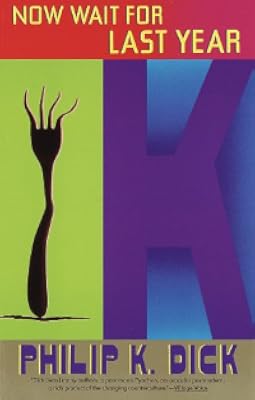
cammykitty The Three Stigmata to me is a forefather of cyberpunk, with it's internal action that questions existence and God. Neuromancer is often credited as the book that made the genre, so I suggest Neuromancer as an interesting book to compare to The Three Stigmata.
21
Member Reviews
Very few Science Fiction authors manage to create memorable works that easily retain their relevance in the near and/or distant future. Phillip K. Dick is one of those talented few, and The 3 Stigmata of Palmer Eldritch.
Dick's not-so-distant dystopian future is one where global warming is an adaptable but growing dillema, with the bulk of humanity virtually sealed away in air-conditioned office buildings and apartment complexes. The solution, space migration to nearby planets, is such a bleak and arduous task that 'settlers' need to be drafted. These off-world settlers often resort to drug-induced shared hallucination involving miniature recreations of life back on earth. Within this structure we find corporations employing psychics to show more predict future sales trends, upper class elitists physically evolving themselves into 'superior beings', naturally created drugs that allow users to connect on different plains of reality and traverse freely throughout space-time, to name a few. In the center of it all is the titular Palmer Eldritch, a powerful and mysterious businessman who has spent decades communing with alien races, and has returned with what he claims to be mankind's mental and spiritual salvation.
What would normally be a one-trick-pony for other authors becomes a multi-layered examination of everything from religion and philosophy to physical/mental evolution and individual freedom versus responsibility. Dick doesn't bother with simple 'Good Vs. Evil' conflict, but instead shows us that both possibilities are sides of the same coin, and simply asks us to call it in the air. Highly recommended for those who like to think about a book long after reading it. show less
Dick's not-so-distant dystopian future is one where global warming is an adaptable but growing dillema, with the bulk of humanity virtually sealed away in air-conditioned office buildings and apartment complexes. The solution, space migration to nearby planets, is such a bleak and arduous task that 'settlers' need to be drafted. These off-world settlers often resort to drug-induced shared hallucination involving miniature recreations of life back on earth. Within this structure we find corporations employing psychics to show more predict future sales trends, upper class elitists physically evolving themselves into 'superior beings', naturally created drugs that allow users to connect on different plains of reality and traverse freely throughout space-time, to name a few. In the center of it all is the titular Palmer Eldritch, a powerful and mysterious businessman who has spent decades communing with alien races, and has returned with what he claims to be mankind's mental and spiritual salvation.
What would normally be a one-trick-pony for other authors becomes a multi-layered examination of everything from religion and philosophy to physical/mental evolution and individual freedom versus responsibility. Dick doesn't bother with simple 'Good Vs. Evil' conflict, but instead shows us that both possibilities are sides of the same coin, and simply asks us to call it in the air. Highly recommended for those who like to think about a book long after reading it. show less
The religious symbolism and concepts are everywhere as Dick takes the reader from competing drug dealers through layer upon layer of hallucinations or alternate realities to direct interaction with God or a god or a devil or ...? The drugged state is compared to “what St. Paul promises ... you’re no longer clothed in a perishable, fleshly body – you’ve put on an ethereal body in its place.” I think I’ll read this one again, there was so much great stuff that I’d like a better look at. One image that stands out for me involves Dick’s deliberate disregard for a writing “rule”; avoid adjective lists. In the midst of an imaginary world consisting mainly of a flat grass plain, an avatar of Palmer Eldritch appears as “a show more scraggly, narrow, ungainly, white dog.” One of Dick’s best! show less
The most terrifying Dick I've read so far. Terrifying imagery, like the "semimechanical" appearance of the title character, reminiscent of the deskinned T-1000, the ultimate cyborg nightmare of fused flesh and metal. Terrifying subject matter — Dick's perennial of identity-dissolution, of latent or pharmaceutically-induced schizophrenia, and of its treatment with more drugs or with the electroshock and "beta particles" they try to combat the "phantasm" with. The terror of desperate seeking, like in dreams — Mayerson for his self-destroyed marriage, the colonists for a fantasy past on Earth, everyone for a time before the unspecified global ecocide. There's also cosmic horror here — the new drug comes from Proxima Centauri by way show more of Pluto (HPL's Yuggoth) and represents the inhuman interfering with what it means to be human. It's "an oral thing that arrived back from the Prox system, a great mouth, open to receive us".
Palmer Eldritch is a real standout from Dick's phenomenal 60's run. Of course the sexism is galactic. show less
Palmer Eldritch is a real standout from Dick's phenomenal 60's run. Of course the sexism is galactic. show less
Even after reading seven of his other novels, I'm still surprised at how excited and perplexed I feel after reading a new one. Explaining the premise of this novel (or any of his novels) is usually difficult because there are so many elements at play. Essentially, the world is really hot because humans messed up the climate, rich people are paying Nazi-esque doctors for "evolution therapy" to increase their brain capacity, people are being conscripted to colonize foreign planets, and a company is getting rich by covertly pushing a mind-altering drug on the colonists that can only be used with miniature accessories and layouts manufactured by this same company. Some of the characters include the head of that company, a "pre-cog" employee show more who can glimpse the future success of potential products, and Martian colonists who live in depressing hovels, gathering around a "layout" populated with dolls and small appliances. These colonists desperately chew the drug and collectively enter the dolls "Perky Pat" and "Walt" in a manner that could be described as "Malkovich-esque."
Eventually, Palmer Eldritch appears as a competitor peddling a drug that is far more intense, inducing entire lifetimes that can be experienced in the blink of an eye, with mysterious residual effects that lead many of its users to doubt the reality they live in. The religious undertones of the book touch on themes of Gnosticism, allusions to the complexities of transubstantiation, and the ontology of God.
As per usual, PKD's narrative is occasionally choppy and the prose is somewhat to be desired, but his novels are inevitably far more about the questions they raise: how might hallucinogenic drug experiences be similar to religious experiences? What does religion offer that the secular world can't? What role does capitalism play in benefiting from and manipulating societal elements like recreational drug use and religion? And, ultimately, how can we tell what is real, and what does it ultimately matter? show less
Eventually, Palmer Eldritch appears as a competitor peddling a drug that is far more intense, inducing entire lifetimes that can be experienced in the blink of an eye, with mysterious residual effects that lead many of its users to doubt the reality they live in. The religious undertones of the book touch on themes of Gnosticism, allusions to the complexities of transubstantiation, and the ontology of God.
As per usual, PKD's narrative is occasionally choppy and the prose is somewhat to be desired, but his novels are inevitably far more about the questions they raise: how might hallucinogenic drug experiences be similar to religious experiences? What does religion offer that the secular world can't? What role does capitalism play in benefiting from and manipulating societal elements like recreational drug use and religion? And, ultimately, how can we tell what is real, and what does it ultimately matter? show less
While not my favorite Dick, Three Stigmata definitely belongs in any list of "must read" for Dick. It's packed with throw-away ideas, such as Dr Smiley, the robotic psychiatrist in a suitcase that one of the protagonists is consulting, not to become mentally healthy, but just the opposite, so that he can dodge the draft. The weather has become so hot -- remember this is from 1964 -- that it's fatal to be outside for more than a few minutes. Even the talking taxis make an appearance. As usual some of the ideas don't make sense. Critical to the story is that life on Mars is so grim, that people are drafted into going, and once there have to take mind-altering drugs to put up with it. But why they're sent there in the first is never clear. show more As colonists, they are completely non-productive. There doesn't even seem to be a population explosion, so even that weak reason isn't relevant.
Two things stood out for me. First, though all the main characters are men, there are *three* women in secondary roles who are all smart, independent, and clearly more competent than the men. The ex-wife, often a negative figure in Dick novels, is sympathetic and balanced. The short-term mistress / assistant is savvy but not devious. The religious missionary is responsible for leading a critical discussion on God and humanity that closes out the novel. Second, the novel stays steady and on course from beginning to end. Palmer Eldritch enters the story very gradually, initially just as a topic of curiosity, then as a distant but menacing threat, then ever more ubiquitous (Ubik reference intentional).
Martian Time-Slip remains my favorite, because I cared more about the characters there, but Three Stigmata is highly recommended. show less
Two things stood out for me. First, though all the main characters are men, there are *three* women in secondary roles who are all smart, independent, and clearly more competent than the men. The ex-wife, often a negative figure in Dick novels, is sympathetic and balanced. The short-term mistress / assistant is savvy but not devious. The religious missionary is responsible for leading a critical discussion on God and humanity that closes out the novel. Second, the novel stays steady and on course from beginning to end. Palmer Eldritch enters the story very gradually, initially just as a topic of curiosity, then as a distant but menacing threat, then ever more ubiquitous (Ubik reference intentional).
Martian Time-Slip remains my favorite, because I cared more about the characters there, but Three Stigmata is highly recommended. show less
Philip K. Dick is a slippery one, his stories and books almost too elusive to characterize or summarize. [The Three Stigmata of Palmer Eldritch] is probably one of the most elusive, but it was a fun read anyway – with PKD, the journey is always an interesting one.
In this one, an hallucinatory drug is marketed to create an experience using miniature mock-ups of the real world. Taking the drug, you can enter the miniature virtual reality and engage in all kinds of experiences – yeah, there’s some early seeds for The Matrix here. The drugs and miniatures are wildly popular on colonized worlds, where real existence is drudgery and toil. Palmer Eldritch returns from a deep-space exploration with a new drug that surpasses the experience show more with the current drug. All out corporate war ensues, with much of the action taking place in virtual space that breaks from the miniatures and puts users in the real past or possible futures. Some of those drugs might have been nice to understand what was going on – I’m sure PKD was using something when he wrote this mind-bender.
In the end, the book is a sort of “grab-hold-and-stay-on-for-the-ride” read, even if you’re not exactly sure whether the narrative is part of the virtual or real. Classic PKD world-building here, with an earth scorched, think global warming – he was way out ahead of Al Gore. And classic PKD characters, faced with impossible situations that highlight their interior struggles more than the practical choices or solutions.
Bottom Line: Classic science fiction, if a little elusive – not my favorite PKD, but still a fun read.
3 ½ bones!!!!! show less
In this one, an hallucinatory drug is marketed to create an experience using miniature mock-ups of the real world. Taking the drug, you can enter the miniature virtual reality and engage in all kinds of experiences – yeah, there’s some early seeds for The Matrix here. The drugs and miniatures are wildly popular on colonized worlds, where real existence is drudgery and toil. Palmer Eldritch returns from a deep-space exploration with a new drug that surpasses the experience show more with the current drug. All out corporate war ensues, with much of the action taking place in virtual space that breaks from the miniatures and puts users in the real past or possible futures. Some of those drugs might have been nice to understand what was going on – I’m sure PKD was using something when he wrote this mind-bender.
In the end, the book is a sort of “grab-hold-and-stay-on-for-the-ride” read, even if you’re not exactly sure whether the narrative is part of the virtual or real. Classic PKD world-building here, with an earth scorched, think global warming – he was way out ahead of Al Gore. And classic PKD characters, faced with impossible situations that highlight their interior struggles more than the practical choices or solutions.
Bottom Line: Classic science fiction, if a little elusive – not my favorite PKD, but still a fun read.
3 ½ bones!!!!! show less
Ah. This was a good one.
Often when I talk to others about my love of detective fiction, I mention that it's nice to slip into the familiar territory of a well-established character. Philip K. Dick is like this, too. His novels are stand alone, but they have a certain feel to them that I find it comforting, no matter how disconcerting.
Three Stigmata is quite the disconcerting novel. Dick frequently concerns his characters with metaphysical questions, but to date I've not read a book that tackles them quite like this. In some ways, it reminds me off a book I read earlier this year, [b:The Good Man Jesus and the Scoundrel Christ|7645932|The Good Man Jesus and the Scoundrel Christ|Philip show more Pullman|http://d.gr-assets.com/books/1327942183s/7645932.jpg|10839280], in that both attempt to explain, in ways that don't rely on the supernatural, religious faith. What Dick does differently here, and in my opinion does better than Pullman (and this is one of many reasons I think Dick is a better writer than Pullman, though I imagine they don't get compared that often), is that he does so while never becoming didactic. Pullman is pat, self-assured that he's explained how Jesus "happened." Dick's characters speak with authority, but the reader can't help but doubt all the same.
The reason this doubt remains is due to the central element of the book, a drug war. In this way, Dick has taken literally Marx's statement on religion, as both Can-D and Chew-Z induce hallucinations while purporting to bring users closer to the "real" world. Whether we the readers are expected to trust that this is so (the characters make a good case for it, but are fair enough in their reasoning that they manage to make good cases for multiple, and often contradictory, interpretations), that the hallucinations actually provide as advertised, is ambiguous without seeming like a trick. Dick is known for his twists, but this one works differently. There is no sudden reveal, though I did have a sudden realization about the nature of Palmer Eldritch-- which was promptly cast into doubt a bit closer to the end. If this is all a bit vague, it's because I would hate to spoil the slowly revealed "surprise." I will say this: when I finished, I was in bed so I grabbed my iPad and jotted down "God is merely a manifestation of our unwillingness to take responsibility." That seems like what this novel is getting at, for me. What was surprising was the sense that, for the characters and myself, this was OK, even preferred.
Anyway, no one is reading this, save a future me, so suffice it to say, this is a novel I'll enjoy thinking about for a long time to come. For now, I'm starting the new Rebus novel. show less
Often when I talk to others about my love of detective fiction, I mention that it's nice to slip into the familiar territory of a well-established character. Philip K. Dick is like this, too. His novels are stand alone, but they have a certain feel to them that I find it comforting, no matter how disconcerting.
Three Stigmata is quite the disconcerting novel. Dick frequently concerns his characters with metaphysical questions, but to date I've not read a book that tackles them quite like this. In some ways, it reminds me off a book I read earlier this year, [b:The Good Man Jesus and the Scoundrel Christ|7645932|The Good Man Jesus and the Scoundrel Christ|Philip show more Pullman|http://d.gr-assets.com/books/1327942183s/7645932.jpg|10839280], in that both attempt to explain, in ways that don't rely on the supernatural, religious faith. What Dick does differently here, and in my opinion does better than Pullman (and this is one of many reasons I think Dick is a better writer than Pullman, though I imagine they don't get compared that often), is that he does so while never becoming didactic. Pullman is pat, self-assured that he's explained how Jesus "happened." Dick's characters speak with authority, but the reader can't help but doubt all the same.
The reason this doubt remains is due to the central element of the book, a drug war. In this way, Dick has taken literally Marx's statement on religion, as both Can-D and Chew-Z induce hallucinations while purporting to bring users closer to the "real" world. Whether we the readers are expected to trust that this is so (the characters make a good case for it, but are fair enough in their reasoning that they manage to make good cases for multiple, and often contradictory, interpretations), that the hallucinations actually provide as advertised, is ambiguous without seeming like a trick. Dick is known for his twists, but this one works differently. There is no sudden reveal, though I did have a sudden realization about the nature of Palmer Eldritch-- which was promptly cast into doubt a bit closer to the end. If this is all a bit vague, it's because I would hate to spoil the slowly revealed "surprise." I will say this: when I finished, I was in bed so I grabbed my iPad and jotted down "God is merely a manifestation of our unwillingness to take responsibility." That seems like what this novel is getting at, for me. What was surprising was the sense that, for the characters and myself, this was OK, even preferred.
Anyway, no one is reading this, save a future me, so suffice it to say, this is a novel I'll enjoy thinking about for a long time to come. For now, I'm starting the new Rebus novel. show less
Members
- Recently Added By
Published Reviews
ThingScore 50
Next year SF celebrates a fairly significant anniversary. It will be 40 years since JG Ballard published The Terminal Beach , Brian Aldiss published Greybeard , William Burroughs published Naked Lunch in the UK, I took over New Worlds magazine and Philip K Dick published The Three Stigmata of Palmer Eldritch . It was a watershed year, if you like, when SF rediscovered its visionary roots and show more began creating new conventions which rejected both modernism and American pulp traditions.
Perhaps best representing that cusp, Dick's work only rarely achieved the stylistic and imaginative coherence of those other writers. His corporate future came from a common pool created by troubled left-wingers Pohl and Kornbluth ( The Space Merchants , 1953) or Alfred Bester ( The Demolished Man , 1953). His Mars is the harsh but habitable planet of Leigh Brackett ( Queen of the Martian Catacombs , 1949) or Ray Bradbury ( The Martian Chronicles , 1950). His style and characters are indistinguishable from those of a dozen other snappy pulpsters. Even his questioning of the fundamentals of identity and reality is largely unoriginal, preceded by the work of the less prolific but perhaps more profound Charles Harness, who wrote stories such as "Time Trap", "The Paradox Men" and "The Rose" in the 50s.
So how has Dick emerged as today's best-known and admired US SF writer? It's hard to judge from this book (which was promoted enthusiastically by me and many others when it first appeared). show less
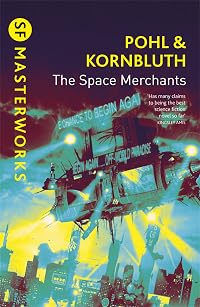
Perhaps best representing that cusp, Dick's work only rarely achieved the stylistic and imaginative coherence of those other writers. His corporate future came from a common pool created by troubled left-wingers Pohl and Kornbluth ( The Space Merchants , 1953) or Alfred Bester ( The Demolished Man , 1953). His Mars is the harsh but habitable planet of Leigh Brackett ( Queen of the Martian Catacombs , 1949) or Ray Bradbury ( The Martian Chronicles , 1950). His style and characters are indistinguishable from those of a dozen other snappy pulpsters. Even his questioning of the fundamentals of identity and reality is largely unoriginal, preceded by the work of the less prolific but perhaps more profound Charles Harness, who wrote stories such as "Time Trap", "The Paradox Men" and "The Rose" in the 50s.
So how has Dick emerged as today's best-known and admired US SF writer? It's hard to judge from this book (which was promoted enthusiastically by me and many others when it first appeared). show less
added by LamontCranston
Lists

Best Science Fiction Novels
816 works; 430 members
Survey of Classic Science Fiction
171 works; 48 members

501 Must-Read Books
529 works; 72 members

David Pringle's Science Fiction: The 100 Best Novels
101 works; 9 members
Dystopian and Apocalyptic Literature
350 works; 74 members

S.F. Masterworks (Complete)
229 works; 15 members

SF Masterworks
193 works; 8 members

Religious Science Fiction
70 works; 20 members

1960s, Best books published therein
254 works; 22 members

Best Horror Books
281 works; 84 members

Speculative Fiction: Slipstream Literature
166 works; 16 members

Top Five Books of 2018
802 works; 265 members

Recommended Philosophic Novels
26 works; 1 member

Books With Numbers in the Title
308 works; 13 members

Jones and Newman's Horror: The 100 Best Books
100 works; 4 members

Books Set on Mars
22 works; 7 members

Fiction with Men's Given Names in the Title
302 works; 11 members

Books Read in 2011
684 works; 20 members

Simulated Reality in Fiction
124 works; 7 members

recalling favorites...
105 works; 2 members

Useful Space Colonization Non-fiction
40 works; 9 members

ORCID Book list
27 works; 1 member

Best Horror Mega-List
342 works; 6 members

Mustich's 1000 Books to Read Before You Die: A Life Changing List
1,001 works; 20 members
Author Information

678+ Works 147,152 Members
Phillip Kindred Dick was an American science fiction writer best known for his psychological portrayals of characters trapped in illusory environments. Born in Chicago, Illinois, on December 16, 1928, Dick worked in radio and studied briefly at the University of California at Berkeley before embarking on his writing career. His first novel, Solar show more Lottery, was published in 1955. In 1963, Dick won the Hugo Award for his novel, The Man in the High Castle. He also wrote a series of futuristic tales about artificial creatures on the loose; notable of these was Do Androids Dream of Electric Sheep?, which was later adapted into film as Blade Runner. Dick also published several collections of short stories. He died of a stroke in Santa Ana, California, in 1982. (Bowker Author Biography) show less
Some Editions
Awards and Honors
Awards
Notable Lists
Series
Belongs to Publisher Series
PKD composition order (1964)
Work Relationships
Common Knowledge
- Canonical title
- The Three Stigmata of Palmer Eldritch
- Original title
- The Three Stigmata of Palmer Eldritch
- Original publication date
- 1965-01; 1964-03-18 (manuscript) (manuscript)
- People/Characters
- Palmer Eldritch; Leo Bulero; Barney Mayerson; Perky Pat; Felix Blau; Roni Fugate (show all 24); Anne Hawthorne; Richard Hnatt; Sam Regan; Emily Hnatt; UN Secretary Hepburn-Gilbert; Miss Gleason; Pia Jurgens; Mr. Icholtz; Tod Morris; Norman Schein; Helen Morris; Fran Schein; Mary Regan; Zoe Eldritch; Frank Santina; Impy White; Willy Denkmal (Dr.); Allen Faine
- Important places
- Mars; New Jersey, USA; New York, New York, USA; Munich, Bavaria, Germany; Ganymede; Earth
- Epigraph
- I mean, after all; you have to consider we're only made out of dust. That's admittedly not much to go on and we shouldn't forget that. But even considering, I mean it's a sort of bad beginning, we're not doing too bad. So I p... (show all)ersonally have faith that even in this lousy situation we're faced with we can make it. You get me?
--From an interoffice audio-memo circulated to Pre-Fash level consultants at Perky Pat Layouts, Inc., dictated by Leo Bulero immediately on his return from Mars. - First words
- His head unnaturally aching, Barney Mayerson woke to find himself in an unfamiliar bedroom in an unfamiliar conapt building.
- Last words
- (Click to show. Warning: May contain spoilers.)The ship rushed on, nearer and nearer Earth.
- Original language
- English
Classifications
Statistics
- Members
- 4,905
- Popularity
- 2,872
- Reviews
- 76
- Rating
- (3.90)
- Languages
- 17 — Chinese, Czech, Dutch, English, Finnish, French, German, Greek, Hungarian, Italian, Japanese, Polish, Portuguese, Romanian, Spanish, Swedish, Turkish
- Media
- Paper, Audiobook, Ebook
- ISBNs
- 86
- UPCs
- 1
- ASINs
- 41