On This Page
Description
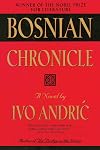
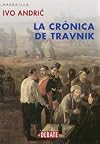
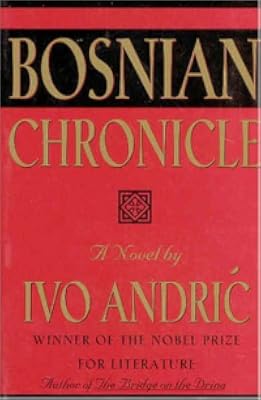
"Set in the town of Travnik, Bosnian Chronicle presents the struggle for supremacy in a region that stubbornly refuses to submit to any outsider. The era is Napoleonic and the novel, both in its historical scope and psychological subtlety, Tolstoyan. In its portrayal of conflict and fierce ethnic loyalties, the story is also eerily relevant. Ottoman viziers, French consuls, and Austrian plenipotentiaries are consumed by an endless game of diplomacy and double-dealing: expansive and courtly show more face-to-face, brooding and scheming behind closed doors. As they have for centuries, the Bosnians themselves observe and endure the machinations of greater powers that vie, futilely, to absorb them. Ivo Andric's masterwork is imbued with the richness and complexity of a region that has brought so much tragedy to our century and known so little peace"-- show lessTags
Recommendations




































Member Reviews
A brilliant novel of conquest and diplomatic intrigue set in Travnik, Bosnia spanning seven years, from 1807-1814 when French and Austrian consuls served alongside the Turkish Viziers in this remote outpost of the Ottoman Empire. Andrić masterfully weaves together a sweeping view of the major events at that time driven by Napoleon's victories and eventual defeat which touched the far reaches of Europe and beyond, and a careful examination of its impacts on the administration of town life in distant Travnik.
The fortunes of and relations beween the Consuls mirror the ebb and flow of Napoleon's sweep across the continent, although nothing much has changed in the lives of the ordinary people. Suspicion, intrigue, but also a quiet show more acceptance of each other continue to define relations between the Turks (Bosnian Moslems), the Catholics, the Jews, and the Orthodox Christians.
The novel is both profound and complex. We are treated to a psychological and sociological examination of life in this tumultuous and harsh region, from the point of view of outsiders. We follow Daville, the highly motivated, efficient French consul and his daily struggle to function effectively as a representative of the new power, amidst the backwardness and pig-headed resistance of the community to change and to progress. We see how these consuls and their families, each in their own way, battled their demons which the difficult and lonely life in Travnik has unmercifully unleashed. We become familiar with the intricate diplomatic dance between the ruling Vizier and the Consuls, and between the two Consuls themselves as they reflect relations between two advancing and sometimes warring powers eager to take over the region. We are introduced to characters and views which exemplified the two extremes of tradition and conservatism on one hand, and modernity and liberalism on the other -- the proverbial clash of east and west.
Andrić writes very beautifully in this novel -- his imagery and depiction of the town, the countryside, and most of all the weather (!) is unforgettable. Especially memorable is his description of one particularly long period of rain so vividly and so poetically written, it reminded me of Garcia Marquez's depiction of one similar long episode of rain in One Hundred Years of Solitude.
Compared to his more widely known novel, The Bridge on the Drina, this is a more penetrating and sensitive account of life 200 years ago in this crossroads of East and West. Andrić's own experience as a diplomat lends further authenticity to the consuls' stories. I enjoyed very much The Bridge but I liked this novel even better. It is considered by his countrymen to be Andrić's masterpiece. I would not hesitate to describe this as one of those rare perfect novels. show less
The fortunes of and relations beween the Consuls mirror the ebb and flow of Napoleon's sweep across the continent, although nothing much has changed in the lives of the ordinary people. Suspicion, intrigue, but also a quiet show more acceptance of each other continue to define relations between the Turks (Bosnian Moslems), the Catholics, the Jews, and the Orthodox Christians.
The novel is both profound and complex. We are treated to a psychological and sociological examination of life in this tumultuous and harsh region, from the point of view of outsiders. We follow Daville, the highly motivated, efficient French consul and his daily struggle to function effectively as a representative of the new power, amidst the backwardness and pig-headed resistance of the community to change and to progress. We see how these consuls and their families, each in their own way, battled their demons which the difficult and lonely life in Travnik has unmercifully unleashed. We become familiar with the intricate diplomatic dance between the ruling Vizier and the Consuls, and between the two Consuls themselves as they reflect relations between two advancing and sometimes warring powers eager to take over the region. We are introduced to characters and views which exemplified the two extremes of tradition and conservatism on one hand, and modernity and liberalism on the other -- the proverbial clash of east and west.
Andrić writes very beautifully in this novel -- his imagery and depiction of the town, the countryside, and most of all the weather (!) is unforgettable. Especially memorable is his description of one particularly long period of rain so vividly and so poetically written, it reminded me of Garcia Marquez's depiction of one similar long episode of rain in One Hundred Years of Solitude.
Compared to his more widely known novel, The Bridge on the Drina, this is a more penetrating and sensitive account of life 200 years ago in this crossroads of East and West. Andrić's own experience as a diplomat lends further authenticity to the consuls' stories. I enjoyed very much The Bridge but I liked this novel even better. It is considered by his countrymen to be Andrić's masterpiece. I would not hesitate to describe this as one of those rare perfect novels. show less
This one just saddens me. I loved Bridge on the Drina and was looking forward to this. But it is nothing like that book. It is a unending series of long character sketches, follwed by the backstory, followed by an episode placing the person in their current life and predicament. Then we start again with another individual’s character sketch, backstory, current episode. The book takes place in Travnik in the early 18s, during Napoleon’s reign in France and the political (and other) struggles over this part of the world. The main characters are the French and Austrian consuls in Travnik, but the cast of characters is very large. People appear, occupy center stage briefly, and then disappear, often forever. (I must make clear: I have show more quit reading after only a few hundred pages--about half the book.) While I don’t object to the way Andrić has constructed the book, it’s a poor job of stitching it all together. It reads more like an student's set of (extremely well-written) assignments strung together largely. After several hundred pages of reading this kind of thing, over and over, I have little interest in reading any more. Fortunately, Andrić was a prolific author and there are plenty more of his works on the shelf. I’m looking forward to finding something to take away the disappointment of this one. show less
Bosnian Chronicle is set in the small Bosnian town of Travnik, during the Napoleonic wars. People from four religions live in Travnik - Jews who were banished from Spain 300 years ago, and still try to maintain their Spanish traditions; Orthodox Christians, mainly Serbian; Muslims, called Turks even though they are native Bosnians; Catholics. Bosnia is part of the Ottoman Empire, ruled by the Sultan in Istanbul who is represented in Travnik by the Vizier.
The Ottoman empire is in decline. It has lost its Hungarian territories to the Austrians, and Serbia is in revolt against Ottoman rule. As Napoleon endeavours to establish an alliance with the Ottomans, a French consulate is set up in Travnik. To counter French influence, the Austrians show more set up a consulate as well. Andric describes the lives and characters of the consuls, Europeans stranded in the Levant among alien people and customs, carrying out diplomatic duties that change with their countries' shifting alliances.
There are so many layers, so much to think about. Absolutely worth the effort. show less
The Ottoman empire is in decline. It has lost its Hungarian territories to the Austrians, and Serbia is in revolt against Ottoman rule. As Napoleon endeavours to establish an alliance with the Ottomans, a French consulate is set up in Travnik. To counter French influence, the Austrians show more set up a consulate as well. Andric describes the lives and characters of the consuls, Europeans stranded in the Levant among alien people and customs, carrying out diplomatic duties that change with their countries' shifting alliances.
There are so many layers, so much to think about. Absolutely worth the effort. show less
http://nhw.livejournal.com/522861.html
I had previously heard of this book as Travnik Chronicle, which is the original Serbo-Croat title, but only worked out that they were the same novel as I was finishing it. It's the story of life in Andrić's home town of Travnik as experienced by the Austrian and French consuls during the Napoleonic wars, told mainly from the viewpoint of the foreigners living in the town. I really liked it.
Travnik was the administrative capital of Bosnia until 1850, so the obvious place for the consuls to be posted. I thought at first that there was no plot at all, just a series of balanced and very detailed character sketches of the consuls themselves, their wives, the three successive viziers, and their staff. show more The native Bosnians themselves are not at the centre of the narrative - the Catholic clergy feature quite a lot, the mainly Muslim townspeople to a large extent as stereotypes (the book's biggest flaw), the Jewish community are reasonably well represented, the local Serbs come into it only twice quice near the end.
But I began to realise that the book is largely about how people experience other cultures. Although the foreigners - Austrians, French and Ottoman viziers - all hate living in Travnik and dealing with the locals, I think Andrić portrays this as a big mistake on their part. Danville, the French consul who arrives at the start and leaves at the end, is the most sympathetic character, perhaps closest to a viewpoint character, but he is perpetually writing bad poetry about Napoleon and missing the local drama of the town for the sake of conspiring against the Austrians. By the time I was halfway through the book I felt that it should be compulsory reading for anyone working on the Balkans, provided they were prepared to look through the Western characters' stereotypical reactions to the Bosnians.
Am I reading it too generously? Was Andrić being serious rather than ironic? Why could he not have stated more clearly that he is exposing rather than sympathising with the foreigners' condescension? I stand by my interpretation because Andrić wrote the book in 1942, in Nazi-occupied Belgrade. And I think that his portrayal of civilised diplomats immersed in a barbarous, violent culture takes on a whole new burden of meaning when you remember that, until the collapse under German invasion of the Kingdom of Yugoslavia, Andrić was serving his country as an ambassador - in Berlin. show less
I had previously heard of this book as Travnik Chronicle, which is the original Serbo-Croat title, but only worked out that they were the same novel as I was finishing it. It's the story of life in Andrić's home town of Travnik as experienced by the Austrian and French consuls during the Napoleonic wars, told mainly from the viewpoint of the foreigners living in the town. I really liked it.
Travnik was the administrative capital of Bosnia until 1850, so the obvious place for the consuls to be posted. I thought at first that there was no plot at all, just a series of balanced and very detailed character sketches of the consuls themselves, their wives, the three successive viziers, and their staff. show more The native Bosnians themselves are not at the centre of the narrative - the Catholic clergy feature quite a lot, the mainly Muslim townspeople to a large extent as stereotypes (the book's biggest flaw), the Jewish community are reasonably well represented, the local Serbs come into it only twice quice near the end.
But I began to realise that the book is largely about how people experience other cultures. Although the foreigners - Austrians, French and Ottoman viziers - all hate living in Travnik and dealing with the locals, I think Andrić portrays this as a big mistake on their part. Danville, the French consul who arrives at the start and leaves at the end, is the most sympathetic character, perhaps closest to a viewpoint character, but he is perpetually writing bad poetry about Napoleon and missing the local drama of the town for the sake of conspiring against the Austrians. By the time I was halfway through the book I felt that it should be compulsory reading for anyone working on the Balkans, provided they were prepared to look through the Western characters' stereotypical reactions to the Bosnians.
Am I reading it too generously? Was Andrić being serious rather than ironic? Why could he not have stated more clearly that he is exposing rather than sympathising with the foreigners' condescension? I stand by my interpretation because Andrić wrote the book in 1942, in Nazi-occupied Belgrade. And I think that his portrayal of civilised diplomats immersed in a barbarous, violent culture takes on a whole new burden of meaning when you remember that, until the collapse under German invasion of the Kingdom of Yugoslavia, Andrić was serving his country as an ambassador - in Berlin. show less
Bosnian Chronicle is set in Travnik, a small town in central Bosnia (the original title is actually Travnik Chronicle) in early 19th century during the rise and fall of Napoleon. The story of stoic Bosnian people who endure yet another turbulent period in history is told through the eyes of French and Austrian consuls and Turkish viziers who at the time have seat in Travnik. As they all dance to an awkward diplomatic tune that reflects the state of the affairs on the broader stage, none of them can understand the people they are surrounded by. And yet, at the end, it is the Bosnians themselves that have the last word as they watch the wheel of history turn one more time.
Beautifully told, with a rich cast of characters, Bosnian show more Chronicle is a masterpiece of literature. It also provides an insight into complex people who for centuries have lived on the crossroads of history. This should have been mandatory reading for every western official serving in Bosnia over the past 15 or so years. show less
Beautifully told, with a rich cast of characters, Bosnian show more Chronicle is a masterpiece of literature. It also provides an insight into complex people who for centuries have lived on the crossroads of history. This should have been mandatory reading for every western official serving in Bosnia over the past 15 or so years. show less
Bosnian Chronicle is concerned with the lives of a French consul and two Austrian consuls in Travnik, Bosnia from 1807 to 1814 during the Empire reign of Napolean. The novel is full of rich descriptions of the Bosnian countryside and its inhabitants, the religious tensions among the Christians, Moslems and Jews, the constant conflict with Serbia and life under the ruling Turks.
Detailed portraits of the main characters leave the reader feeling all the loneliness, fears, hopes and frustrations of being a foreigner living in a politically unstable Bosnia at the time.
I liked this book mostly because: 1. I like historical fiction and this is the first novel I read that takes place in the Balkans. 2. The author's descriptive writing style show more draws you into the lives of the characters and gives you a real sense of place and history. show less
Detailed portraits of the main characters leave the reader feeling all the loneliness, fears, hopes and frustrations of being a foreigner living in a politically unstable Bosnia at the time.
I liked this book mostly because: 1. I like historical fiction and this is the first novel I read that takes place in the Balkans. 2. The author's descriptive writing style show more draws you into the lives of the characters and gives you a real sense of place and history. show less
Set in a small town in Bosnia during the Napoleonic wars, this book seems to tell the story of the foreigners who live there: the Turkish ruler and two consuls, one from France and one from Austria, and their families. But it is really a portrait of the turbulent times and the people of a town that has gone back and forth between outside occupiers for centuries. Andrić has deep insights into character and into the impact of history on personal ambitions. Andrić wrote this book at the very end of World War II, so he had the benefit of seeing the role that the region played in the first part of the 20th century, but the picture he paints tells a lot about the region's role in our contemporary and recent history too. A slow read, but show more worth it. show less
Members
- Recently Added By
Published Reviews
Konsulene er ganske annerledes enn den dramatiske og fortettede Broen over Drina. I denne andre romanen flyter handlingen langsommere og bredere, som en speiling av livsrytmen i byen Travnik på begynnelsen av 1800-tallet. Napoleon "Bunaparte" sender en fransk konsul til byen. Jean Daville og hans livsglade hustru synes de er kommet til verdens ytterste utpost. Travnik er vesirens by. show more Muslimske tyrkere har makten, og det er tyrkerne som dominerer bybildet, men innslagene av jøder og kristne gir grobunn for rivalisering og uro, og alle har sine egne forventninger til den nye konsulen. Møtet, etterhvert snarere konfrontasjonen mellom konsulen og travnikbeboernes religion, tradisjon og generelle verdensanskuelse er noen ganger komisk, ofte skremmende og komplisert.
Konsulene er et fargerikt og underholdende storverk fra en del av Europa som stadig, med skiftenden styrke, opptrer i nyhetsbildet. Som i Andrics andre storverk, Broen over Drina, kommer historien – historiene – bak nyhetene myldrende til live. show less
Konsulene er et fargerikt og underholdende storverk fra en del av Europa som stadig, med skiftenden styrke, opptrer i nyhetsbildet. Som i Andrics andre storverk, Broen over Drina, kommer historien – historiene – bak nyhetene myldrende til live. show less
added by kirstenlund
Lists

1001 Books You Must Read Before You Die
1,448 works; 1,134 members

Tammen Keltainen kirjasto
81 works; 1 member

My TBR
371 works; 3 members

Writers In Public Domain 2026
90 works; 1 member

100 knjiga
100 works; 1 member
Author Information

237+ Works 4,876 Members
Ivo Andric was born October 10, 1892, in Docu, Bosnia. He was raised in Bosnia, a region of violent political turmoil for centuries. As a young patriot, Andric became associated with political organizations, leading to his imprisonment for three years during World War I. He was also under virtual house arrest during World War II. While imprisoned show more Andric wrote his most creative material as he explored the agonies of Bosnia's oppression and exploitation. His World War I incarceration led to Ex Ponto, his collection of prison meditations and philosophy. His World War II house arrest provided Andric with the material and time to produce his most memorable novels, known as the Bosnian trilogy-Gospodjica (The Woman From Sarajevo), Travnicka hronicka (Bosnian Story or Chronicle), and Na Drini cuprija (The Bridge on the Drina). His devotion to truth and morality in times of despair and struggle is one of his strengths. His work has been translated into German, French, Russian, Spanish, and Italian. After the wars, Andric served as a Yugoslav diplomat, deputy, and representative from Bosnia. He was a member of the Federation of Writers of Yugoslavia. Andric was awarded the Prize for Life Work from the Yugoslav government in 1956, the Nobel Prize for Literature in 1961, and was bestowed an honorary doctorate from the University of Krakon in 1964. Andric died March 13, 1975, in Belgrade, Yugoslavia. (Bowker Author Biography) show less
Some Editions
Awards and Honors
Series

Belongs to Publisher Series
Work Relationships
Is contained in
Common Knowledge
- Canonical title
- Bosnian Chronicle
- Original title
- Травничка хроника; Travnička hronika
- Alternate titles
- The Days of the Consuls; Bosnian Story
- Original publication date
- 1945 (original Serbo-Croatian) (original Serbo-Croatian); 1963 (English: Hitrec) (English: Hitrec)
- People/Characters*
- Jean Baptiste-Etienne Daville; Joseph von Mitterer; Husref Mehmed-pascià; Davna (ovvero César D'Avenat); Amédée Chaumette Des Fossés; Nicola Rotta (show all 12); Anne Marie von Mitterer; Tenente colonnello Von Paulich; Madame Daville; Giovanni Mario Cologna; Sulejman-pascià; Ibrahim-pascià
- Important places
- Travnik, Bosnia; Bosnia; Serbia
- Original language
- Serbo-Croatian
*Some information comes from Common Knowledge in other languages. Click "Edit" for more information.
Classifications
- Genres
- General Fiction, Fiction and Literature, Historical Fiction
- DDC/MDS
- 891.8235 — Literature & rhetoric Literatures of other languages East Indo-European and Celtic literatures West and South Slavic languages (Bulgarian, Slovene, Polish, Czech, Slovak, Serbo-Croatian, and Macedonian) Serbo-Croatian Fiction 1900–1991
- LCC
- PG1418 .A6 .T713 — Language and Literature Slavic languages and literatures. Baltic languages. Albanian language Slavic. Baltic. Albanian Serbo-Croatian
- BISAC
Statistics
- Members
- 595
- Popularity
- 49,303
- Reviews
- 12
- Rating
- (3.95)
- Languages
- 19 — Bosnian, Bulgarian, Czech, Danish, Dutch, English, Finnish, French, German, Hebrew, Italian, Norwegian (Bokmål), Portuguese, Russian, Serbian, Croatian, Spanish, Swedish, Turkish
- Media
- Paper, Audiobook, Ebook
- ISBNs
- 50
- ASINs
- 16