The World in Flames: A Black Boyhood in a White Supremacist Doomsday Cult
by Jerald Walker
On This Page
Description
A memoir of growing up with blind, African-American parents in a segregated cult preaching the imminent end of the world When The World in Flames begins, in 1970, Jerry Walker is six years old. His consciousness revolves around being a member of a church whose beliefs he finds not only confusing but terrifying. Composed of a hodgepodge of requirements and restrictions (including a prohibition against doctors and hospitals), the underpinning tenet of Herbert W. Armstrong's Worldwide Church of show more God was that its members were divinely chosen and all others would soon perish in rivers of flames. The substantial membership was ruled by fear, intimidation, and threats. Anyone who dared leave the church would endure hardship for the remainder of this life and eternal suffering in the next. The next life, according to Armstrong, would arrive in 1975, three years after the start of the Great Tribulation. Jerry would be eleven years old. Jerry's parents were particularly vulnerable to the promise of relief from the world's hardships. When they joined the church, in 1960, they were living in a two-room apartment in a dangerous Chicago housing project with the first four of their seven children, and, most significantly, they both were blind, having lost their sight to childhood accidents. They took comfort in the belief that they had been chosen for a special afterlife, even if it meant following a religion with a white supremacist ideology and dutifully sending tithes to Armstrong, whose church boasted more than 100,000 members and more than $80 million in annual revenues at its height. When the prophecy of the 1972 Great Tribulation does not materialize, Jerry is considerably less disappointed than relieved. When the 1975 end-time prophecy also fails, he finally begins to question his faith and imagine the possibility of choosing a destiny of his own. show lessTags
Recommendations












Member Recommendations

Member Reviews
It’s just possible that Jerald Walker and I ran into each other as boys in the 1970s in a building “as nondescript as an airline hanger, and probably larger” in Wisconsin.
We were both children in the Worldwide Church of God (WCG) aka the “White Supremacist Doomsday Cult” of the subtitle.
I’ll confess that when review copies of this title came up on LibraryThing, I rolled my eyes. I am, at best, indifferent to things that smack of minority memoirs about the demon white man.
But, I do like reading about doomsday cults and, when I saw which cult Walker was talking about … well, I had to read it.
For a while, reading the open third, I cynically wondered if this was another bogus victimization autobiography.
There is enough on the show more WCG online and in print, doctrines, publications, and memories of its former members, where you could fake such a book. But why would you want to? Hardly seems like a plausible ticket for big sales.
And there is an emotional truth to it that is not, I believe, faked.
It was a quicker read for me than most I suspect. After all, I wasn’t traversing an odd, apocalyptic landscape. I’d seen the markers before: Saturday mornings with no cartoons, the embarrassment of discussing your church with “worldly” friends, excusing yourself awkwardly from school Halloween and Christmas parties, weird diets, your parents sending money away while you were poor, “deleavening” your house every spring, and chess champion Bobbie Fischer being an odd totem of respectability.
I think Walker had the harder time of it. I lived in rural poverty, not the poor parts of Chicago. My parents were not blind, literally blind, like his were. And the dynamics of his family in the number and ages of his siblings was very different. There are the secrets in Walker’s family that mine never had.
Walker makes much of his apocalyptic fears of the pending “Great Tribulation” when the Four Horseman will ride but the elect will be sheltered by God in Petra. (Yes, that’s Petra, Jordan – a popular tourist attraction.) I just wish he had told it in the past tense instead of resorting to the gimmicky modern fad of the present tense.
The fear of that future Tribulation provides the flames of the title, the flames that will consume your friends down the street because they aren’t “called out of the world”. Same with your cousins.
The end-time flames were prophesized in a Worldwide Church of God booklet called “1975 in Prophecy”. (That was actually a fallback from an earlier end-of-the-world-as-we-know-it date of 1972.) The year came and went, and Christ didn’t return. Walker and I are different people. I don’t remember even reading that pamphlet though it certainly exists and, as far as I can tell, the quotes from it are accurate.
I wasn’t as sensitive a soul, evidently, in my concerns as Walker. The armor of my faith was pried off for different reasons and later than Walker’s.
There are a couple of odd omissions in Walker’s account. His family was fond of the Jackson Five – enough that they “sinned” by dancing to them on the Sabbath. But he doesn’t mention church founder Herbert W. Armstrong’s (HWA) denunciations of rock music. Girls get mentioned, worldly girls that interest the teenage Walker in adulterous pleasures but no mention of HWA’s conservative tract The Missing Dimension in Sex which had much to say on that topic.
Walker charts the doubt that began to creep into his family about the church’s teachings after 1975 came and went.
It was Walker’s brother Timmy, once a devotee of Bobbie Fischer, that introduced him to the works of author Iceberg Slim. His Pimp: The Story of My Life shares the epigraph page with HWA.
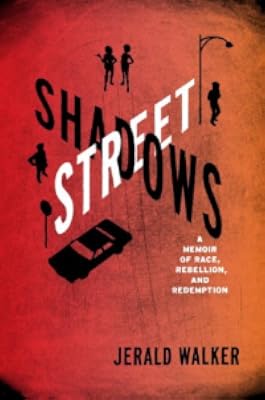
WCG was just another scam decided Walker who then entered “nearly a decade of drug and alcohol abuse, petty crimes, and street violence”, the subject of his first memoir, Street Shadows: A Memoir of Race, Rebellion, and Redemption.
Walker has said in interviews that he struggled with his racial identity. I don’t know what conclusions he came to, but the Walker family learns that the dirt of Chicago’s white South Shore isn’t really magical. The neighborhood becomes a ghetto following white flight. Of black culture, the Walker of this time says, in his cousins’ minds, it’s nothing but “foods and vices”.
Was WCG a “white supremacist doomsday cult”?
Well, “white supremacist” gets us into “race” and “racism”, two words almost value free and totally subjective in modern discourse and conveniently slippery when political debate requires it, so I’m going to address the question more precisely.
I can tell you that Walker is absolutely correct in that WCG did preach against interracial marriage. HWA certainly preached racial segregation.
It did not preach white supremacism.
But there was a difference between how things worked on the ground in the local churches and official teaching. I believe Walker’s account that some white members did interpret these teachings as sanctioning white supremacism.
I do have a problem with Walker calling WCG a cult and even comparing it to Jonestown. WCG worked by social pressure, the painful ostracization of wayward members and household visits by officious deacons (another thing I was spared living in a rural area). But there were no armed guards keeping me or Walker from running into the jungle for freedom.
Intellectually, I understand Walker’s anger at all those tithes wasted by sending them to WCG
Like Walker only telling his family and friends about his strange upbringing in his middle age, it took me awhile to revisit those years in conversation. However, I don’t feel a lot of anger about the whole thing now.
Well, maybe I do about one thing.
I think Walker may agree with me that it wasn’t the money conned out of members or the waste of Saturdays or the awkward social embarrassments of youth that was the worst thing about being a kid in WCG.
It was the lost future, the shortening of horizons in our youth. It was the part of us that should have been thinking about our future that the flames of WCG damaged most.
We both spent a few years of our youth off balance, but Walker and I made it. His career seems to be going well, and he seems to have a nice family. I wish him luck.
And he even made it to Petra after all. show less
We were both children in the Worldwide Church of God (WCG) aka the “White Supremacist Doomsday Cult” of the subtitle.
I’ll confess that when review copies of this title came up on LibraryThing, I rolled my eyes. I am, at best, indifferent to things that smack of minority memoirs about the demon white man.
But, I do like reading about doomsday cults and, when I saw which cult Walker was talking about … well, I had to read it.
For a while, reading the open third, I cynically wondered if this was another bogus victimization autobiography.
There is enough on the show more WCG online and in print, doctrines, publications, and memories of its former members, where you could fake such a book. But why would you want to? Hardly seems like a plausible ticket for big sales.
And there is an emotional truth to it that is not, I believe, faked.
It was a quicker read for me than most I suspect. After all, I wasn’t traversing an odd, apocalyptic landscape. I’d seen the markers before: Saturday mornings with no cartoons, the embarrassment of discussing your church with “worldly” friends, excusing yourself awkwardly from school Halloween and Christmas parties, weird diets, your parents sending money away while you were poor, “deleavening” your house every spring, and chess champion Bobbie Fischer being an odd totem of respectability.
I think Walker had the harder time of it. I lived in rural poverty, not the poor parts of Chicago. My parents were not blind, literally blind, like his were. And the dynamics of his family in the number and ages of his siblings was very different. There are the secrets in Walker’s family that mine never had.
Walker makes much of his apocalyptic fears of the pending “Great Tribulation” when the Four Horseman will ride but the elect will be sheltered by God in Petra. (Yes, that’s Petra, Jordan – a popular tourist attraction.) I just wish he had told it in the past tense instead of resorting to the gimmicky modern fad of the present tense.
The fear of that future Tribulation provides the flames of the title, the flames that will consume your friends down the street because they aren’t “called out of the world”. Same with your cousins.
The end-time flames were prophesized in a Worldwide Church of God booklet called “1975 in Prophecy”. (That was actually a fallback from an earlier end-of-the-world-as-we-know-it date of 1972.) The year came and went, and Christ didn’t return. Walker and I are different people. I don’t remember even reading that pamphlet though it certainly exists and, as far as I can tell, the quotes from it are accurate.
I wasn’t as sensitive a soul, evidently, in my concerns as Walker. The armor of my faith was pried off for different reasons and later than Walker’s.
There are a couple of odd omissions in Walker’s account. His family was fond of the Jackson Five – enough that they “sinned” by dancing to them on the Sabbath. But he doesn’t mention church founder Herbert W. Armstrong’s (HWA) denunciations of rock music. Girls get mentioned, worldly girls that interest the teenage Walker in adulterous pleasures but no mention of HWA’s conservative tract The Missing Dimension in Sex which had much to say on that topic.
Walker charts the doubt that began to creep into his family about the church’s teachings after 1975 came and went.
It was Walker’s brother Timmy, once a devotee of Bobbie Fischer, that introduced him to the works of author Iceberg Slim. His Pimp: The Story of My Life shares the epigraph page with HWA.
WCG was just another scam decided Walker who then entered “nearly a decade of drug and alcohol abuse, petty crimes, and street violence”, the subject of his first memoir, Street Shadows: A Memoir of Race, Rebellion, and Redemption.
Walker has said in interviews that he struggled with his racial identity. I don’t know what conclusions he came to, but the Walker family learns that the dirt of Chicago’s white South Shore isn’t really magical. The neighborhood becomes a ghetto following white flight. Of black culture, the Walker of this time says, in his cousins’ minds, it’s nothing but “foods and vices”.
Was WCG a “white supremacist doomsday cult”?
Well, “white supremacist” gets us into “race” and “racism”, two words almost value free and totally subjective in modern discourse and conveniently slippery when political debate requires it, so I’m going to address the question more precisely.
I can tell you that Walker is absolutely correct in that WCG did preach against interracial marriage. HWA certainly preached racial segregation.
It did not preach white supremacism.
But there was a difference between how things worked on the ground in the local churches and official teaching. I believe Walker’s account that some white members did interpret these teachings as sanctioning white supremacism.
I do have a problem with Walker calling WCG a cult and even comparing it to Jonestown. WCG worked by social pressure, the painful ostracization of wayward members and household visits by officious deacons (another thing I was spared living in a rural area). But there were no armed guards keeping me or Walker from running into the jungle for freedom.
Intellectually, I understand Walker’s anger at all those tithes wasted by sending them to WCG
Like Walker only telling his family and friends about his strange upbringing in his middle age, it took me awhile to revisit those years in conversation. However, I don’t feel a lot of anger about the whole thing now.
Well, maybe I do about one thing.
I think Walker may agree with me that it wasn’t the money conned out of members or the waste of Saturdays or the awkward social embarrassments of youth that was the worst thing about being a kid in WCG.
It was the lost future, the shortening of horizons in our youth. It was the part of us that should have been thinking about our future that the flames of WCG damaged most.
We both spent a few years of our youth off balance, but Walker and I made it. His career seems to be going well, and he seems to have a nice family. I wish him luck.
And he even made it to Petra after all. show less
 This review was written for LibraryThing Early Reviewers.
A rare book, indeed.
What’s your normal? Life is a bowl of cherries? Or all will end as Revelations kicks off in your near future? This story of Jerry growing up under difficult circumstances is even more upsetting when he can’t even complain because, well, the end is nye. What’s the point? Just behave as you’re told, let others laugh their way to hell and all will work out for you.
But will it? How do you question the infallible leaders (from afar). Look up Garner Ted Armstrong and realize just how MANY people were fooled, taken, and suffered for their faith. How Jerald ever grew up with a sense of humor and ability to share his experience is a treasure!
An advanced copy of this book was provided for an honest review.
What’s your normal? Life is a bowl of cherries? Or all will end as Revelations kicks off in your near future? This story of Jerry growing up under difficult circumstances is even more upsetting when he can’t even complain because, well, the end is nye. What’s the point? Just behave as you’re told, let others laugh their way to hell and all will work out for you.
But will it? How do you question the infallible leaders (from afar). Look up Garner Ted Armstrong and realize just how MANY people were fooled, taken, and suffered for their faith. How Jerald ever grew up with a sense of humor and ability to share his experience is a treasure!
An advanced copy of this book was provided for an honest review.
This review was written for LibraryThing Early Reviewers.How do we really know what goes on within a family?
Jerald Walker recounts a childhood which seems nearly unbelievable. His parents raised their children with love, but with elaborate strictures based on their faith that seem more akin to abuse than nurturing.
This telling of a very unusual childhood is punctuated by moments of bravery, moments of cruelty, and moments of pathos, which never quite descend into bathos. Walker shares his recollections with insight and wit, and surprisingly little bitterness. The adult writer retains compassion for his parents, his siblings, and, most importantly, himself.
Although the content makes many parts of the book tough to read, it’s nevertheless a page-turner. I finished it with conflicting show more emotions, however. This is a good read -- does that make it a good book? Is the telling of Walker’s tale a good thing, or is it somehow exploitative? What became of the rest his family after the closing of this narrative? The fact that these questions remain in the reader’s head is evidence of Walker’s power to make us care about the Walker family. No small achievement. show less
Jerald Walker recounts a childhood which seems nearly unbelievable. His parents raised their children with love, but with elaborate strictures based on their faith that seem more akin to abuse than nurturing.
This telling of a very unusual childhood is punctuated by moments of bravery, moments of cruelty, and moments of pathos, which never quite descend into bathos. Walker shares his recollections with insight and wit, and surprisingly little bitterness. The adult writer retains compassion for his parents, his siblings, and, most importantly, himself.
Although the content makes many parts of the book tough to read, it’s nevertheless a page-turner. I finished it with conflicting show more emotions, however. This is a good read -- does that make it a good book? Is the telling of Walker’s tale a good thing, or is it somehow exploitative? What became of the rest his family after the closing of this narrative? The fact that these questions remain in the reader’s head is evidence of Walker’s power to make us care about the Walker family. No small achievement. show less
This review was written for LibraryThing Early Reviewers.The World in Flames is a close examination of the author’s childhood growing up in a doomsday cult.
Walker does an outstanding job of telling the tale through his childhood eyes. I had a little trepidation going into this. Some authors tell their childhood memoirs with too much maturity; you feel like no kid has this much perspective at that age. So you disengage from the story. Or, they tell it with too much simplicity – they belabor the revelations, trying to recapture the essence of what it felt like to first learn about a parent’s infidelity, for example. Again, the reader disengages, often because she has already discerned the big reveal.
Walker threads this needle expertly, sharing the events and emotions of living in this show more group while trying to grow up in the South Side of Chicago, without mangling them through overkill. He draws out the reader’s empathy for this boy, growing up different. In no way do Walker’s experiences mirror mine. Yet, as humans, we share the universal experiences of trying to fit in; trying to balance what your parents tell you with what the world tells you; trying to learn how to – and how not to – compare yourself with your peers and their experiences, seeking out the norm. So this young boy, Jerry, found a place in my heart. I wanted to protect him, to offer him another way through life, to be an adult he could trust.
Let’s talk a little bit about this world Jerry grows up in. He is a poor black boy in the 70s, on the South Side of Chicago, with two blind parents, several older siblings, a twin brother, attending a church that is preparing for the end of the world. The church also doesn’t like black people. This goes beyond the idea that churches preach against sin and sinners, and leave people feeling badly about their behaviors and choices. This is an environment that is hostile to non-white people… and yet they accept their tithes, allow them to show up, and instruct them on how to prepare for Armageddon all the same. As an adult, this is utterly confusing to me. How much more so it must have been for young black children like Jerry & his siblings, trying to find their place in the world and the next.
Within their church they are separate from the rest of the congregation. Their religion separates them from the rest of the world, as well. With no birthdays, no Christmas, no Halloween, the children in the church are clearly different from their peers, and they hate it. There’s a lesson to be learned in being okay with who you are and how you’re different, but I feel like Jerry learns this the hardest, most difficult, most convoluted ways possible.
Perhaps the thing that influences his young experiences the most is the doomsday aspect of the church. With the End of Days hanging over them, it’s often hard for Jerry and his other family members to plan or look forward to the future: what is the point of saving money if you’re going to be swept up by God in two years? What is the point of getting an education? How do you relate to your friends if you think they’re going to be drowned in a lake of fire? Jerry struggles with all of this from a young age. It’s very touching, and tragic. There are a few moments of levity. Hearing him preach to his friend Paul, to try to save him, had me laughing. But for the most part, his struggles are very pressing and present.
Walker does an outstanding job of working us through his development with the church and with his community, from about the age of 6 to 16. It’s a unique coming-of-age tale that still resonates with readers. My thanks to the author, publisher, and Library Thing for an ARC of this lovely book. show less
Walker does an outstanding job of telling the tale through his childhood eyes. I had a little trepidation going into this. Some authors tell their childhood memoirs with too much maturity; you feel like no kid has this much perspective at that age. So you disengage from the story. Or, they tell it with too much simplicity – they belabor the revelations, trying to recapture the essence of what it felt like to first learn about a parent’s infidelity, for example. Again, the reader disengages, often because she has already discerned the big reveal.
Walker threads this needle expertly, sharing the events and emotions of living in this show more group while trying to grow up in the South Side of Chicago, without mangling them through overkill. He draws out the reader’s empathy for this boy, growing up different. In no way do Walker’s experiences mirror mine. Yet, as humans, we share the universal experiences of trying to fit in; trying to balance what your parents tell you with what the world tells you; trying to learn how to – and how not to – compare yourself with your peers and their experiences, seeking out the norm. So this young boy, Jerry, found a place in my heart. I wanted to protect him, to offer him another way through life, to be an adult he could trust.
Let’s talk a little bit about this world Jerry grows up in. He is a poor black boy in the 70s, on the South Side of Chicago, with two blind parents, several older siblings, a twin brother, attending a church that is preparing for the end of the world. The church also doesn’t like black people. This goes beyond the idea that churches preach against sin and sinners, and leave people feeling badly about their behaviors and choices. This is an environment that is hostile to non-white people… and yet they accept their tithes, allow them to show up, and instruct them on how to prepare for Armageddon all the same. As an adult, this is utterly confusing to me. How much more so it must have been for young black children like Jerry & his siblings, trying to find their place in the world and the next.
Within their church they are separate from the rest of the congregation. Their religion separates them from the rest of the world, as well. With no birthdays, no Christmas, no Halloween, the children in the church are clearly different from their peers, and they hate it. There’s a lesson to be learned in being okay with who you are and how you’re different, but I feel like Jerry learns this the hardest, most difficult, most convoluted ways possible.
Perhaps the thing that influences his young experiences the most is the doomsday aspect of the church. With the End of Days hanging over them, it’s often hard for Jerry and his other family members to plan or look forward to the future: what is the point of saving money if you’re going to be swept up by God in two years? What is the point of getting an education? How do you relate to your friends if you think they’re going to be drowned in a lake of fire? Jerry struggles with all of this from a young age. It’s very touching, and tragic. There are a few moments of levity. Hearing him preach to his friend Paul, to try to save him, had me laughing. But for the most part, his struggles are very pressing and present.
Walker does an outstanding job of working us through his development with the church and with his community, from about the age of 6 to 16. It’s a unique coming-of-age tale that still resonates with readers. My thanks to the author, publisher, and Library Thing for an ARC of this lovely book. show less
This review was written for LibraryThing Early Reviewers.His parents were blind, and black, and belonged to Herbert Armstong's Worldwide Church of God. When the world didn't end in 1972, they kept believing and sending money.
The power of this book is the voice. Walker somehow is able to capture what it's like to be the child of these parents, to believe all these things, and to be growing up at the same time.
I very much enjoyed reading it, but, despite the bookends of grown-up Walker and his family at Petra (where the Chosen would be taken at the end of the world), it felt incomplete. I wanted to know more about how he came to disbelieve, what his struggles were along the way, what happened to his relationship with his parents, and what became of his twin brother.
I guess all of this means I show more was truly captured by the story, and wanted more. show less
The power of this book is the voice. Walker somehow is able to capture what it's like to be the child of these parents, to believe all these things, and to be growing up at the same time.
I very much enjoyed reading it, but, despite the bookends of grown-up Walker and his family at Petra (where the Chosen would be taken at the end of the world), it felt incomplete. I wanted to know more about how he came to disbelieve, what his struggles were along the way, what happened to his relationship with his parents, and what became of his twin brother.
I guess all of this means I show more was truly captured by the story, and wanted more. show less
This review was written for LibraryThing Early Reviewers.A memoir about growing up in the 1970s as a member of a large international religious cult whose leader imposed strict rules on his followers, siphoned off large amounts of their money to "spread the word of God" (read: to buy himself private jets and finance his lush lifestyle), and prophesied an imminent end of the world in which only his church's faithful would be spared. Oh, and the whole organization was also pretty racist, which you would think would be a problem for the author's family, but as well as being black, his parents were also blind, and were desperate to believe the cult's promises that their sight would soon be restored.
It's a hell of a childhood story, and the writing is good enough, but despite a genuinely touching show more moment or two, I somehow never quite felt as engaged with this as I'd hoped to. It may be because the style is very novelistic, lacking the feeling of raw honesty you can sometimes get with memoirs, but, because it's real life, also lacking the structure and coherence of a good novel. Or maybe it's just that I've read one too many stories about growing up in cults now. Probably that second one, really; things that once might have shocked me now just make me nod my head sadly. Mind you, if you haven't read any of those (or, I suppose, had the experience firsthand), I think it's very much worth doing. It will expand your perspective on how crazy this world really is. show less
It's a hell of a childhood story, and the writing is good enough, but despite a genuinely touching show more moment or two, I somehow never quite felt as engaged with this as I'd hoped to. It may be because the style is very novelistic, lacking the feeling of raw honesty you can sometimes get with memoirs, but, because it's real life, also lacking the structure and coherence of a good novel. Or maybe it's just that I've read one too many stories about growing up in cults now. Probably that second one, really; things that once might have shocked me now just make me nod my head sadly. Mind you, if you haven't read any of those (or, I suppose, had the experience firsthand), I think it's very much worth doing. It will expand your perspective on how crazy this world really is. show less
This review was written for LibraryThing Early Reviewers.Engrossing and unique. Jerald Walker expertly modulates his voice, inhabiting his younger self with matter-of-fact credulity tempered with the wistful irony of an adult looking back. I might consider "The World in Flames" somewhat underambitious - it never manages to reach beyond the personal for the universal - but this is a mild criticism for a book that works so well at the personal level.
This review was written for LibraryThing Early Reviewers.Members
- Recently Added By
Lists

Books Read in 2017
4,249 works; 130 members

Extremism
31 works; 1 member
Author Information

4+ Works 253 Members
Jerald Walker is the author of The World in Flames: A Black Boyhood in a White Supremacist Doomsday Cult and Street Shadows: A Memoir of Race, Rebellion, and Redemption, winner of the 2011 PEN New England Award for Nonfiction. He has published in magazines such as Creative Nonfiction, Harvard Review, Missouri Review, River Teeth, Mother Jones, show more Iowa Review, and Oxford American, and he has been widely anthologized, including five times in The Best American Essays. The recipient of James A. Michener and National Endowment for the Arts fellowships, Walker is Professor of Creative Writing at Emerson College. show less
Common Knowledge
- Canonical title
- The World in Flames: A Black Boyhood in a White Supremacist Doomsday Cult
- Original title
- The World in Flames: A Black Boyhood in a White Supremacist Doomsday Cult
- Alternate titles
- The World in Flames; The World in Flames: A Boyhood in a Doomsday Cult
- Dedication
- To my Mother, Father,
Brothers, and Sisters,
for Eternal Love - First words
- We have been all along the Street called Straight, where Saul of Tarsus was led after God struck him blind, in Damascus.
- Last words
- (Click to show. Warning: May contain spoilers.)And I could not bring myself to go on.
- Canonical DDC/MDS
- 289.9
- Canonical LCC
- BX6193.W235
Classifications
- Genres
- Nonfiction, Biography & Memoir, Religion & Spirituality, General Nonfiction
- DDC/MDS
- 289.9 — Religion Christian denominations Other denominations and sects Minor Christian Sects
- LCC
- BX6193 .W235 — Philosophy, Psychology and Religion Christian Denominations Christian Denominations Protestantism Other Protestant denominations Adventists. "Millerites"
- BISAC
Statistics
- Members
- 121
- Popularity
- 270,095
- Reviews
- 43
- Rating
- (3.74)
- Languages
- English
- Media
- Paper, Audiobook, Ebook
- ISBNs
- 7
- ASINs
- 2