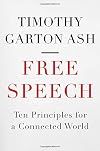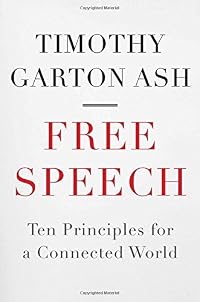
Free Speech: Ten Principles for a Connected World
by Timothy Garton Ash
On This Page
Description
"Never in human history was there such a chance for freedom of expression. If we have Internet access, any one of us can publish almost anything we like and potentially reach an audience of millions. Never was there a time when the evils of unlimited speech flowed so easily across frontiers: violent intimidation, gross violations of privacy, tidal waves of abuse. A pastor burns a Koran in Florida and UN officials die in Afghanistan. Drawing on a lifetime of writing about dictatorships and show more dissidents, Timothy Garton Ash argues that in this connected world that he calls cosmopolis, the way to combine freedom and diversity is to have more but also better free speech. Across all cultural divides we must strive to agree on how we disagree. He draws on a thirteen-language global online project freespeechdebate.com conducted out of Oxford University and devoted to doing just that. With vivid examples, from his personal experience of China's Orwellian censorship apparatus to the controversy around Charlie Hebdo to a very English court case involving food writer Nigella Lawson, he proposes a framework for "civilized" conflict in a world where we are all becoming neighbors." -- Provided by publisher show lessTags
Recommendations
























Member Reviews
People are probably freer to express their views today than they have ever been. Not everybody though. In some parts of the world, such as Turkey, despotic rulers are rolling back hard won gains. Recep Tayyip Erdoğan is not a fan of free speech. Not satisfied with muzzling his own citizens, he has reached out to citizens in the Netherlands and Germany to bring charges against those that have insulted him. It’s easy to be astonished by such sensitivity, but why do those European countries still have laws against insulting the dignity of a foreign head of state? And how many heads of state are dignified anyway?
Lèse-majesté laws in are still on the books in countries such as Denmark, Norway and Spain and the Netherlands, where a man show more was jailed in June 2016 for insulting the king on Facebook. And those are the good guys, who seldom apply the laws. Best not to get started on similar laws in the Middle east and Thailand where not long ago a man faced the possibility of thirty-seven years in prison for making a sarcastic remark about the king’s dog.
Blasphemy is illegal in a worryingly long list of countries, some of which are prepared to execute the offender. The above examples are some of the glaring obstacles to free speech. But its curtailment is universal, and can be far more insidious. Despite the First amendment of the US Constitution, speech there is not without its limits.
Ash’s book sets a benchmark for anyone wanting to understand the barriers to free speech. He introduces ten principles, which he sets as norms that those interested in free speech should promote. Each of the principles is briefly stated, and followed by a comprehensive elaboration of the principle, its obstacles and its consequences. A critical reader might find herself reading about a particular situation and thinking, ‘Yes. But what about…?’ only to find the answer on the next page. The scope is so broad that it is hard to imagine what Ash might have left out.
And, for the infinitely curious, the Kindle version is replete with hyperlinks to references and expansions that transform what is already a hefty book into an almost boundless resource.
‘Free Speech: Ten Principles for a Connected World’ sets the standard for its field. show less
Lèse-majesté laws in are still on the books in countries such as Denmark, Norway and Spain and the Netherlands, where a man show more was jailed in June 2016 for insulting the king on Facebook. And those are the good guys, who seldom apply the laws. Best not to get started on similar laws in the Middle east and Thailand where not long ago a man faced the possibility of thirty-seven years in prison for making a sarcastic remark about the king’s dog.
Blasphemy is illegal in a worryingly long list of countries, some of which are prepared to execute the offender. The above examples are some of the glaring obstacles to free speech. But its curtailment is universal, and can be far more insidious. Despite the First amendment of the US Constitution, speech there is not without its limits.
Ash’s book sets a benchmark for anyone wanting to understand the barriers to free speech. He introduces ten principles, which he sets as norms that those interested in free speech should promote. Each of the principles is briefly stated, and followed by a comprehensive elaboration of the principle, its obstacles and its consequences. A critical reader might find herself reading about a particular situation and thinking, ‘Yes. But what about…?’ only to find the answer on the next page. The scope is so broad that it is hard to imagine what Ash might have left out.
And, for the infinitely curious, the Kindle version is replete with hyperlinks to references and expansions that transform what is already a hefty book into an almost boundless resource.
‘Free Speech: Ten Principles for a Connected World’ sets the standard for its field. show less
Excellent book advocating free speech in the global internet age, while explaining roughly where the limits might reasonably be. Well written with a bit of humor sprinkled in, but still a very dense book.
Ratings
Members
- Recently Added By
Author Information

74+ Works 2,377 Members
Timothy Garton Ash is a fellow of St. Anthony's College, Oxford, and of the Hoover Institution, Stanford.
Awards and Honors
Awards
Distinctions
The Guardian Book of the Day (2016-05-30)
Common Knowledge
- Canonical title
- Free Speech: Ten Principles for a Connected World
- Original publication date
- 2016
Classifications
- Genres
- Politics and Government, Nonfiction, General Nonfiction, Philosophy, History
- DDC/MDS
- 323.443 — Social sciences Political science Civil and political rights The state and the individual Liberty Freedom of speech
- LCC
- JC591 .G37 — Political Science Political theory Political theory. The state. Theories of the state Purpose, functions, and relations of the state
- BISAC
Statistics
- Members
- 174
- Popularity
- 186,218
- Reviews
- 2
- Rating
- (3.41)
- Languages
- 5 — English, German, Italian, Polish, Spanish
- Media
- Paper, Ebook
- ISBNs
- 13
- UPCs
- 1
- ASINs
- 4