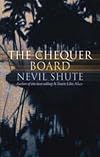
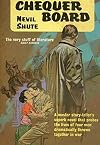
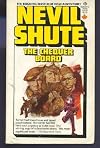
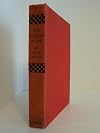
The Chequer Board
by Nevil Shute
On This Page
Description
Fiction. Literature. John Turner, a young man with a checkered past, has been told he has just one year to live. He decides to use his remaining time in search of three very different men he met in the hospital during the war, each of them in trouble of some kind: a pilot whose wife had betrayed him, a young corporal charged with killing a civilian in a brawl, and a black G.I. wrongly accused of the attempted rape of a white English girl. As Turner discovers where these men have landed on show more the checkerboard of life, he learns about compassion, tolerance, and second chances, and overcomes his fear of death. show lessTags
Recommendations















Member Reviews
Jackie Turner, has been experiencing blackouts and difficulty with his coordination, a result of having been injured in a plane crash during WWII (the book is set a year or two after the end of the war). When Turner is sent to see a specialist by his GP he learns that he has some shrapnel in his head from the crash that could not be safely removed. The doctor's diagnosis is that a piece of metal is causing the brain issues and that it remains inoperable -- Turner will die within a year or so.
Facing death, he realizes there are a few things he desperately wants to do before he goes -- primarily, to look up the three men who were in the hospital ward with him after the crash.
'The Chequer Board' was first published in 1947 and is a show more remarkably powerful stand against racism. It deals with both America's dismal treatment of its own black soldiers, and Britain's deplorable treatment of her colonies. Shute regularly uses the N-word (very regularly) but makes clear that it is offensive, and that his black characters perceive it as so. This was no doubt right for the time but in today's hopefully more enlightened age can be very offputting and hard to read.
But be warned, despite Shute appearing to be fiercely anti-racist (in 1940s terms at least) he certainly doesn't appear to have been a feminist.
However, I found Shute's writing style immensely engaging and if a little contrived the message was hopeful and inspiring with all the characters treated with sympathy. Overall I found it an enjoyable read. show less
Facing death, he realizes there are a few things he desperately wants to do before he goes -- primarily, to look up the three men who were in the hospital ward with him after the crash.
'The Chequer Board' was first published in 1947 and is a show more remarkably powerful stand against racism. It deals with both America's dismal treatment of its own black soldiers, and Britain's deplorable treatment of her colonies. Shute regularly uses the N-word (very regularly) but makes clear that it is offensive, and that his black characters perceive it as so. This was no doubt right for the time but in today's hopefully more enlightened age can be very offputting and hard to read.
But be warned, despite Shute appearing to be fiercely anti-racist (in 1940s terms at least) he certainly doesn't appear to have been a feminist.
However, I found Shute's writing style immensely engaging and if a little contrived the message was hopeful and inspiring with all the characters treated with sympathy. Overall I found it an enjoyable read. show less
In recent years the novels of Nevil Shute have come into the public domain, so a reprint was timely, making them available again in crisp paperback editions shortly before free versions could be found in many places on the Internet. It seems unlikely that all of Shute's novels will remain in print, or will be canonized, as a fairly large number of them nowadays have a very outdated feel to them, just like many of the adventure stories of John Buchan, and, in fact, a little bit like Stella Gibbons whose The Charmers I read recently. While Gibbons's novels seem old-fashioned because of their emphasis on class in British society, Buchan's novels because of their exaggerated portrayal of communists, Shute's novels breathe the atmosphere of show more the late 1940 - 50s with their emphasis, also, on class and racism. Nonetheless they are all very well-written books that tell a good story well, and can be immensely satisfying, as indeed The chequer board proved to be a moving story.
The novel tells the story of an army man, who, in the last months of his life due to an injury sustained in the war has a limited time to live. His wish is to set things right (in his mind at least), and therefore wishes to re-engage with three men who shared the same ward with him at the military hospital. His wound or injury is rather telling, as it can be seen as a flaw or scar in his brain. Besides, his former judgement was blind, so to speak, as his head was bandaged while he was in the hospital, nonetheless the issue seems to be he did not do them right.
The structure of the book is cleverly constructed to avoid a boring or repetitive narrative of three quests. As the story progresses it turns out that he had misjudged each of these three men, and that the actual circumstances were entirely different from what they seemed. The issues at hand are class, race and matrimony, which were all at the forefront during the late 1950s.
As I said, The chequer board is an interesting and moving novel about seeing this black or white, but it will no longer be considered palatable or readable by everyone due to its dated and old-fashioned style, and, for instance, the frequent use of the n-word (even retained in the 2009 reprint). show less
The novel tells the story of an army man, who, in the last months of his life due to an injury sustained in the war has a limited time to live. His wish is to set things right (in his mind at least), and therefore wishes to re-engage with three men who shared the same ward with him at the military hospital. His wound or injury is rather telling, as it can be seen as a flaw or scar in his brain. Besides, his former judgement was blind, so to speak, as his head was bandaged while he was in the hospital, nonetheless the issue seems to be he did not do them right.
The structure of the book is cleverly constructed to avoid a boring or repetitive narrative of three quests. As the story progresses it turns out that he had misjudged each of these three men, and that the actual circumstances were entirely different from what they seemed. The issues at hand are class, race and matrimony, which were all at the forefront during the late 1950s.
As I said, The chequer board is an interesting and moving novel about seeing this black or white, but it will no longer be considered palatable or readable by everyone due to its dated and old-fashioned style, and, for instance, the frequent use of the n-word (even retained in the 2009 reprint). show less
This 1947 book is interesting because Shute is very clearly setting out to write a serious novel, not an adventure story. Little bits of engineering and aviation do creep in here and there, inevitably, but essentially it reads like an early working-out of the ideas about race and religion that form the basis of Round the Bend. Few modern readers would find anything remotely controversial in his argument that people of different racial or cultural backgrounds should learn to respect each other as professionals and colleagues: as in Round the Bend, the workplace is the model for society. We might also agree with his notion that differences of religion are not so important either, for "ordinary people like us", but in the light of recent show more history we might find it rather too optimistic. And we might smile a little sadly at his choice of settings for this openness and tolerance: post-colonial Burma and a small village in the South-West of England. show less
John Turner has been having attacks of giddiness and fainting spells. As a veteran of World War II he lives with inoperable shrapnel in his head. The story opens with him learning he has maybe a year to live because of this horrific wound. There is nothing the doctors can do. This abbreviated time on earth has prompted John to want to reconnect with three men he met in military hospital: Philip Morgan, a soldier prisoned in Burma during the war; Pfc Dave Lesurier, a soldier accused of attempted rape of a naive English girl; and Corporal Duggie Brent, a soldier who had killed a man during a bar fight. What had happened to these troubled men? Turner wants to find them and improve their lives if he can.
A side story is John's relationship show more with his wife. His marriage to Mollie has strained for normalcy. From the very beginning the reader learns that Mollie did not visit Turner in the hospital; not even once despite the fact he was there for a week. She claims he hasn't needed he. Neither has done anything kind for the other. A death sentence changes both of them. As a way of understanding Mollie urges John to find his former friends from the hospital. show less
A side story is John's relationship show more with his wife. His marriage to Mollie has strained for normalcy. From the very beginning the reader learns that Mollie did not visit Turner in the hospital; not even once despite the fact he was there for a week. She claims he hasn't needed he. Neither has done anything kind for the other. A death sentence changes both of them. As a way of understanding Mollie urges John to find his former friends from the hospital. show less
The Chequer Board by Nevile Shute is another fine example of this author’s work. This is a multi-part story telling of the experience of John Taylor, whom the doctors have given just one year to live due to injuries that he sustained in a wartime plane crash. Turner decides to use his remaining time to trace three men that he got to know while recovering in the hospital.
Turner and two others were under guard while in hospital as all had been charged with crimes. Turner served some time in military prison for stealing supplies from the army and selling the supplies at a profit. Corporal Duggie Brent was under a murder charge as this British Commando killed a man during a bar fight, and Pfc Dave Lesurier, a black American servicemen, show more had tried to kill himself after he had been accused of trying to rape a young English girl. The third man, Flying Officer Philip Morgan, who had displayed a certain amount of racism, had relocated to Burma, and had matured and learned to be much more tolerant of race issues. The outcome of Turner’s search lead to a few surprises as the lives of these men was much different than what Turner had expected.
I found this an interesting story, perhaps a little too idealistic and simplified, but Shute is at his best when writing of the average man and his story-telling skills are put to good use here. The parts that dealt with the question of racism was handled well and he obviously had a great deal of sympathy for the black American servicemen and the tensions that surrounded them. One word of warning in that the word N ----- was used frequently, but fit with the story as this term was commonly used in the late 1940’s . The Chequer Board is a heart-warming morality tale of second chances and is a great read for anyone who needs their faith in their fellow man restored. show less
Turner and two others were under guard while in hospital as all had been charged with crimes. Turner served some time in military prison for stealing supplies from the army and selling the supplies at a profit. Corporal Duggie Brent was under a murder charge as this British Commando killed a man during a bar fight, and Pfc Dave Lesurier, a black American servicemen, show more had tried to kill himself after he had been accused of trying to rape a young English girl. The third man, Flying Officer Philip Morgan, who had displayed a certain amount of racism, had relocated to Burma, and had matured and learned to be much more tolerant of race issues. The outcome of Turner’s search lead to a few surprises as the lives of these men was much different than what Turner had expected.
I found this an interesting story, perhaps a little too idealistic and simplified, but Shute is at his best when writing of the average man and his story-telling skills are put to good use here. The parts that dealt with the question of racism was handled well and he obviously had a great deal of sympathy for the black American servicemen and the tensions that surrounded them. One word of warning in that the word N ----- was used frequently, but fit with the story as this term was commonly used in the late 1940’s . The Chequer Board is a heart-warming morality tale of second chances and is a great read for anyone who needs their faith in their fellow man restored. show less
Well. It wasn't bad - mildly interesting setup for recounting of wartime adventures (no, not battle. Quite different), and one trip out of England. And there's quite a bit about racism, from multiple angles - white American troops vs black American troops vs Brits who didn't see what all the fuss was about; "he married a _coloured_ woman!" being a reason to cut a man out of his family; and so on. But there's really no point, no plot, no climax or...anything. He just sort of wanders about and learns things about his wartime hospital mates - doesn't even talk to all of them - and story over. The improving relations with his wife are the only real arc in the book. Mildly enjoyable to read (it is a Shute, after all), but I doubt I'll ever show more bother to reread. Worth reading the once, though. show less
Nevil Shute, being English, was struck by the form that racism took in the American Army during WWII. A Black American Airman is falsely accused of rape, and is driven to attempting suicide, rather than deal with the upcoming Court-martial. However, after recovery, he does have the charge reduced to six months confinement due to high quality legal tap-dancing at the court.
Members
- Recently Added By
Lists

Women in War
148 works; 30 members
Talk Discussions
Past Discussions
Found: Trial of ex-soldier who kills in self - defence. By Nevil Shute? in Name that Book (May 2021)
Author Information

56+ Works 20,260 Members
Nevil Shute Norway was born in Ealing, London, England, on January, 17 1899. At the age of 11, Norway played truant from his first preparatory school in Hammersmith. After he was discovered, he was sent to the Dragon School, Oxford, and from there to Shrewsbury. He was on holiday in Dublin at the time of the Easter rising of 1916 and acted as an show more ambulance driver, winning a commendation for gallant conduct. He then entered the Royal Military Academy, intending to be commissioned into the Royal Flying Corps, but a bad stammer led to his being failed at his final medical examination and returned to civil life. The last few months of the war were spent on home service as a private in the Suffolk Regiment. In 1919, Norway went to Balliol College, Oxford, where he took a third class honors course in engineering science in 1922. During the vacations he worked, unpaid, as an aeronautical engineer, for the Aircraft Manufacturing Company at Hendon, and then for Geoffrey de Havilland's own firm, which he joined as an employee upon finishing at Oxford. He learned to fly and gained experience as a test observer. During the evenings he diligently wrote novels and short stories unperturbed by rejection slips from publishers. In 1924 Norway took the post of Chief Calculator to the Airship Guarantee Company, to work on the construction of the R100. In 1929 he became Deputy Chief Engineer under Barnes Wallis, and in the following year he flew to and from Canada in the R100. After the end of the airship project, jobs were hard to come by due to the depression so Shute started an aircraft manufacturing company, Airspeed Limited. This company was ultimately successful and built a large number of aircraft during the war. Shute remained joint managing director until 1938. When the business became too routine, he decided to get out of the rut and live by writing. The de Havillands, the first aviation job Shute had ever had, wound up buying Airspeed Ltd. He had by then enjoyed some success as a novelist and had sold the film rights of Lonely Road and Ruined City. At the outbreak of war in 1939, Norway joined the Royal Naval Volunteer Reserve as a Sub-Lieutenant in the Miscellaneous Weapons Department. Rising to Lieutenant Commander, he found experimenting with secret weapons a job after his own heart. But he found that his growing celebrity as a writer caused him to be in the Normandy landings on 6th June 1944, for the Ministry of Information, and to be sent to Burma as a correspondent in 1945. He entered Rangoon with the 15th Corps from Arakan. Soon after demobilisation in 1945 he emigrated to Australia and made his home in Langwarrin, Victoria. His output of novels, which began with Marazan (1926) continued to the end. Shute was one of the leading aeronautical engineers in Britain during the 30's and a fellow of the Royal Aeronautical Society. When he began writing in the 20's, he feared that a reputation as a writer of fiction might harm his engineering career. For this reason he published under his two Christian names, Nevil Shute and engineered under his "real" name, Nevil S. Norway. Nevil Shute Norway died in Melbourne on January, 12 1960. (Bowker Author Biography) show less
Awards and Honors
Distinctions
Series
Belongs to Publisher Series
Dell Books (D109)
New Windmill Series (77)
Work Relationships
Common Knowledge
- Original publication date
- 1947
- People/Characters
- Mr. Turner; Mr. Morgan
- Important places
- Penzance, Cornwall, England, UK; Rangoon, Burma; Irrawaddy River, Burma; Watford, Hertfordshire, England, UK
- Important events
- World War II (1939 | 1945); World War II, British Home Front
- Epigraph
- 'Tis all a Chequer board of Nights and Days Where Destiny with Men for Pieces plays: Hither and thither moves, and mates, and slays, And one by one back in the Closet lays. - Rubaiyat of Omar Khayyam, Edward Fitzgerald.
- First words
- I saw Mr John Turner first on June the 25th last year.
- Last words
- (Click to show. Warning: May contain spoilers.)I said, "Well, Mr Turner, what have you been doing since I saw you last?"
- Original language
- English
Classifications
Statistics
- Members
- 602
- Popularity
- 48,358
- Reviews
- 14
- Rating
- (3.83)
- Languages
- 7 — Danish, Dutch, English, Finnish, Norwegian (Bokmål), Norwegian, Swedish
- Media
- Paper, Audiobook, Ebook
- ISBNs
- 26
- ASINs
- 43