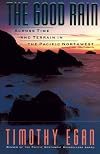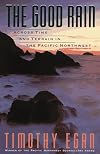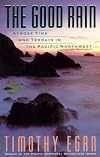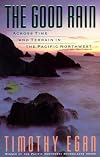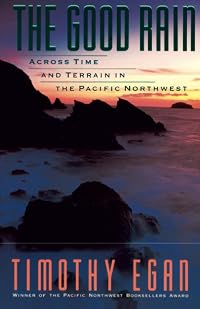
The Good Rain: Across Time and Terrain in the Pacific Northwest
by Timothy Egan
On This Page
Description
A fantastic book! Timothy Egan describes his journeys in the Pacific Northwest through visits to salmon fisheries, redwood forests and the manicured English gardens of Vancouver. Here is a blend of history, anthropology and politics.Tags
Recommendations

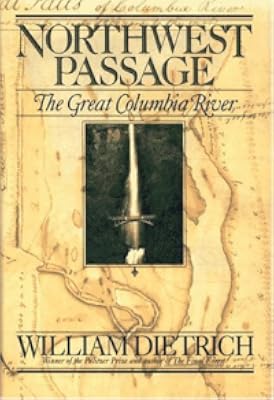

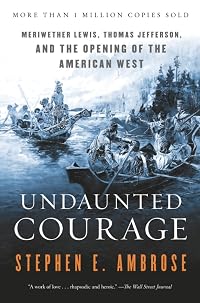
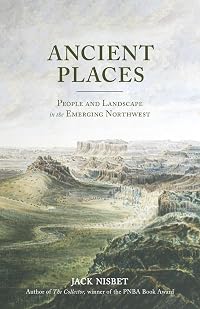

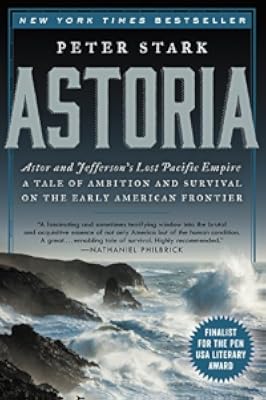







Member Recommendations
Member Reviews
Three stars doesn't do this book justice. It should get 5 for the second half, and -1 for the worst parts.
When it's good, this is a beautiful, moving and informative description of the Pacific Northwest. Egan can be wonderful at describing the beauty of the region and the emotions it induces in people, and at the stupidity and sheer unbridled greed that has led to some of the worst problems we have today. But he can also over-reach, both in terms of just over-egging his writing and exaggerating claims (he makes Rainier Valley sound like Compton) to the point of undermining his own credibility. And in places he falls for the sort of ridiculous stereotypes and cliches that make it sound like he's writing this all from New York.
The chapter show more about Victoria, in particular, was such an irritating pastiche of stereotypes about Canada, the US and Britain that it almost made me stop reading and I would advise anyone to skip it altogether. I'm glad I continued though, and most of the badness is concentrated towards the beginning.
The chapters on native tribes and on salmon are particularly beautifully written, and the parts that I know the factual background to check out with the other things I've read or learned about. They will make you angry, but appropriately so. show less
When it's good, this is a beautiful, moving and informative description of the Pacific Northwest. Egan can be wonderful at describing the beauty of the region and the emotions it induces in people, and at the stupidity and sheer unbridled greed that has led to some of the worst problems we have today. But he can also over-reach, both in terms of just over-egging his writing and exaggerating claims (he makes Rainier Valley sound like Compton) to the point of undermining his own credibility. And in places he falls for the sort of ridiculous stereotypes and cliches that make it sound like he's writing this all from New York.
The chapter show more about Victoria, in particular, was such an irritating pastiche of stereotypes about Canada, the US and Britain that it almost made me stop reading and I would advise anyone to skip it altogether. I'm glad I continued though, and most of the badness is concentrated towards the beginning.
The chapters on native tribes and on salmon are particularly beautifully written, and the parts that I know the factual background to check out with the other things I've read or learned about. They will make you angry, but appropriately so. show less
This should have been a 5 star book. The title "The Good Rain"; the locale - Washington, Oregon and British Columbia - my homeland, especially Washington; and the stories. The story about the Goldman family alone was worth 5 stars - a horrific true-crime tragedy. Young family brutally killed, and it turned out to be a mistake by a drunken, mentally disturbed man. The back story that set him off included a proto-McCarthyite attack on the previous generation of Goldman's, pre-WWII. The attacker won the election battle but long term lost the battle against cheap electricity from Grand Coulee dam. Still bitter from being on the wrong side, he was telling a drifter in the bar how he had been wronged and, perhaps unintentionally, sent the show more fellow off to find and kill the wrong Goldman. I will not soon forget that tragic story.
But the author ruined it for me. The first hint was in an early chapter, set in Victoria, BC. A statue of the namesake was referred to as representing "an overweight queen." I told myself not to take it personally, and the various stories had just about overcome my annoyance. Then he visited the site of Mt. St. Helens, and while there he interviewed a female park ranger. Her comments were found worthy to be included at length, but throughout the segment, she was referred to only as "the rangerette." No more than 1/2 star for Timothy Egan.
I don't want to ever read anything else he wrote. show less
But the author ruined it for me. The first hint was in an early chapter, set in Victoria, BC. A statue of the namesake was referred to as representing "an overweight queen." I told myself not to take it personally, and the various stories had just about overcome my annoyance. Then he visited the site of Mt. St. Helens, and while there he interviewed a female park ranger. Her comments were found worthy to be included at length, but throughout the segment, she was referred to only as "the rangerette." No more than 1/2 star for Timothy Egan.
I don't want to ever read anything else he wrote. show less
This was published when I was in high school, and has been on my reading to-do list since moving to WA ten years ago. Purchased from Powell's by Mason on our 'Christmas' trip.
This used inscribed paperback copy was just mixed in with regular stock, so I picked it over a signed first edition hardcover that was $50.
These essays feel a little... dated, but they mostly hold up well in their environs. I remember cringing at 'rangerette', and a 30 something backpacker dude describing his backcountry steak and bourbon dinner.
That said, Egan hits all the Washington high notes. Three decades on, we are still struggling with the salmon, but there is talk of actual dam removal along the Columbia, along with the recently freed Elwha. At work, show more Howard Hanson dam is getting a fish passage that will restore chinook to the Upper Green.
Having seen most of the same routes, I would be happy just sticking it out at La Push, where he closes. show less
This used inscribed paperback copy was just mixed in with regular stock, so I picked it over a signed first edition hardcover that was $50.
These essays feel a little... dated, but they mostly hold up well in their environs. I remember cringing at 'rangerette', and a 30 something backpacker dude describing his backcountry steak and bourbon dinner.
That said, Egan hits all the Washington high notes. Three decades on, we are still struggling with the salmon, but there is talk of actual dam removal along the Columbia, along with the recently freed Elwha. At work, show more Howard Hanson dam is getting a fish passage that will restore chinook to the Upper Green.
Having seen most of the same routes, I would be happy just sticking it out at La Push, where he closes. show less
This book was written in 1990 and at the time Egan was the Pacific Northwest correspondent for the New York Times. This book is in many ways a companion to Egan's later (1998) book Lasso the Wind.
The book starts with a chapter on Egan taking his grandfather's ashes to the headwaters of a river in the Northwest. It then morphs as Egan becomes interested in what has happened to the land that he grew up on and that his grandfather helped to settle. As Egan does the research he comes across one of the best books about the early Northwest that was written and Egan begins to follow the trail of Theodore Winthrop as Winthrop travels by foot, canoe, and horseback in 1853 from Vancouver, B.C. to Astoria, Oregon. Each chapter of Egan's book is show more about a different section of the trail as followed by Winthrop and Egan contrasts the past and the present as he makes his journey following the same trail. The two journeys turn out to be very different. Egan manages to maintain a fair hand in dealing with all the changes, but there are times when his own prejudices show. He laments the loss of estuaries, free flowing rivers, and most of all the old growth forests. At the end of the book he says, "The most economically distressed counties in the Northwest are those that depend on logging for their livelihood. The most prosperous are those that have unchained themselves from their mills." (p. 253) But at the end of his last chapter he says, "Standing above the Columbia today, the river that carries water from all parts of the Pacific Northwest to the ocean, uniting deserts and glaciers, forest and farmland, cities and sage country, I'm trouble by this paradox. Winthrop thought the land here would change a man, not the other way around; still, at the ebb of the twentieth century, we have yet to prove him entirely wrong." (p. 250)
There were times as I was reading this book, that I wondered if the statistics that he quoted would still be true because it is 30 years after the publication of the book, but in general I was pleasantly surprised to find that the book was still relevant and generally true. The biggest question I have is about the explosion of population that the Northwest has seen in the last thirty years and its effect on the environment. I would think that it has got to be the biggest problem for the area at this point in time.
Like all of Egan's books, this one is high quality and a great read. show less
The book starts with a chapter on Egan taking his grandfather's ashes to the headwaters of a river in the Northwest. It then morphs as Egan becomes interested in what has happened to the land that he grew up on and that his grandfather helped to settle. As Egan does the research he comes across one of the best books about the early Northwest that was written and Egan begins to follow the trail of Theodore Winthrop as Winthrop travels by foot, canoe, and horseback in 1853 from Vancouver, B.C. to Astoria, Oregon. Each chapter of Egan's book is show more about a different section of the trail as followed by Winthrop and Egan contrasts the past and the present as he makes his journey following the same trail. The two journeys turn out to be very different. Egan manages to maintain a fair hand in dealing with all the changes, but there are times when his own prejudices show. He laments the loss of estuaries, free flowing rivers, and most of all the old growth forests. At the end of the book he says, "The most economically distressed counties in the Northwest are those that depend on logging for their livelihood. The most prosperous are those that have unchained themselves from their mills." (p. 253) But at the end of his last chapter he says, "Standing above the Columbia today, the river that carries water from all parts of the Pacific Northwest to the ocean, uniting deserts and glaciers, forest and farmland, cities and sage country, I'm trouble by this paradox. Winthrop thought the land here would change a man, not the other way around; still, at the ebb of the twentieth century, we have yet to prove him entirely wrong." (p. 250)
There were times as I was reading this book, that I wondered if the statistics that he quoted would still be true because it is 30 years after the publication of the book, but in general I was pleasantly surprised to find that the book was still relevant and generally true. The biggest question I have is about the explosion of population that the Northwest has seen in the last thirty years and its effect on the environment. I would think that it has got to be the biggest problem for the area at this point in time.
Like all of Egan's books, this one is high quality and a great read. show less
Three stars doesn't do this book justice. It should get 5 for the second half, and -1 for the worst parts.
When it's good, this is a beautiful, moving and informative description of the Pacific Northwest. Egan can be wonderful at describing the beauty of the region and the emotions it induces in people, and at the stupidity and sheer unbridled greed that has led to some of the worst problems we have today. But he can also over-reach, both in terms of just over-egging his writing and exaggerating claims (he makes Rainier Valley sound like Compton) to the point of undermining his own credibility. And in places he falls for the sort of ridiculous stereotypes and cliches that make it sound like he's writing this all from New York.
The chapter show more about Victoria, in particular, was such an irritating pastiche of stereotypes about Canada, the US and Britain that it almost made me stop reading and I would advise anyone to skip it altogether. I'm glad I continued though, and most of the badness is concentrated towards the beginning.
The chapters on native tribes and on salmon are particularly beautifully written, and the parts that I know the factual background to check out with the other things I've read or learned about. They will make you angry, but appropriately so. show less
When it's good, this is a beautiful, moving and informative description of the Pacific Northwest. Egan can be wonderful at describing the beauty of the region and the emotions it induces in people, and at the stupidity and sheer unbridled greed that has led to some of the worst problems we have today. But he can also over-reach, both in terms of just over-egging his writing and exaggerating claims (he makes Rainier Valley sound like Compton) to the point of undermining his own credibility. And in places he falls for the sort of ridiculous stereotypes and cliches that make it sound like he's writing this all from New York.
The chapter show more about Victoria, in particular, was such an irritating pastiche of stereotypes about Canada, the US and Britain that it almost made me stop reading and I would advise anyone to skip it altogether. I'm glad I continued though, and most of the badness is concentrated towards the beginning.
The chapters on native tribes and on salmon are particularly beautifully written, and the parts that I know the factual background to check out with the other things I've read or learned about. They will make you angry, but appropriately so. show less
In this book, Timothy Egan travels around the Pacific Northwest and give the reader a sense of its natural, environmental, and modern history. He (sort of) follows the footsteps of Theodore Winthrop who explored the area in 1853. He compares what Winthrop saw, and what Winthrop predicted for the area, to what Egan saw in 1990.
I have lived in the Northwest for over 30 years and have traveled around quite a bit, but this book was full of interesting things that I did not know. It even gave me one or two new places I need to visit. Egan manages to fit quite a bit into a small volume.
His observations make you think a lot about some of the trade-offs we've made - sometimes out of good but ignorant intentions and sometimes out of show more carelessness. Obviously there is no excuse for our treatment of the native tribes. But sometimes the things we did that have negatively impacted the environment have been for good reasons - damns that brought electricity to farmers in eastern Washington, for example. While Egan has an obvious bent toward leaving things as they were, he also presents the other side of the argument.
The book will be much more interesting to those who live in or have visited the Northwest. But it might just spur an interest in one who has not been here before.
I have already given this book as a gift and will probably do so again. show less
I have lived in the Northwest for over 30 years and have traveled around quite a bit, but this book was full of interesting things that I did not know. It even gave me one or two new places I need to visit. Egan manages to fit quite a bit into a small volume.
His observations make you think a lot about some of the trade-offs we've made - sometimes out of good but ignorant intentions and sometimes out of show more carelessness. Obviously there is no excuse for our treatment of the native tribes. But sometimes the things we did that have negatively impacted the environment have been for good reasons - damns that brought electricity to farmers in eastern Washington, for example. While Egan has an obvious bent toward leaving things as they were, he also presents the other side of the argument.
The book will be much more interesting to those who live in or have visited the Northwest. But it might just spur an interest in one who has not been here before.
I have already given this book as a gift and will probably do so again. show less
Timothy Egan follows in the footsteps of Winthrop, who traveled in the Pacific Northwest in the 1850s and wrote a travel book about it. Egan looks at how the Pacific Northwest has and has not changed since then. Each chapter explores a particular area, examining its history, geography, and some of the interesting people who live there. The book focuses a lot on nature and ecology, because nature is such a major defining characteristic of the area.
There's lots of interesting information in here. Egan is a good writer. Some chapters were less interesting than others, so I found myself skimming parts of the book.
The book was written in 1990, and naturally the Pacific Northwest has changed a lot in 30 years. If you're looking for a current show more description of the Pacific Northwest, this isn't it. The logging industry, salmon recovery efforts, and attitudes about damming rivers are very different now (although they all follow trajectories found in the book). The chapter about Seattle is downright hilarious now: Egan talks about efforts to curb growth in the city of Seattle in the 1980s. The Seattle of today is suffering a lot from those efforts, because you can't stop a city from growing, and today Seattle is one of the fastest-growing cities in the US and that growth is causing a lot of major problems. show less
There's lots of interesting information in here. Egan is a good writer. Some chapters were less interesting than others, so I found myself skimming parts of the book.
The book was written in 1990, and naturally the Pacific Northwest has changed a lot in 30 years. If you're looking for a current show more description of the Pacific Northwest, this isn't it. The logging industry, salmon recovery efforts, and attitudes about damming rivers are very different now (although they all follow trajectories found in the book). The chapter about Seattle is downright hilarious now: Egan talks about efforts to curb growth in the city of Seattle in the 1980s. The Seattle of today is suffering a lot from those efforts, because you can't stop a city from growing, and today Seattle is one of the fastest-growing cities in the US and that growth is causing a lot of major problems. show less
Members
- Recently Added By
Lists

Non-Fiction Worth Reading
1,025 works; 264 members

Set in the Pacific Northwest
136 works; 7 members

Blue Pyramid 1,276 Best Books of All Time
1,248 works; 32 members
Author Information

18+ Works 10,984 Members
Timothy Egan is a Pulitzer Prize-winning reporter, a New York Times columnist, a winner of the Andrew Carnegie Medal for excellence in nonfiction, and the author of seven books, including Short Nights of the Shadow Catcher, The Worst Hard Time, which won a National Book Award, and the national bestseller The Big Burn.
Awards and Honors
Series
Belongs to Publisher Series
Common Knowledge
- Canonical title
- The Good Rain: Across Time and Terrain in the Pacific Northwest
- Important places
- Pacific Northwest, USA; Puget Sound, Washington, USA; Olympic Peninsula, Washington, USA; Cascade Mountains, Washington, USA
Classifications
- Genres
- Nonfiction, Travel, General Nonfiction, Science & Nature
- DDC/MDS
- 979.5 — History & geography History of North America Great Basin and Pacific Slope region of United States Oregon
- LCC
- F851 .E28 — Local History of the United States, Canada and Latin America United States local history Cascade Range
- BISAC
Statistics
- Members
- 493
- Popularity
- 61,577
- Reviews
- 16
- Rating
- (4.03)
- Languages
- English
- Media
- Paper, Audiobook, Ebook
- ISBNs
- 4
- ASINs
- 5