On This Page
Description
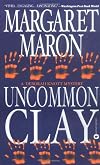
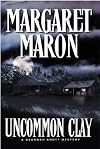
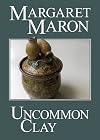
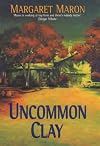
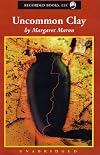
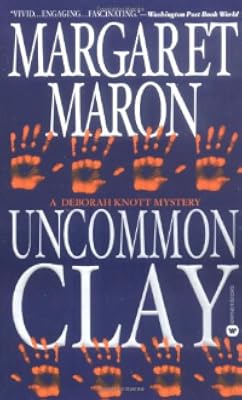
Margaret Maron, winner of the Edgar, Anthony, Agatha and Macavity Awards, has reached renowned success with the Deborah Knott Mystery series. Uncommon Clay delves into the intriguing world of the Nordans, a deep-rooted family of talented yet cursed North Carolina potters. Judge Knott is filling in for another judge who suffered a mild stroke. When she decrees that the divorcing Nordan couple split their valuable earthenware collection, the husband winds up dead--in his own kiln! Many people show more have motives and the clay wheel swirls with suspects. C.J. Critt's narration heightens the suspense in this family's story of long-time grudges, murder, unbearable pain, and loss. This exciting novel is as rich as the red clay pottery of North Carolina. show lessTags
Recommendations


















Member Reviews
Tragic deaths in a family of potters threaten the existence of their unique line of wares, and raise Judge Deborah Knott's very unjudicial curiosity to new heights. She's fun to spend some time with, and I always enjoy the way she incorporates a local enterprise (bootlegging, furniture-making, pottery) into her stories without it feeling forced. A hysterical romance-that-ain't-never-happenin' scene in this one, too.
Review written in 2014
Review written in 2014
8th in the Judge Deborah Knott series set in North Carolina.
Deborah’s off again, sitting in for another judge, this time in the heart of the potting country in the piedmont area of North Carolina. It’s more of a flight from the pain of breaking up with Kidd Chapin after she discovers, in a very funny scene, that Kidd has gotten back together again with his ex-wife.
Once in Seagrove, she finds that judicial life doesn’t change much; she’s there primarily to hear two property settlement cases, one of which involves a couple who are potters, whose breakup is acrimonious. In an attempt to settle the division of a valuable collection of early pottery, Deborah asks the couple to start the property division at the pottery itself. The show more husband doesn’t show—mostly because he has been murdered in one of his own kilns.
This is an excellent story that highlights the potting crafts industry, one of the relatively few cottage industries left in the US. Maron does a much better job than in Killer Marketof intertwining the murder plot with a fascinating look at a particular industry; Killer Market seemed to be not much more than a vehicle for promoting the furniture industry and its half-yearly sales in High Point, N.C. This book illustrates the practicality of potters, who balance tradition with innovation and the need to make a living. It’s quite a contrast with the furniture industry, with its high-tech robotic machines that duplicate dents, wormholes and other oddities of antique furniture in order to produce identical copies that are valued in their own right. In the potting trade, innovations are gas-fired or electric kilns. Maron also does an excellent job, through characters in the plot, of exposing the snobbishness of academics and other who rail at the loss of the more traditional ways of firing. As she has one potter saying, “Don’t see the horse and buggy you came in on”.
The plot is a good if straightforward one, using as a story element the dangers of the heavy metals, especially lead, that used to be used in glazes for foodware until the adverse health effects were realized.
As usual, her writing style is perfectly suited to her characters and area. She does not wear out Deborah, who continues to evolve as a character and for whom Maron provides diverse situations to keep interest high.
Another fine installment in an excellent series. Highly recommended. show less
Deborah’s off again, sitting in for another judge, this time in the heart of the potting country in the piedmont area of North Carolina. It’s more of a flight from the pain of breaking up with Kidd Chapin after she discovers, in a very funny scene, that Kidd has gotten back together again with his ex-wife.
Once in Seagrove, she finds that judicial life doesn’t change much; she’s there primarily to hear two property settlement cases, one of which involves a couple who are potters, whose breakup is acrimonious. In an attempt to settle the division of a valuable collection of early pottery, Deborah asks the couple to start the property division at the pottery itself. The show more husband doesn’t show—mostly because he has been murdered in one of his own kilns.
This is an excellent story that highlights the potting crafts industry, one of the relatively few cottage industries left in the US. Maron does a much better job than in Killer Marketof intertwining the murder plot with a fascinating look at a particular industry; Killer Market seemed to be not much more than a vehicle for promoting the furniture industry and its half-yearly sales in High Point, N.C. This book illustrates the practicality of potters, who balance tradition with innovation and the need to make a living. It’s quite a contrast with the furniture industry, with its high-tech robotic machines that duplicate dents, wormholes and other oddities of antique furniture in order to produce identical copies that are valued in their own right. In the potting trade, innovations are gas-fired or electric kilns. Maron also does an excellent job, through characters in the plot, of exposing the snobbishness of academics and other who rail at the loss of the more traditional ways of firing. As she has one potter saying, “Don’t see the horse and buggy you came in on”.
The plot is a good if straightforward one, using as a story element the dangers of the heavy metals, especially lead, that used to be used in glazes for foodware until the adverse health effects were realized.
As usual, her writing style is perfectly suited to her characters and area. She does not wear out Deborah, who continues to evolve as a character and for whom Maron provides diverse situations to keep interest high.
Another fine installment in an excellent series. Highly recommended. show less
In the eighth book in the Judge Deborah Knott series, Ms Maron employs spare prose and the languid language of the Carolina Piedmont to tell an exceptionally gripping story of hate, jealousy and murder.
The famous Nordan family, who live in an area of North Carolina known for its pottery, is being torn apart by a bitter divorce betweeen two well known potters. Judge Deborah Knotts is called in to oversee distribution of the marital property, but her work is interrupted by the murder of one of the disputants, James Lucas Nordan, son of Amos Nordan, patriarch of the family. Amos rules over his clan with an iron fist and causes jealousy and infighting when he keeps changing his will as to who will inherit the business. Several people seem show more to have a motive for murder, and soon other murders occur.
Amidst a beautifully evoked flowering spring countryside, Deborah pursues the murderer with her usual keen eye and common sense.
Maron's mastery of jurisprudence, her well-researched depiction of the potting world but especially her sensitive portrayal of human relationships raise this novel far above the ordinary run of mysteries.
UNCOMMON CLAY took all four top mystery awards the Edgar, the Anthony, the Agatha and the Macavity. show less
The famous Nordan family, who live in an area of North Carolina known for its pottery, is being torn apart by a bitter divorce betweeen two well known potters. Judge Deborah Knotts is called in to oversee distribution of the marital property, but her work is interrupted by the murder of one of the disputants, James Lucas Nordan, son of Amos Nordan, patriarch of the family. Amos rules over his clan with an iron fist and causes jealousy and infighting when he keeps changing his will as to who will inherit the business. Several people seem show more to have a motive for murder, and soon other murders occur.
Amidst a beautifully evoked flowering spring countryside, Deborah pursues the murderer with her usual keen eye and common sense.
Maron's mastery of jurisprudence, her well-researched depiction of the potting world but especially her sensitive portrayal of human relationships raise this novel far above the ordinary run of mysteries.
UNCOMMON CLAY took all four top mystery awards the Edgar, the Anthony, the Agatha and the Macavity. show less
This is book 8 in the Judge Deborah Knott series. Deborah is sent to the part of NC where they have good red clay, and make pottery. The mystery is around the murders in a family of famous potters. The husband and wife are divorcing, and Deborah has been sent to oversee the distribution of assets. The divorce is not amicable, and the husband is found stuffed into his running kiln on the afternoon when the final division will take place. He is not the only one to die ...
The information on the pots and pot making in the Seagrove, NC area is interesting and woven well into the story. Throughout the books Maron also brings up the changes that outsiders and prosperity are bringing to NC. She focuses on the losses in the lives of the people show more and their traditions, that the rush for money has brought. Running through the books is also the impact of politicians who don't balance development and tradition, and who acquiesce to the special interests with their money and empty promises.
Deborah is getting over the humiliating and humorous (for the reader) break up with her latest beau. Her interactions with her friends and family are wonderful, as is the setting. Again its not hardcore mystery, but I just loved it. show less
The information on the pots and pot making in the Seagrove, NC area is interesting and woven well into the story. Throughout the books Maron also brings up the changes that outsiders and prosperity are bringing to NC. She focuses on the losses in the lives of the people show more and their traditions, that the rush for money has brought. Running through the books is also the impact of politicians who don't balance development and tradition, and who acquiesce to the special interests with their money and empty promises.
Deborah is getting over the humiliating and humorous (for the reader) break up with her latest beau. Her interactions with her friends and family are wonderful, as is the setting. Again its not hardcore mystery, but I just loved it. show less
Ah, another family with drama, though it's definitely much deadlier drama than the Knott family has.
The whole mystery is basically the story of the Hitchcock and Norden families. They're very intertwined, grew up together, all that jazz. They're also all various levels of potters. The story even starts out with everyone alive. Then Deborah finds one of the characters dead in a kiln and the mystery gets weirder and weirder from there.
It was a-- let's say an 'Away' Deborah Knott mystery instead of a 'Home' one, so very little Dwight, although we did see a bit of Kidd.
One thing I like about her novels, and as Maron writes more novels and acquires more characters it happens more often, I like how she weaves characters that the reader met in show more previous books into future books (and generally even if you don't recognize the character right away she gives very good cues to who they are in the story). show less
The whole mystery is basically the story of the Hitchcock and Norden families. They're very intertwined, grew up together, all that jazz. They're also all various levels of potters. The story even starts out with everyone alive. Then Deborah finds one of the characters dead in a kiln and the mystery gets weirder and weirder from there.
It was a-- let's say an 'Away' Deborah Knott mystery instead of a 'Home' one, so very little Dwight, although we did see a bit of Kidd.
One thing I like about her novels, and as Maron writes more novels and acquires more characters it happens more often, I like how she weaves characters that the reader met in show more previous books into future books (and generally even if you don't recognize the character right away she gives very good cues to who they are in the story). show less
#8 in the Judge Deborah Knott mystery series set in North Carolina, this time in “clay country” where Deborah has traveled to hear a case involving the “ED” or Equitable Distribution of property of a recently-divorced couple who also happen to be potters. Sandra Kay and James Lucas Nordan made beautiful pottery together but couldn’t manage the marriage part. And when James Lucas ends up murdered, baked in a kiln, and Deborah finds his body—family secrets, old grudges and present-day jealousies come out of the woodwork with the suspect list burgeoning. Of course Deborah takes a personal interest in the case, which is heightened when an old friend calls and asks her to check up on her son, who has gone to stay with the Nordans show more and who happens to be the illegitimate child of James Lucas’s older (and also deceased) brother, Donny. Deborah’s personal life also takes an interesting turn in this episode, which (with my interest in handmade pottery) I really enjoyed. The reader was once again excellent, and while I had one of my “inklings” about the bad guy, I just wasn’t able to put together the whys and wherefores until close to the end of the book. I think it won’t be too many months before I’ve caught up with this series, which has rapidly become one of my favorites. show less
Judge Deborah Knott is assigned to do some judicial work in another jurisdiction when their judge suffers a slight stroke. The first case is a divorce settlement of a local potter, the second a divorce case of attorneys. The pottery and the people involved gets very complicated very quickly and Deborah is quickly up to her neck in dead bodies, multiple suspects and no idea who is actually trying to kill people.
This is such a good series, the people seem so real and so *true* that you can't help like them, or hate them or have some sort of reaction to them. Just feeling indifferent isn't possible.
I'm looking forward to the next book in the series, and hope that Ms. Maron keeps right on writing about Deborah and her wacky extended family, show more not to mention the wacky cases that involve Deborah. show less
This is such a good series, the people seem so real and so *true* that you can't help like them, or hate them or have some sort of reaction to them. Just feeling indifferent isn't possible.
I'm looking forward to the next book in the series, and hope that Ms. Maron keeps right on writing about Deborah and her wacky extended family, show more not to mention the wacky cases that involve Deborah. show less
Members
- Recently Added By
Author Information

56+ Works 12,142 Members
Margaret Maron grew up in rural North Carolina. She attended college for two years before a summer job at the Pentagon led to marriage, a tour of duty in Italy, than several years in Brooklyn, New York before moving back to North Carolina. She is the author of the Sigrid Harald Mystery series, the Deborah Knott Mystery series, Bloody Kin, and Last show more Lessons of Summer. Bootlegger's Daughter won the Edgar, Agatha, Anthony and Macavity Awards for Best Mystery in 1992. "Up Jumps the Devil" won the 1996 "Best Novel" Agatha award. "High Country Fall" was nominated for an Agatha Award in 2004 and also picked up a Macavity nomination the following year. "Three-Day Town" won the 2011 Agatha Award for "Best Novel". "Long Upon the Land" won the Agatha Award for Best Contemporary Novel of 2015.Margaret is a founding member and past president of sisters in Crime and of the American Crime Writer's League; She is a director on the national board for Mystery Writers of America. (Bowker Author Biography) show less
Series

Common Knowledge
- Original title
- Uncommon Clay
- Original publication date
- 2001
- People/Characters
- Deborah Knott; Portland Brewer; Felicity Chadwick (Fliss); James Lucas Nordan; Sandra Kay Nordan; Amos Nordan (show all 16); Betty Hitchcock (nee Nordan); Dillard Hitchcock; June Gregorich; Tom Hitchcock; Brittany Simmons; Libbett Hitchcock; Davis Richmond; Jenny McAlister; Connor Woodall; Bobby Gerard
- Important places
- Seagrove, North Carolina, USA
- Dedication
- In memory of
Edith Elizabeth Stephenson Johnson
who loved blue flowers, writing poetry,
and staying up late. - First words
- April is the cruellest month.
Who said that? - Last words
- (Click to show. Warning: May contain spoilers.)I hope Karen will appreciate what it cost.
Classifications
Statistics
- Members
- 482
- Popularity
- 63,127
- Reviews
- 15
- Rating
- (3.84)
- Languages
- English
- Media
- Paper, Audiobook, Ebook
- ISBNs
- 14
- ASINs
- 8