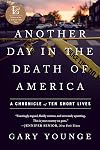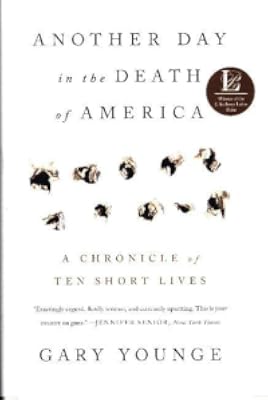
Another Day in the Death of America
by Gary Younge
On This Page
Description
"On an average day in America, seven young people aged nineteen or under will be shot dead. In Another Day in the Death of America, award-winning Guardian journalist Gary Younge tells the stories of the lives lost during the course of a single day in the United States. It could have been any day, but Younge has chosen November 23, 2013. From Jaiden Dixon (9), shot point-blank by his mother's ex-boyfriend on his doorstep in Ohio, to Pedro Dado Cortez (16), shot by an enemy gang on a street show more corner in California, the narrative crisscrosses the country over a period of twenty-four hours to reveal the powerful human stories behind the statistics. Far from a dry account of gun policy in the United States or a polemic about the dangers of gun violence, the book is a gripping chronicle of an ordinary but deadly day in American life, and a series of character portraits of young people taken from us far too soon and those they left behind. Whether it's a father's unspeakable grief over his son who was at the wrong place at the wrong time, a mentor who tries to channel his rage by organizing, or a friend and neighbor who finds strength in faith, the lives lost on that day and the lives left behind become, in Younge's hands, impossible to ignore, or to forget. What emerges in these pages is a searing portrait of youth, family, and the way that lives can be shattered in an instant on any day in America. At a time when it has become indisputable that Americans need to rethink their position on guns, this moving narrative work puts a human face--a child's face--on the "collateral damage" of gun deaths across the country. In his journalism, Younge is committed to challenging conventional wisdom and looking twice where others might look away. There are some things, he argues, that we have come to see as normal, even when they are unacceptable. And gun violence is one of them. A clear-eyed and iconoclastic approach to this contentious issue, this book helps answer the questions so many of us are grappling with, and makes it even harder to just look away"-- show lessTags
Recommendations



Member Reviews
Tragic as the Newtown Massacre is (20 children died that day, as well as some of their teachers), Gary Younge notes that as many children are killed by guns in America every few days, all year long, and their deaths are not thought of as remarkable because they are scattered here and there rather than in one condensed event. He decided to document the deaths of all children killed by guns on one particular day. He chose November 23, 2013, the Saturday before Thanksgiving. Arithmetically, an average of 9 children and teens are killed by guns everyday. Younge was able to discover 10 children who were killed by guns on November 23, 2013. Since there is no centralized reporting, this may or may not be the true number, but in any event the show more number of gun deaths for children was no less than 10 on that day. (He did not include gun suicides, often unreported, which it is believed average 2 a day for children and teens.)
Younge states that his aim was "to put a human face--a child's face--on the collateral damage of gun violence in the U.S." He includes a picture and a short biography of each child, and describes the events leading to their deaths and the aftermath of their deaths. The deaths on November 23, 2013 occurred in settings from suburban Grove City, Ohio, to urban Houston, Dallas, Newark and Chicago, to rural Goldsboro, N.C. The events ranged from 9 year old Jaiden shot in the head by his mother's ex-boyfriend, to friends playing with loaded guns that went off, to shootings of teen gang members, to children just in the wrong place at the wrong time, to just being poor and living in a bad neighborhood.
This book was the winner of the 2017 J. Anthony Lukas Prize. It's hard to imagine that anyone could read this book and not be changed. Unfortunately, Newtown didn't change any minds for the gun nuts, and I expect they would also fail to be swayed by this book. Unfortunately, it's clear that gun violence in America is an epidemic that's only getting worse.
Highly recommended.
4 stars show less
Younge states that his aim was "to put a human face--a child's face--on the collateral damage of gun violence in the U.S." He includes a picture and a short biography of each child, and describes the events leading to their deaths and the aftermath of their deaths. The deaths on November 23, 2013 occurred in settings from suburban Grove City, Ohio, to urban Houston, Dallas, Newark and Chicago, to rural Goldsboro, N.C. The events ranged from 9 year old Jaiden shot in the head by his mother's ex-boyfriend, to friends playing with loaded guns that went off, to shootings of teen gang members, to children just in the wrong place at the wrong time, to just being poor and living in a bad neighborhood.
This book was the winner of the 2017 J. Anthony Lukas Prize. It's hard to imagine that anyone could read this book and not be changed. Unfortunately, Newtown didn't change any minds for the gun nuts, and I expect they would also fail to be swayed by this book. Unfortunately, it's clear that gun violence in America is an epidemic that's only getting worse.
Highly recommended.
4 stars show less
I am finding it hard to gather adequate words to discuss, review, or frame this book. It was painful to read and on several occasions I had to dog ear my page and set it aside until I could compose myself and muster the mental armor to continue forth. It took me seven days to read this book which means from the moment I cracked open the spine until the moment I flipped the last page approximately 70 more children in this country were shot dead. That is not okay. Younge's work should become a part of the national conversation, as he tackled the subject with such dignity and tact while remaining frank and factual. To sum up, I will borrow some of the author's words because I am still finding it difficult to rally my own:
"[M]ore than its show more making me want to scream at anyone in particular, it has mostly made me want to just howl at the moon. A long, doleful, piercing cry for a wealthy country that could and should do better for its youth and children-- for my children-- but that appears to have settled, legislatively at least, on a pain threshold that is morally unacceptable." show less
"[M]ore than its show more making me want to scream at anyone in particular, it has mostly made me want to just howl at the moon. A long, doleful, piercing cry for a wealthy country that could and should do better for its youth and children-- for my children-- but that appears to have settled, legislatively at least, on a pain threshold that is morally unacceptable." show less
(57) This was a powerful exploration of the enormity and tragedy of gun violence in America focused though the lens of all the children killed by guns in on a certain random day in this country. Each short life extinguished by guns on November 23, 2013 is examined through police reports and interviews with friends and family, social media accounts. This British reporter living in the US with his family took a bit of an outsider's view at what goes on in our country and pretty much nailed it spot on. Black lives actually don't matter is the message in this book. It almost seems like they don't even matter to the people living them.
I think the author did a nice job presenting his argument against easy access to guns in this country. He show more did it however, in a realistic way. Guns aren't going away in this country it seems - so let's just point out the cost of that 'freedom,' shall we? He also presents an empathic picture of the impoverished communities where these gun deaths take place, without being an apologist for criminal behavior. It helps that he is non-white and an American - he can point out that it is black on black crime that is more of an issue than black youths being shot by police more effectively than a white American.
Some of the details of each child's life were tough to read - Younge nicely points out that there is a lot between an 'innocent babe' gunned down like at Sandy Hook and evil predators that had it coming to them. But the social media excerpts were still awful - I'll leave it at that. I refuse to accept that it is fine for the black community to refer to each other as 'nigga,' and then get your knickers in a twist if others do the same. Anyway, something about the the inclusion of so much petty and awful details ultimately accounted for the 1 star off - but I guess, reality is reality and he had to be true to his premise.
There is an undercurrent of fatalism in this book that is chilling - like he knows his audience are likely people like me. This sentence in the afterword hit home - "The more likely you are to be wealthy or white, the less likely you are to believe that these children could be your children. Statistically that is true, but the fact remains that they are somebody's children, and those parents grieve just like everyone else."
Depressing. This is so shameful. Really well-done, albeit leaves one feeling rather hopeless. show less
I think the author did a nice job presenting his argument against easy access to guns in this country. He show more did it however, in a realistic way. Guns aren't going away in this country it seems - so let's just point out the cost of that 'freedom,' shall we? He also presents an empathic picture of the impoverished communities where these gun deaths take place, without being an apologist for criminal behavior. It helps that he is non-white and an American - he can point out that it is black on black crime that is more of an issue than black youths being shot by police more effectively than a white American.
Some of the details of each child's life were tough to read - Younge nicely points out that there is a lot between an 'innocent babe' gunned down like at Sandy Hook and evil predators that had it coming to them. But the social media excerpts were still awful - I'll leave it at that. I refuse to accept that it is fine for the black community to refer to each other as 'nigga,' and then get your knickers in a twist if others do the same. Anyway, something about the the inclusion of so much petty and awful details ultimately accounted for the 1 star off - but I guess, reality is reality and he had to be true to his premise.
There is an undercurrent of fatalism in this book that is chilling - like he knows his audience are likely people like me. This sentence in the afterword hit home - "The more likely you are to be wealthy or white, the less likely you are to believe that these children could be your children. Statistically that is true, but the fact remains that they are somebody's children, and those parents grieve just like everyone else."
Depressing. This is so shameful. Really well-done, albeit leaves one feeling rather hopeless. show less
Reading ANOTHER DAY IN THE DEATH OF AMERICA makes one want to “howl with anger”—just as Gary Younge does—at the enormous waste, anguish and helplessness brought on by gun violence in America. The focus of Younge’s book is not on gun control, however. Instead he looks at its victims—an average of 7 per day. His belief is it may be easy to feel outrage and sympathy for the victims of mass shootings, especially when they are children as was the case at Sandy Hook. Yet much of the daily carnage goes unrecognized by most Americans. One grieving father referred to it as a “flash” in the consciousness of the country, gone in a moment. Younge shines a light on 10 of those gun deaths in his book by looking closely at what show more happened on one random Saturday in 2013 (Nov. 23).
Each chapter focuses on one shooting. The victims were between the ages of 9 and 19; seven were African-American, two Hispanic and one White; all were from poor or working class families; only one was a gang member; two were accidents; one was a domestic dispute; and at least one was a case of mistaken identity. Younge conducted interviews with the principals in each shooting managing to elicit considerable empathy for the grief they feel, but this is not the key strength of his book. That is its analytical approach. Everyone is looking for an easy answer, the most common one being more gun control. However, Younge views the problem in its cultural, political and economic contexts. America is a segregated and unequal society. Many of these children live in poverty and “brutalizing, unforgiving” environments that lack basic resources and opportunities. Younge rejects the idea that bad parenting is the main contributing factor, an idea that is promulgated by most conservative politicians and famously vocalized by Bill Cosby. Instead Younge points to environments that are lacking in the kinds of opportunities and resources that would offer meaningful lives for these children. Black parents know their children are at risk and attempt—often unsuccessfully—to create a “cocoon world” to keep them safe.
Younge claims that the easy availability of guns only serves to ignite this highly combustible tinder. He critiques the NRA for its corrupt approach to protecting the gun industry by creating a climate of fear couched in a specious interpretation of the 2nd amendment to the constitution. He also condemns the self-serving cowardice of our political leaders. But he avoids the polarization common in the gun control debate by providing a nuanced and empathic analysis of the contexts where these 10 young people lost their lives unnecessarily. show less
Each chapter focuses on one shooting. The victims were between the ages of 9 and 19; seven were African-American, two Hispanic and one White; all were from poor or working class families; only one was a gang member; two were accidents; one was a domestic dispute; and at least one was a case of mistaken identity. Younge conducted interviews with the principals in each shooting managing to elicit considerable empathy for the grief they feel, but this is not the key strength of his book. That is its analytical approach. Everyone is looking for an easy answer, the most common one being more gun control. However, Younge views the problem in its cultural, political and economic contexts. America is a segregated and unequal society. Many of these children live in poverty and “brutalizing, unforgiving” environments that lack basic resources and opportunities. Younge rejects the idea that bad parenting is the main contributing factor, an idea that is promulgated by most conservative politicians and famously vocalized by Bill Cosby. Instead Younge points to environments that are lacking in the kinds of opportunities and resources that would offer meaningful lives for these children. Black parents know their children are at risk and attempt—often unsuccessfully—to create a “cocoon world” to keep them safe.
Younge claims that the easy availability of guns only serves to ignite this highly combustible tinder. He critiques the NRA for its corrupt approach to protecting the gun industry by creating a climate of fear couched in a specious interpretation of the 2nd amendment to the constitution. He also condemns the self-serving cowardice of our political leaders. But he avoids the polarization common in the gun control debate by providing a nuanced and empathic analysis of the contexts where these 10 young people lost their lives unnecessarily. show less
Gary Younge takes a random 24 hour period, and recounts the stories of all of the children who died from guns on that day in the US. There are 10 of them, not counting suicides, which are counted separately. On this particular day (although of course not on all days) all are male. 7 are African American, 2 are Hispanic and 1 is White. Some die by accident, some by misadventure and some in circumstances that remain murky. In all cases, they are children far too young to die, and their deaths devastate their families. As Younge says, when your parents die you become an orphan. When your child dies before you do, that's something that's too awful to have a name.
Younge follows up all of these deaths; in some cases family and friends of the show more deceased and local reporters are glad of his interest and happy to talk about their children and their deaths. In others, people don't want to talk and Younge does his best with publicly available information; as he admits himself, some knowledge of Spanish would have been helpful for the Hispanic children. But Younge's purpose is not simply to bear witness - the book would be powerful enough even if it was. Instead he uses each of the 10 deaths to also discuss areas of public policy and public attitude to gun deaths. He is not afraid to look at controversial issues such as personal / community responsibility or bad parenting. His most telling point I think, when discussing the death of a child who may or may not have some gang associations, is that by discussing such associations you are partially legitimising the death (he kind of deserved it, or at least should have expected it) and normalising it.
Younge has a lot to say about guns, but does not believe that any sort of gun ownership reform is likely. More importantly, his interviewees don't either. Its just part of how life is, although for us not from the US, the proliferation of guns, the nonchalant way in which they are used, and the lack of interest in curbing them, remains a baffling mystery. As Younge, says, in many places young people have a better chance of survival if they are incarcerated
This is a profound, beautiful and deeply sad book. Highly recommended show less
Younge follows up all of these deaths; in some cases family and friends of the show more deceased and local reporters are glad of his interest and happy to talk about their children and their deaths. In others, people don't want to talk and Younge does his best with publicly available information; as he admits himself, some knowledge of Spanish would have been helpful for the Hispanic children. But Younge's purpose is not simply to bear witness - the book would be powerful enough even if it was. Instead he uses each of the 10 deaths to also discuss areas of public policy and public attitude to gun deaths. He is not afraid to look at controversial issues such as personal / community responsibility or bad parenting. His most telling point I think, when discussing the death of a child who may or may not have some gang associations, is that by discussing such associations you are partially legitimising the death (he kind of deserved it, or at least should have expected it) and normalising it.
Younge has a lot to say about guns, but does not believe that any sort of gun ownership reform is likely. More importantly, his interviewees don't either. Its just part of how life is, although for us not from the US, the proliferation of guns, the nonchalant way in which they are used, and the lack of interest in curbing them, remains a baffling mystery. As Younge, says, in many places young people have a better chance of survival if they are incarcerated
This is a profound, beautiful and deeply sad book. Highly recommended show less
I’m not even sure what to say about this book...wow! This is a thought-provoking book. The author chose a random day, then traced all the deaths of children who died that day as a result of a gun. As the author says in his introduction, this “is not a book about gun control; it is a book made possible by the lack of gun control.”
Though the subject was not easy to read about, it was hard for me to put this book down. One thing that made it interesting was that the perspective of the author was as a black man from England coming from gun-free culture to the gun culture of the U.S. You can feel his initial bewilderment at the ready availability of guns.
I also thought he made an interesting observation about our tendency to feel a show more shooting death is more tragic when a child is a well-behaved, good student who is always where he should be, thus implying that perhaps a student of lesser abilities who occasionally misbehaves and hangs out in the wrong place somehow ‘deserves’ his fate. As I mentioned, the book is thought-provoking.
This is a well-researched book. For each of the ten boys who died that day, the author not only relates the circumstances of the death, but attempts to go beyond the death, interviewing friends and family to flesh out his story. I really felt like I got to know most of these kids, and some of the stories have stayed with me, even almost a month after I’ve finished the book. The author hasn’t really offered me any solutions, but he did give me a lot to think about! show less
Though the subject was not easy to read about, it was hard for me to put this book down. One thing that made it interesting was that the perspective of the author was as a black man from England coming from gun-free culture to the gun culture of the U.S. You can feel his initial bewilderment at the ready availability of guns.
I also thought he made an interesting observation about our tendency to feel a show more shooting death is more tragic when a child is a well-behaved, good student who is always where he should be, thus implying that perhaps a student of lesser abilities who occasionally misbehaves and hangs out in the wrong place somehow ‘deserves’ his fate. As I mentioned, the book is thought-provoking.
This is a well-researched book. For each of the ten boys who died that day, the author not only relates the circumstances of the death, but attempts to go beyond the death, interviewing friends and family to flesh out his story. I really felt like I got to know most of these kids, and some of the stories have stayed with me, even almost a month after I’ve finished the book. The author hasn’t really offered me any solutions, but he did give me a lot to think about! show less
I'm not sure how much this book will be news to US readers but it was horrible, shocking reading to me (despite having read Ghettoside). Younge is a journalist and this is to me a journalist's approach to an issue. Taking one 24 hour period across the US he tries to find out about each shooting.
But not suicides.
Because those are counted separately.
Sometimes he's not able to speak to the family, or get the kind of access that leads to deep detail. Sometimes this seems to help - clearly not all families had the same reaction to the deaths, just illustrating his point about how it is widespread killing.
Younge says it's not a book about gun control, but I can't see an NRA member liking it, as they come in for sharp criticism, from show more opposition to smart guns to lobbying policies. He's critical of liberal reactions to Stony Hook too though: as some activists commented, presenting some victims as angels suggested somehow that others 'deserved' to be shot. And racism clearly plays a role: as one parent commented
‘I haven’t heard nothing from the police since two months after the funeral. Nobody contact me. Nobody said nothing. They just say it’s under investigation. We can’t get nobody to testify. They just think it’s another black kid. show less
But not suicides.
Because those are counted separately.
Sometimes he's not able to speak to the family, or get the kind of access that leads to deep detail. Sometimes this seems to help - clearly not all families had the same reaction to the deaths, just illustrating his point about how it is widespread killing.
Younge says it's not a book about gun control, but I can't see an NRA member liking it, as they come in for sharp criticism, from show more opposition to smart guns to lobbying policies. He's critical of liberal reactions to Stony Hook too though: as some activists commented, presenting some victims as angels suggested somehow that others 'deserved' to be shot. And racism clearly plays a role: as one parent commented
‘I haven’t heard nothing from the police since two months after the funeral. Nobody contact me. Nobody said nothing. They just say it’s under investigation. We can’t get nobody to testify. They just think it’s another black kid. show less
Members
- Recently Added By
Lists

Non-Fiction Worth Reading
1,015 works; 261 members

True Crime
156 works; 1 member

Books about Gun Violence
54 works; 1 member

Books Read in 2016
4,666 works; 199 members

Jhalak Prize listed books
5 works; 1 member

One Day
27 works; 2 members
Author Information

13+ Works 859 Members
Gary Younge is an award-winning author, journalist, and professor of sociology at the University of Manchester. A former editor-at-large for the Guardian, he is a Type Media fellow and an editorial board member of the Nation magazine. His books include the J. Anthony Lukas Prize-winning Another Day in the Death of America, Stranger in a Strange show more Land, The Speech, and No Place Like Home. He lives with his family in London. show less
Awards and Honors
Awards
Distinctions
The Guardian Book of the Day (2016-09-26)
Common Knowledge
Classifications
- Genres
- Nonfiction, Sociology, General Nonfiction
- DDC/MDS
- 303.60835 — Society, government, & culture Social sciences, sociology & anthropology Social processes Conflict and conflict resolution ; Violence
- LCC
- HN90 .V5 — Social sciences Social history and conditions. Social problems. Social reform Social history and conditions. Social problems. By region or country
- BISAC
Statistics
- Members
- 444
- Popularity
- 69,013
- Reviews
- 18
- Rating
- (4.16)
- Languages
- Dutch, English, Italian
- Media
- Paper, Audiobook, Ebook
- ISBNs
- 17
- ASINs
- 4