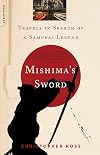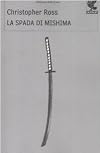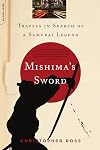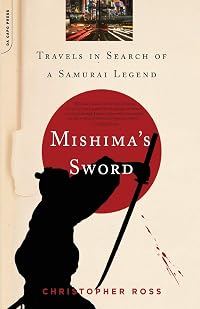
Mishima's Sword: Travels in Search of a Samurai Legend
by Christopher Ross
On This Page
Description
"On 25th November 1970, after a failed coup d'etat, Japanese writer Yukio Mishima plunged a knife into his tightly muscled belly, and was decapitated using his own antique sword. Mishima's spectacular suicide has been called many things: a hankering for heroism; a beautiful, perverse drama; a political protest against Japan's emasculated post-War constitution; the last act in a theatre of death; the epitaph of a mad genius. But which, if any, is correct? And what happened to Mishima's show more sword?" "Thirty years later Christopher Ross sets off for Tokyo on a journey into the heart of the Mishima Incident. While searching for Mishima's sword and re-assessing the life and anachronistic death of this uniquely complex man, he encounters those who knew Mishima, craftsmen and critics, soldiers and swordsmen, boyfriends and biographers - even the man who taught him hara-kiri. The cold trail he follows inspires digressions on, amongst other things, bushido and socks, mutineers and Noh ghosts, nosebleeds and metallurgy - and how to dress for suicide." "Like Tunnel Visions, Christopher Ross has written another unclassifiable blend of travel writing, autobiography and philosophical quest, an insider's mesmeric account of modern Japan and a death that still haunts the nation."--BOOK JACKET. show lessTags
Recommendations






Member Reviews
Famous Japanese writer Yukio Mishima was beheaded with his own old sword in 1970 after stabbing himself in the stomach. Many have questioned a great deal about this remarkable suicide in the decades that have passed. Christopher Ross wondered, What on earth happened to Mishima’s sword? And so Ross sets off for Tokyo on a journey into the heart of the Mishima legend — the very heart of Japan. It was a country Ross knew well after nearly five years of living there, but nothing could have prepared him for this. While searching for the fabled sword, Ross encounters the rather startling range of those who knew Mishima—a world, or perhaps more accurately, a demimonde, of craftsmen and critics, soldiers and swordsmen, boyfriends and show more biographers (even the man who taught Mishima hara-kiri). The trail Ross follows inspires a travelogue of the most eye-opening—and occasionally bizarre — sort, a window into the real Japan that is never seen by tourists and the occasion for digressions on, among other things, socks and the code of the samurai, nosebleeds and metallurgy, and even how to dress for suicide. A captivating read, Mishima's Sword is ideal for anyone with an interest in anything Japanese, including gangsters, Genji, manga, and Mishima. show less
The British writer Christopher Ross, who lived in Japan for five years, decides to return to Japan to search for the sword that Yukio Mishima used to commit seppuku (ritual suicide) in 1970, as a protest against the emasculation of the Japanese military and the removal of the Emperor as the head of the country after World War II. Ross expertly weaves his study of Mishima's life, influences, and major works with samurai culture, the art of sword making, and his own experiences as a practitioner of the martial arts and living as a Westerner in Japan.
Mishima's life is a series of contrasts. He is a married man with children, but also has numerous male lovers. He is fascinated with death and seppuku from an early age, yet loves kabuki, Noh show more theater, and other beautiful elements of Japanese culture. He wishes to be viewed as a serious artist and author, yet writes numerous articles for women's magazines and poses fully and partially nude in widely viewed photographs. He is a frail, sickly child who spends much of his childhood playing with female cousins and their dolls, who then transforms himself into a virile and skilled practitioner of kendo. He develops great strength in his upper body as a result of rigorous training, yet his lower body retains its tiny, almost feminine appearance.
This is a fascinating introduction to Mishima, especially for someone like myself who has not read any of his works. show less
Mishima's life is a series of contrasts. He is a married man with children, but also has numerous male lovers. He is fascinated with death and seppuku from an early age, yet loves kabuki, Noh show more theater, and other beautiful elements of Japanese culture. He wishes to be viewed as a serious artist and author, yet writes numerous articles for women's magazines and poses fully and partially nude in widely viewed photographs. He is a frail, sickly child who spends much of his childhood playing with female cousins and their dolls, who then transforms himself into a virile and skilled practitioner of kendo. He develops great strength in his upper body as a result of rigorous training, yet his lower body retains its tiny, almost feminine appearance.
This is a fascinating introduction to Mishima, especially for someone like myself who has not read any of his works. show less
If I remember correctly, I first came across Christopher Ross' Mishima's Sword: Travels in Search of a Samurai Legend while looking for biographies of Yukio Mishima. While Mishima certainly plays an important role in the book, Mishima's Sword isn't exactly a biography but still promised to be an intriguing read. First published as a hardcover in 2006 by Da Capo Press, and later as a paperback in 2007, Mishima's Sword was included in the Kiriyama Prize's 2007 list of notable books. Part biography, part memoir and part travelogue, with a healthy dose of philosophical musing, Mishima's Sword is an interesting book. Most likely it will appeal to those who, like me, are already interested in Mishima or in Japanese swords and swordsmanship. show more It also provides an outsider's look into Japanese culture in general, including glimpses into some of its shadier aspects. I was intrigued to see what Ross would have to say about it all.
On November 25, 1970, Yukio Mishima, one of Japan's most prominent authors, committed seppuku in the office of General Mashita at the headquarters o the Self Defense Force in Tokyo. A sword that he had received as a gift several years earlier was used as part of the ritual suicide and went missing after the incident. Decades after Mishima's death, Christopher Ross travels back to Japan, having previously lived there for a few years, in order to attempt to better understand Mishima and his actions and perhaps even track down the missing sword. Ross doesn't have much information to go on and discovers that many people are reluctant to even discuss Mishima. Once he realizes this he turns his attention to learning more about Mishima's sword, hoping to have more success with this aspect of his journey. His search leads him to some very interesting places indeed.
After a brief introductory section called "Death in Tokyo," Mishima's Sword is divided into two main parts: "Primary: Word(s)" and "Secondary: (S)word." Although Ross' search for Mishima and the sword are obviously closely linked, "Word(s)" focuses on his pursuit to understand Mishima while "(S)word" concentrates on his efforts to discover more about the sword. Also included in Mishima's Sword is a selected bibliography of works by and about Mishima as well as works on bushidō and Japanese swords. A glossary of Japanese terms used throughout the book is also provided. There's no index, which is somewhat unfortunate, but then again Mishima's Sword isn't exactly meant to be a reference work. It's more of a memoir, and an engaging one at that. But I still wished that I could navigate it a little more easily when I wanted to look up specific information.
I thoroughly enjoyed Mishima's Sword and found it to be both immensely engaging and readable. Ross' tale isn't told in a strictly linear fashion; the narrative consists of a collection of connected thoughts, musings, and diversions. While it is not always clear how a particular digression or tangent is relevant to the work as a whole, they are always interesting. Sometimes the only clue is to be found in the end notes which. I would recommend reading these anyway because they contain important and often fascinating information. While it is not necessary to enjoy Mishima's Sword, I was glad that I had previously read one of Mishima's biographies (Mishima: A Biography by John Nathan) as it helped to put the parts of the book dealing with Mishima into better context and perspective. At times, Mishima's Sword almost seems to read like a novel. While this makes the work approachable, to some extent it also occasionally feels as though the facts are being embellished. But overall I found Mishima's Sword to be very interesting and learned quite a bit while reading it.
Experiments in Manga show less
On November 25, 1970, Yukio Mishima, one of Japan's most prominent authors, committed seppuku in the office of General Mashita at the headquarters o the Self Defense Force in Tokyo. A sword that he had received as a gift several years earlier was used as part of the ritual suicide and went missing after the incident. Decades after Mishima's death, Christopher Ross travels back to Japan, having previously lived there for a few years, in order to attempt to better understand Mishima and his actions and perhaps even track down the missing sword. Ross doesn't have much information to go on and discovers that many people are reluctant to even discuss Mishima. Once he realizes this he turns his attention to learning more about Mishima's sword, hoping to have more success with this aspect of his journey. His search leads him to some very interesting places indeed.
After a brief introductory section called "Death in Tokyo," Mishima's Sword is divided into two main parts: "Primary: Word(s)" and "Secondary: (S)word." Although Ross' search for Mishima and the sword are obviously closely linked, "Word(s)" focuses on his pursuit to understand Mishima while "(S)word" concentrates on his efforts to discover more about the sword. Also included in Mishima's Sword is a selected bibliography of works by and about Mishima as well as works on bushidō and Japanese swords. A glossary of Japanese terms used throughout the book is also provided. There's no index, which is somewhat unfortunate, but then again Mishima's Sword isn't exactly meant to be a reference work. It's more of a memoir, and an engaging one at that. But I still wished that I could navigate it a little more easily when I wanted to look up specific information.
I thoroughly enjoyed Mishima's Sword and found it to be both immensely engaging and readable. Ross' tale isn't told in a strictly linear fashion; the narrative consists of a collection of connected thoughts, musings, and diversions. While it is not always clear how a particular digression or tangent is relevant to the work as a whole, they are always interesting. Sometimes the only clue is to be found in the end notes which. I would recommend reading these anyway because they contain important and often fascinating information. While it is not necessary to enjoy Mishima's Sword, I was glad that I had previously read one of Mishima's biographies (Mishima: A Biography by John Nathan) as it helped to put the parts of the book dealing with Mishima into better context and perspective. At times, Mishima's Sword almost seems to read like a novel. While this makes the work approachable, to some extent it also occasionally feels as though the facts are being embellished. But overall I found Mishima's Sword to be very interesting and learned quite a bit while reading it.
Experiments in Manga show less
Man, I've started and erased absolute essays on this book. I don't want to write a novel about a novel...but I probably could. One of poor colleagues saw me reading this book and asked, "What's it about?" Fifteen minutes later he was able to escape.
Short of it: Yukio Mishima was a world-renowned Japanese author and playwright. He wrote over forty novels, many essays and short stories, and about a dozen plays. He was obsessed with masculinity: not only his perfection of his physical body (he was an obsessive weight-lifter, tanner, and never looked less than pristine), but the qualities of the samurai: union of pen and sword. He felt that the masculine qualities of Japanese culture had been hidden after World War II, in lieu of more show more feminine traditions, such as flower arranging. He contends that this was done on purpose: to promote post-war Japan as a peaceful, feminized society. He forms a private army in order to reinstate the values of the samurai. In a dramatic plea to get his point across, he imprisoned a Japanese general and committed seppuku in the process of trying to overthrow the government.
See, writing that out seems so small and trite. This guy can WRITE. I know a wee bit about him from Paul Schrader's movie about his life, Mishima: A Life in Four Chapters. (One of my favorite movies. The score is by Philip Glass and the executive producers are George Lucas and Francis Ford Coppola.) But the author of this book (back to the review...) wanted to learn more about his life.
This book is about Christopher Ross's search for the sword that Yukio Mishima used to commit seppuku. This book is well-written and a fascinating read. It is the perfect mix of history, personal introspection, history of sword making in Japan, Ross's personal journey, and excerpts from Mishima's writings. There are some parts that I thought dragged (at one point, Ross goes back to England for a while and does things completely unrelated to Mishima...and I don't care!), but for the most part, it's a good read. I'd highly recommend this book to anyone who has read and enjoyed one of his novels (try the Sea of Fertility tetraology...The Temple of the Golden Pavilion is incredible). I will probably read another of his books, armed with this new knowledge of Mishima's life. I really dig books that teach me something.
I am now going to shut up, even though I really want to go on and on about him. Excellent book, fascinating person, hooray. Done! show less
Short of it: Yukio Mishima was a world-renowned Japanese author and playwright. He wrote over forty novels, many essays and short stories, and about a dozen plays. He was obsessed with masculinity: not only his perfection of his physical body (he was an obsessive weight-lifter, tanner, and never looked less than pristine), but the qualities of the samurai: union of pen and sword. He felt that the masculine qualities of Japanese culture had been hidden after World War II, in lieu of more show more feminine traditions, such as flower arranging. He contends that this was done on purpose: to promote post-war Japan as a peaceful, feminized society. He forms a private army in order to reinstate the values of the samurai. In a dramatic plea to get his point across, he imprisoned a Japanese general and committed seppuku in the process of trying to overthrow the government.
See, writing that out seems so small and trite. This guy can WRITE. I know a wee bit about him from Paul Schrader's movie about his life, Mishima: A Life in Four Chapters. (One of my favorite movies. The score is by Philip Glass and the executive producers are George Lucas and Francis Ford Coppola.) But the author of this book (back to the review...) wanted to learn more about his life.
This book is about Christopher Ross's search for the sword that Yukio Mishima used to commit seppuku. This book is well-written and a fascinating read. It is the perfect mix of history, personal introspection, history of sword making in Japan, Ross's personal journey, and excerpts from Mishima's writings. There are some parts that I thought dragged (at one point, Ross goes back to England for a while and does things completely unrelated to Mishima...and I don't care!), but for the most part, it's a good read. I'd highly recommend this book to anyone who has read and enjoyed one of his novels (try the Sea of Fertility tetraology...The Temple of the Golden Pavilion is incredible). I will probably read another of his books, armed with this new knowledge of Mishima's life. I really dig books that teach me something.
I am now going to shut up, even though I really want to go on and on about him. Excellent book, fascinating person, hooray. Done! show less
I enjoyed this - it's very much the kind of book that tickles my fancy. Not quite a memoir, nor a travel book, nor a biography - it's a kind of mixture of the lot. The author's search for the sword with which Mishima Yukio famously committed sappuku after a failed coup in 1970 leads him (literally) down alleyways and into cafes, encountering terribly polite yakuza gangsters, and ultimately realising that his quest was for something more than just a physical object.
What didn't quite hold up for me, unfortunately, were the points where it did sort of break into a memoir. I have no interest in the author's interest in martial arts. Nor do I really need pages of explanation as to how a sword is made. Maybe that's my bad, but I was drawn to show more the book because it was 'about' Mishima, and those were the parts which interested me more.
Nonetheless, it turns into an interesting and well-written meditation on his search, becoming more a philosophical musing as it meanders along. Having recently read Anna Sherman's 'The Bells of Old Tokyo: Meditations on Time and a City' I could not but compare the two, similar in approach as they are. This was published earlier, but I much preferred the Sherman book, so if this book on Mishima appeals to you I wholeheartedly recommend the other.
3.5 stars for an overall engaging read. show less
What didn't quite hold up for me, unfortunately, were the points where it did sort of break into a memoir. I have no interest in the author's interest in martial arts. Nor do I really need pages of explanation as to how a sword is made. Maybe that's my bad, but I was drawn to show more the book because it was 'about' Mishima, and those were the parts which interested me more.
Nonetheless, it turns into an interesting and well-written meditation on his search, becoming more a philosophical musing as it meanders along. Having recently read Anna Sherman's 'The Bells of Old Tokyo: Meditations on Time and a City' I could not but compare the two, similar in approach as they are. This was published earlier, but I much preferred the Sherman book, so if this book on Mishima appeals to you I wholeheartedly recommend the other.
3.5 stars for an overall engaging read. show less
Surpassingly rich and delicate. Rather than a book about a person or his writing, this is a book about Japanese character and it's expression in life and in death. An essential adjunct to any biography of Mishima, but it is also one of a handful of books that gives some real insight into Japanese culture and history. Like Tal Streeter's 'The Art of the Japanese Kite', or Sherrill's 'Dog Man' this book focuses on one very small aspect of Japan, but in doing so illuminates a whole culture. Highly recommended.
This book recounts in part the author's search for the sword that the Japanese novelist Yukio Mishima used to commit seppuku in 1970. However, the book is also an account of the authors' own interest in Japanese martial culture, an investigation of violence in the collective Japanese psyche, and a biography of Mishima himself. The main problem of the work is that it doesn't explore any one topic enough to be cohesive. What it does retain is an eerie sense of the unknowable, a quality that most all writing about Mishima, his death in particular, seems to possess. The multitude of topics explored, while perhaps being the main drawback of the book, is an effective enough garnish on the near mystical subjects of Mishima's death and the show more author's search for the sword. A similar but far shorter work on the subject of Mishima's seppuku is the paper "I Cut Off the Head of Yukio Mishima" by John-Ivan Palmer, which would be of interest to readers of this work and those with an interest Mishima and his grandiose death. show less
Members
- Recently Added By
Author Information

2 Works 307 Members
Common Knowledge
- People/Characters
- Yukio Mishima; Miyamoto Musashi
Classifications
- Genres
- Travel, Biography & Memoir, Literature Studies and Criticism
- DDC/MDS
- 895.635 — Literature & rhetoric Literatures of other languages Literatures of East and Southeast Asia Japanese Japanese fiction 1945–2000
- LCC
- PL833 .I7 .Z82 — Language and Literature Languages and literatures of Eastern Asia, Africa, Oceania Languages of Eastern Asia, Africa, Oceania Japanese language and literature Japanese literature Individual authors and works
- BISAC
Statistics
- Members
- 175
- Popularity
- 187,222
- Reviews
- 9
- Rating
- (3.43)
- Languages
- English, Italian
- Media
- Paper
- ISBNs
- 7
- ASINs
- 1