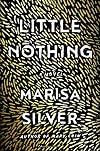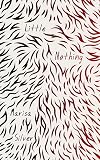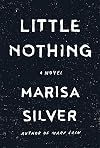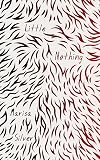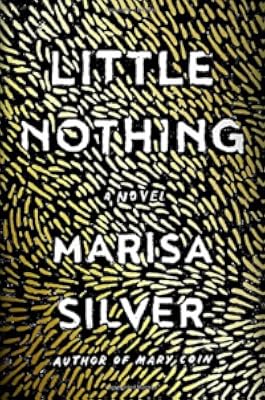
Little Nothing
by Marisa Silver
On This Page
Description
A stunning, provocative novel, Little Nothing is the story of Pavla, a child scorned for her physical deformity, hunted and tormented as a woman, whose passion and salvation lies in her otherworldly ability to transform herself and the world around her.Tags
Recommendations



Member Reviews
If you can embrace the weird, this is one lovely and amazing story.
(Full disclosure: I received a free electronic ARC for review through NetGalley. Trigger warning for violence, including child abuse and rape.)
Pavla revels in her name because she knows that if nothing is little, then it must be something indeed.
###
“You’re the one who said all time exists,” Danilo says. “The past exists. The future exists.”
It’s true. She did say this. And she does somehow believe that what has happened to her and what will happen to her exist simultaneously, that the story is already written but not yet told. She must be like someone in one of her mother’s stories who has existed for centuries of telling and will exist even after her show more mother is gone. How else to explain her life? As something random?
###
“I’m sorry it has taken so long for us to come,” he hears himself say.
###
Pavla Janáček is born at the turn of the century in a rural village located in a small, unnamed (but likely Slavic) country. She arrives in the twilight of her parents' lives: after much trying and four miscarriages, mother Agáta finally enlisted the help a "gypsy." She believes that Pavla's "condition" is a punishment from God for her blasphemy. Pavla is born a dwarf, with a head that's too large for her torso and arms and legs that are disproportionately short.
The chilly reception Pavla initially receives from Agáta gradually warms and deepens, as mother and daughter are forced into close proximity by the harsh winter weather. With spring comes love; Pavla is the child Agáta and Václav have always wanted. She ages, but grows precious little; she continues to sleep in her crib for the next fourteen years. She's a precocious child and a fast learner; she teaches herself to count using the slats on her crib and, when she turns seven, Václav takes her on as his assistant at his plumbing business. She starts school a year later, where her cunning eventually wins over her classmates.
And then Pavla hits puberty and her parents get the foolish notion to "fix" her: for what will happen to their lovely daughter (and Pavla is indeed a beauty, 'from the neck up') when they're gone? They begin dragging her from doctor to doctor, hoping for a miracle cure, until they wind up in the office of the biggest charlatan of them all: Dr. Ignác Smetanka, whose outlandish and cruel "treatments" leaved Pavla scarred, traumatized - and bearing the countenance of a wolf, seemingly overnight. But the transformation from dwarf to (average-sized) wolf-girl won't be the only metamorphosis Pavla experiences before her story's ended.
Pavla's strange journey intersects at multiple points and in unexpected ways with that of Dr. Smetanka's young assistant Danilo - the clever boy who built the rack that once again made Pavla an object of shame and terror.
Little Nothing is simply breathtaking; easily one of my favorite books of 2016, and there have been some pretty wonderful ones released into the wild this year. The early ratings were all over the place on Goodreads, such that I had no idea what to expect. Two things became obvious to me as I devoured Little Nothing: a) I should never, ever automatically discount a book due to low (less than 3.75 star) ratings, because then I might miss out on some real gems; and b) some books just aren't for everyone, and that's okay.
Some words that come to mind when I think of Little Nothing (and I've been thinking on it tons lately): Vulgar. Profane. Weird. Surreal. Beautiful. Shrewd. Penetrating. Fantastical. Lyrical. Nihilistic. Compassionate. Boundaries, The Blurring of. Human, Animal, Vegetable. Wolf girls and girl wolves. Freakery: Cultural Spectacles of the Extraordinary Body. (That last one's a book; look it up.)
There are so many layers to Pavla's story, each one a little more disorienting than the last; levels of weird, I like to think of them. The circumstances of Pavla's birth are a little out of the ordinary, yet still firmly grounded in reality. This begins to slip away with each transformation. Pavla the wolf-girl is surreal, yet perhaps still scientifically explicable. Pavla the wolf, however, is completely off the fucking rails. Everything that comes next? The stuff of fairy tales.
In fact, Little Nothing feels a lot like a fairy tale - or rather, a whole bunch of them, woven and glued and stitched together such that the tapestry becomes so much more than the sum of its parts. Each disparate setting - Pavla's village; the carnival she's traveling with; the countryside she navigates through lupine eyes; the battleground where soldiers fight for independence; a prison for women; a medieval asylum; the underground tunnels of a rapidly modernizing city - could easily sustain its own 350-odd-page book. That Silver is able to condense each tale into a smaller bit, and meld it with other shrunken-yet-still-grand-in-their-own-way bits, while honoring the import of each, is a testament to her skill as a storyteller. Each chapter in the characters' lives manages to satisfy, while still leaving you wanting for more.
It's hard to pick a favorite episode; each one turns a mirror back on society, in its own unique way. During her time touring the freak show circuit with Smetanka, she uses the audience's disquiet against them: by refusing to react to their taunts and aggression, she outs them as the monsters they are. Yet as much as I loved the carnival scenes (I have a thing for stories set in carnivals, okay), Pavla's transformation into a full-fledged wolf is exquisite (and reminiscent of Emma Geen's lovely and amazing The Many Selves of Katherine North). Does a mother grieve the loss of a child any less if he is a wolf? If she is?
Of course those scenes set in the asylum and prison are also trenchant AF, revealing the many atrocities that have and do take place within their walls. ("The hole" even goes by the same name, all these decades later.) It's interesting to note that the treatment that Danilo and Pavla were subjected to was much the same - even though one was a confessed murderer deemed too "crazy" to go to jail; the other, a suspected murder who was imprisoned for her "crimes." The distinction between institutionalization and imprisonment seems superficial at best.
Silver also does her characters proud, creating people who are flawed and complex and brave - even, on occasion, heroic. Pavla is astonishing, in all her forms - and the many she's been made to assume give her a rather unique perspective on love and loss, on the nature of life, and everything (or nothing) that comes with it. During the end of her time in prison, "the woman who rarely spoke and whose introversion made her seem practically invisible becomes an object of veneration" among inmates and jailers alike.
"Veneration" just about sums it up.
If you can get past the weirdness - or, better yet, embrace it - Little Nothing is a book that will capture your imagination, along with your breath and heart. This is one amazing story, befitting the "Little Nothing" for whom it's named.
http://www.easyvegan.info/2016/11/07/little-nothing-by-marisa-silver/ show less
(Full disclosure: I received a free electronic ARC for review through NetGalley. Trigger warning for violence, including child abuse and rape.)
Pavla revels in her name because she knows that if nothing is little, then it must be something indeed.
###
“You’re the one who said all time exists,” Danilo says. “The past exists. The future exists.”
It’s true. She did say this. And she does somehow believe that what has happened to her and what will happen to her exist simultaneously, that the story is already written but not yet told. She must be like someone in one of her mother’s stories who has existed for centuries of telling and will exist even after her show more mother is gone. How else to explain her life? As something random?
###
“I’m sorry it has taken so long for us to come,” he hears himself say.
###
Pavla Janáček is born at the turn of the century in a rural village located in a small, unnamed (but likely Slavic) country. She arrives in the twilight of her parents' lives: after much trying and four miscarriages, mother Agáta finally enlisted the help a "gypsy." She believes that Pavla's "condition" is a punishment from God for her blasphemy. Pavla is born a dwarf, with a head that's too large for her torso and arms and legs that are disproportionately short.
The chilly reception Pavla initially receives from Agáta gradually warms and deepens, as mother and daughter are forced into close proximity by the harsh winter weather. With spring comes love; Pavla is the child Agáta and Václav have always wanted. She ages, but grows precious little; she continues to sleep in her crib for the next fourteen years. She's a precocious child and a fast learner; she teaches herself to count using the slats on her crib and, when she turns seven, Václav takes her on as his assistant at his plumbing business. She starts school a year later, where her cunning eventually wins over her classmates.
And then Pavla hits puberty and her parents get the foolish notion to "fix" her: for what will happen to their lovely daughter (and Pavla is indeed a beauty, 'from the neck up') when they're gone? They begin dragging her from doctor to doctor, hoping for a miracle cure, until they wind up in the office of the biggest charlatan of them all: Dr. Ignác Smetanka, whose outlandish and cruel "treatments" leaved Pavla scarred, traumatized - and bearing the countenance of a wolf, seemingly overnight. But the transformation from dwarf to (average-sized) wolf-girl won't be the only metamorphosis Pavla experiences before her story's ended.
Pavla's strange journey intersects at multiple points and in unexpected ways with that of Dr. Smetanka's young assistant Danilo - the clever boy who built the rack that once again made Pavla an object of shame and terror.
Little Nothing is simply breathtaking; easily one of my favorite books of 2016, and there have been some pretty wonderful ones released into the wild this year. The early ratings were all over the place on Goodreads, such that I had no idea what to expect. Two things became obvious to me as I devoured Little Nothing: a) I should never, ever automatically discount a book due to low (less than 3.75 star) ratings, because then I might miss out on some real gems; and b) some books just aren't for everyone, and that's okay.
Some words that come to mind when I think of Little Nothing (and I've been thinking on it tons lately): Vulgar. Profane. Weird. Surreal. Beautiful. Shrewd. Penetrating. Fantastical. Lyrical. Nihilistic. Compassionate. Boundaries, The Blurring of. Human, Animal, Vegetable. Wolf girls and girl wolves. Freakery: Cultural Spectacles of the Extraordinary Body. (That last one's a book; look it up.)
There are so many layers to Pavla's story, each one a little more disorienting than the last; levels of weird, I like to think of them. The circumstances of Pavla's birth are a little out of the ordinary, yet still firmly grounded in reality. This begins to slip away with each transformation. Pavla the wolf-girl is surreal, yet perhaps still scientifically explicable. Pavla the wolf, however, is completely off the fucking rails. Everything that comes next? The stuff of fairy tales.
In fact, Little Nothing feels a lot like a fairy tale - or rather, a whole bunch of them, woven and glued and stitched together such that the tapestry becomes so much more than the sum of its parts. Each disparate setting - Pavla's village; the carnival she's traveling with; the countryside she navigates through lupine eyes; the battleground where soldiers fight for independence; a prison for women; a medieval asylum; the underground tunnels of a rapidly modernizing city - could easily sustain its own 350-odd-page book. That Silver is able to condense each tale into a smaller bit, and meld it with other shrunken-yet-still-grand-in-their-own-way bits, while honoring the import of each, is a testament to her skill as a storyteller. Each chapter in the characters' lives manages to satisfy, while still leaving you wanting for more.
It's hard to pick a favorite episode; each one turns a mirror back on society, in its own unique way. During her time touring the freak show circuit with Smetanka, she uses the audience's disquiet against them: by refusing to react to their taunts and aggression, she outs them as the monsters they are. Yet as much as I loved the carnival scenes (I have a thing for stories set in carnivals, okay), Pavla's transformation into a full-fledged wolf is exquisite (and reminiscent of Emma Geen's lovely and amazing The Many Selves of Katherine North). Does a mother grieve the loss of a child any less if he is a wolf? If she is?
Of course those scenes set in the asylum and prison are also trenchant AF, revealing the many atrocities that have and do take place within their walls. ("The hole" even goes by the same name, all these decades later.) It's interesting to note that the treatment that Danilo and Pavla were subjected to was much the same - even though one was a confessed murderer deemed too "crazy" to go to jail; the other, a suspected murder who was imprisoned for her "crimes." The distinction between institutionalization and imprisonment seems superficial at best.
Silver also does her characters proud, creating people who are flawed and complex and brave - even, on occasion, heroic. Pavla is astonishing, in all her forms - and the many she's been made to assume give her a rather unique perspective on love and loss, on the nature of life, and everything (or nothing) that comes with it. During the end of her time in prison, "the woman who rarely spoke and whose introversion made her seem practically invisible becomes an object of veneration" among inmates and jailers alike.
"Veneration" just about sums it up.
If you can get past the weirdness - or, better yet, embrace it - Little Nothing is a book that will capture your imagination, along with your breath and heart. This is one amazing story, befitting the "Little Nothing" for whom it's named.
http://www.easyvegan.info/2016/11/07/little-nothing-by-marisa-silver/ show less
‘’Love!’’, the woman exclaims. ‘’All anyone wants to know about is love! My God! Is there nothing more important on earth than that? Why don’t you ask the necessary questions: Will I have food in my belly? Will I have all my teeth? Will I be able to urinate without pain? But no, it’s always love! It’s pathetic.’’
In a country that resembles Poland during the beginning of the last century, an elderly woman gives birth to a girl. What should have been a blessing turns into an ordeal. Isolated peasants, the parents notice that the child is unusual. Whispers about changelings haunt the mother’s mind before she comes to accept that her Pavla is unique. More unique than she could ever imagine. Soon a story of show more transformation, desperate love and persecution begins, brilliantly written by Marisa Silver.
''Why is she staring at them? What horror does she see?''
This novel is full of horrors. Inspired by the wealth of Slavic myths related to wolves, Silver presents the complex theme of identity and transformation through the adventures of Pavla and Danilo. Using a wonderful combination of Folklore, seasoned with a sense of humour that varies from bittersweet to crude, and literary language that is raw and poetic, she chronicles the odyssey of being the Other. From the circus of extraordinary beings to the behaviour of the community of wolves, the terrifying asylums, the unspeakable horrors of war and the holiest obligation of protecting a child.
Each chapter, each page hides a surprise and there is no way the reader will be able to predict the story. Through misery, sadness, and isolation, a small glimpse of hope is born and change dictates our choices. Sometimes, though, Fate decides for us and all we can do is to adapt to new situations that may seem incomprehensible. The only problem I faced is the crude sexual remarks that were often and unnecessary, in my opinion. The story is so beautiful and constant emphasis on the brutal aspect of sex was tiresome.
The characters of Pavla and Danilo are excellent, full of surprises, their journey from innocence to the ugly face of life and whatever hope they still have left is beautifully communicated. Ivan is yet another memorable character, very realistic and his story was possibly the most moving sequence in the novel.
Little Nothing is anything but ''little''. It is one more literary gem...
''All she can do is stare out into the night sky. Once, she would have said that night was simply black. But now she knew differently about colour and pain and delusion. Russet red, indigo blue, brown, other. She chants this litany to herself over and over, building up a wall of words that protects her from the sound of her mother's voice, the feel of the chill on the tips of her ears and nose, the smell of chimney smoke carried on the wind. She needs to block out any intrusion that threatens to remind her of her being.''
My reviews can also be found on https://theopinionatedreaderblog.wordpress.com/ show less
In a country that resembles Poland during the beginning of the last century, an elderly woman gives birth to a girl. What should have been a blessing turns into an ordeal. Isolated peasants, the parents notice that the child is unusual. Whispers about changelings haunt the mother’s mind before she comes to accept that her Pavla is unique. More unique than she could ever imagine. Soon a story of show more transformation, desperate love and persecution begins, brilliantly written by Marisa Silver.
''Why is she staring at them? What horror does she see?''
This novel is full of horrors. Inspired by the wealth of Slavic myths related to wolves, Silver presents the complex theme of identity and transformation through the adventures of Pavla and Danilo. Using a wonderful combination of Folklore, seasoned with a sense of humour that varies from bittersweet to crude, and literary language that is raw and poetic, she chronicles the odyssey of being the Other. From the circus of extraordinary beings to the behaviour of the community of wolves, the terrifying asylums, the unspeakable horrors of war and the holiest obligation of protecting a child.
Each chapter, each page hides a surprise and there is no way the reader will be able to predict the story. Through misery, sadness, and isolation, a small glimpse of hope is born and change dictates our choices. Sometimes, though, Fate decides for us and all we can do is to adapt to new situations that may seem incomprehensible. The only problem I faced is the crude sexual remarks that were often and unnecessary, in my opinion. The story is so beautiful and constant emphasis on the brutal aspect of sex was tiresome.
The characters of Pavla and Danilo are excellent, full of surprises, their journey from innocence to the ugly face of life and whatever hope they still have left is beautifully communicated. Ivan is yet another memorable character, very realistic and his story was possibly the most moving sequence in the novel.
Little Nothing is anything but ''little''. It is one more literary gem...
''All she can do is stare out into the night sky. Once, she would have said that night was simply black. But now she knew differently about colour and pain and delusion. Russet red, indigo blue, brown, other. She chants this litany to herself over and over, building up a wall of words that protects her from the sound of her mother's voice, the feel of the chill on the tips of her ears and nose, the smell of chimney smoke carried on the wind. She needs to block out any intrusion that threatens to remind her of her being.''
My reviews can also be found on https://theopinionatedreaderblog.wordpress.com/ show less
Marisa Silver weaves together a fairy tale that is as beautiful as it is haunting. The writing strikes me as a wonderful study of contrasts: grotesque imagery and disturbing themes juxtaposed with the lovely, dreamlike quality of the story and plot.
"Pavla makes her sound again and watches as her father's astonishment turns to pleasure, his smile unmasking a mouthful of brown and rotted teeth that emerge from his swollen gums at odd angles like the worn picket fence that surrounds Agata's garden and fails to keep out the scavenger deer. Pavla will do anything to keep seeing these teeth and so she laughs and waves her arms and feels, for the first time in her life, but not the last, the exquisite pain of love."
"Pavla makes her sound again and watches as her father's astonishment turns to pleasure, his smile unmasking a mouthful of brown and rotted teeth that emerge from his swollen gums at odd angles like the worn picket fence that surrounds Agata's garden and fails to keep out the scavenger deer. Pavla will do anything to keep seeing these teeth and so she laughs and waves her arms and feels, for the first time in her life, but not the last, the exquisite pain of love."
This a book for the intrepid reader who likes to grapple with ideas and meaning beyond plot. New York Times Book Review calls this “beguiling novel …. a powerful exploration of the relationship between our changeable bodies and our just as malleable identities….” The writing is beautiful and I love a narrator who lets the reader in on the joke –the story is narrated with an arch tone and with enough detachment to draw your own conclusions and sympathies. The story is fairy-tale-ish and takes place in an unnamed (universal) tiny country that seems vaguely Eastern-European/pre-Soviet bloc, where hunger and war are imminent and superstition and backwardness prevail. It centers on Pavla, whose name means “little” because she show more was born a dwarf to parents who long-awaited a living child. Agata and Vaclav are dismayed at first, but soon discover her value and her beauty, as does the rest of the village. Vaclav is a visionary and plumber, bringing the miracles of faucets and toilets to the hamlet, and Pavla is small enough to fit into the cramped places new pipes must go, becoming indispensable. The school girls call her “little nothing” and “Pavla revels in her name because she knows that if nothing is little, then it must be something indeed.” The book takes off from here, into Pavla’s adolescence where she encounters Danilo, an apprentice to a quack doctor her parents consult and the two fall in innocent love, but are thwarted by time and destiny and a host of other esoteric obstacles that require a reading leap of faith. But with the beautiful writing, themes and characters circle back around to a satisfying, if unconventional conclusion. show less
Pavla's birth is difficult in many ways. Born to elderly parents whose desperation for a child has led them to consult a local witch she is born a dwarf and faces rejection from her disappointed and guilt-ridden mother. Over time the infant manages to overcome her mother's reservations and become her parents' darling but even as she grows beautiful and clever (if not tall) they worry for her future and turn to the disreputable Dr Smetanka and his assistant Danilo in the hope of a cure. As one might expect, things do not go to plan. So begins Pavla's tale of many transformations as she is buried, stretched and anointed in the quest for height and passes through forests, freakshows, prisons and several physical forms. Her story is show more paralleled by that of Danilo who is haunted by his role in Pavla's life and passes from doctor's assistant, carnival performer, madman and engineer as he seeks to make amends.
Silver has created a pitch-perfect modern fairy-tale with shades of the Brothers Grimm, Hans Christian Anderson, Angela Carter and Catherynne M. Valente. She uses the familiar tropes of transformation and redemption with great skill and such unwavering confidence that the reader is easily swept up in the fairy-tale logic of their childhood with no inclination to break the spell with unwarranted disbelief. But despite the feeling of familiarity she manages to surprise at every turn, the sudden shifts and shocks always supported by her evocative prose.
The tales of Pavla and Danilo beautifully compliment each other, both centring on the exploration of the self whether this is through physical change, from childhood to adulthood, from dwarf to wolf-girl or a change in situation and role. It is also a meditation on the way we use stories (and stories use us) to shape our identities and speaks for the transformative power of love and the consequences that our desires for our loved ones can have, for good and for ill. "Love is not always kind," a young Pavla realises, "and it is never simple." show less
Silver has created a pitch-perfect modern fairy-tale with shades of the Brothers Grimm, Hans Christian Anderson, Angela Carter and Catherynne M. Valente. She uses the familiar tropes of transformation and redemption with great skill and such unwavering confidence that the reader is easily swept up in the fairy-tale logic of their childhood with no inclination to break the spell with unwarranted disbelief. But despite the feeling of familiarity she manages to surprise at every turn, the sudden shifts and shocks always supported by her evocative prose.
The tales of Pavla and Danilo beautifully compliment each other, both centring on the exploration of the self whether this is through physical change, from childhood to adulthood, from dwarf to wolf-girl or a change in situation and role. It is also a meditation on the way we use stories (and stories use us) to shape our identities and speaks for the transformative power of love and the consequences that our desires for our loved ones can have, for good and for ill. "Love is not always kind," a young Pavla realises, "and it is never simple." show less
What a delightful story this book turned out to be! I am really not sure what made me request this book when I saw it offered on First to Read. The cover is okay but nothing amazing. I have never read any other books written by Marisa Silver. Something made me request this one and I am so glad that I did. I was sucked into the story and ended up reading almost all of it in a single day. When I wasn't reading this book, I was thinking about it. This story is a definite win for me.
I will say that this is a strange book. I like strange stories so it worked out well for me but I am not sure that everyone will enjoy all the aspects of this story as much as I did. This book is almost like a fairy tale for adults with a bit of magic sprinkled show more throughout. I was enchanted by all of the magical realism that made up this story.
I started reading this book just before going to bed which ended up being a huge mistake because I didn't want to put it down once I started. The way that this story begins was hard to get out of my mind. I was immediately in love with the style of writing found throughout the story. As I continued to read, I started to fall in love with the characters and that love grew throughout the story.
I would highly recommend this book to others. This is a story where you can expect the unexpected and suspend your knowledge of what is real for a while and just enjoy the journey. This is the first book by Marisa Silver that I have read but I will be looking for more of her work in the future.
I received an advance reader edition of this book from Blue Rider Press via First to Read for the purpose of providing an honest review. show less
I will say that this is a strange book. I like strange stories so it worked out well for me but I am not sure that everyone will enjoy all the aspects of this story as much as I did. This book is almost like a fairy tale for adults with a bit of magic sprinkled show more throughout. I was enchanted by all of the magical realism that made up this story.
I started reading this book just before going to bed which ended up being a huge mistake because I didn't want to put it down once I started. The way that this story begins was hard to get out of my mind. I was immediately in love with the style of writing found throughout the story. As I continued to read, I started to fall in love with the characters and that love grew throughout the story.
I would highly recommend this book to others. This is a story where you can expect the unexpected and suspend your knowledge of what is real for a while and just enjoy the journey. This is the first book by Marisa Silver that I have read but I will be looking for more of her work in the future.
I received an advance reader edition of this book from Blue Rider Press via First to Read for the purpose of providing an honest review. show less
I really enjoyed this book. That being said, I felt like I lost sight of Pavla as she grew and changed both literally and figuratively to the point that at the end the book doesn't really seem to be about her anymore. However, Danilo's story advances in new and interesting ways and I can imagine a brighter future for him after the book's end. Though I can't help but wish the ending offered a stronger, more substantial closure for Pavla.
Members
- Recently Added By
Lists

Books Read in 2017
4,249 works; 130 members

Troublesome bodies
110 works; 7 members
Author Information

12+ Works 1,166 Members
Marisa Silver made her fictional debut in "The New Yorker". She has previously worked as a feature film director & lives in Los Angeles. (Bowker Author Biography)
Some Editions
Awards and Honors
Awards
Classifications
Statistics
- Members
- 186
- Popularity
- 175,538
- Reviews
- 11
- Rating
- (3.65)
- Languages
- English
- Media
- Paper, Audiobook, Ebook
- ISBNs
- 14
- ASINs
- 2