Briar Rose
by Robert Coover
On This Page
Description
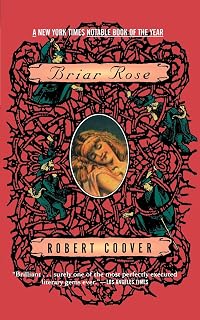
Coover puts his unique spin on one of the oldest and best-known of all fairy tales, "Sleeping Beauty", telling the story of a prince trapped in the briars; a sleeping beauty who cannot awaken, dreaming of a succession of kissing princes; and the old spell-casting fairy who inhabits the princess's dreams, regaling her with legends of other sleeping beauties and trying to imagine the nature of human desire.Tags
Recommendations















Member Reviews
"What is happily ever after, after all, but a fall into the ordinary, into human weakness, gathering despair, a fall into death?"
Adult. Repulsive. Corrupt. All accurate descriptions of Coover's Briar Rose, a post-modern retelling of "Sleeping Beauty." Not the Disney version with lovely Aurora and whimsical fairy godmothers and an honorable Prince Charming. Nope, this story is born of its originals: dark, shocking, and overtly rapey. However, intertwined with these threads of depravity, Coover spins a fairy tale about the insidious nature of desire and the folly of romance.
3.5 stars
"And even if there is a princess, is she truly the beautiful object of pure love she is alleged to be, or is she, the wicked fairy's wicked creature, more show more captor than captive, more briar than blossom, such that waking her might have proven a worse fate than the one that is seemingly his, if worse than this can be imagined?" show less
Adult. Repulsive. Corrupt. All accurate descriptions of Coover's Briar Rose, a post-modern retelling of "Sleeping Beauty." Not the Disney version with lovely Aurora and whimsical fairy godmothers and an honorable Prince Charming. Nope, this story is born of its originals: dark, shocking, and overtly rapey. However, intertwined with these threads of depravity, Coover spins a fairy tale about the insidious nature of desire and the folly of romance.
3.5 stars
"And even if there is a princess, is she truly the beautiful object of pure love she is alleged to be, or is she, the wicked fairy's wicked creature, more show more captor than captive, more briar than blossom, such that waking her might have proven a worse fate than the one that is seemingly his, if worse than this can be imagined?" show less
This is not your child's "Sleeping Beauty." Coover weaves a surreal tale about the fabled Briar Rose, a.k.a. Beauty, to determine the nature of dreams and desire. It is difficult to determine what is real and what is a dream, but what is apparant is that Rose lives in her head, one dream after another and subconciously visits the fairy who enchanted her for stories to explain her plight. Between Rose, the fairy, and the prince trying to make his way through the briars to her, their thoughts reach out to each other, adding to the dreamlike narrative, the feeling of one story unfolding into another, and a sense of getting close, but being unable, to finally reach reality. Ultimately, the question is whether Rose really wants to wake up; show more if "happily ever after" can exist, or if it's just a silly catch phrase.
The novel is very much in tune to the original folk tale, with details such as rape, childbirth, adultery, and misery, which were eliminated from the Disney version. The awful attacks on Rose blur the line between abuse on women and criticism of folk tales' treatment of women. It is only the dreamlike narrative that preserves the integrity of the story in light of the constant abuse, the feeling that hope may spring around the corner and the prince will come and kick-start "happily ever after," despite the rather bleak denouement. show less
The novel is very much in tune to the original folk tale, with details such as rape, childbirth, adultery, and misery, which were eliminated from the Disney version. The awful attacks on Rose blur the line between abuse on women and criticism of folk tales' treatment of women. It is only the dreamlike narrative that preserves the integrity of the story in light of the constant abuse, the feeling that hope may spring around the corner and the prince will come and kick-start "happily ever after," despite the rather bleak denouement. show less
This is my second experience with a post modern fairy tale, and I'm still not a fan of post-modernism. The tale of Sleeping Beauty is imagined and re-imagined with Rose trapped in a nightmare that repeats itself over and over again. At first it was interesting to examine the philosophy behind the tale, but then it just got annoying. I don't want the story left unfinished, and I don't want to be trapped in a nightmare.
Het begint met een prins die zich door de doornstruiken een weg baant - dat gaat vlotter dan hij had verwacht: de takken openen zich als dijen - wat te doen met de zoveelste 'bedridden princess'? Nee, hem gaat het om het mysterie op zich en om, als prins, enige naam te maken natuurlijk.
Meteen is duidelijk: dit is niet een sprookje als een ander.
Ondertussen ligt in het kasteel de mooie prinses te wachten op de verlossende kus. Als een speelbal niet alleen van de vloek die haar tot een honderdjarige slaap dwong, maar ook van haar dromen die bij gebrek aan een werkelijk geleefd leven als surrogaatherinneringen dienen en van de troost die zij zoekt - weg van die verschrikkelijke dromen waarin stinkende en ijdele of verdwaalde (I think this show more is the wrong castle) en bovenal getrouwde prinsen, of een roversbende, of een aap, of haar bloedeigen vader, daarbij al dan niet aangespoord door het jubelende en applaudiserende hof, zich aan haar lichaam vergapen, laven, te goed doen of het daarentegen als een bijkomstigheid onaangeroerd laten - bij de oude fairy of toverknol, die om het meisje bezig te houden tijdens haar beproeving, om haar te troosten, maar ook te plagen, zelfs kwaad te doen, haar sprookjes vertelt over andere prinsessen, andere prinsen (haven't I heard this story before?) in ontelbare variaties en tegelijkertijd ook steeds hetzelfde verhaaltje. Maar nooit de versie die het kind horen wil (that's not how a story is supposed to go!)
Niettemin een sprookje, vol humor, vol wreedheid, vol sadisme: over ijdelheid, over begeerte, over schoonheid ... als een vloek die je beter onaangeroerd laat. Tenzij je nog gelooft in 'happily ever after' ...
http://occamsrazorlibrary.blogspot.com/2009/07/briar-rose.html show less
Meteen is duidelijk: dit is niet een sprookje als een ander.
Ondertussen ligt in het kasteel de mooie prinses te wachten op de verlossende kus. Als een speelbal niet alleen van de vloek die haar tot een honderdjarige slaap dwong, maar ook van haar dromen die bij gebrek aan een werkelijk geleefd leven als surrogaatherinneringen dienen en van de troost die zij zoekt - weg van die verschrikkelijke dromen waarin stinkende en ijdele of verdwaalde (I think this show more is the wrong castle) en bovenal getrouwde prinsen, of een roversbende, of een aap, of haar bloedeigen vader, daarbij al dan niet aangespoord door het jubelende en applaudiserende hof, zich aan haar lichaam vergapen, laven, te goed doen of het daarentegen als een bijkomstigheid onaangeroerd laten - bij de oude fairy of toverknol, die om het meisje bezig te houden tijdens haar beproeving, om haar te troosten, maar ook te plagen, zelfs kwaad te doen, haar sprookjes vertelt over andere prinsessen, andere prinsen (haven't I heard this story before?) in ontelbare variaties en tegelijkertijd ook steeds hetzelfde verhaaltje. Maar nooit de versie die het kind horen wil (that's not how a story is supposed to go!)
Niettemin een sprookje, vol humor, vol wreedheid, vol sadisme: over ijdelheid, over begeerte, over schoonheid ... als een vloek die je beter onaangeroerd laat. Tenzij je nog gelooft in 'happily ever after' ...
http://occamsrazorlibrary.blogspot.com/2009/07/briar-rose.html show less
Aug 8, 2009Dutch
Ratings
Members
- Recently Added By
Published Reviews
ThingScore 75
Wie bei Coover nicht anders zu erwarten, kommen vor allem die sexuellen Konnotationen, die schon das Märchen in sich birgt, zum Tragen, gleichzeitig aber auch die realitätschaffende Wirkung von Mythen und Märchen an sich. Wer vor dem großen Wälzer "Johns Frau" zurückschreckt, der bekommt hier sozusagen Coover-light, zum Kennenlernen und Geschmack daran finden.
added by Indy133
Lists

Princess Tales
130 works; 4 members

Favorite Fairy Tales
269 works; 103 members
Author Information

72+ Works 5,766 Members
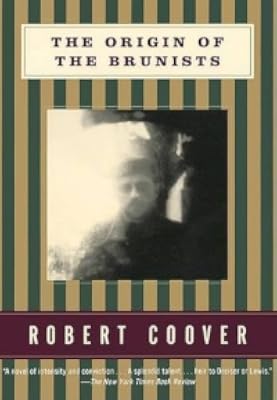
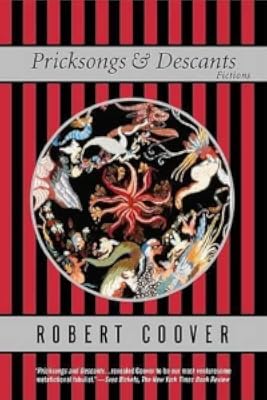
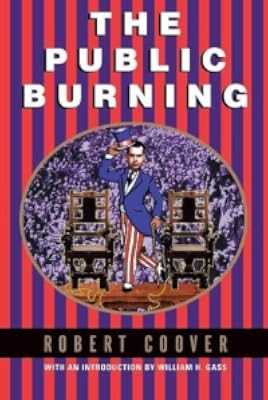
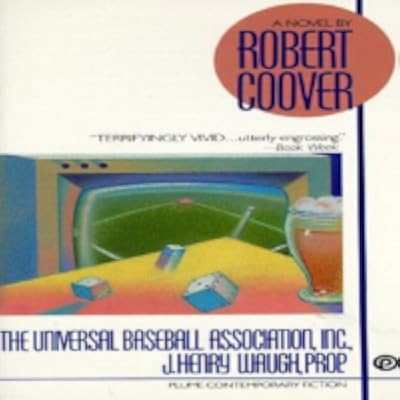
Robert Coover is a midwesterner who has earned a reputation as one of the most innovative of contemporary writers of fiction. Coover likes to experiment with an abundance of differing styles. The Origin of the Brunists (1966), his first novel, is a religious parable heavily loaded with symbolism and mythical parallels. It deals with the rise show more following an Appalachian coal-mine disaster of a sect of worshipers made up of fundamentalists and theosophists whose leader, Giovanni Bruno, is less a preacher than a silent enigma. The principal analogue is apparently meant to be the founding of the Christian religion, but Coover's extensive irony requires that he reverse many of the traditional features of the Christian legend. The Universal Baseball Association (1968), Coover's most accessible novel to date, is also dominated by religious symbolism. Over the years, J. Henry Waugh, a middle-aged bachelor and accountant, has developed an elaborately structured game, which he plays with dice. His game is based on the mathematical probabilities of baseball. Every evening Henry plays his game and maintains his extensive record books. J. Henry Waugh is a surrogate for God, and the participants in his imaginary baseball league seem almost to come to life, raising as they do age-old questions about fate and free will, success and failure, games and religions. Coover's Pricksongs and Descants (1969) is a collection of 20 short pieces and a theoretical "Prologo" in which the author states his belief that contemporary fiction should be based on familiar historical or mythical forms. Most of the stories in this volume, which was well received by critics, are based on biblical episodes or classical fairy tales retold in startling new ways. The Public Burning (1977) is based on the controversial trial of the Rosenbergs. With the exception of a novel, A Night at the Movies (1992), Coover's publications in recent years have consisted mainly of shorter works, written at various stages of his career, published in limited editions to appeal to collectors. Coover is one of the founders of the Electronic Literature Organization. In 1987 he was chosen as the winner of the Rea Award for the Short Story. Coover is indeed one of the foremost short story writers of the postmodern period, as exemplified by the "Seven Exemplary Fictions" contained in his 1969 book Pricksongs and Descants. (Bowker Author Biography) show less
Some Editions
Work Relationships
Is contained in
Common Knowledge
- Canonical title
- Briar Rose
- Original title
- Briar Rose
- Original publication date
- 1996
- Dedication
- For Pili & all her magic tricks
- First words
- He is surprised to see how easy it is.
Classifications
Statistics
- Members
- 227
- Popularity
- 143,841
- Reviews
- 4
- Rating
- (3.22)
- Languages
- English, German
- Media
- Paper
- ISBNs
- 3
- ASINs
- 2