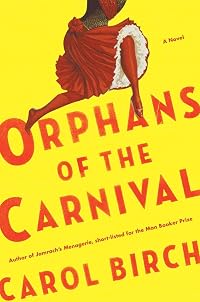
Orphans of the Carnival
by Carol Birch
On This Page
Description
London had the best freaks, always had. The Egyptian Hall, the Promenade of Wonders, the Siamese twins, pinheads, midgets, cannibals, giants, living skeletons, the fat, the hairy, the legless, the armless, the noseless, London had seen it all. In the Hall of Ugliness the competition was stiff. But noone had ever seen anything quite like Julia . . . Pronounced by the most eminent physician of the day to be "a true hybrid wherein the nature of woman presides over that of the brute," Julia show more Pastrana stood apart from the other carnival acts. She was fluent in English, French and Spanish, an accomplished musician with an exquisite singing voice, equally at ease riding horseback and turning pirouettes--but all anyone noticed was her utterly unusual face. Alternately vilified and celebrated, Julia toured through New Orleans, New York, London, Berlin, Vienna, and Moscow, often hobknobbing with high society as she made her fame and fortune. Beneath the flashy lights and thunderous applause lies a bright, compassionate young woman who only wants people to see beyond her hairy visage--and perhaps, the chance for love. When Julia visits a mysterious shaman in the back alleys of New Orleans, he gives her a potion and says that she'll find a man within the year. Sure enough, Julia soon meets Theodore Lent, a boyishly charming showman who catapults Julia onto the global stage. As they travel the world, the two fall into an easy intimacy, but the question of whether Theo truly cares for Julia or if his management is just a gentler form of exploitation lingers heavily with every kind word and soft embrace. show lessTags
Recommendations





Member Reviews
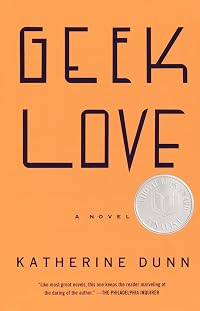
Julia Pastrana is mistaken for a werewolf or the Missing Link. Though she can speak three languages, strangers think she can't speak at all. Julia Pastrana was actually a living woman with hypertrichosis, an abnormal amount of hair grows on the body. Having two rows of teeth and bigger mouth didn't help her being confused for a monster in the mid 19th century. Julia's obvious path was to join circus life, and other things in her life made her story stranger than fiction. Here, Carol Birch reimagines Julia's story. The book follows the basic story of Julia's real life -- of course, any writer can't know any historical figure completely. (Even family doesn't know every detail of their own family members lives.) But this is not a show more biography, it's a novel that can take liberties with Julia's story. Birch writes this "monster" with so much humanity, that most of the others in the book lack. Julia's journey is a strange one, going from fearing for her life around a gang of children (though she is such a beautiful person, she is more worried about scaring a child with her appearance), then a few pages later, being invited to a ball and dancing the night away. The quick changes from lows to highs reminded me of Alexander Chee's 'The Queen of the Night' and circus life can't help but remind me of Katherine Dunn's 'Geek Love'. There is also another story winding within the book, only a couple pages at a time, taking place in 1980's London, a woman who loves common objects that others would find useless almost more than she loves people. At first, I was questioning the purpose of this story line, but in the end, I loved how it intertwined. There is so much tragic irony here but to explain it would spoil the story. The only minor complaint I would have of the book would be that I wanted to read more of Theo's back story. I'm very happy I found this book, as I didn't know Julia Pastrana existed. Her actual story seems like something too bizarre to think up, but here Birch brings Julia to vivid full life with her beautiful writing. Even if there are liberties with Julia's Pastrana's story, I'm grateful to Carol Birch for writing a book about Julia at all. I love this book. I'll definitely have Birch's eleven other novels on my to-be-read list, and 'Jamrach's Menagerie' her almost-winner of both the Booker and Orange Prize is already waiting on the shelf. show less
Jamrach's Menagerie was one of the best reads I had in a long while, and I've been waiting for a new one from Birch ever since. I was hooked immediately on this colorful tale of Juliana Pastrana, a gifted young woman cursed with a genetic disorder that makes her a sideshow attraction: "Ape Woman," "Bear Woman." She speaks three languages, has exquisite manners, a charitable heart, a sweet singing voice and dances delightfully... and looks like a gorilla. (On a curious side note, the eminent chief of surgical anatomy Alexander Mott at Bellevue Hospital - see my review of Oshinsky's Bellevue book - examined her and officially opined that she was a hybrid of a human and an orangutan.) Through Juliana, Birch explores what it means to be show more human, how humans love and exploit one another, how one remains humane in the face of fear, disgust, and even hatred. And then the book starts to fall apart. Juliana is basically bought by a feckless, selfish, ambitious impresario who marries her, partly for a perverse attraction, but mostly to control her as her manager. Theo ferries her around the world, raking in the admission fees. The story shifts from Juliana's point of view to Theo's, and it almost seems as though Birch has lost interest. The lively, rich writing (if you don't care for lush language with lots of adjectives, you won't like it, but I do!) becomes pedestrian, loses its color... perhaps Birch meant to, but it lost me. The reader goes from engagement with this lovely, suffering woman to a slightly exhausted "poor Juliana." Once Juliana is off-stage (though still disturbingly present - no spoilers here), I began reading faster just to finish. It goes on too long, and an occasionally poignant present-day secondary plot feels perfunctory. That said, the story stays with me... I put the book down and kept thinking about it. Which is more than you can say for most. And yes, it is based on facts, a real person. You can Google that part yourself. I think I'm going to go re-read Jamrach. show less
What to say about this unusual novel by Carol Birch? First, I loved part of it. Second, I didn’t realize until I got to the end that it is loosely-based on a true story. If you loved Birch’s ‘Jamrach’s Menagerie’, try this.
1854. A young veiled woman travels by train from Mexico to New Orleans. She is disfigured but we don’t know the exact details until quite a way into the book: this is a novel which rewards patient reading. Julia Pastrana becomes a music hall attraction - singing, dancing, playing a guitar - while undergoing examinations by doctors who proclaim her part-human. Her successive managers make the most of the doctors’ pronouncements. This is a linear narrative, Julia’s life story, driven by her search for show more unconditional love.
The real Julia Pastrana had large ears and nose, irregular teeth and straight black hair all over her body. Despite her obvious intelligence – she spoke three languages - the myths continued until her death. It is an indictment of the way people not considered ‘normal’ were treated in the 19th century, seeing them as attractions rather than people with feelings.
The modern-day storyline of Rose, a young woman who collects unwanted items, was, for me, an unnecessary distraction from the main story. The obvious connection between the two women is their struggle to fit into society, though Rose is more of an emotional drifter.
Read more of my book reviews at http://www.sandradanby.com/book-reviews-a-z/ show less
1854. A young veiled woman travels by train from Mexico to New Orleans. She is disfigured but we don’t know the exact details until quite a way into the book: this is a novel which rewards patient reading. Julia Pastrana becomes a music hall attraction - singing, dancing, playing a guitar - while undergoing examinations by doctors who proclaim her part-human. Her successive managers make the most of the doctors’ pronouncements. This is a linear narrative, Julia’s life story, driven by her search for show more unconditional love.
The real Julia Pastrana had large ears and nose, irregular teeth and straight black hair all over her body. Despite her obvious intelligence – she spoke three languages - the myths continued until her death. It is an indictment of the way people not considered ‘normal’ were treated in the 19th century, seeing them as attractions rather than people with feelings.
The modern-day storyline of Rose, a young woman who collects unwanted items, was, for me, an unnecessary distraction from the main story. The obvious connection between the two women is their struggle to fit into society, though Rose is more of an emotional drifter.
Read more of my book reviews at http://www.sandradanby.com/book-reviews-a-z/ show less
Telling the story of Julia, an exceptionally hairy young woman (based on a real person) who in the 19c extracts herself from a paternalist sponsorship in Mexico to appear as a touring exhibit and performer. Alongside this is a modern day narrative of a young woman hoarder. What can the link be?
I thought the first third of this book was the strongest, as Julia struggled with the implications of fame and notoriety. Birch captures the weirdness of being someone who everyone wants to see and (often) recoil from, of having wealth but being unable to step outside alone. I also liked her creation of carnival characters, and the small community's ways of dealing with their difference.
I didn't understand the point of the modern strand running show more alongside Julia's story: the characters were annoying and self absorbed. I think if you read this novel it is for Julia herself, as she is vivid on the page, the view of the person who in history has been the one looked at. show less
I thought the first third of this book was the strongest, as Julia struggled with the implications of fame and notoriety. Birch captures the weirdness of being someone who everyone wants to see and (often) recoil from, of having wealth but being unable to step outside alone. I also liked her creation of carnival characters, and the small community's ways of dealing with their difference.
I didn't understand the point of the modern strand running show more alongside Julia's story: the characters were annoying and self absorbed. I think if you read this novel it is for Julia herself, as she is vivid on the page, the view of the person who in history has been the one looked at. show less
Fell a little short of my expectations.
(Full disclosure: I received a free electronic ARC for review through Edelweiss. Trigger warning for ableist language.)
She heard a wag in the audience say, “It’s a chimpanzee in a dress!”
Someone shouted, “Loup garou!” She laughed. Her eyes twinkled, her smile was genuine. Now that she was on, she didn’t feel so bad. I’m looking at you, she thought. You are looking at me. And you’re paying.
###
Funny. After all this time he could still get lost in looking, just looking at her. Marie didn’t have that. Her face, though hairy enough, was completely human. With Julia, you did wonder.
###
Julia Pastrana was a singer/dancer/musician/actress/all-around performer who lived in the 19th show more century. The details of her early life are sketchy. An indigenous Mexican born in a small village in the state of Sinaloa in 1834, Julia was raised in the household of Pedro Sanchez, who briefly served as the governor of Sinaloa. Here she was trained as a mezzo soprano and dancer, and also became fluent in Spanish, English, and French, in addition to her native Cáhita. In 1854, she was sold to Francisco Sepúlveda, a customs official in Mazatlán, and was brought to America, where she toured under the management of J.W. Beach and Theodore Lent. She and Lent eloped not long after, and they toured Europe together. Their first baby was born in Moscow in March 1860, but lived only three days. Julia died five days later of "postpartum complications."
Julia was born with a rare genetic condition called generalized hypertrichosis lanuguinosa, which caused thick black hair to grow all over her body, as well as severe gingival hyperplasia, which resulted in an overdeveloped jaw and thickened lips and gums. She was variously billed as a "Bear Woman"; a human-ape hybrid; and the offspring of an orangutan and a human.
After Julia's death, Lent arranged to have his wife and son's bodies preserved by Professor Sukolov of Moscow University. He displayed the mummies in a glass cabinet and toured with their remains for years. Lent found another woman with features similar to Julia's and remarried. He reinvented Mrs. Theodore Lent: Version 2.0 as Zenora Pastrana, sister of the late Julia Pastrana, and added her to the tour. The show made him a wealthy man. He may or may not have been committed to an asylum in Russia, where he died in 1884.
As for Julia and Theodore Junior's remains, they continued to be displayed until the 1970s, when public distaste forced them into storage. Vandals broke in in 1976 and mutilated the baby's body. Julia's remains were stolen in 1979, but eventually wound up at the Oslo Forensic Institute. In 2013, thanks in part to the current governor of Sinaloa, Julia's remains were returned to her home state for burial.
Loosely based on the facts in some areas, more faithfully in others, Carol Birch tries to imagine what Pastrana's life - especially her adulthood, and her marriage to Lent in particular - might have been like. Wherever she went, Julia was both celebrated and reviled; even as crowds flocked to see her, medical "authorities" warned against the damage her "hideous" face might inflict on children and pregnant women. She worked hard to cultivate her talent - dancing, singing, playing the guitar, even writing and performing in her own comedic plays - yet, at the end of the day, it was all moot: she could just stand there in silence, and people would still pay to see her. She was intelligent and personable, yet struggled to rise above her "bestial" appearance and the prejudices that accompanied it. She never wanted for social engagements, yet often found that she was the entertainment.
Julia's marriage to Theodore is a focal point of the story. Could it really have been love, or was it just a marriage of convenience? As a reader, I rooted for Julia; I wanted hers to be a happy story, even if the ending was tragic. (Why couldn't someone love 'a face like that'? Huh? ) Yet Birch resists romanticizing their relationship, which is a relief since to do so would fly in the face of the facts. (See, e.g., Lent's treatment of his wife and son's corpses, and his second marriage to a Julia clone.) Instead she characterizes Lent's interest in Julia as a mix of self-interest (financial gain; fame and reputation; showing up his more successful family members), genuine feelings of friendship, and a taboo sexual attraction that's ultimately a source of shame and distress for Lent. But don't be fooled: mostly it's about the money.
For her part, Julia genuinely loves Lent, though it's impossible to see why: he's a simpering, self-interested phony who bosses Julia around and exploits her for gain.
On its face, Orphans of the Carnival seems like a book I should love. I have an affinity for stories set in the circus/carnival, and am fascinated with the idea of "freaks": born freaks vs. made freaks; the social construction of freakery, and how ideas about what constitutes a freak have changed over time; the psychological and sociological aspects of "abnormality"; you name it. Yet the writing just didn't resonate with me, for various reasons:
- Instead of chapters, the story is told in three large parts (New World/ Old World/ Next World), with line breaks to delineate changes in action or scenes. Only most of the breaks were missing from the ARC. Now I know that we're not supposed to hold spelling/grammatical/formatting issues against ARCs - and usually I'm pretty good about this - but it really disrupted the flow of the story for me. I tried to ignore it, I really did, but I'm not making any promises. (No doubt this will be fixed in the finished version, fwiw.)
- The story is told from the perspectives of various characters, most notably Julia and Lent. Consequently, we're "treated" (sarcasm much?) to pages upon pages of Lent's inner monologues, which are sleazy and gross and will leave you wanting a hot shower with a Lysol chaser. I would've much preferred the story be told in Julia's voice and Julia's voice alone. Not only would this have given us a clearer picture of her as a person, but it would have left us wondering - as did she, perhaps - whether Lent actually loved her, or just loved possessing her.
- I never really felt like I got a handle on any of the characters (except maybe for Lent; insert retching noises here), especially Julia. She is so confusing! She decides to leave Sinaloa and tour (really the facts suggest she was sold, like a slave; the story paints her as more of an independent woman) so that she can be financially independent...but then she doesn't want to think about money, because boring! She loathes how bossy and controlling her managers are...so she decides to make one her husband. Lent only proposes to her when she considers dropping him as a manager...so she agrees, even though it's clearly a power play born of desperation. I don't get it. I had an easier time wrapping my head around Zenora, even though she got much less space than Julia.
- I really didn't see the significance of the whole Rose plot line, though I must admit that the big reveal with the island of the dolls was kind of neat and maybe even squeezed a tear or two out of me.
Overall, the story has a lot of promise, but fell a little short for me. Still, the historical details are interesting, and I enjoyed how Birch filled in some of the gaps with her own artistic flourishes.
http://www.easyvegan.info/2016/11/11/orphans-of-the-carnival-by-carol-birch/ show less
(Full disclosure: I received a free electronic ARC for review through Edelweiss. Trigger warning for ableist language.)
She heard a wag in the audience say, “It’s a chimpanzee in a dress!”
Someone shouted, “Loup garou!” She laughed. Her eyes twinkled, her smile was genuine. Now that she was on, she didn’t feel so bad. I’m looking at you, she thought. You are looking at me. And you’re paying.
###
Funny. After all this time he could still get lost in looking, just looking at her. Marie didn’t have that. Her face, though hairy enough, was completely human. With Julia, you did wonder.
###
Julia Pastrana was a singer/dancer/musician/actress/all-around performer who lived in the 19th show more century. The details of her early life are sketchy. An indigenous Mexican born in a small village in the state of Sinaloa in 1834, Julia was raised in the household of Pedro Sanchez, who briefly served as the governor of Sinaloa. Here she was trained as a mezzo soprano and dancer, and also became fluent in Spanish, English, and French, in addition to her native Cáhita. In 1854, she was sold to Francisco Sepúlveda, a customs official in Mazatlán, and was brought to America, where she toured under the management of J.W. Beach and Theodore Lent. She and Lent eloped not long after, and they toured Europe together. Their first baby was born in Moscow in March 1860, but lived only three days. Julia died five days later of "postpartum complications."
Julia was born with a rare genetic condition called generalized hypertrichosis lanuguinosa, which caused thick black hair to grow all over her body, as well as severe gingival hyperplasia, which resulted in an overdeveloped jaw and thickened lips and gums. She was variously billed as a "Bear Woman"; a human-ape hybrid; and the offspring of an orangutan and a human.
After Julia's death, Lent arranged to have his wife and son's bodies preserved by Professor Sukolov of Moscow University. He displayed the mummies in a glass cabinet and toured with their remains for years. Lent found another woman with features similar to Julia's and remarried. He reinvented Mrs. Theodore Lent: Version 2.0 as Zenora Pastrana, sister of the late Julia Pastrana, and added her to the tour. The show made him a wealthy man. He may or may not have been committed to an asylum in Russia, where he died in 1884.
As for Julia and Theodore Junior's remains, they continued to be displayed until the 1970s, when public distaste forced them into storage. Vandals broke in in 1976 and mutilated the baby's body. Julia's remains were stolen in 1979, but eventually wound up at the Oslo Forensic Institute. In 2013, thanks in part to the current governor of Sinaloa, Julia's remains were returned to her home state for burial.
Loosely based on the facts in some areas, more faithfully in others, Carol Birch tries to imagine what Pastrana's life - especially her adulthood, and her marriage to Lent in particular - might have been like. Wherever she went, Julia was both celebrated and reviled; even as crowds flocked to see her, medical "authorities" warned against the damage her "hideous" face might inflict on children and pregnant women. She worked hard to cultivate her talent - dancing, singing, playing the guitar, even writing and performing in her own comedic plays - yet, at the end of the day, it was all moot: she could just stand there in silence, and people would still pay to see her. She was intelligent and personable, yet struggled to rise above her "bestial" appearance and the prejudices that accompanied it. She never wanted for social engagements, yet often found that she was the entertainment.
Julia's marriage to Theodore is a focal point of the story. Could it really have been love, or was it just a marriage of convenience? As a reader, I rooted for Julia; I wanted hers to be a happy story, even if the ending was tragic. (Why couldn't someone love 'a face like that'? Huh? ) Yet Birch resists romanticizing their relationship, which is a relief since to do so would fly in the face of the facts. (See, e.g., Lent's treatment of his wife and son's corpses, and his second marriage to a Julia clone.) Instead she characterizes Lent's interest in Julia as a mix of self-interest (financial gain; fame and reputation; showing up his more successful family members), genuine feelings of friendship, and a taboo sexual attraction that's ultimately a source of shame and distress for Lent. But don't be fooled: mostly it's about the money.
For her part, Julia genuinely loves Lent, though it's impossible to see why: he's a simpering, self-interested phony who bosses Julia around and exploits her for gain.
On its face, Orphans of the Carnival seems like a book I should love. I have an affinity for stories set in the circus/carnival, and am fascinated with the idea of "freaks": born freaks vs. made freaks; the social construction of freakery, and how ideas about what constitutes a freak have changed over time; the psychological and sociological aspects of "abnormality"; you name it. Yet the writing just didn't resonate with me, for various reasons:
- Instead of chapters, the story is told in three large parts (New World/ Old World/ Next World), with line breaks to delineate changes in action or scenes. Only most of the breaks were missing from the ARC. Now I know that we're not supposed to hold spelling/grammatical/formatting issues against ARCs - and usually I'm pretty good about this - but it really disrupted the flow of the story for me. I tried to ignore it, I really did, but I'm not making any promises. (No doubt this will be fixed in the finished version, fwiw.)
- The story is told from the perspectives of various characters, most notably Julia and Lent. Consequently, we're "treated" (sarcasm much?) to pages upon pages of Lent's inner monologues, which are sleazy and gross and will leave you wanting a hot shower with a Lysol chaser. I would've much preferred the story be told in Julia's voice and Julia's voice alone. Not only would this have given us a clearer picture of her as a person, but it would have left us wondering - as did she, perhaps - whether Lent actually loved her, or just loved possessing her.
- I never really felt like I got a handle on any of the characters (except maybe for Lent; insert retching noises here), especially Julia. She is so confusing! She decides to leave Sinaloa and tour (really the facts suggest she was sold, like a slave; the story paints her as more of an independent woman) so that she can be financially independent...but then she doesn't want to think about money, because boring! She loathes how bossy and controlling her managers are...so she decides to make one her husband. Lent only proposes to her when she considers dropping him as a manager...so she agrees, even though it's clearly a power play born of desperation. I don't get it. I had an easier time wrapping my head around Zenora, even though she got much less space than Julia.
- I really didn't see the significance of the whole Rose plot line, though I must admit that the big reveal with the island of the dolls was kind of neat and maybe even squeezed a tear or two out of me.
Overall, the story has a lot of promise, but fell a little short for me. Still, the historical details are interesting, and I enjoyed how Birch filled in some of the gaps with her own artistic flourishes.
http://www.easyvegan.info/2016/11/11/orphans-of-the-carnival-by-carol-birch/ show less
Where do you begin when you leave a book in an emotional trash heap?
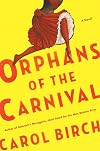
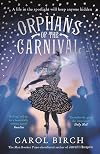
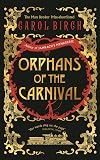
I fell in love with the cover immediately and still think it is one of the best I’ve seen this year. And certainly the flashy promise in the press blurb worked its magic on me. I leapt at the chance to read the book.
The dazzling new novel, evoking the strange and thrilling world of the Victorian carnival, from the Man Booker-shortlisted author of Jamrach’s Menagerie.
Let’s start with some true facts. The protagonist in the novel, Orphans of the Carnival, was a real person. In 1834, a native Indian woman living in western Mexico gave birth to a child so fiercely abnormal the mother feared her daughter was the result of supernatural interference and fled with the show more child into the mountains. Upon discovery two years later, the child, covered from head to foot with dark black hair and an ape-like face was abandoned by her mother and placed in an orphanage. The child was found to be highly intelligent and blessed with a sweet disposition. A local governor adopted the child to serve as a maid, caretaker to an elderly family member, and an in-house oddity. In 1854, upon the death of her charge, the child left to return to her native tribe. Somewhere in that journey, she was discovered by an American showman and was convinced to join him for a life in the world of human curiosities thus enabling her to fulfill her dreams of seeing the world outside her small village.
The child’s name was Julia Pastrana and in her short lifetime became one of the world’s best known curiosities.
The author has done her research. The major facts known about Julia Pastrana are in the novel. I know this because I was affected enough to learn more about the real Julia. Believe me, Julia’s life story coated with the fictional embellishments will rip your heart out.
I was appalled at the horrors and mental cruelty she suffered at the hands of greedy carnival men and “respected” medical authorities that repeatedly reported that she was a hybrid human. There’s no doubt that this fiction represents Julia’s reality.
In the real world, one well-known New York medical authority examined her and declared she was a half-breed of human and orangutan origin. This wasn’t a new idea. Two hundred years earlier a Dutch doctor stated that orangutans were born “from the lust of Indian women, who mix with apes and monkeys with detestable sensuality”.
Each time Julia stepped on a stage and faced the hordes of gawkers ostensibly interested in her singing voice and her talented dance routines, she knew, and you, the reader knows they are just there to stare at her face. Her greatest desire in life was to be loved and for people to see her, to see beyond the hairy body and the “world’s ugliest face”. Her single most need was the answer to a simple question…Am I Human?
Julia’s final manager, Theo Lent (and husband) must have been a real son-of-a-bleep. The author presents him from two sides- the face of the carnival barker who lived to make money off his “precious possession” and the lonely friendless leech marrying to force Julia to remain with him. When tragedy strikes, Lent shows his true colors and they are not pretty.
A misfit modern day junk collector finds a discarded broken doll and her fictional story reveals itself to have links to Julia. Overall, this added story was a distraction to the emotional turmoil surrounding Julia and her unfortunate life. I believe that sticking to Julia and the other poor unfortunate souls in this macabre world of entertainment would been better. In my advance reader copy, Rose’s story breaks into Julia’s story making it difficult to keep track of the narrative. Having said that, the ending of the book was a complete surprise to me.
I wanted to give this book a 3 star. In so many ways, it probably deserves it. The first half of the book had me flipping pages. The story just repeated itself over and over. New city, new show, same old cruel taunts and jeers. Midway I found myself ignoring Rose’s story and just reading to finish the book. As much as I flinched at every cruel word flung at the unfortunates, I never felt a depth to the characters themselves.
I do want to thank Netgalley and Doubleday for the advanced readers copy. This review reflects my own personal views and reaction to the novel. show less
I fell in love with the cover immediately and still think it is one of the best I’ve seen this year. And certainly the flashy promise in the press blurb worked its magic on me. I leapt at the chance to read the book.
The dazzling new novel, evoking the strange and thrilling world of the Victorian carnival, from the Man Booker-shortlisted author of Jamrach’s Menagerie.
Let’s start with some true facts. The protagonist in the novel, Orphans of the Carnival, was a real person. In 1834, a native Indian woman living in western Mexico gave birth to a child so fiercely abnormal the mother feared her daughter was the result of supernatural interference and fled with the show more child into the mountains. Upon discovery two years later, the child, covered from head to foot with dark black hair and an ape-like face was abandoned by her mother and placed in an orphanage. The child was found to be highly intelligent and blessed with a sweet disposition. A local governor adopted the child to serve as a maid, caretaker to an elderly family member, and an in-house oddity. In 1854, upon the death of her charge, the child left to return to her native tribe. Somewhere in that journey, she was discovered by an American showman and was convinced to join him for a life in the world of human curiosities thus enabling her to fulfill her dreams of seeing the world outside her small village.
The child’s name was Julia Pastrana and in her short lifetime became one of the world’s best known curiosities.
The author has done her research. The major facts known about Julia Pastrana are in the novel. I know this because I was affected enough to learn more about the real Julia. Believe me, Julia’s life story coated with the fictional embellishments will rip your heart out.
I was appalled at the horrors and mental cruelty she suffered at the hands of greedy carnival men and “respected” medical authorities that repeatedly reported that she was a hybrid human. There’s no doubt that this fiction represents Julia’s reality.
In the real world, one well-known New York medical authority examined her and declared she was a half-breed of human and orangutan origin. This wasn’t a new idea. Two hundred years earlier a Dutch doctor stated that orangutans were born “from the lust of Indian women, who mix with apes and monkeys with detestable sensuality”.
Each time Julia stepped on a stage and faced the hordes of gawkers ostensibly interested in her singing voice and her talented dance routines, she knew, and you, the reader knows they are just there to stare at her face. Her greatest desire in life was to be loved and for people to see her, to see beyond the hairy body and the “world’s ugliest face”. Her single most need was the answer to a simple question…Am I Human?
Julia’s final manager, Theo Lent (and husband) must have been a real son-of-a-bleep. The author presents him from two sides- the face of the carnival barker who lived to make money off his “precious possession” and the lonely friendless leech marrying to force Julia to remain with him. When tragedy strikes, Lent shows his true colors and they are not pretty.
A misfit modern day junk collector finds a discarded broken doll and her fictional story reveals itself to have links to Julia. Overall, this added story was a distraction to the emotional turmoil surrounding Julia and her unfortunate life. I believe that sticking to Julia and the other poor unfortunate souls in this macabre world of entertainment would been better. In my advance reader copy, Rose’s story breaks into Julia’s story making it difficult to keep track of the narrative. Having said that, the ending of the book was a complete surprise to me.
I wanted to give this book a 3 star. In so many ways, it probably deserves it. The first half of the book had me flipping pages. The story just repeated itself over and over. New city, new show, same old cruel taunts and jeers. Midway I found myself ignoring Rose’s story and just reading to finish the book. As much as I flinched at every cruel word flung at the unfortunates, I never felt a depth to the characters themselves.
I do want to thank Netgalley and Doubleday for the advanced readers copy. This review reflects my own personal views and reaction to the novel. show less
I found the synopsis of this book intriguing; it is certainly a book outside of my usual reading even though it is technically historical fiction. Julia Pastrana is a young girl in Mexico with a number of birth defects including being covered with hair all over her body. She had been rescued from an orphanage and taken into the care of some people who if they didn’t love her they did at least keep her safe. As she gets older Julia starts to want more from her life and so when an opportunity arises to perform with a troupe of sorts she takes it.
What I didn’t realize when I started the book was that Julia Pastrana was a real person. This sent me down a google rabbit hole until I learned about this amazing woman. It made me wonder if show more she had been born in modern times if she would have had a longer life. I don’t know if she would have been treated any better – in fact some ways I suspect it would have been worse given the state of today’s society.
The story is fictional but it does follow the course of Julia’s life as she becomes a bit of sensation as a performer; she sings and dances and then reveals her face to the audience who predictably react in shock. As time goes on she starts to wonder if she is nothing but an oddity. She is intelligent, she can speak three languages and yet people do not believe she is a human being. What must it be like to have your basic humanity questioned?
Julia moves between promoters until she meets Theodore Lent. He is a mix of con man and entrepreneur. He takes Julia to Europe where her shows are received in varying degrees of popularity. She does seem to live a life that makes her happy. I don’t want to spoil that story although it is a part of the historical record. I would rather let the reader choose how they want to learn Julia’s fate.
I found this to be a fascinating read. It did get a little slow in places but that didn’t take away from the whole for me. The everyday minutia of Julia’s life helped to truly humanize her. She was a truly remarkable young woman to rise above her birth defects and push so hard for herself. It’s a lesson for those of us born with far fewer problems. I think she would have been fascinating to know. show less
What I didn’t realize when I started the book was that Julia Pastrana was a real person. This sent me down a google rabbit hole until I learned about this amazing woman. It made me wonder if show more she had been born in modern times if she would have had a longer life. I don’t know if she would have been treated any better – in fact some ways I suspect it would have been worse given the state of today’s society.
The story is fictional but it does follow the course of Julia’s life as she becomes a bit of sensation as a performer; she sings and dances and then reveals her face to the audience who predictably react in shock. As time goes on she starts to wonder if she is nothing but an oddity. She is intelligent, she can speak three languages and yet people do not believe she is a human being. What must it be like to have your basic humanity questioned?
Julia moves between promoters until she meets Theodore Lent. He is a mix of con man and entrepreneur. He takes Julia to Europe where her shows are received in varying degrees of popularity. She does seem to live a life that makes her happy. I don’t want to spoil that story although it is a part of the historical record. I would rather let the reader choose how they want to learn Julia’s fate.
I found this to be a fascinating read. It did get a little slow in places but that didn’t take away from the whole for me. The everyday minutia of Julia’s life helped to truly humanize her. She was a truly remarkable young woman to rise above her birth defects and push so hard for herself. It’s a lesson for those of us born with far fewer problems. I think she would have been fascinating to know. show less
Members
- Recently Added By
Lists

Western & Northern Europe
60 works; 1 member
Author Information

16 Works 1,550 Members
Common Knowledge
- Canonical title
- Orphans of the Carnival
- Original publication date
- 2016
- People/Characters
- Julia Pastrana
Classifications
Statistics
- Members
- 188
- Popularity
- 173,103
- Reviews
- 10
- Rating
- (3.33)
- Languages
- English
- Media
- Paper, Audiobook, Ebook
- ISBNs
- 10
- ASINs
- 2