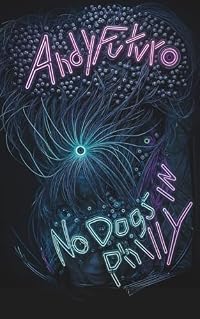
No Dogs in Philly: A Lovecraftian Cyberpunk Noir (Special Sin) (Volume 1)
by Andy Futuro 
Special Sin (1)
On This Page
Description
"This is one of the most enjoyable books I have read in some time. It is in the running for one of the top 5 books for 2015. I know the year is not even half over, but the book is that good." -Word RefinerAn OpenBooks science fiction best seller of monsters, Gods, and aliens, unlike anything you've ever read.
Philadelphia. Elzi on every corner, cops just itching to crack a skull, and the Gaespora lordin' it up in their high towers while the rest of the filth dribbled down the sewer. Saru show more had a way out. All she had to do was find the girl, one skinny stray with blue, blue eyes—bluer than anyone had ever seen—and ten million fat bucks were hers. Except someone was killing blue-eyed girls, and they were A-list, major-league, cold-sweat effective. And something about the end of all existence if she failed.
No Dogs in Philly is a Lovecraftian Cyberpunk Noir with aliens, monsters, extra-dimensional death Gods and a hardboiled female protagonist. It tackles questions of existence and the role humans play in this particular universe.
Rated R for strong language, mentions of sex, and graphic violence. Contains intense horror and potentially disturbing imagery.
No Dogs in Philly may appeal to fans of H.P. Lovecraft, Neal Stephenson, China Mieville, Dan Simmons, Gyo, Tank Girl, Swamp Thing, Spawn, science fiction, horror, cyberpunk, absurdism, urban fantasy, new weird, weird fiction, slipstream, and speculative fiction.
Keywords: dark books, gritty books, noir books, horror books, weird books, strange books, unique books, different books, controversial books, challenging books, surprising books, unsettling books, disturbing books, bizarre books, unusual books, scary books, absurd books, crazy books, violent books, bloody books, gory books, books like sandman slim, books like snowcrash, books like neal stephenson, books like neil stephenson, books like lovecraft, books like william gibson, books like gibson, books with dark covers, books with female heroines, black humor, quick reads, weird book series, books that make you think, gritty thrillers, dark thrillers, sci fi thrillers, weird thrillers, alien books, monster books, metaphysical books.
. show less
Tags
Recommendations














Member Reviews
“You see, your case falls into what we call ‘the gap’ in the justice system. Don’t feel too special; it’s a pretty large gap. Most people fall into ‘the gap.’ You don’t make enough to afford private justice, me, and you’re not dealing with people who have anything worth seizing—drugs, money, illegal hardware, guns—so the cops don’t really care. You can make a stink about it or take out a justice loan, but here’s a free piece of advice—forget about it.”
Our heroine, private eye Saru Salon, is many things: money hungry, violent, pugnacious, curious, and an alcoholic. What’s she’s not is interested in helping people who can’t pay her.
This novel is subtitled “A Cyberpunk Horror Noir”, and that’s show more truth in advertising.
When the novel opens, Saru is flush with money and the subject of media attention for successfully retrieving a kidnapped here. In the opening chapter, Futuro introduces us to the cyberpunk aspects of his story. It’s a world of extensive gene modifications, ubiquitous NetLink headsets, cybernetic implants, mercs, and strange terrorist groups.
Rescuing heirs is not Saru’s bread and butter. That’s missing person cases. They’re usually easy to resolve because the missing usually turned into elzi, not
“your regular ol’ drug addicts, Net heads, homeless sob stories, or modded-out freaks. Elzi were something else. Completely nonverbal, unresponsive, indifferent to pain, shame, discomfort, or just about any stimuli at all. They ate anything from garbage to feces and clogged the alleys with their ragged bodies. They were harmless—unless you were dumb or unlucky enough to touch one of their implants. Then they’d rip you to shreds with their bare hands and eat your fresh hot corpse.”
No one’s really sure where the elzi come from.
“A fabulous new drug. A Net feed so stimulating no one who experienced it could bear to log off. Moral decay. Aliens. Brain-eating parasites. Carcinogens in the water. Government experiments. Excessive implanting. Disease.”
Saru isn’t taking calls from reporters or potential clients. But the Gaespora, the corporate entity whose internal memorandum carry more weight in the world than mere laws, won’t be ignored. Saru won’t take their calls, so they buy the building where she rents an office and evict her.
Meanwhile, in the second chapter, we meet Ria, a blue-eyed young woman, homeless and preparing to bed down in Philadelphia’s subway. A dog has been following her around. A dog that people can’t often see. Here Futuro starts to give us the horror when a centipede-like amalgam of human bodies swarms out of the tunnel to attack the homeless. Ria is saved by that dog.
Of course, the Gaespora prevail, and Saru meets with their not entirely human spokesman ElilE (palindromic names show up frequently here). He gives Saru a telepathic briefing on gods: the Sad Gods the Gaespora are associated with, the Hungry God, and the Blue God.
“Within their plane of existence, these gods are mortal flesh and blood to each other. They struggle against one another for survival. They fight, procreate with, and consume one another. Their wars and their deaths are the suffering and extinction of the lifeforms that exist within them. … The gods battle on the frontier where their bodies can overlap. This is the margin of similarity. In this space the physical rules are similar enough that the organisms living within one god can affect the organisms living within another. It is through the margins of similarity the gods wound, kill, and devour one another. The organisms within each god influence, invade, and conquer the other, with the goal of pushing the margin in their favor. Through these battles across the frontiers of their bodies, one god will eventually triumph and absorb its rival. Even now, this battle in microcosm occurs on Earth.”
The Sad Gods, “a god of gods” is opposed to the Hungry God, basically a death god that seeks “no union, no shared knowledge, no balance, no compromise, no existence other than its own.” Its toehold on Earth is through the shared human consciousness of the UausuaU. The Gaespora want Saru to find a blue-eyed girl who is somewhere in Philadelphia and affiliated with the Blue God. The Gaespora want to know what the Blue God’s intentions are on Earth.
Consulting Morgan Friar, a far better detective than Saru and who turned down the Gaespora’s job, puts a different spin on the whole god thing. Friar calls the gods holobionts, collections of organisms analogous to conscious humans carrying insentient bacteria in their bodies. He has a theory that the elzi all have a shared consciousness that’s linked to the UausuaU. He’s even been capturing the elzi and running experiments on them. But Friar takes one chance too many and, in Saru’s presence, an elzi infects Friar. At his request, Saru chains him down and gives him a lethal injection.
But that’s not the end of Friar. As Ria has a dog companion following her around, Friar starts appearing to Saru. He’s either infected her body or hacked her implants. And he starts trying to recruit her into joining the UausuaU and offering help in finding Ria.
And we’re off as Saru straps on various weapons, dons her armor, and gets out the fake IDs in a story which will have us encountering a hacker, a freelance forensic investigator, several deaths of blue-eyed girls, and Saru almost having a fit of conscience in not rending aid to someone who can’t pay her. We’ll also meet another party that has its own interest in events: the hippies affiliated with the Slow God. They eschew the ubiquitous cybernetic implants of the general population to live inconveniently and primitively in a zone of Philadelphia.
Naturally, the Gaespora haven’t been entirely truthful with Saru.
It all comes to a gruesome, horrific climax beneath Philadelphia, and Futuro tells his tale with style and black humor. Saru is interesting and compelling, sympathetic despite her flaws.
The murkier aspects of plot are resolved in the concluding novel, Cloud Country. These books have more the flavor of cyberpunk-tinged horror and fantasy rather than science fiction. show less
Our heroine, private eye Saru Salon, is many things: money hungry, violent, pugnacious, curious, and an alcoholic. What’s she’s not is interested in helping people who can’t pay her.
This novel is subtitled “A Cyberpunk Horror Noir”, and that’s show more truth in advertising.
When the novel opens, Saru is flush with money and the subject of media attention for successfully retrieving a kidnapped here. In the opening chapter, Futuro introduces us to the cyberpunk aspects of his story. It’s a world of extensive gene modifications, ubiquitous NetLink headsets, cybernetic implants, mercs, and strange terrorist groups.
Rescuing heirs is not Saru’s bread and butter. That’s missing person cases. They’re usually easy to resolve because the missing usually turned into elzi, not
“your regular ol’ drug addicts, Net heads, homeless sob stories, or modded-out freaks. Elzi were something else. Completely nonverbal, unresponsive, indifferent to pain, shame, discomfort, or just about any stimuli at all. They ate anything from garbage to feces and clogged the alleys with their ragged bodies. They were harmless—unless you were dumb or unlucky enough to touch one of their implants. Then they’d rip you to shreds with their bare hands and eat your fresh hot corpse.”
No one’s really sure where the elzi come from.
“A fabulous new drug. A Net feed so stimulating no one who experienced it could bear to log off. Moral decay. Aliens. Brain-eating parasites. Carcinogens in the water. Government experiments. Excessive implanting. Disease.”
Saru isn’t taking calls from reporters or potential clients. But the Gaespora, the corporate entity whose internal memorandum carry more weight in the world than mere laws, won’t be ignored. Saru won’t take their calls, so they buy the building where she rents an office and evict her.
Meanwhile, in the second chapter, we meet Ria, a blue-eyed young woman, homeless and preparing to bed down in Philadelphia’s subway. A dog has been following her around. A dog that people can’t often see. Here Futuro starts to give us the horror when a centipede-like amalgam of human bodies swarms out of the tunnel to attack the homeless. Ria is saved by that dog.
Of course, the Gaespora prevail, and Saru meets with their not entirely human spokesman ElilE (palindromic names show up frequently here). He gives Saru a telepathic briefing on gods: the Sad Gods the Gaespora are associated with, the Hungry God, and the Blue God.
“Within their plane of existence, these gods are mortal flesh and blood to each other. They struggle against one another for survival. They fight, procreate with, and consume one another. Their wars and their deaths are the suffering and extinction of the lifeforms that exist within them. … The gods battle on the frontier where their bodies can overlap. This is the margin of similarity. In this space the physical rules are similar enough that the organisms living within one god can affect the organisms living within another. It is through the margins of similarity the gods wound, kill, and devour one another. The organisms within each god influence, invade, and conquer the other, with the goal of pushing the margin in their favor. Through these battles across the frontiers of their bodies, one god will eventually triumph and absorb its rival. Even now, this battle in microcosm occurs on Earth.”
The Sad Gods, “a god of gods” is opposed to the Hungry God, basically a death god that seeks “no union, no shared knowledge, no balance, no compromise, no existence other than its own.” Its toehold on Earth is through the shared human consciousness of the UausuaU. The Gaespora want Saru to find a blue-eyed girl who is somewhere in Philadelphia and affiliated with the Blue God. The Gaespora want to know what the Blue God’s intentions are on Earth.
Consulting Morgan Friar, a far better detective than Saru and who turned down the Gaespora’s job, puts a different spin on the whole god thing. Friar calls the gods holobionts, collections of organisms analogous to conscious humans carrying insentient bacteria in their bodies. He has a theory that the elzi all have a shared consciousness that’s linked to the UausuaU. He’s even been capturing the elzi and running experiments on them. But Friar takes one chance too many and, in Saru’s presence, an elzi infects Friar. At his request, Saru chains him down and gives him a lethal injection.
But that’s not the end of Friar. As Ria has a dog companion following her around, Friar starts appearing to Saru. He’s either infected her body or hacked her implants. And he starts trying to recruit her into joining the UausuaU and offering help in finding Ria.
And we’re off as Saru straps on various weapons, dons her armor, and gets out the fake IDs in a story which will have us encountering a hacker, a freelance forensic investigator, several deaths of blue-eyed girls, and Saru almost having a fit of conscience in not rending aid to someone who can’t pay her. We’ll also meet another party that has its own interest in events: the hippies affiliated with the Slow God. They eschew the ubiquitous cybernetic implants of the general population to live inconveniently and primitively in a zone of Philadelphia.
Naturally, the Gaespora haven’t been entirely truthful with Saru.
It all comes to a gruesome, horrific climax beneath Philadelphia, and Futuro tells his tale with style and black humor. Saru is interesting and compelling, sympathetic despite her flaws.
The murkier aspects of plot are resolved in the concluding novel, Cloud Country. These books have more the flavor of cyberpunk-tinged horror and fantasy rather than science fiction. show less
Don't let the doe-eyed woman on the cover fool you. That's Saru. She'll use that cattle prod on you if you mess with her. While not evident from the cover, she's enhanced with all the doodads that cyberpunk fans would expect of a near future sci-fi heroine. She's connected to the Net 24/7; has a pistol named "Betty" up her sleeve ready to go when adrenaline, pulse rate, and subconscious thought reach a critical threshold; and everything's subdermal. But just as her soft exterior belies the bad ass that she is, her gender hides the fact that she's more macho than most men, certainly the other male characters in the story. She could be Mike Hammer's granddaughter, though with less rage and more cynicism.
I get that she has to be tough. Her show more world is full of creeps and creepy things. But the hard-boiled persona has its limitations. While Hammer was out for justice, Saru only seems to be out for herself. People can sympathize with vigilantes, not so much the obnoxious brats just looking for a payday. It takes a lot of death before any kind of humanity breaks through the concrete barrier surrounding her heart. Even when it does, I wasn't convinced that she was going to carry through on her promise to set things right.
Futuro's Philadelphia is a complex place with enhanced humans, aliens, and monsters. The aliens and monsters would be right at home in Lovecraft's universe. But whereas Lovecraft's unthinkable creations lurked in the shadows and faraway places, Futuro's creations are out in the open. Considering the obvious menace that some of them pose, I'm surprised that there wasn't more panic among the populace. The elzi seem to be former people that were exposed to dark forces which devolved them into sub-human animals with tech sticking out of their bodies and great appetite (hence the book's title). Sure, there are even worse things lurking underground, but the elzi are out on Broad Street in broad daylight. The city seems to function; why not round them up or put them down?
Futuro is at his best when he taps into that Lovecraft vibe. He reaches out to the infinite and shows how it overwhelms a human mind. There's the plea from a desperate soul that we have to hope that the old, hungry god ignores our world. But it's the elements of indescribable horrors lurking in the dark that do unspeakable things that really fires things up. My favorite part was when Ria took shelter from the rain in a subway tunnel. It was already a tense scene as she sat with a few homeless people around a trash fire while dozens of satiated elzi slept nearby. Will they stay asleep? What if one of them needs a midnight snack? And then there's a rumble that wakes up the elzi, and they scatter. The people start to panic. What could drive an elzi to run away? Then Futuro reveals what that thing is.
Unfortunately, my experience was marred by comma problems (missing or too many) and run on sentences. Sometimes it seemed as if Futuro tried to cram as many adjectives and phrases as possible. These two sentences lack any form of punctuation:
Here's an example of a sentence that goes on far too long given its limited punctuation:
While there are more examples, it's not like the whole book is like this. Most of the time, Futuro gets it right. If he had hired a proofreader, I believe that the manuscript would've been much cleaner. If commas and long sentences like these don't bother you, then don't sweat it. Just enjoy the story.
While it might seem from my complaints about grammar and the unsympathetic protagonist that I didn't like the story, that isn't the case. I really enjoyed it. Futuro nicely blends cyberpunk and Lovecraftian horror together in a bleak, near future Philadelphia. While his protagonist is about as warm and cuddly as 80 grit sandpaper, she adds a hard-boiled detective element into the mix that works well given the story's setting and plot.
This review originally appeared on the New Podler Review of Books. A free copy was received in exchange for an honest review. show less
I get that she has to be tough. Her show more world is full of creeps and creepy things. But the hard-boiled persona has its limitations. While Hammer was out for justice, Saru only seems to be out for herself. People can sympathize with vigilantes, not so much the obnoxious brats just looking for a payday. It takes a lot of death before any kind of humanity breaks through the concrete barrier surrounding her heart. Even when it does, I wasn't convinced that she was going to carry through on her promise to set things right.
Futuro's Philadelphia is a complex place with enhanced humans, aliens, and monsters. The aliens and monsters would be right at home in Lovecraft's universe. But whereas Lovecraft's unthinkable creations lurked in the shadows and faraway places, Futuro's creations are out in the open. Considering the obvious menace that some of them pose, I'm surprised that there wasn't more panic among the populace. The elzi seem to be former people that were exposed to dark forces which devolved them into sub-human animals with tech sticking out of their bodies and great appetite (hence the book's title). Sure, there are even worse things lurking underground, but the elzi are out on Broad Street in broad daylight. The city seems to function; why not round them up or put them down?
Futuro is at his best when he taps into that Lovecraft vibe. He reaches out to the infinite and shows how it overwhelms a human mind. There's the plea from a desperate soul that we have to hope that the old, hungry god ignores our world. But it's the elements of indescribable horrors lurking in the dark that do unspeakable things that really fires things up. My favorite part was when Ria took shelter from the rain in a subway tunnel. It was already a tense scene as she sat with a few homeless people around a trash fire while dozens of satiated elzi slept nearby. Will they stay asleep? What if one of them needs a midnight snack? And then there's a rumble that wakes up the elzi, and they scatter. The people start to panic. What could drive an elzi to run away? Then Futuro reveals what that thing is.
Unfortunately, my experience was marred by comma problems (missing or too many) and run on sentences. Sometimes it seemed as if Futuro tried to cram as many adjectives and phrases as possible. These two sentences lack any form of punctuation:
We live as we can can as thoughts within your kind and through thought we drive action and with action we bring your world closer to our own.
She could pound a liter of vodka and walk a line and thread a needle and she remembered exactly what had happened.
Here's an example of a sentence that goes on far too long given its limited punctuation:
She'd tried wearing sunglasses to complete her disguise, but with the clouds and the dark she couldn't see shit, kept stepping in it and glass and syringes and tripping and potholes and the last time she'd had a condom dragging from her heel for about four blocks until the cashier at the liquor store pointed it out by yelling in his angry foreigner language.
While there are more examples, it's not like the whole book is like this. Most of the time, Futuro gets it right. If he had hired a proofreader, I believe that the manuscript would've been much cleaner. If commas and long sentences like these don't bother you, then don't sweat it. Just enjoy the story.
While it might seem from my complaints about grammar and the unsympathetic protagonist that I didn't like the story, that isn't the case. I really enjoyed it. Futuro nicely blends cyberpunk and Lovecraftian horror together in a bleak, near future Philadelphia. While his protagonist is about as warm and cuddly as 80 grit sandpaper, she adds a hard-boiled detective element into the mix that works well given the story's setting and plot.
This review originally appeared on the New Podler Review of Books. A free copy was received in exchange for an honest review. show less
(Disclosure: I received my copy of this book for free in a Goodreads giveaway)
No Dogs in Philly is a mostly solid story mixing detective noir, cyberpunk, and lovecraftian horror. Private investigator Saru is hired to track down Ria, a young woman haunted by visions of a phantasmal dog, who is being pursued by the servants of a malign god. The plot was compelling, but I felt it had some significant issues at certain points: not enough exposition about certain aspects of the world at the beginning, and not enough interaction between Saru and Ria before the end. Still, despite these flaws, I enjoyed the book for the most part, and would be interested in reading a sequel.
I wrote a full-length spoiler review for my blog; you can read it at show more target="_top">Prof Morbius Book Reviews. show less
No Dogs in Philly is a mostly solid story mixing detective noir, cyberpunk, and lovecraftian horror. Private investigator Saru is hired to track down Ria, a young woman haunted by visions of a phantasmal dog, who is being pursued by the servants of a malign god. The plot was compelling, but I felt it had some significant issues at certain points: not enough exposition about certain aspects of the world at the beginning, and not enough interaction between Saru and Ria before the end. Still, despite these flaws, I enjoyed the book for the most part, and would be interested in reading a sequel.
I wrote a full-length spoiler review for my blog; you can read it at show more target="_top">Prof Morbius Book Reviews. show less
I love science fiction, and when I was given the opportunity for this book, I said yes. I started reading, and I was interested in this world. However, I could only rate the book 3 stars because of several issues I had.
We are introduced to an interesting world where people can apparently swap any body part they like with cybernetics, or get a widely varied amount of implants. The character of the narrator's past is hinted at, and I would have liked to know more about her struggle/'success story'.
However, things get weird when the author introduces a supernatural/otherwordly element. I'll be frank, that's when things went to heck. To me, that element was unnecessary, and the story would have benefited from more world-exploration into it, show more with a story tied to that. I had an hard time imagining the elzi while reading the book, I wish the author had explained more about them. show less
We are introduced to an interesting world where people can apparently swap any body part they like with cybernetics, or get a widely varied amount of implants. The character of the narrator's past is hinted at, and I would have liked to know more about her struggle/'success story'.
However, things get weird when the author introduces a supernatural/otherwordly element. I'll be frank, that's when things went to heck. To me, that element was unnecessary, and the story would have benefited from more world-exploration into it, show more with a story tied to that. I had an hard time imagining the elzi while reading the book, I wish the author had explained more about them. show less
Ratings
Members
- Recently Added By
Author Information
4 Works 58 Members
Andy Futuro is a LibraryThing Author, an author who lists their personal library on LibraryThing.
Series

Classifications
- Genres
- Fiction and Literature, Science Fiction, Horror
- BISAC
Statistics
- Members
- 45
- Popularity
- 658,578
- Reviews
- 4
- Rating
- (3.67)
- Languages
- English
- Media
- Paper, Ebook
- ISBNs
- 2
- ASINs
- 1