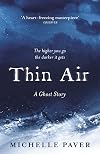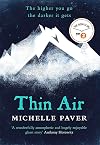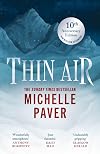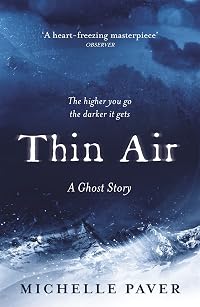
Thin Air
by Michelle Paver
On This Page
Description
The Himalayas, 1935. Kangchenjunga. Third-highest peak on earth. Greatest killer of them all. Five Englishmen set off from Darjeeling, determined to conquer the sacred summit. But courage can only take them so far - and the mountain is not their only foe. As the wind dies, the dread grows. Mountain sickness. The horrors of extreme altitude. A past that will not stay buried. And sometimes, the truth does not set you free.Tags
Recommendations










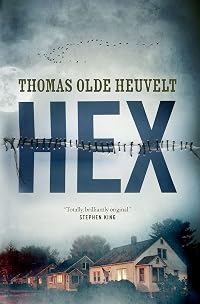
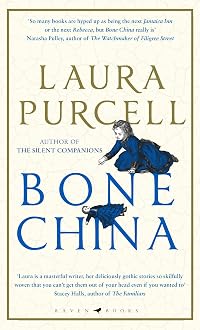

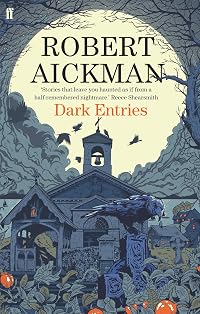

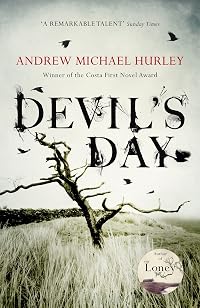












Member Recommendations
sturlington Ghost stories set in the Himalayas
Member Reviews
Atmosphere: perfect. Pacing: steady. Brain cells: dwindling.
Thin Air is a slow-burn psychological chokehold wrapped in Himalayan ice. It’s classic Paver: meticulous landscape, quiet dread, and characters who think they’re rational right up until the altitude strips their minds bare.
The ascent is where this book shines.
Stephen, our doctor-protagonist, unravels in that terrifyingly believable way hypoxia actually works — one decision at a time, each just wrong enough to make you want to yell at the page. His fear of Ward becomes obsession, and his obsession becomes hallucination. Whether you believe there’s a ghost or not, the creeping loss of judgment feels real, earned, and scarily human.
I loved the way the environment becomes show more the antagonist. The mountain doesn’t care about ghosts; it’s busy choking the oxygen out of everyone’s reasoning. Paver absolutely nails that “your body is the haunting” feeling.
Where the book falters is the ending. After such a long, careful descent into madness, the actual descent off the mountain is shockingly fast. Kit’s fate barely lands. Stephen comes home with the emotional depth of someone returning from a disappointing cruise, not a man who’s lost toes, a brother, and maybe his mind. The tone shifts so abruptly that it feels either intentionally liminal… or simply rushed.
I found myself reading the final chapter as a kind of limbo — a dreamlike “return” that might not even be real. The mist, the strangely flat behavior, the emotional detachment… it almost reads like Stephen never made it down at all. That interpretation actually enhances the novel, but I’m not convinced it was deliberate.
Still: the journey is so strong, so atmospheric, so psychologically convincing that the ending can wobble without sinking the whole book.
This is a quiet, icy ghost story where the real haunting is the human mind under pressure.
Highly recommended — especially if you enjoy the horror of altitude, guilt, and one man’s very alarming commitment to bad decisions. show less
Thin Air is a slow-burn psychological chokehold wrapped in Himalayan ice. It’s classic Paver: meticulous landscape, quiet dread, and characters who think they’re rational right up until the altitude strips their minds bare.
The ascent is where this book shines.
Stephen, our doctor-protagonist, unravels in that terrifyingly believable way hypoxia actually works — one decision at a time, each just wrong enough to make you want to yell at the page. His fear of Ward becomes obsession, and his obsession becomes hallucination. Whether you believe there’s a ghost or not, the creeping loss of judgment feels real, earned, and scarily human.
I loved the way the environment becomes show more the antagonist. The mountain doesn’t care about ghosts; it’s busy choking the oxygen out of everyone’s reasoning. Paver absolutely nails that “your body is the haunting” feeling.
Where the book falters is the ending. After such a long, careful descent into madness, the actual descent off the mountain is shockingly fast. Kit’s fate barely lands. Stephen comes home with the emotional depth of someone returning from a disappointing cruise, not a man who’s lost toes, a brother, and maybe his mind. The tone shifts so abruptly that it feels either intentionally liminal… or simply rushed.
I found myself reading the final chapter as a kind of limbo — a dreamlike “return” that might not even be real. The mist, the strangely flat behavior, the emotional detachment… it almost reads like Stephen never made it down at all. That interpretation actually enhances the novel, but I’m not convinced it was deliberate.
Still: the journey is so strong, so atmospheric, so psychologically convincing that the ending can wobble without sinking the whole book.
This is a quiet, icy ghost story where the real haunting is the human mind under pressure.
Highly recommended — especially if you enjoy the horror of altitude, guilt, and one man’s very alarming commitment to bad decisions. show less
Michelle Paver does a lot of adventurous travel and clearly pays very close attention when she does. The astounding detail is one of the things I appreciate about her children's series, Chronicles of Ancient Darkness, and I appreciate it even more in the two "grown-up" books of hers that I've read. She has a keen eye and is adept not only at putting her observations into words, but also in weaving them into an interesting story.
In Thin Air, as in her previous novel, Dark Matter, the darkness, cold, and confusion come through clearly, and in this one Paver adds the breathlessness of altitude sickness, which had me taking deep breaths as I was reading, just to prove that I could. And like with Dark Matter, this novel had me afraid to look show more over my shoulder after dark.
Both are quite good novels, but even though Thin Air is the more recent novel, it has the feel of a warm-up for the tighter and scarier Dark Matter. Both novels are set in the 1930s and peopled with British men intent upon proving something to the world and, even more, to themselves. The characters are distinct, but Paver could almost have put a collection of character traits on separate strips of paper, put them in a hat, and pulled them out, matching them up to names and putting them in both novels in different configurations ("Okay, in this one, one guy will be afraid of dogs, and in the other one, a dog will be afraid of the guy. Now let's draw to see what happens to the medic."). I don't mind that, though. It gives me a chance to see her process as a writer and to feel like I know a little more about how her mind works (I don't really think she draws character traits out of a hat except in the sense that one wears a hat on one's head and I assume she draws the character traits from her head).
Even though this one's not my favorite of the two novels, it's still an enjoyable, spooky read. I wish her grown-up books were more easily obtained in the United States...and that there were more of them. show less
In Thin Air, as in her previous novel, Dark Matter, the darkness, cold, and confusion come through clearly, and in this one Paver adds the breathlessness of altitude sickness, which had me taking deep breaths as I was reading, just to prove that I could. And like with Dark Matter, this novel had me afraid to look show more over my shoulder after dark.
Both are quite good novels, but even though Thin Air is the more recent novel, it has the feel of a warm-up for the tighter and scarier Dark Matter. Both novels are set in the 1930s and peopled with British men intent upon proving something to the world and, even more, to themselves. The characters are distinct, but Paver could almost have put a collection of character traits on separate strips of paper, put them in a hat, and pulled them out, matching them up to names and putting them in both novels in different configurations ("Okay, in this one, one guy will be afraid of dogs, and in the other one, a dog will be afraid of the guy. Now let's draw to see what happens to the medic."). I don't mind that, though. It gives me a chance to see her process as a writer and to feel like I know a little more about how her mind works (I don't really think she draws character traits out of a hat except in the sense that one wears a hat on one's head and I assume she draws the character traits from her head).
Even though this one's not my favorite of the two novels, it's still an enjoyable, spooky read. I wish her grown-up books were more easily obtained in the United States...and that there were more of them. show less
This is the second highly atmospheric ghost story in an unusual setting I have read by this author. Whereas Dark Matter was set in the Arctic, Thin Air is set in the Himalayas, where a (fictional) expedition is trying in 1935 to climb Kangchenjunga, the third highest mountain in the world, in the footsteps of a failed earlier (also fictional) expedition of 1906 which ended in tragedy and the deaths of all but two expedition members. Dr Stephen Pearce, the narrator of the second expedition, is given a vague warning by one of the survivors of the earlier one, but the expedition, including his headstrong and imperious brother Kits, sets off anyway. As they get higher and the air gets thinner, there are strange sights and sounds - but are show more they real or products of the thin atmosphere? The final solution exposes a darker mystery within the tragedy of the first expedition and scars the lives of Stephen and his colleagues. This is powerful and atmospheric and like all the best ghost stories, relies on suggestion and atmosphere-building to achieve its effect. A great read. show less
Thin Air by Michelle Paver is an excellent and chilling ghost story that is set in the Himalayas in 1935. A small expedition prepares to tackle Kangchenjunga, the world’s third highest mountain that had so far not been climbed. They are following in the footsteps of a previous expedition, one that ended tragically many years ago. How tragic that expedition was is slowly revealed during the course of the book.
A troubled doctor, Stephen Pearce, is the narrator of the story, he has joined the expedition as a last minute replacement at the invitation of his older brother Kit. The sibling rivalry between these brothers helps to ground the story as it soon becomes obvious that although they love each other, there are times when they show more desperately don’t want the other to succeed. As they slowly climb this daunting mountain, Dr. Pearce is soon feeling and then seeing the presence of someone or something else that appears to be shadowing the party.
I had previous read Dark Matter by this author and found it to be an exceeding well done ghost story. The author seems to specialize in setting her haunted stories in inaccessible places that give her books a claustrophobic and dark atmosphere. While I think I was a little more scared while reading Dark Matter, this book was still eerily spooky and kept me anxiously looking over my shoulder. Thin Air has a classic ghost story feel that made it a perfect read for these October nights. show less
A troubled doctor, Stephen Pearce, is the narrator of the story, he has joined the expedition as a last minute replacement at the invitation of his older brother Kit. The sibling rivalry between these brothers helps to ground the story as it soon becomes obvious that although they love each other, there are times when they show more desperately don’t want the other to succeed. As they slowly climb this daunting mountain, Dr. Pearce is soon feeling and then seeing the presence of someone or something else that appears to be shadowing the party.
I had previous read Dark Matter by this author and found it to be an exceeding well done ghost story. The author seems to specialize in setting her haunted stories in inaccessible places that give her books a claustrophobic and dark atmosphere. While I think I was a little more scared while reading Dark Matter, this book was still eerily spooky and kept me anxiously looking over my shoulder. Thin Air has a classic ghost story feel that made it a perfect read for these October nights. show less
Ghosts - or fictional ones, at least - tend to haunt inhabited places, whether houses, churches, castles or hospital wards. So used are we to the traditions of the genre that a description of a decrepit mansion full of dark corners and unexplained creaks is enough to raise in us readers expectations of phantoms and ghouls. In this regard, Michelle Paver's "Thin Air" - much like its predecessor [b:Dark Matter|8350864|Dark Matter|Michelle Paver|https://images.gr-assets.com/books/1504563569s/8350864.jpg|13203928] - is not your typical ghostly tale since it is the very remoteness of the haunted spaces which makes the setting particularly eerie. The context of "Thin Air" is a 1935 expedition to the summit of the Kangchenjunga in the show more Himalayas, the third highest peak in the world. A team of five Englishmen, including narrator Stephen Pearce and his brother "Kits", set off in the footsteps of a disastrous 1907 expedition, made famous through the memoirs of its leader Edmund Lyell. It turns out, however, that Lyell's memoirs might have left out some of the more unsavoury details of that doomed attempt, as our intrepid protagonists will discover to their dismay. Indeed, memories and relics of the Lyell expedition seem to cast a pall over the new climb.
Both the 1907 and the 1935 expeditions described in Paver's book are fictional - but the context is well researched, and the novel contains several references to real life attempts... and tragedies: the Kangchenjunga remains, to date, one of the deadliest peaks for mountaineers. Accordingly, the dangers portrayed in the initial chapters are physical rather than otherwordly. Indeed, the first part of the book has the feel of a vintage "Boys' Own" issue, or a long-lost Conan Doyle novel. There's a sense of male bonhomie and rivalry, typical of that sort of Edwardian and inter-war fiction. The "sahibs" express the same gung-ho "let's beat the Hun" values and there's the same dated, dismissive attitude towards the "coolies" and their "backward superstitions". In a rather apologetic afterword, Paver explains that this is not meant to condone an imperialist worldview but, rather, to authentically reflect the literature of the period. No such justification is needed - there are enough clues along the way to show intelligent readers that Paver does not share the views of her characters. And the male group dynamics, particularly the love-hate relationship between the Pearce siblings, not only give an authentic 'historical' touch, but also provide a nicely developed theme which runs through the novel.
But what about the ghosts, I hear you ask? Initially, the manifestations are few and far between - the storms, the cold, the frostbite, the crevasses are scarier - and frankly more interesting - than the Sherpas' vague mentions of demons and curses. Roughly half-way through the novel, however, Paver starts to ratchet up the tension. Strange calls, half-seen shadows, dogs behaving strangely - we're back in traditional ghost story territory. All this leads to an extended scene in which the narrator spends a night alone and in the dark. I won't give away any details except to state that not since The Blair Witch Project has a backpack exuded such menace.
Thin Air is, all in all, a highly satisfying supernatural read which also works as a piece of well-researched historical fiction. It is original in conception yet retains enough "traditional" elements to appeal to lovers of the "classic ghost story" - not least that lingering doubt that, all along, the hauntings might have been tricks of a mind starved of oxygen... show less
Both the 1907 and the 1935 expeditions described in Paver's book are fictional - but the context is well researched, and the novel contains several references to real life attempts... and tragedies: the Kangchenjunga remains, to date, one of the deadliest peaks for mountaineers. Accordingly, the dangers portrayed in the initial chapters are physical rather than otherwordly. Indeed, the first part of the book has the feel of a vintage "Boys' Own" issue, or a long-lost Conan Doyle novel. There's a sense of male bonhomie and rivalry, typical of that sort of Edwardian and inter-war fiction. The "sahibs" express the same gung-ho "let's beat the Hun" values and there's the same dated, dismissive attitude towards the "coolies" and their "backward superstitions". In a rather apologetic afterword, Paver explains that this is not meant to condone an imperialist worldview but, rather, to authentically reflect the literature of the period. No such justification is needed - there are enough clues along the way to show intelligent readers that Paver does not share the views of her characters. And the male group dynamics, particularly the love-hate relationship between the Pearce siblings, not only give an authentic 'historical' touch, but also provide a nicely developed theme which runs through the novel.
But what about the ghosts, I hear you ask? Initially, the manifestations are few and far between - the storms, the cold, the frostbite, the crevasses are scarier - and frankly more interesting - than the Sherpas' vague mentions of demons and curses. Roughly half-way through the novel, however, Paver starts to ratchet up the tension. Strange calls, half-seen shadows, dogs behaving strangely - we're back in traditional ghost story territory. All this leads to an extended scene in which the narrator spends a night alone and in the dark. I won't give away any details except to state that not since The Blair Witch Project has a backpack exuded such menace.
Thin Air is, all in all, a highly satisfying supernatural read which also works as a piece of well-researched historical fiction. It is original in conception yet retains enough "traditional" elements to appeal to lovers of the "classic ghost story" - not least that lingering doubt that, all along, the hauntings might have been tricks of a mind starved of oxygen... show less
Ghosts - or fictional ones, at least - tend to haunt inhabited places, whether houses, churches, castles or hospital wards. So used are we to the traditions of the genre that a description of a decrepit mansion full of dark corners and unexplained creaks is enough to raise in us readers expectations of phantoms and ghouls. In this regard, Michelle Paver's "Thin Air" - much like its predecessor [b:Dark Matter|8350864|Dark Matter|Michelle Paver|https://images.gr-assets.com/books/1504563569s/8350864.jpg|13203928] - is not your typical ghostly tale since it is the very remoteness of the haunted spaces which makes the setting particularly eerie. The context of "Thin Air" is a 1935 expedition to the summit of the Kangchenjunga in the show more Himalayas, the third highest peak in the world. A team of five Englishmen, including narrator Stephen Pearce and his brother "Kits", set off in the footsteps of a disastrous 1907 expedition, made famous through the memoirs of its leader Edmund Lyell. It turns out, however, that Lyell's memoirs might have left out some of the more unsavoury details of that doomed attempt, as our intrepid protagonists will discover to their dismay. Indeed, memories and relics of the Lyell expedition seem to cast a pall over the new climb.
Both the 1907 and the 1935 expeditions described in Paver's book are fictional - but the context is well researched, and the novel contains several references to real life attempts... and tragedies: the Kangchenjunga remains, to date, one of the deadliest peaks for mountaineers. Accordingly, the dangers portrayed in the initial chapters are physical rather than otherwordly. Indeed, the first part of the book has the feel of a vintage "Boys' Own" issue, or a long-lost Conan Doyle novel. There's a sense of male bonhomie and rivalry, typical of that sort of Edwardian and inter-war fiction. The "sahibs" express the same gung-ho "let's beat the Hun" values and there's the same dated, dismissive attitude towards the "coolies" and their "backward superstitions". In a rather apologetic afterword, Paver explains that this is not meant to condone an imperialist worldview but, rather, to authentically reflect the literature of the period. No such justification is needed - there are enough clues along the way to show intelligent readers that Paver does not share the views of her characters. And the male group dynamics, particularly the love-hate relationship between the Pearce siblings, not only give an authentic 'historical' touch, but also provide a nicely developed theme which runs through the novel.
But what about the ghosts, I hear you ask? Initially, the manifestations are few and far between - the storms, the cold, the frostbite, the crevasses are scarier - and frankly more interesting - than the Sherpas' vague mentions of demons and curses. Roughly half-way through the novel, however, Paver starts to ratchet up the tension. Strange calls, half-seen shadows, dogs behaving strangely - we're back in traditional ghost story territory. All this leads to an extended scene in which the narrator spends a night alone and in the dark. I won't give away any details except to state that not since The Blair Witch Project has a backpack exuded such menace.
Thin Air is, all in all, a highly satisfying supernatural read which also works as a piece of well-researched historical fiction. It is original in conception yet retains enough "traditional" elements to appeal to lovers of the "classic ghost story" - not least that lingering doubt that, all along, the hauntings might have been tricks of a mind starved of oxygen... show less
Both the 1907 and the 1935 expeditions described in Paver's book are fictional - but the context is well researched, and the novel contains several references to real life attempts... and tragedies: the Kangchenjunga remains, to date, one of the deadliest peaks for mountaineers. Accordingly, the dangers portrayed in the initial chapters are physical rather than otherwordly. Indeed, the first part of the book has the feel of a vintage "Boys' Own" issue, or a long-lost Conan Doyle novel. There's a sense of male bonhomie and rivalry, typical of that sort of Edwardian and inter-war fiction. The "sahibs" express the same gung-ho "let's beat the Hun" values and there's the same dated, dismissive attitude towards the "coolies" and their "backward superstitions". In a rather apologetic afterword, Paver explains that this is not meant to condone an imperialist worldview but, rather, to authentically reflect the literature of the period. No such justification is needed - there are enough clues along the way to show intelligent readers that Paver does not share the views of her characters. And the male group dynamics, particularly the love-hate relationship between the Pearce siblings, not only give an authentic 'historical' touch, but also provide a nicely developed theme which runs through the novel.
But what about the ghosts, I hear you ask? Initially, the manifestations are few and far between - the storms, the cold, the frostbite, the crevasses are scarier - and frankly more interesting - than the Sherpas' vague mentions of demons and curses. Roughly half-way through the novel, however, Paver starts to ratchet up the tension. Strange calls, half-seen shadows, dogs behaving strangely - we're back in traditional ghost story territory. All this leads to an extended scene in which the narrator spends a night alone and in the dark. I won't give away any details except to state that not since The Blair Witch Project has a backpack exuded such menace.
Thin Air is, all in all, a highly satisfying supernatural read which also works as a piece of well-researched historical fiction. It is original in conception yet retains enough "traditional" elements to appeal to lovers of the "classic ghost story" - not least that lingering doubt that, all along, the hauntings might have been tricks of a mind starved of oxygen... show less
Perfekt, einfach nur perfekt!
Schon der Vorgänger "Dark Matter" war ein kleines Meisterwerk des unterkühlten Horrors: die Geschichte einer glücklosen Expedition in die Arktis. Diesmal ist es eine Bergsteiger-Expedition im Himalaja und man hätte fürchten können, dass die Story zu ähnlich ist, ein bloßer zweiter Aufguss. Ja, die Story ist ähnlich, aber so überzeugend und stimmig bis ins kleinste Detail erzählt, dass dies keine Rolle spielt.
Es gibt viele erfolgreiche Schriftsteller,die ihre Leserschaft mit einem nicht enden wollenden Feuerwerk an Ideen fesseln, obwohl ihr schriftstellerisches Handwerk bestenfalls mittelmäßig ist. Und es gibt jene, die ein altes Motiv nehmen (wie hier die Ghost Story) aber durch ihr schieres show more handwerkliches Können kleine Meisterwerke schaffen. Michelle Paver ist so eine begnadete Handwerkerin.
Verdikt: lesen, bevor es ein anderer tut. show less
Schon der Vorgänger "Dark Matter" war ein kleines Meisterwerk des unterkühlten Horrors: die Geschichte einer glücklosen Expedition in die Arktis. Diesmal ist es eine Bergsteiger-Expedition im Himalaja und man hätte fürchten können, dass die Story zu ähnlich ist, ein bloßer zweiter Aufguss. Ja, die Story ist ähnlich, aber so überzeugend und stimmig bis ins kleinste Detail erzählt, dass dies keine Rolle spielt.
Es gibt viele erfolgreiche Schriftsteller,die ihre Leserschaft mit einem nicht enden wollenden Feuerwerk an Ideen fesseln, obwohl ihr schriftstellerisches Handwerk bestenfalls mittelmäßig ist. Und es gibt jene, die ein altes Motiv nehmen (wie hier die Ghost Story) aber durch ihr schieres show more handwerkliches Können kleine Meisterwerke schaffen. Michelle Paver ist so eine begnadete Handwerkerin.
Verdikt: lesen, bevor es ein anderer tut. show less
Members
- Recently Added By
Lists

Books Read in 2017
4,249 works; 130 members

Ghosts
278 works; 17 members

Haunted Places and Ghost Stories Reading List
99 works; 4 members

Best Survival Stories
97 works; 15 members

Books Read in 2018
4,360 works; 110 members

Reading Glasses Podcast
410 works; 3 members

Kindle Fantasy/Science Fiction Re-Read
151 works; 1 member
Author Information

Some Editions
Common Knowledge
- Canonical title*
- Expedition Kanchenjunga
- Original title
- Thin air
- Original publication date
- 2016
- People/Characters
- Dr Stephen Pearce; Christopher 'Kits' Pearce; Major Gordon Cotterell; McLellan; Garrard; Captain Charles Tennant (show all 9); Nima; Pasang; Cedric
- Important places
- Kangchenjunga, Himalayas; Darjeeling, India
- Epigraph
- Were we wrong to attempt the conquest of Kangchenjunga? Some would say that we were, and that it is a sin to lay siege to the highest mountains on earth. Moreover, of the three mightiest peaks - Mount Everest, K.2 and Kangche... (show all)njunga - seasoned alpinists regard Kangchenjunga as the most lethal. It stands apart from the rest of the Himalaya, its avalanches are legendary, and its rarified air induces a degree of nervous sensibility - one might almost say abhorrence - which tests the mettle of the doughtiest men.
Nevertheless, I remain convinced that to vanquish it would be the purest expression of the ideal of Empire: the defeat of the unknown, the triumph of Man over Nature. Yes, our attack on Kangchenjunga failed. Yes, our Expedition ended in tragedy. However, I believe that we who survived may yet hold our heads high, for against terrible odds we retrieved our fallen comrades from the mountain's icy grip and buried them in a manner befitting Englishmen, having accorded them those honours for which they had so dearly paid.
General Sir Edmund Lyell,
Bloody but Unbowed: the Assault on Mount Kangchenjunga, 1907
Edmund Lyell is a pompous windbag and third-rate mountaineer who doomed our expedition by fatally underestimating Kangchenjunga. He is also an adroit self-publicist who turned himself into a national hero by penning a 'best-s... (show all)elling' account of the tragedy. What his book largely ignores, but what still haunts me decades later, is the fact that although the mountain killed five of our number, we only laid to rest four.
Private memoir of Captain Charles Tennant, unpublished - First words
- 'Ah there you are, Dr Pearce!' Charles Tennant's daughter come striding across the lawn with two springer spaniels at her eels. 'This dreadful fog, you won't get you view of the mountain now, what a shame!' -Dar... (show all)jeeling, West Bengal, April 1935
- Last words
- (Click to show. Warning: May contain spoilers.)I shall always see them.
- Publisher's editor
- Forrester, Jemima; Jones, Bethan
- Blurbers
- Horowitz, Anthony; Pinborough, Sarah
- Original language
- English UK
- Canonical DDC/MDS
- 823.92
*Some information comes from Common Knowledge in other languages. Click "Edit" for more information.
Classifications
Statistics
- Members
- 404
- Popularity
- 77,146
- Reviews
- 24
- Rating
- (3.91)
- Languages
- English, Swedish
- Media
- Paper, Audiobook, Ebook
- ISBNs
- 9
- ASINs
- 6