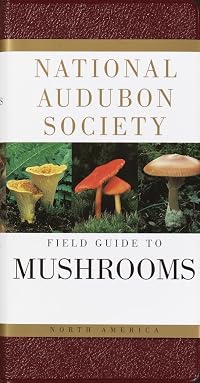
National Audubon Society Field Guide to North American Mushrooms
by National Audubon Society, National Audubon Society
On This Page
Description
Over 750 color photographs show mushrooms as they appear in their natural habitats and are arranged by species, shape and color.Tags
Recommendations







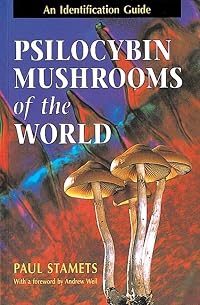

Member Reviews
Oddly, this wasn't among the first books I bought when I became a rabid mushroom photographer. It's a recent purchase and while useful for photos and the little visual key to mushroom ID, it has a couple of drawbacks. First the color plates use "common names" for the mushrooms depicted. According to author Gary H. Lincoff it was his editor who asked for that. He complained that 90% of mushrooms didn't have common names and mycology enthusiasts were used to scientific names. They won. The other issue is that it hasn't been revised since 1981 which means MANY of the taxonomical details have changed due to DNA analysis and other improved ID technology. Still, it is a helpful book to have since the photos are good and the organization is show more easy to use. show less
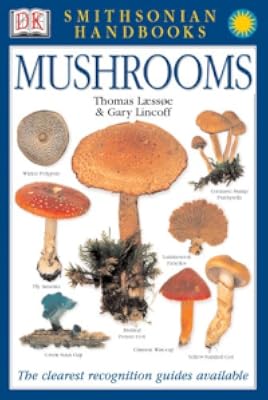
A great guide with a vast amount of information, but having the color plates in the front of the guide are cumbersome as you have to go back and forth between the text entry and the photo. Photos show ideal specimens in their habitat. I find cross referencing this guide with the Smithsonian guide to be highly complimentary, even essential, because neither guide stands fully on their own.
The guide classifies the majority of North American mushrooms into 14 groups. However, I think they could have easily used only 8. The objective here is not scientific rigor, so I see no reason to give every oddball mushroom its own group. Yes, I know that sometimes that is the nature of the beast in assignments like this. When coming upon an unknown mushroom, the person compares its shape to the silhouettes provided in the beginning of the book. There are many of these silhouettes, but each is distinctive in its own way. It really is easy to get right to the general group rather quickly. However, you will likely find that the mushrooms in your area vary slightly. You will have many species particular to your area only, but their show more resemblance to the book's mushrooms will be telling. Books that concentrate on a smaller area, like Southern Mushrooms, will be your next stop or the good ole internet. I remember the easiest intermediate book I used was David Aurora's Mushrooms Demystified, but it is focused on western species.
Audubon's guides are difficult to match for the quality of the photos. Even if you prefer a more rigorous approach to identification, the photos and text packed into this small and somewhat rugged little book is impressive. My only complaint that I can level at it, though not seriously, is that the large breath of coverage leaves out many species. That said, you will always find a species close enough to yours that after a little more research you can put a tag on. Unless, of course, your mushroom is a little brown mushroom -- of which I refuse to give them the satisfaction of speak about. Each mushroom is presented in a colored photo plate. Each colored plate is linked to an associated entry in the second part of the book detailing its: common name, binomial name, family, and order. Below this, the average measurements, distinguishing characteristics (white hairs, latex like secretions, bad spell, elliptical spores, sticky cap, spore print color, etc.) are enumerated. While edibility is defined, and many people do eat them, I am uneasy about this -- for the overwhelming majority of species, it would matter little, for a couple of mushrooms there would little that doctors could do to help you -- unless you fancy dialysis for significant periods of your life. Amanita phalloides and Amanita ocreata are called death cap and destroying angel, respectively, for a reason. Contact your local university's resident mycologist. His or her classes will most definitely have field work associated with them -- maybe you can tag along. Habitat, Season, Range, and common look-alikes are also mentioned and two or three well written paragraphs mention interesting about the species to round off the description.
I think the audubon guides are the best ones to get early adolescents into nature. They are easy to use, packed with color photos, and are relatively rugged (except for the paper thin descriptions page). They differentiate the groups by concentrating on the criteria that make some mushrooms stand out from others. The glossary is also not simply a tacked on affair that offers little. Includes drawings that clearly indicate diversity of structure among the groups. Near the back is a spore print chart. The spore chart can be used to take many gilled mushrooms to genus level. This is great, as there are so many gilled mushrooms. To make a spore print, separate the cap from the 'stalk'. Then place the cap gills down on a piece of clear glass. Now cover the cap with a bowl and wait a few hours. You can wait until the print dries then scrape it up and re-suspend the spores in water to view them under a microscope if you are so inclined. I am confused why one of the authors didn't mention these things. show less
Audubon's guides are difficult to match for the quality of the photos. Even if you prefer a more rigorous approach to identification, the photos and text packed into this small and somewhat rugged little book is impressive. My only complaint that I can level at it, though not seriously, is that the large breath of coverage leaves out many species. That said, you will always find a species close enough to yours that after a little more research you can put a tag on. Unless, of course, your mushroom is a little brown mushroom -- of which I refuse to give them the satisfaction of speak about. Each mushroom is presented in a colored photo plate. Each colored plate is linked to an associated entry in the second part of the book detailing its: common name, binomial name, family, and order. Below this, the average measurements, distinguishing characteristics (white hairs, latex like secretions, bad spell, elliptical spores, sticky cap, spore print color, etc.) are enumerated. While edibility is defined, and many people do eat them, I am uneasy about this -- for the overwhelming majority of species, it would matter little, for a couple of mushrooms there would little that doctors could do to help you -- unless you fancy dialysis for significant periods of your life. Amanita phalloides and Amanita ocreata are called death cap and destroying angel, respectively, for a reason. Contact your local university's resident mycologist. His or her classes will most definitely have field work associated with them -- maybe you can tag along. Habitat, Season, Range, and common look-alikes are also mentioned and two or three well written paragraphs mention interesting about the species to round off the description.
I think the audubon guides are the best ones to get early adolescents into nature. They are easy to use, packed with color photos, and are relatively rugged (except for the paper thin descriptions page). They differentiate the groups by concentrating on the criteria that make some mushrooms stand out from others. The glossary is also not simply a tacked on affair that offers little. Includes drawings that clearly indicate diversity of structure among the groups. Near the back is a spore print chart. The spore chart can be used to take many gilled mushrooms to genus level. This is great, as there are so many gilled mushrooms. To make a spore print, separate the cap from the 'stalk'. Then place the cap gills down on a piece of clear glass. Now cover the cap with a bowl and wait a few hours. You can wait until the print dries then scrape it up and re-suspend the spores in water to view them under a microscope if you are so inclined. I am confused why one of the authors didn't mention these things. show less
Good mushroom book, but the formatting takes awhile to get used to. I would pick others first if I were selecting just one or two to own.
A good reference, although I found it difficult to look up specific instances for identification. That may be my lack & not theirs though. Like their other books, this is a very good buy.
The classification and instruction are great to sort mushroom finds. pics are amazing
I never got poisoned from any mushrooms I ate while referring to this book.
Members
- Recently Added By
Author Information

118+ Works 4,049 Members
Series
Belongs to Publisher Series
Common Knowledge
- Canonical title
- National Audubon Society Field Guide to North American Mushrooms
- Original publication date
- 1981
- Important places
- North America
- Original language
- English
Classifications
Statistics
- Members
- 1,036
- Popularity
- 24,985
- Reviews
- 8
- Rating
- (4.14)
- Languages
- English
- Media
- Paper
- ISBNs
- 2
- UPCs
- 1
- ASINs
- 4
