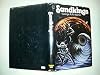
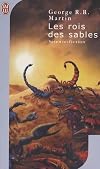
Sandkings
by George R. R. Martin
On This Page
Tags
Recommendations
















Member Reviews
I was quite excited to find this book in the library discard pile - I first saw Sandkings in an Outer Limits reboot in the 90's. This is a short story collection of Martin's stories from the 1970's. Like a lot of authors starting out in the period, the stories are weird and sometimes unsettling. For example "In the House of the Worms", a story set far in the future with a dying a sun, the humans worship the worms, and each year, their king sacrifices part of himself to be more like the worms... However, a few of them such as Star Lady captures what it means to be human. As for Sandkings- this isn't the same story the Outer Limits episode was based on, which is rather disappointing. However, the story in this book is incredibly well show more written, and a fun read. Its the best in this volume. show less
I first read Sandkings as a youngster with a purloined copy of Omni magazine. To this day I still get a little creeped out around anthills and/or secretly wonder if I fed the ants right if they'll begin to decorate their hills with pictures of me. Came across this again today and found it as deliciously creepy as I did the first time
https://nwhyte.livejournal.com/3651558.html
I have a feeling that I actually read “Sandkings” when it was first published in Omni in 1979, borrowed from a colleague of my parents' at the Netherlands Institute for Advanced Studies. At twelve, I didn't really know what to make of it. At 53, it's a brutal story of what it means for a flawed man to become a god. The narcissistic protagonist acquires four colonies of sandkings, creatures which build their own civilisations in his terrarium, worshipping him. He treats them badly, and they change and grow to match his personality. His attempts to liberate himself from the problem that he has created end in disaster. It's not a nice story but it's very well crafted; we are fascinated by the show more awfulness of the central character.
Of course, now we know that George R.R. Martin is fascinated by flawed characters. Looking back on Game of Thrones, it's remarkable how memorable the out-and-out villains are - Tywin, Cersei and Joffrey; Ramsay Bolton; Daenerys at the end. And his good characters certainly also have flaws, and are tempted to apotheosis (this is Daenerys' downfall). The world of the sandkings is convincingly like ours, just a little worse, perhaps.
Also on both ballots for Best Novelette that year was “Options”, by John Varley. The other Hugo finalists were “Fireflood”, by Vonda N. McIntyre; “Homecoming”, by Barry B. Longyear; “The Locusts”, by Larry Niven & Steve Barnes; and “Palely Loitering”, by Christopher Priest. The other Nebula finalists were “The Angel of Death”, by Michael Shea; “Camps”, by Jack Dann; “The Pathways of Desire”, by Ursula K. Le Guin; and “The Ways of Love”, by Poul Anderson. I have read the first of these but can't remember if I have read any of the others. I suspect the voters got it right. show less
I have a feeling that I actually read “Sandkings” when it was first published in Omni in 1979, borrowed from a colleague of my parents' at the Netherlands Institute for Advanced Studies. At twelve, I didn't really know what to make of it. At 53, it's a brutal story of what it means for a flawed man to become a god. The narcissistic protagonist acquires four colonies of sandkings, creatures which build their own civilisations in his terrarium, worshipping him. He treats them badly, and they change and grow to match his personality. His attempts to liberate himself from the problem that he has created end in disaster. It's not a nice story but it's very well crafted; we are fascinated by the show more awfulness of the central character.
Of course, now we know that George R.R. Martin is fascinated by flawed characters. Looking back on Game of Thrones, it's remarkable how memorable the out-and-out villains are - Tywin, Cersei and Joffrey; Ramsay Bolton; Daenerys at the end. And his good characters certainly also have flaws, and are tempted to apotheosis (this is Daenerys' downfall). The world of the sandkings is convincingly like ours, just a little worse, perhaps.
Also on both ballots for Best Novelette that year was “Options”, by John Varley. The other Hugo finalists were “Fireflood”, by Vonda N. McIntyre; “Homecoming”, by Barry B. Longyear; “The Locusts”, by Larry Niven & Steve Barnes; and “Palely Loitering”, by Christopher Priest. The other Nebula finalists were “The Angel of Death”, by Michael Shea; “Camps”, by Jack Dann; “The Pathways of Desire”, by Ursula K. Le Guin; and “The Ways of Love”, by Poul Anderson. I have read the first of these but can't remember if I have read any of the others. I suspect the voters got it right. show less
The title story from this collection was mentioned in a list of the best short stories ever, and since I've enjoyed George R.R. Martin's other work I was particularly interested in hunting it down. That story focuses on a character's slide from casual selfish evil to total villainy, and provides a tantalizing glimpse of a vivid Sci-Fi setting.
This collection features seven Martin short stories from the late 70s, including two Hugo winners. For the most part these are stories about people set on interesting and dangerous alien worlds. The title story, "Sandkings," is probably Martin's best known short story, and is very well done, if not exactly my cup of tea (it's more of a horror story set in a sci fi world). My favorite was "Bitterblooms," a sad and strangely beautiful story about a young woman's struggle for survival on a world that endures winters that last for years. "The Way of Cross and Dragon," "In the House of the Worm," and "The Stone City" were also pretty good.
The ultimate pets needs a benevolent god. Or you get 'Sandkings' by GRRM.
My reactions to reading this collection in 1995. Spoilers follow.
“The Way of Cross and Dragon” -- An interesting story with a distinctly mediaeval flavor. This is part of Martin’s loosely connected Commonwealth series and features an Inquisitor of the Order of the Knights of Jesus Christ dispatched to put an end to a particularly intriguing heresy (the best and most inventive part of the story), namely the Order of Saint Judas Iscariot. The heresy is based on a lively mishmash and confusion of myth and history (with the cover of divine curses having altered memories). Judas starts out as an ambitious youth and child prostitute and then becomes a necromancer, sole tamer of dragons, and lord of Babylon. Then he moves to mutilator of show more Christ and, via repentance, an apostle. After the crucifixion, he angrily kills Peter and is rebuked by Christ upon his resurrection. (Peter is resurrected). Judas has his gifts of tongues and healing removed and is told by Christ he will forever be remember as the Betrayer. Eventually, after living more than a 1,000 years, he finds favor with Christ again. He consents to have Judas’ true history remembered by a few. As entertaining as this heresy is, it’s just a frame to hang a philosophical tale on about the attraction beautiful lies have be they political ideologies or religions. Only a few can stare at the true universe which has no afterlife, no Creator, no purpose for human life, and no chance for the human race to leave a permanent memorial. (Martin once described his stories as being search-and-destroy missions against romance.) One of those few is the inventor of the heresy who cheerfully admits he made the whole thing up (including forging supporting historical documents and altering others). He belongs to a conspiracy of Liars, a very long-lived group who takes it upon themselves to invent beautiful lies (including, perhaps, Christianity) for those who can not gaze upon the truth of the universe like they can.
“Bitterblooms” -- A story exhibiting Martin’s lyrical, fantasy flavored prose. Essentially this is a story of a woman abducted – at least it seemed to me – by a stranded space traveler and forced into a love affair (a lesbian one) but this is very matter-of-fact and not salaciously played up. She escapes but develops a permanent taste for travel and, in her dying moments, thinks fondly of her time on the spaceship. This is part of Martin’s loose Avalon series.
“In the House of the Worm” -- An enjoyable, suspenseful far-future tale of a dying sun and a decaying humanity living in the ruins of a city. There is a vague history of genetic manipulation that’s alluded to, a time that produced the mysterious, dark dwelling grouns and the worms that prey on them. Not only does this story share a theme with Martin’s “The Way of Cross and Dragon” – the unflinching acceptance of the purposelessness and fleeting nature of humanity’s existence. (The White Worm the humans worship is a symbol of decay, entropy, and death.) It is also a story of a person’s preconceptions being challenged. The humans regard grouns as livestock. When the hero encounters some grouns on his flight through the underworld (and convinces them not to kill him) and learns they have a human type culture (he doesn’t spend that much time with them) and seem to come from human stock. On his return to his people, he tries to convince his people to stop eating grouns, to mate with them, and that their common enemy are the worms taking over the underworld. Alas, the story ends on the same gloomy, fatal note of decay and decadence it opened since the hero comes to be regarded as simply an entertaining novelty. The worm, symbol of decay, is not to be stopped.
“Fast-Friend” -- A story similar to Martin’s “A Song for Lya” in that both feature pairs of lovers where a gulf is opened when one lover undergoes a transcendent reformation that the other can not share in. In “A Song for Lya”, it was a submergence in a telepathic group mind. Here it is when a woman becomes a “fast-friend”, a vacuum inhabiting symbiot (formed in a usually lethal encounter with a “dark” a creature capable of faster-than-light travel in space) that flits from sun to sun. Her lover finds her more distant, more alien. Yet, he doesn’t have the courage to risk death to become like her. Eventually, he hatches a successful scheme to harness the “fast-friends” as slaves to pull ships through space but decides that the fast-friends should not be exploited.
“The Stone City” -- An interesting story of an interstellar sailor possessed by wanderlust and desperate to get off a planet he’s stranded on. He undertakes an exploration of a mysterious alien ruin, a city that ultimately proves to be a tool for walking from world to world by walking from door to door in its subterranean passages. It’s not a new idea. Roger Zelazny used it in Today We Choose Faces, but Martin carries it off by lots of his usual baroque touches.
“Starlady” -- Essentially this is a story of street vengeance – a prostitute kills the pimp who stole her lover for his own stable – amid the squalor of a future alien slum instead of a contemporary one. She also forsakes the “love” of her pimp. The story works well by Martin’s baroque style, future slang, and by providing more detail for his disconnected manrealm series.
“Sandkings” -- This science fiction horror story uses the same central idea as Barry B. Longyear’s “Adagio” and a Twilight Zone episode whose name I don’t remember: a man playing God – literally – to a race of smaller sentient beings. But Martin takes the premise further and adds more details. The Sandkings war with each other and regard protagonist Kress as a malevolent god at best. They are telepathic and manipulate Kress into murdering for them. Most importantly, they are capable of evolving into a new, man-size form that is intelligent and, generally, peaceful except when tortured by Kress. A good story. The sandkings are also hive-minds and evolve a greater intelligence as they develop. Both features set them apart from the aliens in those other mentioned stories. show less
“The Way of Cross and Dragon” -- An interesting story with a distinctly mediaeval flavor. This is part of Martin’s loosely connected Commonwealth series and features an Inquisitor of the Order of the Knights of Jesus Christ dispatched to put an end to a particularly intriguing heresy (the best and most inventive part of the story), namely the Order of Saint Judas Iscariot. The heresy is based on a lively mishmash and confusion of myth and history (with the cover of divine curses having altered memories). Judas starts out as an ambitious youth and child prostitute and then becomes a necromancer, sole tamer of dragons, and lord of Babylon. Then he moves to mutilator of show more Christ and, via repentance, an apostle. After the crucifixion, he angrily kills Peter and is rebuked by Christ upon his resurrection. (Peter is resurrected). Judas has his gifts of tongues and healing removed and is told by Christ he will forever be remember as the Betrayer. Eventually, after living more than a 1,000 years, he finds favor with Christ again. He consents to have Judas’ true history remembered by a few. As entertaining as this heresy is, it’s just a frame to hang a philosophical tale on about the attraction beautiful lies have be they political ideologies or religions. Only a few can stare at the true universe which has no afterlife, no Creator, no purpose for human life, and no chance for the human race to leave a permanent memorial. (Martin once described his stories as being search-and-destroy missions against romance.) One of those few is the inventor of the heresy who cheerfully admits he made the whole thing up (including forging supporting historical documents and altering others). He belongs to a conspiracy of Liars, a very long-lived group who takes it upon themselves to invent beautiful lies (including, perhaps, Christianity) for those who can not gaze upon the truth of the universe like they can.
“Bitterblooms” -- A story exhibiting Martin’s lyrical, fantasy flavored prose. Essentially this is a story of a woman abducted – at least it seemed to me – by a stranded space traveler and forced into a love affair (a lesbian one) but this is very matter-of-fact and not salaciously played up. She escapes but develops a permanent taste for travel and, in her dying moments, thinks fondly of her time on the spaceship. This is part of Martin’s loose Avalon series.
“In the House of the Worm” -- An enjoyable, suspenseful far-future tale of a dying sun and a decaying humanity living in the ruins of a city. There is a vague history of genetic manipulation that’s alluded to, a time that produced the mysterious, dark dwelling grouns and the worms that prey on them. Not only does this story share a theme with Martin’s “The Way of Cross and Dragon” – the unflinching acceptance of the purposelessness and fleeting nature of humanity’s existence. (The White Worm the humans worship is a symbol of decay, entropy, and death.) It is also a story of a person’s preconceptions being challenged. The humans regard grouns as livestock. When the hero encounters some grouns on his flight through the underworld (and convinces them not to kill him) and learns they have a human type culture (he doesn’t spend that much time with them) and seem to come from human stock. On his return to his people, he tries to convince his people to stop eating grouns, to mate with them, and that their common enemy are the worms taking over the underworld. Alas, the story ends on the same gloomy, fatal note of decay and decadence it opened since the hero comes to be regarded as simply an entertaining novelty. The worm, symbol of decay, is not to be stopped.
“Fast-Friend” -- A story similar to Martin’s “A Song for Lya” in that both feature pairs of lovers where a gulf is opened when one lover undergoes a transcendent reformation that the other can not share in. In “A Song for Lya”, it was a submergence in a telepathic group mind. Here it is when a woman becomes a “fast-friend”, a vacuum inhabiting symbiot (formed in a usually lethal encounter with a “dark” a creature capable of faster-than-light travel in space) that flits from sun to sun. Her lover finds her more distant, more alien. Yet, he doesn’t have the courage to risk death to become like her. Eventually, he hatches a successful scheme to harness the “fast-friends” as slaves to pull ships through space but decides that the fast-friends should not be exploited.
“The Stone City” -- An interesting story of an interstellar sailor possessed by wanderlust and desperate to get off a planet he’s stranded on. He undertakes an exploration of a mysterious alien ruin, a city that ultimately proves to be a tool for walking from world to world by walking from door to door in its subterranean passages. It’s not a new idea. Roger Zelazny used it in Today We Choose Faces, but Martin carries it off by lots of his usual baroque touches.
“Starlady” -- Essentially this is a story of street vengeance – a prostitute kills the pimp who stole her lover for his own stable – amid the squalor of a future alien slum instead of a contemporary one. She also forsakes the “love” of her pimp. The story works well by Martin’s baroque style, future slang, and by providing more detail for his disconnected manrealm series.
“Sandkings” -- This science fiction horror story uses the same central idea as Barry B. Longyear’s “Adagio” and a Twilight Zone episode whose name I don’t remember: a man playing God – literally – to a race of smaller sentient beings. But Martin takes the premise further and adds more details. The Sandkings war with each other and regard protagonist Kress as a malevolent god at best. They are telepathic and manipulate Kress into murdering for them. Most importantly, they are capable of evolving into a new, man-size form that is intelligent and, generally, peaceful except when tortured by Kress. A good story. The sandkings are also hive-minds and evolve a greater intelligence as they develop. Both features set them apart from the aliens in those other mentioned stories. show less
Members
- Recently Added By
Lists

Short Story Collections and Anthologies
261 works; 42 members

Favorite Short Fiction
228 works; 99 members

Genre Benders: Science Fiction + Horror
15 works; 4 members

Favourite Short Stories
157 works; 9 members

BlackDog's Complete Paperbacks From Hell List
639 works; 3 members
Author Information

George R. R. Martin was born on September 20, 1948 in Bayonne, New Jersey. He began writing at an early age, selling monster stories for pennies to neighborhood children. He received B.S. and M.S. degrees in Journalism from Northwestern University. In 1986, he worked as a story editor for the CBS series The Twilight Zone. He was also an executive show more story consultant, producer and co-supervising producer for CBS's Beauty and the Beast. In 1970, he sold the story The Hero to Galaxy magazine. Since becoming a full-time writer in 1979, he has written many novels, stories, and series including A Song for Lya, Portraits of His Children, The Pear-Shaped Man, and the Song of Ice and Fire series. He has won numerous awards including five Locus Awards, three Hugo Awards and two Nebula awards. In 2013 he made The New York Times Best Seller List with his titles A Dance with Dragons and A Game of Thrones: a Clash of Kings, a Storm of Swords, a Feast for Crows. His title's Rogues and The Ice Dragon made the New York Times List in 2014. Martin's title, A Knight of Seven Kingdoms, A Song of Fire and Ice novel, made the New York Times bestseller list in 2015. He is number 4 on the Hollywood Reporter's '25 Most Powerful Authors' 2016 list. (Bowker Author Biography) show less
Some Editions
Awards and Honors
Awards
Series
Belongs to Publisher Series
Work Relationships
Is contained in
Contains
Common Knowledge
- Canonical title*
- Les rois des sables
- Original title
- Sandkings
- Original publication date
- 1981 (collection) (collection); 1977 (Bitterblooms) (Bitterblooms); 1976 (Fast-Friend) (Fast-Friend); 1976 (In the House of the Worm) (In the House of the Worm); 1979 (Sandkings) (Sandkings); 1976 (starlady) (starlady) (show all 8); 1977 (The Stone City) (The Stone City); 1979 (The Way of Cross and Dragon) (The Way of Cross and Dragon)
- Related movies
- "The Outer Limits" Sandkings (1995 | IMDb)
- First words*
- « Hérésie », me dit-il.
- Last words*
- (Click to show. Warning: May contain spoilers.)Tous avaient son visage.
- Original language
- English
- Disambiguation notice
- This is the listing for the Collection which includes at least 7 stories including the title story. Do not combine with the standalone novelette listing.
*Some information comes from Common Knowledge in other languages. Click "Edit" for more information.
Classifications
Statistics
- Members
- 541
- Popularity
- 55,368
- Reviews
- 20
- Rating
- (4.11)
- Languages
- 12 — Bengali, Bulgarian, Czech, Danish, English, French, German, Hungarian, Japanese, Polish, Romanian, Spanish
- Media
- Paper, Audiobook, Ebook
- ISBNs
- 23
- ASINs
- 9