On This Page
Description
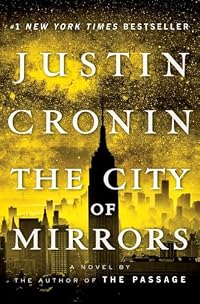
#1 NEW YORK TIMES BESTSELLER • “A thrilling finale to a trilogy that will stand as one of the great achievements in American fantasy fiction.”—Stephen KingYou followed The Passage. You faced The Twelve. Now enter The City of Mirrors for the final reckoning. As the bestselling epic races to its breathtaking finale, Justin Cronin’s band of hardened survivors await the second coming of unspeakable darkness.
The world we knew is gone. What world will rise in its place?
The Twelve show more have been destroyed and the terrifying hundred-year reign of darkness that descended upon the world has ended. The survivors are stepping outside their walls, determined to build society anew—and daring to dream of a hopeful future.
But far from them, in a dead metropolis, he waits: Zero. The First. Father of the Twelve. The anguish that shattered his human life haunts him, and the hatred spawned by his transformation burns bright. His fury will be quenched only when he destroys Amy—humanity’s only hope, the Girl from Nowhere who grew up to rise against him.
One last time light and dark will clash, and at last Amy and her friends will know their fate.
Look for the entire Passage trilogy:
THE PASSAGE | THE TWELVE | THE CITY OF MIRRORS
Praise for The City of Mirrors
“Compulsively readable.”—The New York Times Book Review
“The City of Mirrors is poetry. Thrilling in every way it has to be, but poetry just the same . . . The writing is sumptuous, the language lovely, even when the action itself is dark and violent.”—The Huffington Post
“This really is the big event you’ve been waiting for . . . A true last stand that builds and comes with a bloody, roaring payoff you won’t see coming, then builds again to the big face off you’ve been waiting for.”—NPR
“A masterpiece . . . with The City of Mirrors, the third volume in The Passage trilogy, Justin Cronin puts paid to what may well be the finest post-apocalyptic epic in our dystopian-glutted times. A stunning achievement by virtually every measure.”—The National Post
“Justin Cronin’s Passage trilogy is remarkable for the unremitting drive of its narrative, for the breathtaking sweep of its imagined future, and for the clear lucidity of its language.”—Stephen King. show less
Tags
Recommendations




Member Reviews
This is the third book in Justin Cronin's Passage trilogy. I read the first two a while back, and, I'm sorry to say, I was not impressed with them. I only finished the series, finally, out of some stubborn sense of completism, which is really not a very good reason to read a 600 page book. But I figured, hey, maybe he'd saved the best for last and would pull off a really engaging conclusion.
No such luck. I knew I was in trouble when, after about 80 pages in which not a whole lot happens, we then drop even that much of the story to spend fully a hundred pages on a detailed history of the bad guy's college days and unconvincing tragic love story. Which is clearly meant to make him seem more well-rounded and human, and even somewhat show more sympathetic, but as far as I'm concerned, it succeeds on that first thing only in as far as it makes him at least slightly less of a non-entity, and fails spectacularly on the second.
Honestly, I think the problem with these books is that Cronin is trying very hard to write something that is simultaneously character-based literary fiction and an apocalyptic action/horror story, and in trying to do both at once, he ends up doing neither well. Which isn't to say it can't be done. It certainly can, but it's hard, and Cronin does not pull it off. What makes this even more frustrating is that, while this was never going to be good litfic, it had the potential to be a decent apocalyptic action/horror story, if it weren't so thoroughly bogged down with things like 100-page flashbacks to make sure we know important details like what kind of sandwich the villain's mother packed for him on his first day of college.
As it is, well, this is just going to have to remain one of those works whose popularity is truly inexplicable to me. show less
No such luck. I knew I was in trouble when, after about 80 pages in which not a whole lot happens, we then drop even that much of the story to spend fully a hundred pages on a detailed history of the bad guy's college days and unconvincing tragic love story. Which is clearly meant to make him seem more well-rounded and human, and even somewhat show more sympathetic, but as far as I'm concerned, it succeeds on that first thing only in as far as it makes him at least slightly less of a non-entity, and fails spectacularly on the second.
Honestly, I think the problem with these books is that Cronin is trying very hard to write something that is simultaneously character-based literary fiction and an apocalyptic action/horror story, and in trying to do both at once, he ends up doing neither well. Which isn't to say it can't be done. It certainly can, but it's hard, and Cronin does not pull it off. What makes this even more frustrating is that, while this was never going to be good litfic, it had the potential to be a decent apocalyptic action/horror story, if it weren't so thoroughly bogged down with things like 100-page flashbacks to make sure we know important details like what kind of sandwich the villain's mother packed for him on his first day of college.
As it is, well, this is just going to have to remain one of those works whose popularity is truly inexplicable to me. show less
***NO SPOILERS***
(Part I reviews The City of Mirrors. Part II reviews the trilogy as a whole.)
Part I
Series authors take note: this is how you write a finale. The City of Mirrors not only ties up the trilogy well but brings it beautifully full circle. Cronin connected the third book to the other two with enough references and familiar characters but made it distinct enough that nothing feels repetitious. Twists and surprises abound; leaps in time work well, never feeling jarring; no new characters are extraneous.
The City of Mirrors is more unlike than like The Twelve, though the writing is just as sharp. Cronin is the kind of author who thoughtfully selects words without overdoing it. This translates to a story that’s a full, balanced show more experience. This isn’t a genre story that sacrifices quality writing for story nor is this pages of turgid prose that shows off rather than tells much of a story.
What makes The City of Mirrors stand out from The Passage and The Twelve--and makes it a vital installment--is its villain, lovingly crafted and one of the most well-realized characters across all three books. He’s multi-dimensional, with a heart-shattering, psychologically complex backstory portraying a breathtaking vulnerability. This is a lengthy chapter that somehow feels way too short. To say more would be to spoil what’s easily The City of Mirrors’s strongest section, but those unsure about whether to read book three should do it for this; that backstory alone makes The City of Mirrors worth reading.
As is true of The Twelve, Cronin’s descriptions in The City of Mirrors tend to linger, whether that’s spending too much time in characters’ heads or describing, say, a sunset. Descriptions of the outdoors and cityscapes in particular are excessive. These are only interesting when focused on scenes of destruction--how the land has been ravaged by virals and how nature has overtaken what humankind made--otherwise, they’re dull, make the pacing uneven, and simply aren’t always necessary. There’s also, like in The Twelve, an extremely long final action sequence that’s impossible to envision well.
Some question marks hang in the air--see specific questions here (Note: Major spoilers in the questions): https://www.goodreads.com/topic/show/18261212-do-these-make-sense-spoilers ; nevertheless, Cronin was admirably meticulous overall, and considering how many story threads, backstories, tiny details, and characters he had to juggle across three huge books, that’s simply stunning. Additionally, there’s one small element left open-ended that will make some speculate but not others. It seems clear the trilogy is over. There will be no fourth book, and that’s how it needs to be for what’s here to be just right. The City of Mirrors is stupendous, a nearly flawless wrap-up to a first-rate epic.
Part II
The Passage trilogy isn’t about vampires exactly, at least not in the way many people think when they think of vampire stories. These vampires most definitely aren’t of the Edward Cullen variety or Bill and Eric variety. They aren’t of the Dracula variety either. Cronin took a little here and a little there from different horror sources. Those who don’t like vampire stories, think again. This isn’t “another vampire story.” Cronin developed his human characters as much as his monsters, maybe more.
Cronin plotted this trilogy from book one. The story arc therefore extends perfectly across all three books, concluding naturally in book three. Clues dropped and storylines begun in books one and two continue and are fleshed out fully in book three. Readers need to go in order; this is a must, as the books will be incomprehensible otherwise. These aren’t capsules. It’s also ideal--imperative--to read them back-to-back or at least very close in time. These contain many moving parts, and to wait too long between them is to forget numerous crucial details; furthermore, reading the books close in time packs the biggest punch. For those who did read them back-to-back, it can even be rewarding to go back to book one and reread at least part one of that.
Cronin’s trilogy has proven to be on a much more elevated plane than others in the genre. There’s enough here to attract all kinds of readers, including those who normally eschew science fiction, horror, fantasy, or post-apocalyptic stories. There’s also enough artistry in Cronin’s writing to attract lovers of literary fiction. It’s truly a trilogy that can’t be summed up well, and that wouldn’t do it justice anyway.
Final verdict: The vampire trilogy for those who dislike vampire stories. A must-read now.
(Final note: visit enterthepassage.com.) show less
(Part I reviews The City of Mirrors. Part II reviews the trilogy as a whole.)
Part I
Series authors take note: this is how you write a finale. The City of Mirrors not only ties up the trilogy well but brings it beautifully full circle. Cronin connected the third book to the other two with enough references and familiar characters but made it distinct enough that nothing feels repetitious. Twists and surprises abound; leaps in time work well, never feeling jarring; no new characters are extraneous.
The City of Mirrors is more unlike than like The Twelve, though the writing is just as sharp. Cronin is the kind of author who thoughtfully selects words without overdoing it. This translates to a story that’s a full, balanced show more experience. This isn’t a genre story that sacrifices quality writing for story nor is this pages of turgid prose that shows off rather than tells much of a story.
What makes The City of Mirrors stand out from The Passage and The Twelve--and makes it a vital installment--is its villain, lovingly crafted and one of the most well-realized characters across all three books. He’s multi-dimensional, with a heart-shattering, psychologically complex backstory portraying a breathtaking vulnerability. This is a lengthy chapter that somehow feels way too short. To say more would be to spoil what’s easily The City of Mirrors’s strongest section, but those unsure about whether to read book three should do it for this; that backstory alone makes The City of Mirrors worth reading.
As is true of The Twelve, Cronin’s descriptions in The City of Mirrors tend to linger, whether that’s spending too much time in characters’ heads or describing, say, a sunset. Descriptions of the outdoors and cityscapes in particular are excessive. These are only interesting when focused on scenes of destruction--how the land has been ravaged by virals and how nature has overtaken what humankind made--otherwise, they’re dull, make the pacing uneven, and simply aren’t always necessary. There’s also, like in The Twelve, an extremely long final action sequence that’s impossible to envision well.
Some question marks hang in the air--see specific questions here (Note: Major spoilers in the questions): https://www.goodreads.com/topic/show/18261212-do-these-make-sense-spoilers ; nevertheless, Cronin was admirably meticulous overall, and considering how many story threads, backstories, tiny details, and characters he had to juggle across three huge books, that’s simply stunning. Additionally, there’s one small element left open-ended that will make some speculate but not others. It seems clear the trilogy is over. There will be no fourth book, and that’s how it needs to be for what’s here to be just right. The City of Mirrors is stupendous, a nearly flawless wrap-up to a first-rate epic.
Part II
The Passage trilogy isn’t about vampires exactly, at least not in the way many people think when they think of vampire stories. These vampires most definitely aren’t of the Edward Cullen variety or Bill and Eric variety. They aren’t of the Dracula variety either. Cronin took a little here and a little there from different horror sources. Those who don’t like vampire stories, think again. This isn’t “another vampire story.” Cronin developed his human characters as much as his monsters, maybe more.
Cronin plotted this trilogy from book one. The story arc therefore extends perfectly across all three books, concluding naturally in book three. Clues dropped and storylines begun in books one and two continue and are fleshed out fully in book three. Readers need to go in order; this is a must, as the books will be incomprehensible otherwise. These aren’t capsules. It’s also ideal--imperative--to read them back-to-back or at least very close in time. These contain many moving parts, and to wait too long between them is to forget numerous crucial details; furthermore, reading the books close in time packs the biggest punch. For those who did read them back-to-back, it can even be rewarding to go back to book one and reread at least part one of that.
Cronin’s trilogy has proven to be on a much more elevated plane than others in the genre. There’s enough here to attract all kinds of readers, including those who normally eschew science fiction, horror, fantasy, or post-apocalyptic stories. There’s also enough artistry in Cronin’s writing to attract lovers of literary fiction. It’s truly a trilogy that can’t be summed up well, and that wouldn’t do it justice anyway.
Final verdict: The vampire trilogy for those who dislike vampire stories. A must-read now.
(Final note: visit enterthepassage.com.) show less
A strange one. Mostly in good ways.
What was strange? I found it interesting that this one pretty much picked up where The Twelve left off, but when we met Zero, it completely detoured for somewhere around a quarter to a third of the novel in an extended flashback of Fanning's life.
I can be a long-winded damn storyteller at times, and I've read some long-winded authors, like Tolkien and King and Clancy. But even to my battle-hardened eyes, this seemed awfully long.
And yet, once I settled in and realized this wasn't a quick side trip, but a long ride, I found myself enjoying this novella-within-the-novel-within-the-trilogy.
Then we got through that, and the story kept ticking along at a good pace. The climax was epic, and very cinematic, show more in my view, as though Cronin had an eye to the inevitable movie deal (yes, I know it was sold years ago).
And then there was the ending. Cronin takes a page from Tolkien, or more appropriately, from the real life Peter Jackson (the fictional version of which is one of the many heroes of this novel) and ends the novel...and just keeps going.
Yes, it was nice to find out what became of some of the characters. Yes, it was interesting to see the world a thousand years past the "event"...even if it looked pretty much exactly like the one we have now, but with less dependable phone reception. But did I really need to watch a burgeoning romance start at the end of a story I'd already read a half-million words on? Not so much.
Overall, though, despite some of the story that felt padded for length, I really enjoyed both this novel and the entire series. Not my favourite apocalyptic thriller (that still falls to King's The Stand), and not my favourite trilogy (that would likely be Stephen R. Donaldson's first three Thomas Covenant books, before he went on to fuck it up so badly). But this series is up there. Well realized characters, interesting antagonists, and a fun story, overall...even if he uses the overused "kill the host, kill the horde" plot device).
Definitely worth the read. So yes, this was a fitting end to the Passage trilogy that put Cronin's name on the map. It'll be interesting to see what he does next. show less
What was strange? I found it interesting that this one pretty much picked up where The Twelve left off, but when we met Zero, it completely detoured for somewhere around a quarter to a third of the novel in an extended flashback of Fanning's life.
I can be a long-winded damn storyteller at times, and I've read some long-winded authors, like Tolkien and King and Clancy. But even to my battle-hardened eyes, this seemed awfully long.
And yet, once I settled in and realized this wasn't a quick side trip, but a long ride, I found myself enjoying this novella-within-the-novel-within-the-trilogy.
Then we got through that, and the story kept ticking along at a good pace. The climax was epic, and very cinematic, show more in my view, as though Cronin had an eye to the inevitable movie deal (yes, I know it was sold years ago).
And then there was the ending. Cronin takes a page from Tolkien, or more appropriately, from the real life Peter Jackson (the fictional version of which is one of the many heroes of this novel) and ends the novel...and just keeps going.
Yes, it was nice to find out what became of some of the characters. Yes, it was interesting to see the world a thousand years past the "event"...even if it looked pretty much exactly like the one we have now, but with less dependable phone reception. But did I really need to watch a burgeoning romance start at the end of a story I'd already read a half-million words on? Not so much.
Overall, though, despite some of the story that felt padded for length, I really enjoyed both this novel and the entire series. Not my favourite apocalyptic thriller (that still falls to King's The Stand), and not my favourite trilogy (that would likely be Stephen R. Donaldson's first three Thomas Covenant books, before he went on to fuck it up so badly). But this series is up there. Well realized characters, interesting antagonists, and a fun story, overall...even if he uses the overused "kill the host, kill the horde" plot device).
Definitely worth the read. So yes, this was a fitting end to the Passage trilogy that put Cronin's name on the map. It'll be interesting to see what he does next. show less
I have been avoiding writing this review for three weeks and not because I did not enjoy the finale. Rather, I enjoyed it a lot. Yet, the entire time I was reading it, I could not help but recognize that there are going to be many fans who are supremely disappointed. It is not as action-packed as the first novel, and there are huge swaths of flashbacks that seem odd in a third book but are necessary to flesh out Zero as the ultimate villain. While I feel Mr. Cronin brings dignified and fitting ends to these characters who have experienced so much in their lives, I fear that others will disagree. Strongly.
Personally, I thoroughly enjoyed The City of Mirrors. Using flashbacks, Mr. Cronin fills in the gaps of Zero’s past, and we finally show more see the connections between Zero and Dr. Lear as well as the reasons for Zero’s fascination with Amy. We get to see all of our favorite characters yet again and what they are doing with their lives since we last saw them. I adore the ending and how he ties certain character arcs up so nicely but leaves others open for interpretation. I think this better reflects reality and is in keeping with each character’s personality. Mr. Cronin’s writing remains powerful and evocative, and the story, for all its trolling of past events, moves along at a rapid pace without skipping key plot points.
That being said, there are several points within the novel that made me laugh out loud or work a bit harder than necessary to suspend disbelief. While there has always been an element of the supernatural to Amy’s powers, Mr. Cronin elevates this supernatural element, thereby giving the story a more fantastical air about it than in the previous two novels. It is not that this shift is bad; it is just that it is a departure from the other two stories and is one of the areas I know will be controversial.
Then there is Zero himself. On the surface, he is an unlikely villain, even if he is ground zero for the virus that nearly wiped out all of humanity. Supremely self-absorbed, he is not the type of person to bother with the rest of humanity, whom he so clearly disdains as beneath him. As he shares his story and the parts in his life that continue to haunt him, you realize just how messed in the head he is. It makes for a chilling realization that our hapless heroes are dealing with a true madman, and we all know how difficult that is. Zero is the penultimate monster.
The most important thing about The City of Mirrors is that we get closure. Closure on Amy – the poor girl who has been a pawn in someone else’s end game for too long. Closure on Zero. Closure on the virus that took out the world. Closure on the characters we first met in the first novel, who left the safety of The Colony to seek answers and found themselves facing things they could never imagine – Peter, Michael, Alicia, Sara, and their entire group. Closure on Carter, one of the only virals to inspire sympathy. Closure on this post-apocalyptic world in which humanity hangs by a thread. After so many pages and years with these characters, you cannot ask for much better than that. show less
Personally, I thoroughly enjoyed The City of Mirrors. Using flashbacks, Mr. Cronin fills in the gaps of Zero’s past, and we finally show more see the connections between Zero and Dr. Lear as well as the reasons for Zero’s fascination with Amy. We get to see all of our favorite characters yet again and what they are doing with their lives since we last saw them. I adore the ending and how he ties certain character arcs up so nicely but leaves others open for interpretation. I think this better reflects reality and is in keeping with each character’s personality. Mr. Cronin’s writing remains powerful and evocative, and the story, for all its trolling of past events, moves along at a rapid pace without skipping key plot points.
That being said, there are several points within the novel that made me laugh out loud or work a bit harder than necessary to suspend disbelief. While there has always been an element of the supernatural to Amy’s powers, Mr. Cronin elevates this supernatural element, thereby giving the story a more fantastical air about it than in the previous two novels. It is not that this shift is bad; it is just that it is a departure from the other two stories and is one of the areas I know will be controversial.
Then there is Zero himself. On the surface, he is an unlikely villain, even if he is ground zero for the virus that nearly wiped out all of humanity. Supremely self-absorbed, he is not the type of person to bother with the rest of humanity, whom he so clearly disdains as beneath him. As he shares his story and the parts in his life that continue to haunt him, you realize just how messed in the head he is. It makes for a chilling realization that our hapless heroes are dealing with a true madman, and we all know how difficult that is. Zero is the penultimate monster.
The most important thing about The City of Mirrors is that we get closure. Closure on Amy – the poor girl who has been a pawn in someone else’s end game for too long. Closure on Zero. Closure on the virus that took out the world. Closure on the characters we first met in the first novel, who left the safety of The Colony to seek answers and found themselves facing things they could never imagine – Peter, Michael, Alicia, Sara, and their entire group. Closure on Carter, one of the only virals to inspire sympathy. Closure on this post-apocalyptic world in which humanity hangs by a thread. After so many pages and years with these characters, you cannot ask for much better than that. show less
Cronin has crafted the best possible outcome for his Passage Trilogy. These three stories are epic in scope, and I no longer believe they can be properly captured with even four movies. I almost wish they'd opt for a miniseries so they could really delve into this world.
Book three picks up a few years after the last battle and the survivors are once again trying to rebuild their lives and their civilization. Every one of our core characters are scarred physically, emotionally, and psychologically. Soon after you get everyone's bearings, the story fast forwards 20 years. People feel the threat is over and begin to branch back out to settle the land. The story also veers back to before the outbreak to the story of Zero, the first to show more become infected. He tells his story to Alicia as a way to bond with her.
His tale begins with a parting from his parents as he heads for college, through his first year and then to his ultimate moments being befriended by Jonas Lear and Lears' girlfriend Liz. He falls for her and loves her all his life. His story is heartbreaking, sometimes petty, and often you see how he becomes who he was in life through these stories. Her death and his horrible reaction to it puts him squarely in the path that leads to the ruination of the world.
You might be leery of. a story that goes back and forth in time as well as strange wonderful passages of the surreal afterworld the virals alive and dead exist in, but as Cronin has proved before, he is a master at this craft. You become immersed in each one so completely that you want to keep reading, but it is not the least bit jarring when you rejoin the present day.
The battles to save humanity are breathtaking, the flights to freedom are spectacular, and the final moments of all our favorite characters are beautifully rendered.
This trilogy began as a simple request by the authors very young daughter while they were biking, write a story where a little girl saves the world. What he ended up with is no less than epic. Amy, the little girl from nowhere, and the family she forms along her journey, do indeed save us all. And Justin Cronin has written a story filled with both scope and substance. show less
Book three picks up a few years after the last battle and the survivors are once again trying to rebuild their lives and their civilization. Every one of our core characters are scarred physically, emotionally, and psychologically. Soon after you get everyone's bearings, the story fast forwards 20 years. People feel the threat is over and begin to branch back out to settle the land. The story also veers back to before the outbreak to the story of Zero, the first to show more become infected. He tells his story to Alicia as a way to bond with her.
His tale begins with a parting from his parents as he heads for college, through his first year and then to his ultimate moments being befriended by Jonas Lear and Lears' girlfriend Liz. He falls for her and loves her all his life. His story is heartbreaking, sometimes petty, and often you see how he becomes who he was in life through these stories. Her death and his horrible reaction to it puts him squarely in the path that leads to the ruination of the world.
You might be leery of. a story that goes back and forth in time as well as strange wonderful passages of the surreal afterworld the virals alive and dead exist in, but as Cronin has proved before, he is a master at this craft. You become immersed in each one so completely that you want to keep reading, but it is not the least bit jarring when you rejoin the present day.
The battles to save humanity are breathtaking, the flights to freedom are spectacular, and the final moments of all our favorite characters are beautifully rendered.
This trilogy began as a simple request by the authors very young daughter while they were biking, write a story where a little girl saves the world. What he ended up with is no less than epic. Amy, the little girl from nowhere, and the family she forms along her journey, do indeed save us all. And Justin Cronin has written a story filled with both scope and substance. show less
All good things must come to an end, even vampire apocalypses. And in the final book of his horror trilogy, titled THE CITY OF MIRRORS, Justin Cronin wraps up the epic story he began with THE PASSAGE, and then continued with in THE TWELVE. Clocking in at just under 600 pages, this volume is just as stuffed with character and action, time jumps and narrative skips, as the other two books. As I stated in my review of THE TWELVE, I am a big fan of end of the civilization stories, and scifi/horror/fantasy epics that come in big thick narratives, and take the reader on a long and convoluted journey, ending in what is hopefully, a satisfying payoff for all that time commitment. Cronin writes excellent prose, has a good eye for detail, and show more knows how to build tension, deliver a scare, and write an explosive action scene. The man is a consummate storyteller.
As in the other books, THE CITY OF MIRRORS doesn’t follow a linier narrative. It picks up with some characters right after the climatic events of THE TWELVE, which was set a century after the viral plague that destroyed civilization, then does a long flashback to before the plague to tell the story of Zero, the first infected from whom all the death and destruction flowed forth. The book begins and ends with sections set a thousand years in future, where we learn the final fate of a pertinent character. The last section is told in the present tense, which might be jarring to some, but I think that is because a character is talking directly to the reader, though it is never so stated. The main part of THE CITY OF MIRRORS tells what happens after the destruction of The Twelve has freed humanity from the Virals, infected humans who were transformed into relentless blood drinking killing machines. Years pass and the surviving humans in North America get on with their lives. These survivors let their guard down, begin building communities again out in the open, and embrace what they think is a hopeful future. But Zero is biding his time in the ruins of New York City, playing the long game, and determined to wipe the remaining humans from the face of the earth. When he springs his final trap, it is a free for all for survival, with the only hope being the last working ship afloat in the harbor in Houston. Texas. But Amy, a young girl, who like Zero, was also deliberately infected with the virus, and who has not become a monster like the others, heads for NYC with a few other humans for a final showdown. Characters we come to be invested in, like Peter Jaxon, Michael Fisher, Lucius Greer, Sara and Hollis Wilson, Anthony Carter, Alicia Donadio, Caleb Jaxon and Pim, his wife, along with many others, meet their fates; some of which are not happy ones, but most of which feel earned.
Cronin switches narrative gears more than once in this story, never more so than when he tells the story of Zero, who starts out as a young man named Tim Fanning from Ohio, who goes to college in New York, leads a self centered life, but does fall deeply in love with a woman married to his best friend. It’s a love story which does not end well, and the scars and bad judgments in its wake lead to disaster. As some have noted, this section reads almost like a John Updike story, but what Cronin is doing is humanizing his Big Bad, telling us that civilization was destroyed and the human species driven to near extinction because of one man’s fallible nature. It is what Cronin does with most of his characters, even ones like Amy and Alicia, who might have come off as tropes, instead portraying them as deeply human. I think it is what puts his novels far above the usual horror fare. Cronin does a very good job of telling an epic story by always focusing on his group of characters, while the devastation of the wider world is glimpsed enough so that we know what happens elsewhere. The escape from Texas is as terrifying and suspenseful as anything found in a great horror novel, and it is only topped by the final apocalypse in New York when Zero is at last confronted.
In the end, I must say that THE CITY OF MIRRORS is a horror story that stays with you. The compassion Cronin has for his creations, even the Virals, monsters with their human souls trapped within, raises his work to another level. In this third book, he sticks the landing, and brings it all home with a satisfying conclusion that will have more than one reader wiping away a tear at the end of the final page. show less
As in the other books, THE CITY OF MIRRORS doesn’t follow a linier narrative. It picks up with some characters right after the climatic events of THE TWELVE, which was set a century after the viral plague that destroyed civilization, then does a long flashback to before the plague to tell the story of Zero, the first infected from whom all the death and destruction flowed forth. The book begins and ends with sections set a thousand years in future, where we learn the final fate of a pertinent character. The last section is told in the present tense, which might be jarring to some, but I think that is because a character is talking directly to the reader, though it is never so stated. The main part of THE CITY OF MIRRORS tells what happens after the destruction of The Twelve has freed humanity from the Virals, infected humans who were transformed into relentless blood drinking killing machines. Years pass and the surviving humans in North America get on with their lives. These survivors let their guard down, begin building communities again out in the open, and embrace what they think is a hopeful future. But Zero is biding his time in the ruins of New York City, playing the long game, and determined to wipe the remaining humans from the face of the earth. When he springs his final trap, it is a free for all for survival, with the only hope being the last working ship afloat in the harbor in Houston. Texas. But Amy, a young girl, who like Zero, was also deliberately infected with the virus, and who has not become a monster like the others, heads for NYC with a few other humans for a final showdown. Characters we come to be invested in, like Peter Jaxon, Michael Fisher, Lucius Greer, Sara and Hollis Wilson, Anthony Carter, Alicia Donadio, Caleb Jaxon and Pim, his wife, along with many others, meet their fates; some of which are not happy ones, but most of which feel earned.
Cronin switches narrative gears more than once in this story, never more so than when he tells the story of Zero, who starts out as a young man named Tim Fanning from Ohio, who goes to college in New York, leads a self centered life, but does fall deeply in love with a woman married to his best friend. It’s a love story which does not end well, and the scars and bad judgments in its wake lead to disaster. As some have noted, this section reads almost like a John Updike story, but what Cronin is doing is humanizing his Big Bad, telling us that civilization was destroyed and the human species driven to near extinction because of one man’s fallible nature. It is what Cronin does with most of his characters, even ones like Amy and Alicia, who might have come off as tropes, instead portraying them as deeply human. I think it is what puts his novels far above the usual horror fare. Cronin does a very good job of telling an epic story by always focusing on his group of characters, while the devastation of the wider world is glimpsed enough so that we know what happens elsewhere. The escape from Texas is as terrifying and suspenseful as anything found in a great horror novel, and it is only topped by the final apocalypse in New York when Zero is at last confronted.
In the end, I must say that THE CITY OF MIRRORS is a horror story that stays with you. The compassion Cronin has for his creations, even the Virals, monsters with their human souls trapped within, raises his work to another level. In this third book, he sticks the landing, and brings it all home with a satisfying conclusion that will have more than one reader wiping away a tear at the end of the final page. show less
I was given a gallery copy of this book by NetGalley in exchange for my honest review.
The LONG awaited conclusion of The Passage trilogy, I was excited to get my hands on this book, but quickly into it, I was quickly overwhelmed. Cronin has done SUCH an excellent job at building a very complex future world that I found I had forgotten too much of the background and went in search of the first two books in the series. Some books are meant as stand-alones, but The City of Mirrors is not that book.
Once I was fully up-to-date, having reread The Passage and The Twelve, I can say that City of Mirrors is my favorite of the three. Cronin's final book spans the full thousand years since the story first began, revisiting prior events, retelling show more some parts of the story offer a new perspective, all the while moving ahead from where book 2 left off - effectively pulling together the final threads in this amazing story.
Because it is epic, and heartbreaking, and hope building. And well worth the wait.
And because you have waited SO long, definitely invest a little more time in re-reading the first two. I had forgotten how the second book ended, so when rereading it, the sense of "what the heck is he going to do next" was fully heightened.
I'm not a spoiler girl, and this book is loaded with OMG moments, so I'll leave you to it, reader. show less
The LONG awaited conclusion of The Passage trilogy, I was excited to get my hands on this book, but quickly into it, I was quickly overwhelmed. Cronin has done SUCH an excellent job at building a very complex future world that I found I had forgotten too much of the background and went in search of the first two books in the series. Some books are meant as stand-alones, but The City of Mirrors is not that book.
Once I was fully up-to-date, having reread The Passage and The Twelve, I can say that City of Mirrors is my favorite of the three. Cronin's final book spans the full thousand years since the story first began, revisiting prior events, retelling show more some parts of the story offer a new perspective, all the while moving ahead from where book 2 left off - effectively pulling together the final threads in this amazing story.
Because it is epic, and heartbreaking, and hope building. And well worth the wait.
And because you have waited SO long, definitely invest a little more time in re-reading the first two. I had forgotten how the second book ended, so when rereading it, the sense of "what the heck is he going to do next" was fully heightened.
I'm not a spoiler girl, and this book is loaded with OMG moments, so I'll leave you to it, reader. show less
Members
- Recently Added By
Lists

Best Science Fiction Novels
816 works; 426 members

Best Dystopias
280 works; 276 members

Best Post-Apocalyptic Stories
143 works; 88 members

Best Horror Books
281 works; 85 members

Bloody Good Vampire Books
394 works; 26 members

Dystopian and Apocalyptic Literature
350 works; 74 members

Best 21st Century Books (So Far)
670 works; 86 members

Top Five Books of 2016
795 works; 228 members

SFFKit 2016
13 works; 1 member

Strange Cities
30 works; 7 members

Books Read in 2016
4,666 works; 197 members

Top Five Books of 2017
757 works; 231 members

Creatures of Various Kinds
15 works; 3 members

Books Read in 2021
5,361 works; 114 members
Author Information

19 Works 18,954 Members
Justin Cronin is a graduate of the Iowa Writer's Workshop, and a professor of creative writing at La Salle University in Philadelphia. His work has appeared in many literary journals. (Publisher Provided) Justin Cronin was born and raised in New England. He is a graduate of Harvard University and the Iowa Writers' Workshop. He has written several show more books including The Summer Guest, The Passage Trilogy, and Mary and O'Neil, which won the PEN/Hemingway Award and the Stephen Crane Prize. He taught creative writing and was the author in-residence at La Salle University from 1992 to 2005. He is currently a professor of English at Rice University. (Bowker Author Biography) show less
Awards and Honors
Series

Belongs to Publisher Series
Goldmann (46936)
Work Relationships
Is contained in
Common Knowledge
- Canonical title
- The City of Mirrors
- Original title
- The City of Mirrors
- Original publication date
- 2016-05-24
- People/Characters
- Amy Harper Bellafonte; Alicia Donadio; Peter Jaxon; Michael Fisher; Anthony Carter; Lucius Greer (show all 24); Tim Fanning aka "The Zero"; Elizabeth "Liz" Macomb; James Lear; Lore DeVeer; Caleb Jaxon; Sara Wilson; Hollis Wilson; Kate Wilson; Sister Peg; Jenny Apgar; Pim; Victoria Sanchez; Gunnar Apgar; Ford Chase; Dunk Withers; Rachel Wood; Logan Miles; Nessa Tripp
- Important places
- Kerrville, Texas, USA; New York, New York, USA; Indo-Australian Republic
- Epigraph
- And how am I to face the odds
Of man's bedevilment and God's?
I, a stranger and afraid
In a world I never made.
- A.E. Housman, Last Poems - Dedication
- For my family
- First words
- 1 Thus did it come to pass that Amy and her fellows returned to Kerrville, in the place of Texas. (Prologue, headers omitted)
The ground yielded easily under her blade, unlocking a black smell of earth.
Good morning and welcome, everyone. (Epilogue) - Last words
- (Click to show. Warning: May contain spoilers.)"Tell me the story, Amy." (Epilogue)
(Click to show. Warning: May contain spoilers.)12 But of Amy's fate, her friends knew nothing; for she was nowhere to be found. (Prologue)
(Click to show. Warning: May contain spoilers.)She would make her garden, and wait. - Blurbers
- King, Stephen
- Original language
- English
- Canonical DDC/MDS
- 813.54
- Canonical LCC
- PS3553.R542
Classifications
Statistics
- Members
- 2,274
- Popularity
- 8,728
- Reviews
- 101
- Rating
- (4.02)
- Languages
- 13 — Czech, Danish, Dutch, English, Estonian, Finnish, French, German, Italian, Polish, Portuguese, Spanish, Swedish
- Media
- Paper, Audiobook, Ebook
- ISBNs
- 50
- ASINs
- 11