
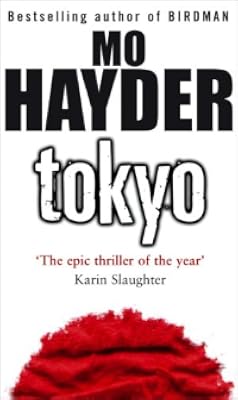
Tokyo
by Mo Hayder
On This Page
Description
With the redolent atmosphere of Ian Rankin and the spine-chilling characters of Thomas Harris, Mo Hayder's The Devil of Nanking, takes the reader on an electrifying literary ride from the palatial apartments of yakuza kingpins to deep inside the secret history of one of the twentieth century's most brutal events: the Nanking Massacre. A young Englishwoman obsessed with an indecipherable past, Grey comes to Tokyo seeking a lost piece of film footage of the notorious 1937 Nanking Massacre, show more footage some say never existed. Only one man can help Grey. A survivor of the massacre, he is now a visiting professor at a university in Tokyo. But he will have nothing to do with her. So Grey accepts a job in an upmarket nightspot, where a certain gangster may be the key to gaining the professor's trust. An old man in a wheelchair surrounded by a terrifying entourage, the gangster is rumored to rely on a mysterious elixir for his continued health. Taut, gritty, sexy, and harrowing, The Devil of Nanking is an incomparable literary thriller set in one of the world's most fascinating cities-Tokyo-from an internationally bestselling author. show lessTags
Recommendations

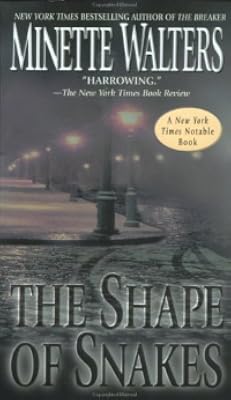
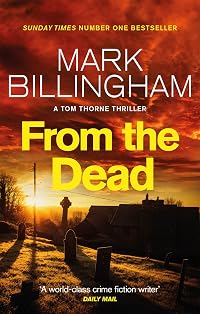

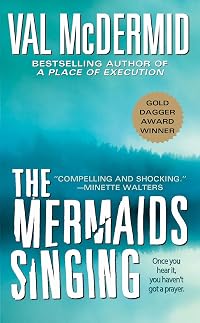
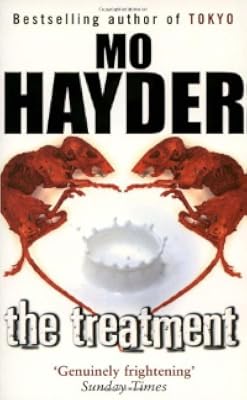
















Member Recommendations
SomeGuyInVirginia Bit of film crucial in each.
Member Reviews
When I read Hayder’s previous two books, Birdman and The Treatment, I thought they were the scariest books I had ever read. But the Devil of Nanking surpasses both of those works for inducing nightmares. That doesn’t mean I didn’t like it; in fact I thought it was brilliantly constructed. It just seemed so plausible that I could see it happening just the way she wrote it and things that are realistic are always much scarier than scenarios that are only remotely possible.
The story centers on Grey (the only name we ever learn) who travels to Tokyo from Great Britain to talk to a Chinese professor of linguistics, Shi Chongming, about the Japanese invasion of China in 1937. It’s not clear at the start why Grey is so anxious to see show more a film the professor is rumoured to possess. The film was hinted at in an article about the atrocities committed by the Japanese troops in Nanking. Grey has been studying this era for years (nine years, seven months and eighteeen days to be exact) and she spends almost all her money to fly to Japan to see Professor Shi. Initially he rebuffs her, denying there is a film and refusing to give her any information. After spending a night on a bench in a park, Grey encounters a young American man who invites her to rent a room in the house he is in if she is staying in Tokyo. Grey refuses but after Professor Shi says he will contact her in a week she gives the telephone number the young man gave her and then goes to ask for a room in the house. As well as the young man from the park (Jason), two Russian twins live in the house. The three of them work in a Japanese nightclub that is owned by Strawberry. Strawberry is convinced she is the double of Marilyn Monroe. The club is called Some Like it Hot and there is a giant statue of Marilyn suspended outside the club. They convince Gray she can also work in the club and earn lots of money to pay for her stay in Tokyo. Grey, for reasons that are only hinted at, has a very poor body image and she doubts if she can handle being a hostess but she is desperate for money. Strawberry hires her and when Grey asks the group of businessmen she is entertaining if their fathers fought in China she is an immediate hit.
The chapters forming Grey’s story are interspersed with excerpts from Professor Shi’s diary that he kept in 1937 while in Nanking. Grey and Professor Shi come to an arrangement whereby he will show her the film if she finds out what ingredient a Japanese gangster uses to restore his health and prolong his life. The gangster sometimes comes to the club and sometimes invites hostesses back to his apartment. Grey starts looking for this mysterious substance but is sidetracked when she and Jason become lovers. Grey is content in a way she never has been but of course it does not last. Then the horror really starts.
Hayder conveys the ambiance of Tokyo so authentically that I almost believed I was there. She is obviously drawing upon her own experiences when she lived in Asia, including being a hostess in a Tokyo nightclub. Almost as realistic are the details in Professor Shi’s diaries, which must be the result of extensive research since she is not old enough to have been alive in 1937. show less
The story centers on Grey (the only name we ever learn) who travels to Tokyo from Great Britain to talk to a Chinese professor of linguistics, Shi Chongming, about the Japanese invasion of China in 1937. It’s not clear at the start why Grey is so anxious to see show more a film the professor is rumoured to possess. The film was hinted at in an article about the atrocities committed by the Japanese troops in Nanking. Grey has been studying this era for years (nine years, seven months and eighteeen days to be exact) and she spends almost all her money to fly to Japan to see Professor Shi. Initially he rebuffs her, denying there is a film and refusing to give her any information. After spending a night on a bench in a park, Grey encounters a young American man who invites her to rent a room in the house he is in if she is staying in Tokyo. Grey refuses but after Professor Shi says he will contact her in a week she gives the telephone number the young man gave her and then goes to ask for a room in the house. As well as the young man from the park (Jason), two Russian twins live in the house. The three of them work in a Japanese nightclub that is owned by Strawberry. Strawberry is convinced she is the double of Marilyn Monroe. The club is called Some Like it Hot and there is a giant statue of Marilyn suspended outside the club. They convince Gray she can also work in the club and earn lots of money to pay for her stay in Tokyo. Grey, for reasons that are only hinted at, has a very poor body image and she doubts if she can handle being a hostess but she is desperate for money. Strawberry hires her and when Grey asks the group of businessmen she is entertaining if their fathers fought in China she is an immediate hit.
The chapters forming Grey’s story are interspersed with excerpts from Professor Shi’s diary that he kept in 1937 while in Nanking. Grey and Professor Shi come to an arrangement whereby he will show her the film if she finds out what ingredient a Japanese gangster uses to restore his health and prolong his life. The gangster sometimes comes to the club and sometimes invites hostesses back to his apartment. Grey starts looking for this mysterious substance but is sidetracked when she and Jason become lovers. Grey is content in a way she never has been but of course it does not last. Then the horror really starts.
Hayder conveys the ambiance of Tokyo so authentically that I almost believed I was there. She is obviously drawing upon her own experiences when she lived in Asia, including being a hostess in a Tokyo nightclub. Almost as realistic are the details in Professor Shi’s diaries, which must be the result of extensive research since she is not old enough to have been alive in 1937. show less
A cross between horror, mystery and a real event, the Nanking Massacre of 1937, this is not a story for everyone. Hayder's novel is a story of a young woman obsessed by the story of the 1937 massacre of Nanking. This troubled woman who calls herself Grey, travelled to Japan to search of a piece of film shot during the massacre that will confirm what she believes to be true and ease her own demons. The text is alternatively Grey's account and that of an elderly survivor, now a visiting professor in Japan, who reads from his journal written in the days before and after the massacre. As both stories are revealed bit by bit, the connection is at first puzzling, then becomes thinly apparent, and then disclosed with a final startling show more revelation. Hayder's characters and writing are excellent, her knowledge of the culture is extensive, and although this is not a book for the faint-hearted, the horrific story this novel is based on is an intriguing choice in itself as well as being a chilling theme for a psychological thriller. show less
I'm not sure what to think about this book. It was a bit like a car crash - you shouldn't look, but you can't help yourself. I've never read a book by Mo Hayder before, and perhaps if I had, I would have had a better idea of what to expect. I don't even know who may have suggested it to me, as I downloaded it from Audible in 2007.
The story takes place in the 1990's and has a young English woman arriving in Tokyo to find a professor who was a survivor of the massacre of Nanking in 1937. (I learned a lot about that horrible event which took place during the Japanese invasion of China). She believes he has a piece of film that will confirm something she read many years ago. Something so horrible that people think she is crazy and has made show more it up. The story moves back and forth between the present and the 1937 diary entries of the professor who was a young man at the time. The professor has kept the film secreted away, and tells her he will show it to her only if she helps him find something. During her search, she finds herself in a very dangerous situation.
The two narrators do a fine job, with Simon Vance reading the chapters which are the professor's old diary. I think you would call the book horror/thriller. It gets very gruesome at times. In fact I was wishing I was reading it rather than listening to it, as I think that might have been easier to handle. I think I liked it with reservations. Recommended, but only if you have a strong stomach.
April 2014 show less
The story takes place in the 1990's and has a young English woman arriving in Tokyo to find a professor who was a survivor of the massacre of Nanking in 1937. (I learned a lot about that horrible event which took place during the Japanese invasion of China). She believes he has a piece of film that will confirm something she read many years ago. Something so horrible that people think she is crazy and has made show more it up. The story moves back and forth between the present and the 1937 diary entries of the professor who was a young man at the time. The professor has kept the film secreted away, and tells her he will show it to her only if she helps him find something. During her search, she finds herself in a very dangerous situation.
The two narrators do a fine job, with Simon Vance reading the chapters which are the professor's old diary. I think you would call the book horror/thriller. It gets very gruesome at times. In fact I was wishing I was reading it rather than listening to it, as I think that might have been easier to handle. I think I liked it with reservations. Recommended, but only if you have a strong stomach.
April 2014 show less
Originally posted here
I was left pretty speechless by The Devil of Nanking. It was absolutely horrifying, I actually teared up at the end.
The story follows the first person perspective of a troubled young woman, Grey - who has travelled to Tokyo because she has heard that a university professor there, Shi Chongming, has a film of the 1937 Nanking massacre; an event in history that she has become obsessed with for mysterious reasons that become clear by the end. Chongming at first denies the existence of such a film but then he admits to Grey that he will show her the film if she finds out some information for him about the local Yakuza boss, Fuyuki. In addition, many chapters are told in flashback to Chongming's POV in 1937, Nanking show more where he lived through the massacre.
The creepy atmosphere was one of my favourite things about this book. The creepy, dilapidated Japanese house that Grey lives in felt so eery and haunted. The seedy hostess clubs and the dangerous, dark underbelly of Japan added to the creeping unease that something terrible is going to happen at any moment. The slow build up of tension was just fantastically done.
The climax of the book honestly just destroyed me, Mo Hayder really explored the blackest evil of history, I was really emotionally affected by it and I almost wish that I didn't have those images in my mind. Absolutely horrifying.
This is the perfect book for readers who want a atmospheric creepy story set in Tokyo. A perfect read for Halloween or the fall/winter season in general. show less
I first read this book nearly twenty years ago, soon after its initial release. I rarely reread books at all, but in this case, the book stayed with me and I couldn't resist eventually coming back to it. Just like the first time, this dark, immersive read pulled me in and became a haunting presence as I journeyed back through it. There's no denying that the book won't be for everyone--especially because of its graphic imagery and its roots in actual history, particularly as related to war atrocities--but this book cemented Mo Hayder as a writer I'd want to read everything from. I can't think of a more powerful, compulsive suspense novel that also draws from history, and Hayder's writing and characters are perfectly dark.
It wouldn't show more surprise me if I read this book again some time in the future.
Absolutely recommended. show less
It wouldn't show more surprise me if I read this book again some time in the future.
Absolutely recommended. show less
The Devil of Nanking is as dark, grotesque and beautiful as a Breughel painting or a Goya etching. The surface story, a young English woman searching for proof that things she remembers actually do exist and she is not crazy, a search that eventually leads her to Tokyo, makes for a good story in itself. She lands in Japan almost totally broke and must change in order to support herself. This makes for an excellent story of character growth.
The Tokyo described by Ms. Hayder is certainly believable, but it is also just fanciful enough to meet the requirements of the plot. Just as with the artists alluded to, once you start examining the scenery in the novel, nasty and startling details start emerging from the shadows: crime world figures show more are deeply embedded into the story and many of the characters have secrets they cannot forget yet would like to.
Some of the beauty of the story is the author’s rich prose. There is an economy of words, yet each word seems carefully chosen to convey the fullest meaning and even subtle nuances in character are delivered without prolonged biographies.
One of the major devices used by Ms. Hayder is jumping back and forth between Nanking of 1937 and Tokyo of the story’s now. I appreciated the way she kept a certain continuity between these jumps by having similar settings: if the scene described in China was a winter scene, it was snowing in Tokyo; a nice literary device that lent itself to visualizing these settings.
The story of what happened in Nanking was powerful enough to propel me through the story. The writing was fluid enough that I needed no other force to keep me going. Between the two, I had trouble stopping reading. The ultimate secret was not too obscure and the ending of the story confirmed all my suppositions as to what it was. Again mirroring comes into play here, but in this case, it was mirroring of two of the main characters pasts that are mirrored.
Because of the disturbing nature of the plot, this story will not be every mystery readers’ liking. Yet, like the artists I’ve mentioned above with their beautiful but disturbing images, the appeal of this work may be broad enough to attract non-mystery readers as well. Not quite a work of historical fiction, the sacking of Nanking and the massacre of Chinese civilians by Japanese soldier did occur. I believed all the characters in this work and even got emotionally involved with them. The visual descriptions were very satisfying and the dialog was very well done. The overall impact of the story was great enough that I’m going to give this a four and a half star rating. If the ultimate secret had been better shielded, I would consider this a full five stars. show less
The Tokyo described by Ms. Hayder is certainly believable, but it is also just fanciful enough to meet the requirements of the plot. Just as with the artists alluded to, once you start examining the scenery in the novel, nasty and startling details start emerging from the shadows: crime world figures show more are deeply embedded into the story and many of the characters have secrets they cannot forget yet would like to.
Some of the beauty of the story is the author’s rich prose. There is an economy of words, yet each word seems carefully chosen to convey the fullest meaning and even subtle nuances in character are delivered without prolonged biographies.
One of the major devices used by Ms. Hayder is jumping back and forth between Nanking of 1937 and Tokyo of the story’s now. I appreciated the way she kept a certain continuity between these jumps by having similar settings: if the scene described in China was a winter scene, it was snowing in Tokyo; a nice literary device that lent itself to visualizing these settings.
The story of what happened in Nanking was powerful enough to propel me through the story. The writing was fluid enough that I needed no other force to keep me going. Between the two, I had trouble stopping reading. The ultimate secret was not too obscure and the ending of the story confirmed all my suppositions as to what it was. Again mirroring comes into play here, but in this case, it was mirroring of two of the main characters pasts that are mirrored.
Because of the disturbing nature of the plot, this story will not be every mystery readers’ liking. Yet, like the artists I’ve mentioned above with their beautiful but disturbing images, the appeal of this work may be broad enough to attract non-mystery readers as well. Not quite a work of historical fiction, the sacking of Nanking and the massacre of Chinese civilians by Japanese soldier did occur. I believed all the characters in this work and even got emotionally involved with them. The visual descriptions were very satisfying and the dialog was very well done. The overall impact of the story was great enough that I’m going to give this a four and a half star rating. If the ultimate secret had been better shielded, I would consider this a full five stars. show less
Student Grey Hutchins comes to Tokyo seeking a rare piece of film showing the notorious Nanking Massacre in which, in one city, the Imperial Japanese Army butchered up to 300,000 civilians. Only one man can help her, a survivor of the massacre, and now a visiting professor at the prestigious University of Todai in Tokyo; a man who is rumoured to possess documentary evidence of Nanking.But first Grey must gain his trust. Desperate and alone, she accepts a job as a hostess in an upmarket nightspot catering for Japanese businessmen and wealthy gangsters. One gangster dominates - an old man in a wheelchair guarded by a terrifying entourage - who is said to rely on a powerful elixir for his continued wealth and well-being. It is an elixir show more that others want for themselves - at any price.
My Thoughts:
When you read a book by Mo Hayder you know what you are going to get. Her stories are gritty and quite scary. This story focuses on the massacre of Nanking which I knew nothing about at all. The story is told by Grey a student and Chongming who lived through the massacre. Both stories blend together to a very scary finale.
At first I didn’t think I was going to get very far with this book as I struggle with books that have a war connection but I found that I ploughed through the book quite quickly. There was something compelling that made me want to read futher. With Mo Hayder there are no holds barred and the story takes on a very gritty, scary turn. This book is not for the faint hearted. The book starts very darkly and the gloom doesn’t lift at all which I think gave it’s appeal. Dark and brooding, graphic and violent at times, a part historical, part thriller that will keep you hooked until the very end. I couldn’t expect anything less from this author. show less
My Thoughts:
When you read a book by Mo Hayder you know what you are going to get. Her stories are gritty and quite scary. This story focuses on the massacre of Nanking which I knew nothing about at all. The story is told by Grey a student and Chongming who lived through the massacre. Both stories blend together to a very scary finale.
At first I didn’t think I was going to get very far with this book as I struggle with books that have a war connection but I found that I ploughed through the book quite quickly. There was something compelling that made me want to read futher. With Mo Hayder there are no holds barred and the story takes on a very gritty, scary turn. This book is not for the faint hearted. The book starts very darkly and the gloom doesn’t lift at all which I think gave it’s appeal. Dark and brooding, graphic and violent at times, a part historical, part thriller that will keep you hooked until the very end. I couldn’t expect anything less from this author. show less
Members
- Recently Added By
Published Reviews
ThingScore 75
From its start in 1937, as the Japanese overrun the Chinese port of Nanking and massacre hundreds of thousands, to its narrative core in 1990, as a disturbed young British woman who calls herself Grey searches for the hidden truths that made her the mentally fragile person she is, Hayder's third book (after 2002's The Treatment) is a thriller of rare art and gripping excitement. Hayder, one of show more the rising stars of British crime fiction, teaches at a university in Bath and has worked as a hostess in a Tokyo nightclub. Both experiences add to her book's unusually rich atmosphere. Grey, who lives on the fringes of the academic world, tries to find out in Tokyo whether a piece of 16mm film taken during the Nanking atrocities actually exists—and whether it will ease her pain. When an elderly Chinese professor, a survivor of Nanking, at first refuses to help her, she drifts into a well-paying job as a night club hostess. Eventually, the story becomes a beautifully paced, three-way duel among an aged Japanese gangster who wants to live forever; the Chinese professor, with secrets too horrible to hide any longer; and Grey, a courageous young woman unlike any other heroine you're likely to find in a thriller. show less
added by VivienneR
Author Information

24+ Works 9,636 Members
Mo Hayder is the pen name for Clare Dunkel, a British Crime novelist. She was born, in 1962. After leaving school at 15, she worked as a barmaid, security guard, filmmaker, hostess in a Tokyo club, and taught English as a foreign language in Asia. Here first novel was Birdman (1999). The books that followed were The Treatment (2001), Tokyo (2004) show more also published in 2010 as The Devil in Nanking, Pigs Island (2006), Ritual (2008), Skin (2009), Hanging Hill (2011), Gone (2010) won the Edgar Award, Poppet (2013), and Wolf (2014) which is being adapted for the BBC. In 2011, she won the Crime Writers' Association Daggar in the Library award for an outstanding body of work. Clare Dunkel died from motor neurone disease on July 27, 2021. She was 59. (Bowker Author Biography) show less
Some Editions
Awards and Honors
Series
Belongs to Publisher Series
Goldmann (46320)
Common Knowledge
- Canonical title*
- Tokio
- Original title
- Tokyo
- Alternate titles
- The Devil of Nanking
- Original publication date
- 2004
- People/Characters
- Grey Hutchins
- Important places
- Nanking, China; Tokyo, Japan
- Important events
- Nanking massacre, 1937
- First words*
- Jenen, die gegen den Aberglauben wettern und wüten, habe ich nur eins zu sagen: Warum?
- Last words*
- (Click to show. Warning: May contain spoilers.)Denn, mein verloren gegangenes Kind, wenn du überhaupt etwas gelernt hast, dann, dass in dieser Welt niemandem von uns sehr viel Zeit bleibt.
- Original language*
- Engels
- Disambiguation notice*
- Auteur van “Vogelman” en “De behandeling”
*Some information comes from Common Knowledge in other languages. Click "Edit" for more information.
Classifications
Statistics
- Members
- 1,502
- Popularity
- 15,361
- Reviews
- 47
- Rating
- (3.78)
- Languages
- 14 — Bulgarian, Czech, Danish, Dutch, English, French, German, Greek, Hungarian, Indonesian, Italian, Norwegian (Bokmål), Swedish, Portuguese (Portugal)
- Media
- Paper, Audiobook, Ebook
- ISBNs
- 66
- UPCs
- 1
- ASINs
- 16