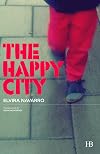
The Happy City
by Elvira Navarro
On This Page
Description
The stories of Chi-Huei--a Chinese boy whose family has come to Spain in search of a better life--and his friend Sara--a girl strangely fascinated by a homeless man--comprise two separate yet complementary sections, presenting the reader with an account of their life circumstances and the nuances of their perspectives: the genuine voices through which they negotiate the world around them.Tags
Member Reviews
The title is, of course, ironic. These two novellas, linked together only by the geography of an urban quarter in Madrid, are explorations of adolescent angst. Nobody's happy at all. However these stories transcend the typical YA preoccupation with relevance and relatability (see Felicity Castagna's thoughts about this here) with circumstances that are not typical at all.
The first novella, The Story of the Chinese Restaurant 'Happy City' is about a family of Chinese migrants. The younger son, Chi-Huei, was left behind in China when the family migrated to Spain, and the story begins when he rejoins the family after an absence that was longer than originally planned. This first part covers familiar territory — the confusions of a young show more child experiencing migration: negotiating a new language and encountering different traditions of school and play.
As is usually the case, the boy learns the language of his new country with more dexterity than adult members of the family. Within the household his mother, stepmother and grandfather speak Chinese albeit with a different accent because the family came from the north, while the aunt with whom Chi-Huei lived in the south spoke the H. dialect and a thickly-accented Mandarin. This was the language his aunt had always used when she spoke to him, and the one they used at school, although the predominant language in the streets [was] the H. dialect. [Probably either Hokkien or Haikou, which are southern dialects). After an initial period of awkwardness Chi-Huei becomes adept at switching accents depending on who he's talking to, and soon also not only speaks Spanish with his older brother, but also with his father.
Navarro deftly explains why the family migrated in this sequence about languages. Chi-Huei's father was briefly imprisoned in China, and although it's not named as such and one needs to read between the lines, he is suffering PTSD from the interrogation. He can't now, in Chinese, answer any questions, about anything, because in the interrogation, he had to give the 'right' answer, not the truth (whatever that was), and he had to guess what was wanted without incriminating himself. The Chinese-speaking members of the family have to tell him what to do, never to ask him what he wants or thinks, because it sends him into panic. But in Spanish, which he learned quickly and speaks easily with his sons, he's not the fool he's thought to be by his wife, his father and his stepmother. Not much is made of this in the story because the focus in on the boy's difficult relationship with his mother, but it's an illuminating example of the after-effects of torture. It also explains the family preoccupation with making enough money to be secure in their new home.
In adolescence Chi-Huei begins to chafe at the duty he is expected to fulfil. His older brother is destined to work in the business (a take-away chicken shop that gradually morphs into a somewhat shabby restaurant) while he is expected to study hard and enter one of the professions. He despises the family preoccupation with money because he comes to realise that it was the reason for his long absence in China. His relationship with his mother is conflicted partly because she is the driving force in the business and works at it seven days a week and into the night as well, and he doesn't share her value system that money is security for the family and her sons in the future. But he also resents her abandonment of him.
She in return intrudes on his nostalgic memories of his childhood past with his aunt in China.
To read the rest of my review please visit https://anzlitlovers.com/2020/08/27/the-happy-city-by-elvira-navarro-translated-... show less
The first novella, The Story of the Chinese Restaurant 'Happy City' is about a family of Chinese migrants. The younger son, Chi-Huei, was left behind in China when the family migrated to Spain, and the story begins when he rejoins the family after an absence that was longer than originally planned. This first part covers familiar territory — the confusions of a young show more child experiencing migration: negotiating a new language and encountering different traditions of school and play.
As is usually the case, the boy learns the language of his new country with more dexterity than adult members of the family. Within the household his mother, stepmother and grandfather speak Chinese albeit with a different accent because the family came from the north, while the aunt with whom Chi-Huei lived in the south spoke the H. dialect and a thickly-accented Mandarin. This was the language his aunt had always used when she spoke to him, and the one they used at school, although the predominant language in the streets [was] the H. dialect. [Probably either Hokkien or Haikou, which are southern dialects). After an initial period of awkwardness Chi-Huei becomes adept at switching accents depending on who he's talking to, and soon also not only speaks Spanish with his older brother, but also with his father.
Navarro deftly explains why the family migrated in this sequence about languages. Chi-Huei's father was briefly imprisoned in China, and although it's not named as such and one needs to read between the lines, he is suffering PTSD from the interrogation. He can't now, in Chinese, answer any questions, about anything, because in the interrogation, he had to give the 'right' answer, not the truth (whatever that was), and he had to guess what was wanted without incriminating himself. The Chinese-speaking members of the family have to tell him what to do, never to ask him what he wants or thinks, because it sends him into panic. But in Spanish, which he learned quickly and speaks easily with his sons, he's not the fool he's thought to be by his wife, his father and his stepmother. Not much is made of this in the story because the focus in on the boy's difficult relationship with his mother, but it's an illuminating example of the after-effects of torture. It also explains the family preoccupation with making enough money to be secure in their new home.
In adolescence Chi-Huei begins to chafe at the duty he is expected to fulfil. His older brother is destined to work in the business (a take-away chicken shop that gradually morphs into a somewhat shabby restaurant) while he is expected to study hard and enter one of the professions. He despises the family preoccupation with money because he comes to realise that it was the reason for his long absence in China. His relationship with his mother is conflicted partly because she is the driving force in the business and works at it seven days a week and into the night as well, and he doesn't share her value system that money is security for the family and her sons in the future. But he also resents her abandonment of him.
She in return intrudes on his nostalgic memories of his childhood past with his aunt in China.
To read the rest of my review please visit https://anzlitlovers.com/2020/08/27/the-happy-city-by-elvira-navarro-translated-... show less
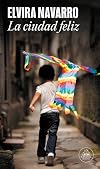
La ciudad feliz
Elvira Navarro
Publicado: 2009 | 123 páginas
Novela Drama
«La ciudad feliz» narra, a través de los ojos de un niño, las peripecias de una familia china que llega a España. También cuenta la historia de una niña que es acechada por un vagabundo. De fondo, el ruido de una ciudad, cuyas calles simbolizan la posibilidad y lo desconocido. Los personajes que deambulan por este libro buscan restaurar una identidad rota: la necesitan para poder caminar por un mundo que ha dejado de hacerles felices.
Elvira Navarro
Publicado: 2009 | 123 páginas
Novela Drama
«La ciudad feliz» narra, a través de los ojos de un niño, las peripecias de una familia china que llega a España. También cuenta la historia de una niña que es acechada por un vagabundo. De fondo, el ruido de una ciudad, cuyas calles simbolizan la posibilidad y lo desconocido. Los personajes que deambulan por este libro buscan restaurar una identidad rota: la necesitan para poder caminar por un mundo que ha dejado de hacerles felices.
Members
- Recently Added By
Author Information

7+ Works 170 Members
Some Editions
Common Knowledge
- Canonical title
- The Happy City
- Original title
- La ciudad feliz
- Original publication date
- 2009
- Original language
- Spanish
Classifications
Statistics
- Members
- 15
- Popularity
- 1,598,606
- Reviews
- 2
- Rating
- (4.00)
- Languages
- English, Spanish
- Media
- Paper, Ebook
- ISBNs
- 4