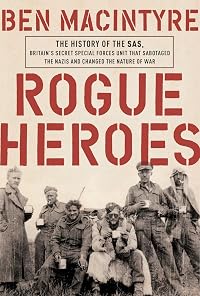
Rogue Heroes: The History of the SAS, Britain's Secret Special Forces Unit That Sabotaged the Nazis and Changed the Nature of War
by Ben Macintyre
On This Page
Description
Britain's Special Air Service--or SAS--was the brainchild of David Stirling, a young, gadabout aristocrat with a remarkable strategic mind. Where his colleagues looked at a map of World War II's African theater and saw a protracted struggle with Rommel's desert forces, Stirling saw an opportunity: given a small number of elite, well-trained men, he could parachute behind Nazi lines and sabotage their airplanes and supplies. Paired with his constitutional opposite, the disciplined martinet show more Jock Lewes, Stirling assembled a revolutionary fighting force that would upend not just the balance of the war, but the nature of combat itself. He faced no little resistance from those who found his tactics ungentlemanly or beyond the pale, but in the SAS's remarkable exploits facing the Nazis in the Africa and then on the Continent can be found the seeds of nearly all special forces units that would follow. Bringing his keen eye for psychological detail to a riveting wartime narrative, Ben Macintyre uses his unprecedented access to SAS archives to shine a light inside a legendary unit long shrouded in secrecy. The result is not just a tremendous war story, but a fascinating group portrait of men of whom history and country asked the most.--Adapted from dust jacket and publisher description. show lessTags
Recommendations



Member Recommendations


anonymous user Written just 15 years after the events based on extensive first-person interviews.
Member Reviews
Digging deep into the SAS Regimental Archives, Ben Macintyre has produced a history of the SAS proceeding from the formation through the regiment’s activities during WWII. Macintyre has the ability to render a specific period in time extremely compelling and readable. He has done that here. Macintyre coaxes the personalities from various regiment members, some long dead, which brings the book alive.
The SAS was the creation of David Stirling, a Scot described by Winston Churchill’s son, who was under Stirling’s command, as “one of the few people who think of the war in three-dimensional terms.” Stirling and Jock Lewes, who was later killed in action, developed a fighting force that broke the mold of traditional combat to that show more point, sneaking deep behind enemy lines and creating havoc through hit-and-run raids and bombings. They harassed German forces in the African desert, creeping onto airstrips and blowing up planes, and disrupting supply lines. “The SAS was pioneering a new sort of war, so asymmetrical as to be almost lopsided.” “This was war on the hoof, invented ad hoc, unpredictable, highly effective and often chaotic.” Macintyre tells the story with verve. show less
The SAS was the creation of David Stirling, a Scot described by Winston Churchill’s son, who was under Stirling’s command, as “one of the few people who think of the war in three-dimensional terms.” Stirling and Jock Lewes, who was later killed in action, developed a fighting force that broke the mold of traditional combat to that show more point, sneaking deep behind enemy lines and creating havoc through hit-and-run raids and bombings. They harassed German forces in the African desert, creeping onto airstrips and blowing up planes, and disrupting supply lines. “The SAS was pioneering a new sort of war, so asymmetrical as to be almost lopsided.” “This was war on the hoof, invented ad hoc, unpredictable, highly effective and often chaotic.” Macintyre tells the story with verve. show less
 This review was written for LibraryThing Early Reviewers.
This is a very unlikely book for me to have read at all, much less liked. I don't read about military battles, and I stay away from violence. I only read it because it was written by Ben Macintyre and so far, everything I've read by him I've liked. Surprisingly, I liked this one best of all. I laughed, I cried, I grew to love these violent, brutal, intelligent and very brave men. As always, Macintyre's histories are factual and read like novels -- well written novels.
Rogue Heroes is the story of the founding of the British SAS, the Special Air Service.
Being raised by a military historian, I was familiar with the SAS from a young age. For reasons I can't fully explain, I always admired the SAS fighting knife (also called a Fairbairn-Sykes fighting knife) as it seemed to typify the silent commando carrying out daring infiltrations behind enemy lines. The SAS were just these sort of commandos.
Rogue Heroes certainly offers plenty of secret missions and daring attacks. It also details the reality of such exploits, that there are lots of times that the good guys don't come home.
Rogue Heroes makes it clear that much of the SAS sprang from the ambition and determination of its first commander, David show more Stirling. Frustrated by out of date tactics and driven by a belief that hit and run tactics and operations focused on spreading chaos could result in a few, well trained soldiers having far more impact than their numbers, Stirling persuaded the British Army to create his own force. He did so my recruiting an odd collection of soldiers, many of whom struggled, like Stirling, with the obligation of being an ordinary soldier following orders.
What I did not appreciate until reading this book was how much of the early days of the SAS was defined by desert warfare in North Africa. While the SAS did do some parachuting (hence the Air in the title) much of its early techniques were honed in attempting to thwart Rommel's conquest of North Africa.
Stirling succeeded beyond expectations. That success, combined with the canny use of Winston Churchill's son to spread the story of the success, resulted in a rapid expansion of the SAS. By war's end, the SAS had established itself as an elite special forces group that would continue to serve the British army after WWII.
Rogue Heroes is well written and engaging. It does a good job of fleshing out the character of the individuals who first joined the unit. The loss of some of them in action and by accident feels like a real loss to the reader. Recommended for any WWII enthusiast. show less
Being raised by a military historian, I was familiar with the SAS from a young age. For reasons I can't fully explain, I always admired the SAS fighting knife (also called a Fairbairn-Sykes fighting knife) as it seemed to typify the silent commando carrying out daring infiltrations behind enemy lines. The SAS were just these sort of commandos.
Rogue Heroes certainly offers plenty of secret missions and daring attacks. It also details the reality of such exploits, that there are lots of times that the good guys don't come home.
Rogue Heroes makes it clear that much of the SAS sprang from the ambition and determination of its first commander, David show more Stirling. Frustrated by out of date tactics and driven by a belief that hit and run tactics and operations focused on spreading chaos could result in a few, well trained soldiers having far more impact than their numbers, Stirling persuaded the British Army to create his own force. He did so my recruiting an odd collection of soldiers, many of whom struggled, like Stirling, with the obligation of being an ordinary soldier following orders.
What I did not appreciate until reading this book was how much of the early days of the SAS was defined by desert warfare in North Africa. While the SAS did do some parachuting (hence the Air in the title) much of its early techniques were honed in attempting to thwart Rommel's conquest of North Africa.
Stirling succeeded beyond expectations. That success, combined with the canny use of Winston Churchill's son to spread the story of the success, resulted in a rapid expansion of the SAS. By war's end, the SAS had established itself as an elite special forces group that would continue to serve the British army after WWII.
Rogue Heroes is well written and engaging. It does a good job of fleshing out the character of the individuals who first joined the unit. The loss of some of them in action and by accident feels like a real loss to the reader. Recommended for any WWII enthusiast. show less
This review was written for LibraryThing Early Reviewers.This book is utterly fascinating. In 1942, in the deserts of Northern Africa, a brutal war was being waged. The victor of this front would gain a great advantage in the overall scheme of World War II.
Enter a rather peculiar soldier. David Stirling was an aristocratic Scot with many Scarlet Pimpernel-esque traits. He hated discipline, could often be found enjoying the local alcohol or women, and was generally regarded as something of a dandy. But Stirling envisioned an entirely new way to wage war. Rather than the more conventional warfare practiced in WWI, where two large armies threw themselves at one another until a victor emerged, Stirling wanted to create a small, highly trained unit which could operate secretly behind enemy lines show more and cause maximum disruption to the Axis war machine. Old-school higher-ups viewed this as a unsporting, but with a combination of charm and family connections, Stirling was able to put together his very own squadron of rogues and misfits. Thus the SAS was born.
Macintyre used the war diary of the SAS, a compilation of primary documents about the unit from its founding in 1942 through 1946, for his source material for this book. This recently unclassified document has provided Macintyre with a rich canvas to write this history of the SAS, which he does with wry humor and masterful storytelling. The story of the origins of the SAS rightly belongs in the realm of legend, and Macintyre does their story justice. The primary players in forming the unit are realized as actual people, and vividly brought into focus by the author.
While this is a history book, the fast pacing and accessible narrative makes this a good choice even for those who normally don't read the genre. Any one with an interest in military or WWII history will find this book fascinating.
A copy of this book was provided by the publisher in exchange for an honest review. Rogue Heroes is currently available for purchase. show less
Enter a rather peculiar soldier. David Stirling was an aristocratic Scot with many Scarlet Pimpernel-esque traits. He hated discipline, could often be found enjoying the local alcohol or women, and was generally regarded as something of a dandy. But Stirling envisioned an entirely new way to wage war. Rather than the more conventional warfare practiced in WWI, where two large armies threw themselves at one another until a victor emerged, Stirling wanted to create a small, highly trained unit which could operate secretly behind enemy lines show more and cause maximum disruption to the Axis war machine. Old-school higher-ups viewed this as a unsporting, but with a combination of charm and family connections, Stirling was able to put together his very own squadron of rogues and misfits. Thus the SAS was born.
Macintyre used the war diary of the SAS, a compilation of primary documents about the unit from its founding in 1942 through 1946, for his source material for this book. This recently unclassified document has provided Macintyre with a rich canvas to write this history of the SAS, which he does with wry humor and masterful storytelling. The story of the origins of the SAS rightly belongs in the realm of legend, and Macintyre does their story justice. The primary players in forming the unit are realized as actual people, and vividly brought into focus by the author.
While this is a history book, the fast pacing and accessible narrative makes this a good choice even for those who normally don't read the genre. Any one with an interest in military or WWII history will find this book fascinating.
A copy of this book was provided by the publisher in exchange for an honest review. Rogue Heroes is currently available for purchase. show less
David Stirling came from an aristocratic family and served in a respected regiment (the Scots Guard), two qualities that instantly conjure up a familiar stereotype: a young officer bearing the weight of centuries of tradition on his shoulders and determined -- to use a modern phrase -- to uphold the brand, brave and determined in battle, but suspicious of departures from the traditional conduct of war, and actively allergic to innovation. In fact, Stirling was nothing of the sort. His brilliant, if undisciplined, mind changed the course of World War II on the North African front, and helped to lay the groundwork for the modern special operations warfare.
Rogue Heroes is equally Stirling's story and the story of the unit he founded: the show more Special Air Service (SAS). Beginning in 1942, Stirling and his men waged unconventional warfare deep behind enemy lines, relying on aircraft, parachutes, and heavily armed jeeps for mobility and surprise. They struck vulnerable, high-value targets like airfields and fuel depots, attacking under cover of darkness, wreaking havoc, and slipping away into the night before the enemy could organize a counterattack. Not for nothing was Stirling known as "the Phantom Major," and not for nothing did the SAS choose "Who Dares Wins" as its motto.
Macintyre tells the intertwined stories of Stirling and the SAS in engaging style. His descriptions of behind-the-scenes raids are gripping, and his portraits of the latter-day pirates who carried them out -- men like Stirling's chief co-conspirator Jock Lewes and the legendary team leader Paddy Mayne -- are vivid. Reading the early history of the SAS, you can see the roots of fictional narratives like The Dirty Dozen and Kelly's Heroes, but also the latter-day remakes of The Italian Job, Mission Impossible, and Ocean's 11. Gratifyingly, Macintyire narrates the heroics in a coolly understated way, resisting the tempation to "make the story more exciting" by layering it in breathless prose. It's the right choice: The story doesn't need it.
A great deal has been written about the SAS, but if you want to read the proverbial "one book" on the subject, or find a good place from which to start a deeper dive, this is an excellent choice. show less
Rogue Heroes is equally Stirling's story and the story of the unit he founded: the show more Special Air Service (SAS). Beginning in 1942, Stirling and his men waged unconventional warfare deep behind enemy lines, relying on aircraft, parachutes, and heavily armed jeeps for mobility and surprise. They struck vulnerable, high-value targets like airfields and fuel depots, attacking under cover of darkness, wreaking havoc, and slipping away into the night before the enemy could organize a counterattack. Not for nothing was Stirling known as "the Phantom Major," and not for nothing did the SAS choose "Who Dares Wins" as its motto.
Macintyre tells the intertwined stories of Stirling and the SAS in engaging style. His descriptions of behind-the-scenes raids are gripping, and his portraits of the latter-day pirates who carried them out -- men like Stirling's chief co-conspirator Jock Lewes and the legendary team leader Paddy Mayne -- are vivid. Reading the early history of the SAS, you can see the roots of fictional narratives like The Dirty Dozen and Kelly's Heroes, but also the latter-day remakes of The Italian Job, Mission Impossible, and Ocean's 11. Gratifyingly, Macintyire narrates the heroics in a coolly understated way, resisting the tempation to "make the story more exciting" by layering it in breathless prose. It's the right choice: The story doesn't need it.
A great deal has been written about the SAS, but if you want to read the proverbial "one book" on the subject, or find a good place from which to start a deeper dive, this is an excellent choice. show less
This review was written for LibraryThing Early Reviewers.Reviewing this as part of Library Thing's Early Reviewer program:
This is an excellent, fast paced, and easy to read telling of the initiation of global "special forces" with the establishment of the SAS (British) in World War II. This is a work of history that reads almost like an adventure thriller. The men who made up this unit were warriors in the truest sense - brave, skilled, inventive, unconventional, and brutally violent. It is amazing that most of the survivors returned to "normal" life as productive members of society. Their almost total immersion into violence must have changed them forever. The psychological aspect of this is compelling and certainly has profound implications for returning warrior from today's conflicts.
This is an excellent, fast paced, and easy to read telling of the initiation of global "special forces" with the establishment of the SAS (British) in World War II. This is a work of history that reads almost like an adventure thriller. The men who made up this unit were warriors in the truest sense - brave, skilled, inventive, unconventional, and brutally violent. It is amazing that most of the survivors returned to "normal" life as productive members of society. Their almost total immersion into violence must have changed them forever. The psychological aspect of this is compelling and certainly has profound implications for returning warrior from today's conflicts.
This review was written for LibraryThing Early Reviewers.Ben McIntyre ( despite a recent sidestep into the life of the British traitor Kim Philby) happily resides in world of WWII Britain. He has made a cottage industry of book after excellent book based largely upon newly declassified documentation. This latest effort details the successes and travails of the Special Air Service. The highly mobile unit outside the usual chain of command was formed as a response to the needs for modern warfare methods. The SAS was initially used to brilliant effect in North Africa. They could attack targets on the fly, appearing and disappearing into the desert night, after wreaking maximum damage and chaos with a minimum of personnel or supplies. Exceedingly demoralizing to the Axis Forces.
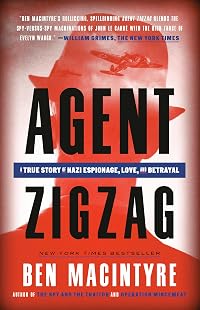
I have always show more enjoyed McIntyre's writing for its narrative arc and his eye for the telling detail. I particularly enjoyed his telling of the unit's founding under David Stirling - a rogue if there ever was one, but a rogue's who's idea came at exactly the perfect moment in the war effort. He stood shoulder-to-shoulder with a crew of military misfits, chaffing under the usual command, but wily tacticians and commandos. Rogue Heroes, addressing an entire unit for an entire war, will perforce be broader in scope as many of his prior works. Those often dealt with specific missions (Operation Piecemeal), individuals (Agent ZigZag) or a group of double agents (Double Cross). This latest effort rightly takes its place alongside. A great read, particularly for those, like me, who can never get enough of history, politics and WWII. show less
I have always show more enjoyed McIntyre's writing for its narrative arc and his eye for the telling detail. I particularly enjoyed his telling of the unit's founding under David Stirling - a rogue if there ever was one, but a rogue's who's idea came at exactly the perfect moment in the war effort. He stood shoulder-to-shoulder with a crew of military misfits, chaffing under the usual command, but wily tacticians and commandos. Rogue Heroes, addressing an entire unit for an entire war, will perforce be broader in scope as many of his prior works. Those often dealt with specific missions (Operation Piecemeal), individuals (Agent ZigZag) or a group of double agents (Double Cross). This latest effort rightly takes its place alongside. A great read, particularly for those, like me, who can never get enough of history, politics and WWII. show less
This review was written for LibraryThing Early Reviewers.Members
- Recently Added By
Lists

THE WAR ROOM
813 works; 24 members
Author Information

30+ Works 14,184 Members
All Editions
Awards and Honors
Distinctions
The Guardian Book of the Day (2016-10-15)
Work Relationships
Has the adaptation
Common Knowledge
- Original publication date
- 2016
- People/Characters
- David Stirling; John Steele Lewis
- Important places
- Kabrit, Egypt
- Important events
- World War II, North African Theater
- Related movies
- Rogue Heroes (2022 | IMDb)
- Blurbers
- Beevor, Antony; Luttrell, Marcus
- Original language
- English
Classifications
Statistics
- Members
- 1,128
- Popularity
- 22,396
- Reviews
- 127
- Rating
- (4.11)
- Languages
- Dutch, English, Korean, Spanish
- Media
- Paper, Audiobook, Ebook
- ISBNs
- 28
- ASINs
- 10
