On This Page
Description
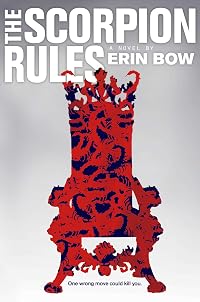
The children of world leaders are held hostage in an attempt to keep the peace in this "slyly humorous, starkly thought-provoking" (Kirkus Reviews, starred review) novel.Greta is a Duchess and a Crown Princess. She is also a Child of Peace, a hostage held by the de facto ruler of the world, the great Artificial Intelligence, Talis. This is how the game is played: if you want to rule, you must give one of your children as a hostage. Start a war and your hostage dies.
The system has worked show more for centuries. Parents don't want to see their children murdered.
Greta will be free if she can make it to her eighteenth birthday. Until then she is prepared to die with dignity, if necessary. But everything changes when Elian arrives at the Precepture. He's a hostage from a new American alliance, and he defies the machines that control every part of their lives—and is severely punished for it. His rebellion opens Greta's eyes to the brutality of the rules they live under, and to the subtle resistance of her companions. And Greta discovers her own quiet power.
Then Elian's country declares war on Greta's and invades the prefecture, taking the hostages hostage. Now the great Talis is furious, and coming himself to deliver punishment. Which surely means that Greta and Elian will be killed...unless Greta can think of a way to break all the rules. show less
Tags
Recommendations


Member Reviews
Greta is a princess, and a hostage: the AI ruling the post-global warming, water-scarce world has declared that any leader of a country must have a child-hostage under the AI’s control. The leader can choose to fight a war, whether offensively or defensively, but will have their hostage killed as a result. After a revolution, Greta, who represents the entity that occupies what’s now Canada, gets a new counterpart from what used to be a big chunk of the US; they’re very likely to go to war over water access soon, and the new hostage isn’t at all reconciled to the way things are, as Greta is. Bow explores the various ways that a person can be tortured, in terrifying detail both physical and psychological, and the ways in which show more people survive, and deform, under such circumstances. It’s a thought-provoking and entertaining read, if you can deal with the torture (which is never presented as anything but horrifying). show less
Dear Simon & Schuster, who sent me this advance copy: thank you for nothing. Now I have to endure what will be at least a year (probably two) before I can get my grimy hands on the sequel to this. Yes, I entered the giveaway so I brought this on myself but some sort of warning label (especially for those with heart conditions who could die from the anticipaction) should have plastered the cover...
On a painfully realized dystopian earth, nations submit to control by UN robots who were formerly human and each country's leader sends thier children to be raised in a robot-monitored boarding school-cum-hippie farming commune, where they serve as hostages against the possibility of more wars. Princess Greta lives in one of these prefectures show more in the wilds of Saskatchewan with her cohort of six, plus the younger children of other world leaders, some comic livestock and plenty of disciplinarian spider bots. This is the set up for the most amazingly marvelous sci-fi tale I have read in years. By turns horrifying and hysterically absurd, Greta's journey of self-realization is twined with the arrival of reality in a very tangible way for the whole class.
I already started to read it again. Erin Bow needs to be my new best friend immediately so I can steal a draft of the next volume when she isn't looking. show less
On a painfully realized dystopian earth, nations submit to control by UN robots who were formerly human and each country's leader sends thier children to be raised in a robot-monitored boarding school-cum-hippie farming commune, where they serve as hostages against the possibility of more wars. Princess Greta lives in one of these prefectures show more in the wilds of Saskatchewan with her cohort of six, plus the younger children of other world leaders, some comic livestock and plenty of disciplinarian spider bots. This is the set up for the most amazingly marvelous sci-fi tale I have read in years. By turns horrifying and hysterically absurd, Greta's journey of self-realization is twined with the arrival of reality in a very tangible way for the whole class.
I already started to read it again. Erin Bow needs to be my new best friend immediately so I can steal a draft of the next volume when she isn't looking. show less
"The Scorpion Rules" sat on my TBR list for a long time because I felt it was going to be grim and I didn't feel up to it. It is grim but it is also a beautifully told story about really bad things.
The basic premise is that, 400 years before the story, a (formally human) AI, Talis, took over the world, to save humanity from destroying themselves, and made war illegal. Talis takes a "Child Of Peace" from every ruler and holds them hostage. In the event that war is declared, the lives of the hostages of the warring parties are forfeit. The story is told from the point of view of a fifteen year old Crown Princess Greta, who has been held hostage since she was five and who will continue as a hostage until she is eighteen.
At this point you show more might think you know where this novel is going. Greta is the victim of an evil, despotic, AI. A new hostage, Elián arriveswho, to quote the publishers blurb "refuses to play by the rules, a boy who defies everything Greta has ever been taught" disrupts everything and who constantly tries to escape. Next, we'd expect some kind of "Hunger Games", "Divergent" rebellion in which our girl and boy hero struggle to free the world from evil.
Yeah, well, that shows you the wicked sense of humour that Erin Bow has. She's not going there. She's going somewhere new and exciting and difficult and constantly surprising.
This isn't a book for fans of action-packed, thrillers where the main function of the dystopian construct is to give the teens the chance to rebel while falling in love. I've seen lots of one star reviews for this book where the reader was "bored", "confused" or "so didn't care". They should open a copy of "Maze Runner" and move on.
This is a book about power and responsibility and obedience and sacrifice and dealing with the reality people will always find a way to go to war and that other people than the ones who took that decision will pay for it in blood.
It's also a character driven book.
Greta is a wonderful creation. She lives each day knowing that today she might be asked to walk calmly from her school desk, abandon her studies of languages and politics, and submit with dignity to her death in the Gray Room. She is deeply afraid that she will fail and dishonour herself. She holds on to her sanity through rigorous study and discipline. She is so focused on this that she does not understand her power over her peers, does not see how she is loved, does not take in the struggles of the people around her. Until things change.
Talis is not some cardboard cut-out evil AI. He is witty and charismatic and thoughtful and capable of great compassion. He is also ruthless, deadly, and barely remembers what it meant to be human.
The relationships between the characters are not what they'd first seem or what the dystopian genre has led us to expect. Greta cares as much for the Abbot AI who is both her jailer and her mentor as she does for her mother.Elián is not the love interest, even though he wants to be, that role falls, in a quite delightful way to Xie who is a Princess and a Goddess to her people.
The ending... well I won't discuss it here except to say that it was as disturbing as it was unexpected.
"The Scorpion Rules" is a book of strong emotions and a good deal of violence. Not the blow 'em up and count the bodies vidoe-game sort of violence, but the slow, vicious, cruel kind of violence that changes everyone touched by it."Scorpion Rules" made me think. It made me angry and it twisted my emotions around the writer's little finger.
Wonderful stuff.
So wonderful that I put the next book, "The Swan Riders" on pre-order. It arrived yesterday. It WON'T linger in my TBR pile.
Madeleine Maybe does a superb job of narrating "The Scorpion Rules". Take a listen the extract below which has Talis explaining his first rule of stopping wars: make it personal.
https://soundcloud.com/simonschuster/the-scorpion-rules-audiobook show less
The basic premise is that, 400 years before the story, a (formally human) AI, Talis, took over the world, to save humanity from destroying themselves, and made war illegal. Talis takes a "Child Of Peace" from every ruler and holds them hostage. In the event that war is declared, the lives of the hostages of the warring parties are forfeit. The story is told from the point of view of a fifteen year old Crown Princess Greta, who has been held hostage since she was five and who will continue as a hostage until she is eighteen.
At this point you show more might think you know where this novel is going. Greta is the victim of an evil, despotic, AI. A new hostage, Elián arriveswho, to quote the publishers blurb "refuses to play by the rules, a boy who defies everything Greta has ever been taught" disrupts everything and who constantly tries to escape. Next, we'd expect some kind of "Hunger Games", "Divergent" rebellion in which our girl and boy hero struggle to free the world from evil.
Yeah, well, that shows you the wicked sense of humour that Erin Bow has. She's not going there. She's going somewhere new and exciting and difficult and constantly surprising.
This isn't a book for fans of action-packed, thrillers where the main function of the dystopian construct is to give the teens the chance to rebel while falling in love. I've seen lots of one star reviews for this book where the reader was "bored", "confused" or "so didn't care". They should open a copy of "Maze Runner" and move on.
This is a book about power and responsibility and obedience and sacrifice and dealing with the reality people will always find a way to go to war and that other people than the ones who took that decision will pay for it in blood.
It's also a character driven book.
Greta is a wonderful creation. She lives each day knowing that today she might be asked to walk calmly from her school desk, abandon her studies of languages and politics, and submit with dignity to her death in the Gray Room. She is deeply afraid that she will fail and dishonour herself. She holds on to her sanity through rigorous study and discipline. She is so focused on this that she does not understand her power over her peers, does not see how she is loved, does not take in the struggles of the people around her. Until things change.
Talis is not some cardboard cut-out evil AI. He is witty and charismatic and thoughtful and capable of great compassion. He is also ruthless, deadly, and barely remembers what it meant to be human.
The relationships between the characters are not what they'd first seem or what the dystopian genre has led us to expect. Greta cares as much for the Abbot AI who is both her jailer and her mentor as she does for her mother.Elián is not the love interest, even though he wants to be, that role falls, in a quite delightful way to Xie who is a Princess and a Goddess to her people.
The ending... well I won't discuss it here except to say that it was as disturbing as it was unexpected.
"The Scorpion Rules" is a book of strong emotions and a good deal of violence. Not the blow 'em up and count the bodies vidoe-game sort of violence, but the slow, vicious, cruel kind of violence that changes everyone touched by it."Scorpion Rules" made me think. It made me angry and it twisted my emotions around the writer's little finger.
Wonderful stuff.
So wonderful that I put the next book, "The Swan Riders" on pre-order. It arrived yesterday. It WON'T linger in my TBR pile.
Madeleine Maybe does a superb job of narrating "The Scorpion Rules". Take a listen the extract below which has Talis explaining his first rule of stopping wars: make it personal.
https://soundcloud.com/simonschuster/the-scorpion-rules-audiobook show less
Post-apocalypse, an AI has decided to discourage nation states from war by taking all heirs hostage. Greta, Duchess of Halifax and Crown Princess of the Pan Polar Confederacy, a seventh-generation hostage, knows she will be killed if the confederacy ever breaks the peace.
There’s a lot I could talk about: the terrifyingly yet believable future of fighting over resources; the darkly-humorous AI overlord; the cutting commentary on power and politics; the delicate bonds between the hostages.
But what I came away pondering was why I found the first half slightly more compelling than the second, even though the stakes kept getting higher.
Greta and her friends live in a world governed by strict rules with harsh consequences. As a reader, I show more knew the worst is unlikely to happen, but Greta’s fears felt visceral and totally understandable because there were lots of things which could still go wrong.
Once survival became the most pressing matter -- and not all the rules applied any more -- I felt sure there had to be some sort of way out, if only because it’s a much more interesting story if everyone doesn’t die. An insight into how, sometimes, smaller stakes can make for a more gripping story, just because they’re more imaginable, more comprehensible, and feel less like a bluff on the author’s part.
I’m not sure if I liked the ending -- it depends on where the sequel takes it.
All of a sudden there were whole populations under water. Which meant that whole populations moved. Borders strained, checkpoints broke, and of course people started shooting, because that’s what passes for problem-solving among humans. See, guys, this is why you can’t have nice things.
—Holy Utterances of Talis, Book One, Chapter One: “Being a meditation on the creation of the Preceptures and the mandate of the Children of Peace” show less
There’s a lot I could talk about: the terrifyingly yet believable future of fighting over resources; the darkly-humorous AI overlord; the cutting commentary on power and politics; the delicate bonds between the hostages.
But what I came away pondering was why I found the first half slightly more compelling than the second, even though the stakes kept getting higher.
Greta and her friends live in a world governed by strict rules with harsh consequences. As a reader, I show more knew the worst is unlikely to happen, but Greta’s fears felt visceral and totally understandable because there were lots of things which could still go wrong.
Once survival became the most pressing matter -- and not all the rules applied any more -- I felt sure there had to be some sort of way out, if only because it’s a much more interesting story if everyone doesn’t die. An insight into how, sometimes, smaller stakes can make for a more gripping story, just because they’re more imaginable, more comprehensible, and feel less like a bluff on the author’s part.
I’m not sure if I liked the ending -- it depends on where the sequel takes it.
All of a sudden there were whole populations under water. Which meant that whole populations moved. Borders strained, checkpoints broke, and of course people started shooting, because that’s what passes for problem-solving among humans. See, guys, this is why you can’t have nice things.
—Holy Utterances of Talis, Book One, Chapter One: “Being a meditation on the creation of the Preceptures and the mandate of the Children of Peace” show less
The Twilight of Your Love
(Full disclosure: I received a free electronic ARC for review though NetGalley. Trigger warning for torture. This review contains clearly marked spoilers.)
"I’m not a cruel man, Talis is recorded as saying. Only rarely is the next bit quoted: I mean, technically I’m not a man at all."
"I was born to a crown. This was my crown - a cage for the head."
"It’s a strange word, 'twilight.' It makes me think of endings, of things done or left undone, of things over, of evening. But there are two twilights in every day, and one of them does not foretell darkness, but dawn. In this twilight, something new was opening up before me."
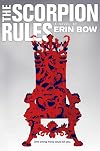
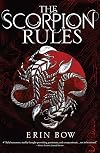
Dear Potential Readers: Do not judge this book by its cover. (Possibly Unpopular Opinion show more Time: I kind of hate it.) Take the publisher's synopsis with a spoonful of salt. Forget everything you think and know and feel about love triangles, Strong Female Leads, and the Three Laws of Robotics. Unpack your expectations and leave them at the door. The Scorpion Rules is an inventive, unique spin on the YA scifi/dystopia genre that subverts and upends existing tropes and conventions. IT IS DAZZLING.
Set four hundred+ years in the future, the world of The Scorpion Rules is one both painfully familiar and foreign to our own. Climate change caused the polar ice caps to melt, leading to massive flooding, which in turn caused wide scale displacement, poverty, and food shortages. As borders shifted and disappeared altogether, wars raged over rapidly diminishing resources, water chief among them. Humans were quickly destroying each other - and the planet. The United Nations tasked Talis, one of their top Artificial Intelligences, with finding a solution. They didn't expect him to take over the world.
After blowing a few strategically chosen cities off the face of the map - just a way to get everyone's attention, mind you - Talis proposed a new way of doing things. The AI looked backwards in history so that he might push humanity forward: drawing upon the Roman tradition of hostage-taking, Talis demanded that the rulers - be it goddess, queen, president, or general - of each country surrender to him their children. He would keep them safe and educate them in one of his high-tech Preceptures, to be released at the age of eighteen (and presumably, marry, procreate, and assume leadership their own bad selves). In the interim, should their country engage in war, the child's life would be forfeit.
Go to war, I kill your children. Injecting a little royal skin into the game, if you will.
This system has worked, more or less, for several centuries. Conflicts do occur, but not as frequently and with less damage: in his infinite wisdom, Talis also limited weaponry to that with an effective range of one hundred yards: "If you want blood, then I want it all over your hands."
Our narrator and soon-to-be-hero is one Greta Gustafsen Stuart, Duchess of Halifax and Crown Princess of the Pan Polar Confederacy, a 7th generation hostage. Together with six of her teenage peers, she lives in Precepture Four in Saskatchewan, where they study politics and philosophy and make use of appropriate technology. ("No to petroleum-driven personal transportation and chemical fertilizers. Yes to transcranial magnetic psychotherapy.")
All of the kids live in a near-constant state of fear, though some more than most. Greta and her friend Sidney know that their countries are on the brink of war: the PanPol Confederacy has water, and the Mississippi Delta Conference needs it. When they spot the telltale plume of dust kicked up by a Swan Rider crossing the plains, Greta rightly thinks she's done for - and yet dear Sidney is the only one taken to the grey room. Five weeks later, a new hostage arrives in his place: a scrappy, defiant teenager named Elián Palnik, grandson of Wilma Armenteros, leader of the newly-formed Cumberland Alliance.
His presence - loud, rebellious, unrefined - threatens to upend their practiced peace, as his radical ideas make Greta question centuries of tradition.
There's so, so much I love about this book, you guys. Let's start with the AI. I love stories that feature intelligences greater than us, whether they're synthetic or organic: the Cylons from Battlestar Galactica, Terminator's Skynet, the chimps and gorillas and orangutans in Planet of the Apes, the Oankali responsible for Lilith's Brood. Usually I find myself rooting for our robot overlords/alien invaders, at least on some level; after all, we humans had our shot at governing the planet, and so far we've made a huge mess of it. We're rapidly depleting the earth's resources, altering the climate at unprecedented rates, and wiping out entire species of fellow animals. We divide one another into various categories based on arbitrary, self-serving criteria - race, class, gender, nationality, sexual orientation, species membership - and then use these divisions to excuse and justify the oppression and exploitation of "others."
Quite possibly, AI or alien leadership might be a step up from humans. If not? Welp, they're smarter, stronger, and more advanced than us - so, according to our own rules of power and dominance, they deserve to sit at the top of the hierarchy. They beat us at our own game! Howdya like them apples?
So anyway, I was so, so ready to root for Talis. I mean, his reasoning as laid out in the synopsis seems pretty solid. There's usually nothing that parents cherish more than their children, so keeping kids hostage to prevent mass bloodshed seems a fair exchange. The greater good, yes? Presumably most of these kids will be returned home safely, since no king or chieftain would dare risk war with his own child's life in the balance.
Except it doesn't always work as planned: there aren't enough resources to go around, making conflict inevitable. Also, if a nation is attacked, under Talis's rules they aren't allowed to defend themselves without sacrificing their children in turn. This hardly seems fair but, then again, I suppose it gives more powerful nations additional incentive to negotiate and "play nice" with their impoverished neighbors. Still, it seems that getting to the root of the problem - too many people/not enough resources - would prove a more fruitful and humane strategy. (Maybe in the sequel?)
More problematic is how the Children of Peace are treated at the Preceptures. Though they don't pose much of a threat to the AI - many of them are little children, after all - total obedience is expected, even in thought. ("Never lie to an AI" - because they can read your vital signs.) Troublemakers are subject to torture: through electroshock, with drugs, and by isolation. Likewise, their cohort also suffers the consequences, albeit in more minor forms (the loss of privileges, like fresh air or water for bathing, for example). In short, human rights abuses abound.
Yet I still kind of love Talis. If nothing else, his intentions are noble, plus he's so damn fun and witty. And more complex in thought and emotion than is betrayed by first impressions. There's nothing typical or cartoonish about this "villain."
** spoiler alert! **
Part of me wondered, as it always does, why Talis and the other AI didn't just obliterate humanity in order to achieve peace. (Think: Mulder's botched wish for world peace in "Je Souhaite.") We're such major fuckups, why keep us around?
Alas, THERE'S A REASON FOR THIS: As one of just a handful of surviving Class Two Turing Intelligences, Talis needs us. Class Twos are AIs "whose 'birth' involved the upload of a copied human psyche" - they were once human. Given that this process was in its infancy when the world went to rot, it was never perfected; most humans die during the upload, or shortly thereafter (in a pretty amazing-horrifying process called "skinning"). Talis wants more AI companions, and for that he needs fresh meat.
This also suggests that truly artificial intelligence doesn't exist; rather, this AI of the future is a marriage of man and machine. The other AIs, while highly functioning, don't appear to be sentient.
** end spoiler alert! **
I mentioned that The Scorpion Rules is chock full of surprises - and Talis is just one of many. At first I thought I knew where the story was headed, but around the 40% mark, Bow throws in a second conflict, followed by an impossible solution. The ending is simply breathtaking and sets the stage for what could be a most amazing sequel.
The characters are a breath of fresh air too. Many of the kids show remarkable restraint in their behavior and affect; while this might come off as blandness or even a lack of dimension, I attributed it to their royal breeding and disciplined upbringing. And once Elián arrives to shake things up, it quickly becomes evident that the pot was close to boiling over anyway: the Children of Peace are much more turbulent than they appear on the surface. Everyone but Greta, but luckily rebellion is communicable.
Also both compelling and complex are the kids' relationships with their parents - who love them enough to nominate them as hostages, but not enough to forfeit their power. That's got to make for some awkward family dinners, don't you think?
While the plot unfolds in North America, the cast is international and thus fairly diverse (and often in unexpected ways).
* Li Da-Xia ("Xie"), the Daughter of the Heavenly Throne, is a goddess from the Mountain Glacials in Yunnan (Yunnan is in China and is at the far eastern edge of the Himalayan uplift).
* Thandi is heir to one of the great thrones of Africa and speaks Xhosa (one of the official Bantu languages of South Africa; the Xhosa people live in southeastern South Africa).
* Gregori Kalvelis ("Grego") is the son of a grand duke of the Baltic Alliance and is Lithuanian in descent; he suffers from albinism and has had cybernetics implanted in his eyes to more effectively regulate light.
* Atta Paşa, a prince in the line of the Prophet, is "from Vlad's part of the world" (Romania?), while the surname Paşa suggests Turkish descent.
* Han, who we learn little of, save for he's small and slight and bad with subtext and sarcasm.
* Sidney Carlow is the son of governor of Mississippi Delta Conference.
* Elián Palnik's father is a Jewish sheep farmer from Kentucky. His grandmother is Wilma Armenteros, leader of the Cumberland Alliance; her great-great-etc-grandfather led the evacuation of Miami. Between his grandmother's surname; the fact that his matrilineal line hails from Miami; and his loose, dark curls, I got the impression that he was part Latino.
There's more, but spoilers. Suffice it to say that two of the teens are bisexual, and their romance takes the plot in a pretty lovely direction.
One quibble: The casting of Thandi as the Angry Black Woman made me uncomfortable at times. For example, Thandi frequently calls the Eurocentric bent of the curriculum into question (oh how little we've changed). On the one hand, she's got plenty of reasons to be angry (one of which, we later learn, was prolonged torture when she first entered the Preceptures); on the other, so do they all. One could either interpret this as a rational response to an unjust system - or some pernicious racial stereotyping. Or both!
Also, I hope the finished copy of the book includes a world map and/or character guide. My grasp of the various nations is still rather hazy; and, while Bow gives a decent amount of info on the Children (Han excepted, and Thandi could've been fleshed out more too), I had to cobble the bullet points together using bits and pieces of info scattered throughout the book. It's like a scavenger hunt - all too easy to overlook a crucial detail. Not that I'd have her structure the book differently - but having the pertinent details gathered in one place for easy reference would be nice too.
Read it if: You're looking to diversify your shelves; you need more life-changing/life-ruining same-sex romances in your world; you love YA scifi/dystopias but crave something fresh and new.
http://www.easyvegan.info/2015/09/21/the-scorpion-rules-by-erin-bow/ show less
(Full disclosure: I received a free electronic ARC for review though NetGalley. Trigger warning for torture. This review contains clearly marked spoilers.)
"I’m not a cruel man, Talis is recorded as saying. Only rarely is the next bit quoted: I mean, technically I’m not a man at all."
"I was born to a crown. This was my crown - a cage for the head."
"It’s a strange word, 'twilight.' It makes me think of endings, of things done or left undone, of things over, of evening. But there are two twilights in every day, and one of them does not foretell darkness, but dawn. In this twilight, something new was opening up before me."
Dear Potential Readers: Do not judge this book by its cover. (Possibly Unpopular Opinion show more Time: I kind of hate it.) Take the publisher's synopsis with a spoonful of salt. Forget everything you think and know and feel about love triangles, Strong Female Leads, and the Three Laws of Robotics. Unpack your expectations and leave them at the door. The Scorpion Rules is an inventive, unique spin on the YA scifi/dystopia genre that subverts and upends existing tropes and conventions. IT IS DAZZLING.
Set four hundred+ years in the future, the world of The Scorpion Rules is one both painfully familiar and foreign to our own. Climate change caused the polar ice caps to melt, leading to massive flooding, which in turn caused wide scale displacement, poverty, and food shortages. As borders shifted and disappeared altogether, wars raged over rapidly diminishing resources, water chief among them. Humans were quickly destroying each other - and the planet. The United Nations tasked Talis, one of their top Artificial Intelligences, with finding a solution. They didn't expect him to take over the world.
After blowing a few strategically chosen cities off the face of the map - just a way to get everyone's attention, mind you - Talis proposed a new way of doing things. The AI looked backwards in history so that he might push humanity forward: drawing upon the Roman tradition of hostage-taking, Talis demanded that the rulers - be it goddess, queen, president, or general - of each country surrender to him their children. He would keep them safe and educate them in one of his high-tech Preceptures, to be released at the age of eighteen (and presumably, marry, procreate, and assume leadership their own bad selves). In the interim, should their country engage in war, the child's life would be forfeit.
Go to war, I kill your children. Injecting a little royal skin into the game, if you will.
This system has worked, more or less, for several centuries. Conflicts do occur, but not as frequently and with less damage: in his infinite wisdom, Talis also limited weaponry to that with an effective range of one hundred yards: "If you want blood, then I want it all over your hands."
Our narrator and soon-to-be-hero is one Greta Gustafsen Stuart, Duchess of Halifax and Crown Princess of the Pan Polar Confederacy, a 7th generation hostage. Together with six of her teenage peers, she lives in Precepture Four in Saskatchewan, where they study politics and philosophy and make use of appropriate technology. ("No to petroleum-driven personal transportation and chemical fertilizers. Yes to transcranial magnetic psychotherapy.")
All of the kids live in a near-constant state of fear, though some more than most. Greta and her friend Sidney know that their countries are on the brink of war: the PanPol Confederacy has water, and the Mississippi Delta Conference needs it. When they spot the telltale plume of dust kicked up by a Swan Rider crossing the plains, Greta rightly thinks she's done for - and yet dear Sidney is the only one taken to the grey room. Five weeks later, a new hostage arrives in his place: a scrappy, defiant teenager named Elián Palnik, grandson of Wilma Armenteros, leader of the newly-formed Cumberland Alliance.
His presence - loud, rebellious, unrefined - threatens to upend their practiced peace, as his radical ideas make Greta question centuries of tradition.
There's so, so much I love about this book, you guys. Let's start with the AI. I love stories that feature intelligences greater than us, whether they're synthetic or organic: the Cylons from Battlestar Galactica, Terminator's Skynet, the chimps and gorillas and orangutans in Planet of the Apes, the Oankali responsible for Lilith's Brood. Usually I find myself rooting for our robot overlords/alien invaders, at least on some level; after all, we humans had our shot at governing the planet, and so far we've made a huge mess of it. We're rapidly depleting the earth's resources, altering the climate at unprecedented rates, and wiping out entire species of fellow animals. We divide one another into various categories based on arbitrary, self-serving criteria - race, class, gender, nationality, sexual orientation, species membership - and then use these divisions to excuse and justify the oppression and exploitation of "others."
Quite possibly, AI or alien leadership might be a step up from humans. If not? Welp, they're smarter, stronger, and more advanced than us - so, according to our own rules of power and dominance, they deserve to sit at the top of the hierarchy. They beat us at our own game! Howdya like them apples?
So anyway, I was so, so ready to root for Talis. I mean, his reasoning as laid out in the synopsis seems pretty solid. There's usually nothing that parents cherish more than their children, so keeping kids hostage to prevent mass bloodshed seems a fair exchange. The greater good, yes? Presumably most of these kids will be returned home safely, since no king or chieftain would dare risk war with his own child's life in the balance.
Except it doesn't always work as planned: there aren't enough resources to go around, making conflict inevitable. Also, if a nation is attacked, under Talis's rules they aren't allowed to defend themselves without sacrificing their children in turn. This hardly seems fair but, then again, I suppose it gives more powerful nations additional incentive to negotiate and "play nice" with their impoverished neighbors. Still, it seems that getting to the root of the problem - too many people/not enough resources - would prove a more fruitful and humane strategy. (Maybe in the sequel?)
More problematic is how the Children of Peace are treated at the Preceptures. Though they don't pose much of a threat to the AI - many of them are little children, after all - total obedience is expected, even in thought. ("Never lie to an AI" - because they can read your vital signs.) Troublemakers are subject to torture: through electroshock, with drugs, and by isolation. Likewise, their cohort also suffers the consequences, albeit in more minor forms (the loss of privileges, like fresh air or water for bathing, for example). In short, human rights abuses abound.
Yet I still kind of love Talis. If nothing else, his intentions are noble, plus he's so damn fun and witty. And more complex in thought and emotion than is betrayed by first impressions. There's nothing typical or cartoonish about this "villain."
** spoiler alert! **
Part of me wondered, as it always does, why Talis and the other AI didn't just obliterate humanity in order to achieve peace. (Think: Mulder's botched wish for world peace in "Je Souhaite.") We're such major fuckups, why keep us around?
Alas, THERE'S A REASON FOR THIS: As one of just a handful of surviving Class Two Turing Intelligences, Talis needs us. Class Twos are AIs "whose 'birth' involved the upload of a copied human psyche" - they were once human. Given that this process was in its infancy when the world went to rot, it was never perfected; most humans die during the upload, or shortly thereafter (in a pretty amazing-horrifying process called "skinning"). Talis wants more AI companions, and for that he needs fresh meat.
This also suggests that truly artificial intelligence doesn't exist; rather, this AI of the future is a marriage of man and machine. The other AIs, while highly functioning, don't appear to be sentient.
** end spoiler alert! **
I mentioned that The Scorpion Rules is chock full of surprises - and Talis is just one of many. At first I thought I knew where the story was headed, but around the 40% mark, Bow throws in a second conflict, followed by an impossible solution. The ending is simply breathtaking and sets the stage for what could be a most amazing sequel.
The characters are a breath of fresh air too. Many of the kids show remarkable restraint in their behavior and affect; while this might come off as blandness or even a lack of dimension, I attributed it to their royal breeding and disciplined upbringing. And once Elián arrives to shake things up, it quickly becomes evident that the pot was close to boiling over anyway: the Children of Peace are much more turbulent than they appear on the surface. Everyone but Greta, but luckily rebellion is communicable.
Also both compelling and complex are the kids' relationships with their parents - who love them enough to nominate them as hostages, but not enough to forfeit their power. That's got to make for some awkward family dinners, don't you think?
While the plot unfolds in North America, the cast is international and thus fairly diverse (and often in unexpected ways).
* Li Da-Xia ("Xie"), the Daughter of the Heavenly Throne, is a goddess from the Mountain Glacials in Yunnan (Yunnan is in China and is at the far eastern edge of the Himalayan uplift).
* Thandi is heir to one of the great thrones of Africa and speaks Xhosa (one of the official Bantu languages of South Africa; the Xhosa people live in southeastern South Africa).
* Gregori Kalvelis ("Grego") is the son of a grand duke of the Baltic Alliance and is Lithuanian in descent; he suffers from albinism and has had cybernetics implanted in his eyes to more effectively regulate light.
* Atta Paşa, a prince in the line of the Prophet, is "from Vlad's part of the world" (Romania?), while the surname Paşa suggests Turkish descent.
* Han, who we learn little of, save for he's small and slight and bad with subtext and sarcasm.
* Sidney Carlow is the son of governor of Mississippi Delta Conference.
* Elián Palnik's father is a Jewish sheep farmer from Kentucky. His grandmother is Wilma Armenteros, leader of the Cumberland Alliance; her great-great-etc-grandfather led the evacuation of Miami. Between his grandmother's surname; the fact that his matrilineal line hails from Miami; and his loose, dark curls, I got the impression that he was part Latino.
There's more, but spoilers. Suffice it to say that two of the teens are bisexual, and their romance takes the plot in a pretty lovely direction.
One quibble: The casting of Thandi as the Angry Black Woman made me uncomfortable at times. For example, Thandi frequently calls the Eurocentric bent of the curriculum into question (oh how little we've changed). On the one hand, she's got plenty of reasons to be angry (one of which, we later learn, was prolonged torture when she first entered the Preceptures); on the other, so do they all. One could either interpret this as a rational response to an unjust system - or some pernicious racial stereotyping. Or both!
Also, I hope the finished copy of the book includes a world map and/or character guide. My grasp of the various nations is still rather hazy; and, while Bow gives a decent amount of info on the Children (Han excepted, and Thandi could've been fleshed out more too), I had to cobble the bullet points together using bits and pieces of info scattered throughout the book. It's like a scavenger hunt - all too easy to overlook a crucial detail. Not that I'd have her structure the book differently - but having the pertinent details gathered in one place for easy reference would be nice too.
Read it if: You're looking to diversify your shelves; you need more life-changing/life-ruining same-sex romances in your world; you love YA scifi/dystopias but crave something fresh and new.
http://www.easyvegan.info/2015/09/21/the-scorpion-rules-by-erin-bow/ show less
This story is told by Greta, also known as Duchess of Halifax and Crown Princess of the Pan Polar Confederacy. She has been a hostage - a Child of Peace - since she was five years old. Now sixteen, she knows that if she can survive until she is eighteen, she will be sent back to rule her country. But if war breaks out between her country and any other, she will be killed by the AI that controls everyone. And her country is on the brink of war...
In this world, the polar ice caps melted suddenly and wars broke out when people from the newly drowned areas moved to higher ground. Then the plagues came and reduced the population by half and half again. To control the constant warfare the UN appointed an artificial intelligence named Talis to show more restore the peace. He did so by instituting the whole hostage taking thing. A ruler couldn't rule unless he or she sent their child to one of the Prefectures. Four hundred years have passed and the system has mostly worked. But it has taken quite a toll on the children who are hostages and who know that they could be killed at any time.
What surprised me most was that so many of the characters managed to show strength and not turn into quivering heaps. Greta watches the news and studies the ancient thinkers. She's particularly fond of the Stoics. But her precariously balanced world is shaken when a new hostage arrives. Elian is from the country that neighbors hers and he wasn't raised to be a hostage. His grandmother has recently taken charge of the military of her country. Elian's struggles to fit in and the torture that is used to make him comply, open Greta's eyes to the undercurrents of the life she has been living.
When Elian's grandmother's forces take over the Prefecture, they draw the attention of Talis and lead Greta to make a life-changing decision.
The characters were richly drawn and well-rounded. The world building made complete sense to me. Perhaps the most interesting character beyond Greta was Talis. He was once human but now he is a self-confessed monster. He is willing to do quite horrible things to stop the world from sliding back into a time of constant wars. At the same time, he is a man out of his time who has almost forgotten what it was like being human. He is so focused on the big picture that he doesn't really see what effect his actions have on individuals.
I really enjoyed this story and look forward to reading the sequel to find out the results of Greta's choice. show less
In this world, the polar ice caps melted suddenly and wars broke out when people from the newly drowned areas moved to higher ground. Then the plagues came and reduced the population by half and half again. To control the constant warfare the UN appointed an artificial intelligence named Talis to show more restore the peace. He did so by instituting the whole hostage taking thing. A ruler couldn't rule unless he or she sent their child to one of the Prefectures. Four hundred years have passed and the system has mostly worked. But it has taken quite a toll on the children who are hostages and who know that they could be killed at any time.
What surprised me most was that so many of the characters managed to show strength and not turn into quivering heaps. Greta watches the news and studies the ancient thinkers. She's particularly fond of the Stoics. But her precariously balanced world is shaken when a new hostage arrives. Elian is from the country that neighbors hers and he wasn't raised to be a hostage. His grandmother has recently taken charge of the military of her country. Elian's struggles to fit in and the torture that is used to make him comply, open Greta's eyes to the undercurrents of the life she has been living.
When Elian's grandmother's forces take over the Prefecture, they draw the attention of Talis and lead Greta to make a life-changing decision.
The characters were richly drawn and well-rounded. The world building made complete sense to me. Perhaps the most interesting character beyond Greta was Talis. He was once human but now he is a self-confessed monster. He is willing to do quite horrible things to stop the world from sliding back into a time of constant wars. At the same time, he is a man out of his time who has almost forgotten what it was like being human. He is so focused on the big picture that he doesn't really see what effect his actions have on individuals.
I really enjoyed this story and look forward to reading the sequel to find out the results of Greta's choice. show less
From the opening sentence of this intense novel, readers know that they are in for a treat. Erin Bow’s latest novel throws out everything one expects from a dystopian young adult novel and completely rewrites the genre. Greta and her friends face a life which is practically unfathomable to anyone’s thought process, and Elian’s presence only serves to heighten the considerable tension that already exists at the Precepture. The use of AI and the omniscient Talis are both fascinating and utterly creepy at the human characteristics these mobile computer monitors present. On top of everything, Ms. Bow pulls no punches in detailing the risks and the fates of her characters. This story is not for the faint of heart. However, it is worth show more every squeamish, nerve-wracking moment for its fantastic tale of a world always on the brink of war and the spark that is set to ignite it all. show less
Members
- Recently Added By
Lists

Relationships: LGTBQ
40 works; 2 members

Fantasy with Rulers (and some Sci-fi rulers, too)
56 works; 1 member

LGBTQ+ Speculative Fiction
821 works; 51 members

Science Fiction
72 works; 1 member

Struggle for Freedom
69 works; 4 members

Relationships: Boys & Girls
112 works; 1 member

not at the library
17 works; 1 member

Children's and YA Dystopias
123 works; 11 members

Books recommended by Calgary Public Library staff
1,588 works; 4 members
Author Information

13 Works 2,263 Members
Awards and Honors
Awards
Distinctions
Notable Lists
Series

Common Knowledge
- Canonical title
- The Scorpion Rules
- Original publication date
- 2015-09-22
- People/Characters
- Greta Stuart
- Epigraph
- We may be likened to two scorpions in a bottle, each capable of killing the other, but only at the risk of his own life.
- J. Robert Oppenheimer
the scientific director of the Manhattan Project, which developed the ato... (show all)mic bomb - Dedication
- for my younger self, with love
- First words
- Once Upon a Time, at the End of the World
Sit down, kiddies. Let me tell you a story.
[Prologue]
We were studying the assassination of Archduke Franz Ferdinand when we saw the plume of dust. - Last words
- (Click to show. Warning: May contain spoilers.)"I love you," I said.
And then I let go. - Blurbers
- Wein, Elizabeth; Stiefvater, Maggie; Turner, Megan Whalen; Maberry, Jonathan; Young, Suzanne; Schwab, V. E. (show all 9); Johnston, E. K.; Almhjell, Tone; Marriott, Zoë
- Original language
- English
Classifications
- Genres
- Teen, Fiction and Literature, Young Adult, Science Fiction
- DDC/MDS
- 813.6 — Literature & rhetoric American literature in English American fiction in English 2000-
- LCC
- PZ7 .B67167 — Language and Literature Fiction and juvenile belles lettres Fiction and juvenile belles lettres Juvenile belles lettres
- BISAC
Statistics
- Members
- 644
- Popularity
- 45,202
- Reviews
- 59
- Rating
- (3.69)
- Languages
- English, French, Italian, Spanish
- Media
- Paper, Audiobook, Ebook
- ISBNs
- 16
- ASINs
- 3