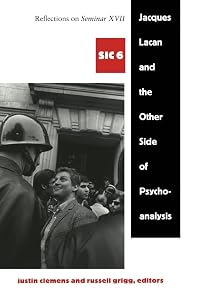
Jacques Lacan and the Other Side of Psychoanalysis: Reflections on Seminar XVII [Series: SIC 6]
by Justin Clemens
SIC (6)
On This Page
Description
Articles by noted Lacanian psychoanalysts and scholars discussing issues that emerge in Lacan's Seminar XVII (newly translated) that import fields of psychoanalysis, philosophy, political theory, cultural studies and literary studies.Tags
Recommendations












Member Reviews
There are certain clear landmarks that stand out in the development of Jacques Lacan's career, most of which correspond to the topics of his seminars: Seminar VII, for instance, is a groundbreaking look at ethics and pyschoanalysis; Seminar XI follows on the heels of Lacan's "ex-communication" from the IPA; Seminar XX reveals his thoughts on sexuation and feminine sexuality; Seminar XXIII develops his ideas about the sinthome.
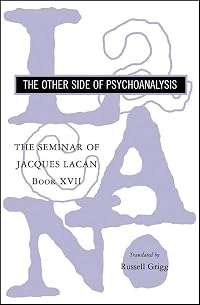
Increasingly, I have come to see the importance of Seminar XVII among these other landmarks, especially because it articulates most clearly the link between psychoanalysis and politics. This superb collection of essays affirms the centrality of Seminar XVII in the development of Lacan's thought.
Jacques-Alain Miller show more opens the book with a meditation on shame, a crucial concept in Lacan's critique of the imperative to enjoy. While Miller doesn't put it in these terms, Lacan sees those who have given in to the enjoyment of the master's discourse have essentially "sold out," and thus ought to be ashamed by how they have been tricked and seduced into being slaves.
Another highlight of the collection is Russell Grigg's delineation of Lacan's dramatic turnaround, in this seminar, regarding the importance of the Oedipus complex. Grigg brilliantly untangles the historical layers of this argument, showing how there are different father-related discourses tailored for hysterical and neurotic discourses, all grounded in Freud's desire to "save the father." Yet more evidence that, by the late 1960s, Lacan was already moving toward an anti-Oedipal model.
The very best piece, however, is a dazzling essay by Mladen Dolar, who interweaves a reading of Hegel into the famous "four discourses" that Lacan outlines in Seminar XVII. Dolar does an amazing job of showing how Hegel is made by Lacan to take up the positions of Master, Professor (university discourse), and hysteric, even though these seem to contradict one another.
I have to admit that I found the last section of the book - under the title "Discourses of Everyday Life" - to be of much less interest than the earlier, more theoretical parts. Nonetheless, there are plenty of other worthy pieces that I have mentioned in detail by the likes of Dominiek Hoens, Slavoj Žižek, and Alenka Zupančič. Together, they make this book into a strong collection that validates and explicates the importance of Seminar XVII. show less
Increasingly, I have come to see the importance of Seminar XVII among these other landmarks, especially because it articulates most clearly the link between psychoanalysis and politics. This superb collection of essays affirms the centrality of Seminar XVII in the development of Lacan's thought.
Jacques-Alain Miller show more opens the book with a meditation on shame, a crucial concept in Lacan's critique of the imperative to enjoy. While Miller doesn't put it in these terms, Lacan sees those who have given in to the enjoyment of the master's discourse have essentially "sold out," and thus ought to be ashamed by how they have been tricked and seduced into being slaves.
Another highlight of the collection is Russell Grigg's delineation of Lacan's dramatic turnaround, in this seminar, regarding the importance of the Oedipus complex. Grigg brilliantly untangles the historical layers of this argument, showing how there are different father-related discourses tailored for hysterical and neurotic discourses, all grounded in Freud's desire to "save the father." Yet more evidence that, by the late 1960s, Lacan was already moving toward an anti-Oedipal model.
The very best piece, however, is a dazzling essay by Mladen Dolar, who interweaves a reading of Hegel into the famous "four discourses" that Lacan outlines in Seminar XVII. Dolar does an amazing job of showing how Hegel is made by Lacan to take up the positions of Master, Professor (university discourse), and hysteric, even though these seem to contradict one another.
I have to admit that I found the last section of the book - under the title "Discourses of Everyday Life" - to be of much less interest than the earlier, more theoretical parts. Nonetheless, there are plenty of other worthy pieces that I have mentioned in detail by the likes of Dominiek Hoens, Slavoj Žižek, and Alenka Zupančič. Together, they make this book into a strong collection that validates and explicates the importance of Seminar XVII. show less
Ratings
Members
- Recently Added By
Author Information
20+ Works 122 Members
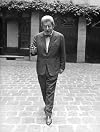
Justin Clemens teaches in psychoanalysis and literary studies at Deakin University, Australia.
Series

Work Relationships
Common Knowledge
- People/Characters
- Jacques Lacan
Classifications
Statistics
- Members
- 31
- Popularity
- 903,871
- Reviews
- 1
- Rating
- (4.50)
- Languages
- English
- Media
- Paper, Ebook
- ISBNs
- 3
- ASINs
- 1