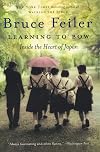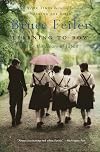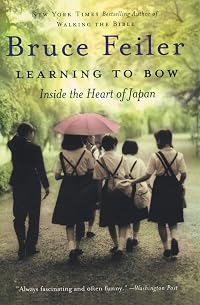
Learning to Bow: Inside the Heart of Japan
by Bruce Feiler
On This Page
Description
Learning to Bow has been heralded as one of the funniest, liveliest, and most insightful books ever written about the clash of cultures between America and Japan. With warmth and candor, Bruce Feiler recounts the year he spent as a teacher in a small rural town. Beginning with a ritual outdoor bath and culminating in an all-night trek to the top of Mt. Fuji, Feiler teaches his students about American culture, while they teach him everything from how to properly address an envelope to how to show more date a Japanese girl.. show less
Tags
Recommendations

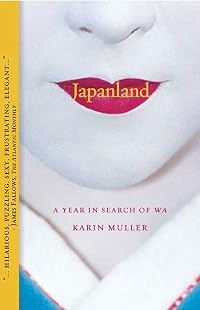

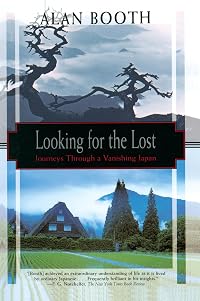
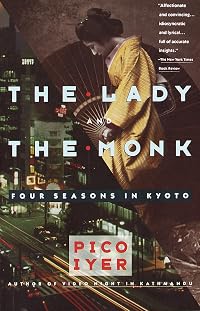
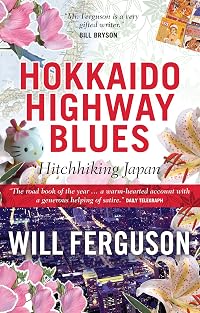
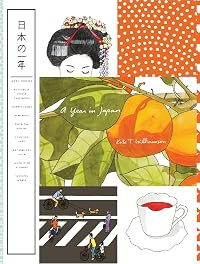
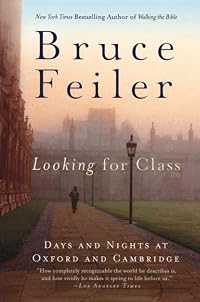
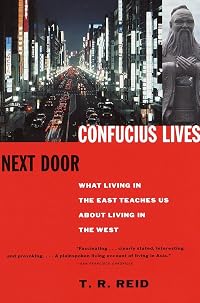
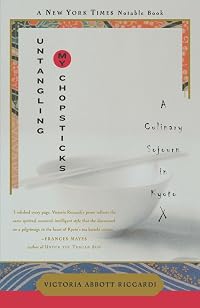


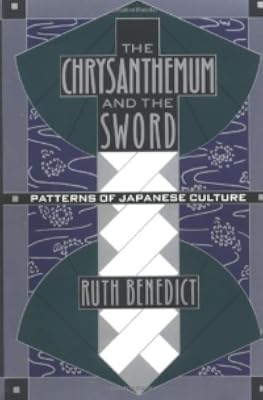




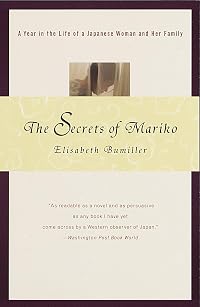

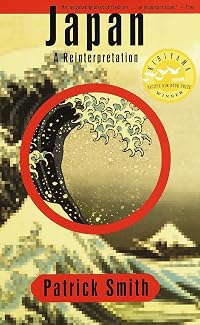




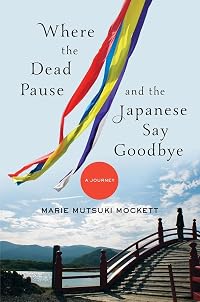
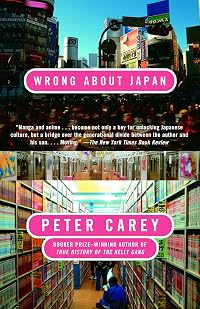


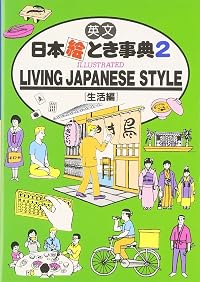

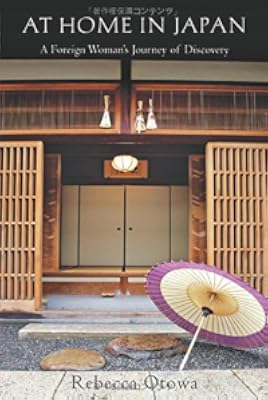






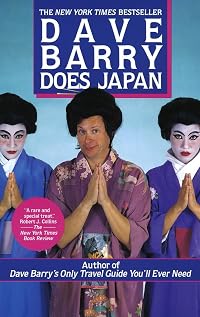





Member Recommendations
aulsmith Another memoir of an American in Japan. This one is a zen student and English tutor.
Literate.Ninja Both works are clever and friendly autobiographical accounts of westerners trying to live and work in Asia.
Member Reviews
The author spent a year teaching American culture and English in Japan. In this book, he relates his experiences both as a teacher and as a foreigner trying to understand Japanese culture. Well written and often funny, this is an honest account of living abroad.
The author also examines the strengths and weaknesses of the Japanese education system. He explores aspects of the culture such as dating, marriage and work place rituals. Most interesting, to me, was his his discussion on cultural homogeneity vs diversity and what it means to fit in and to belong.
The author also examines the strengths and weaknesses of the Japanese education system. He explores aspects of the culture such as dating, marriage and work place rituals. Most interesting, to me, was his his discussion on cultural homogeneity vs diversity and what it means to fit in and to belong.
A thought provoking memoir of an American man who lives in Japan for a year teaching Japaneses school children to speak English. It's an intimate view of Japanese culture as observed and experienced by an outsider who is being slowly conformed and integrated into Japanese life. By turns amused, frustrated, overwhelmed and baffled, the narrator's voice leads us through the mysteries and imparts the wisdom he has gained from his time there.
There is beauty to the culture, but also deep-seated societal problems that are not easily remedied. There is a strong desire to change and grow entrance into an international community, but at the same time, the culture is bound by centuries old traditions and the weight of their own history. I show more enjoyed reading the author's insights and learning about Japan during this specific period of intense change. show less
There is beauty to the culture, but also deep-seated societal problems that are not easily remedied. There is a strong desire to change and grow entrance into an international community, but at the same time, the culture is bound by centuries old traditions and the weight of their own history. I show more enjoyed reading the author's insights and learning about Japan during this specific period of intense change. show less
As a statement to how busy I've been lately, it took me nearly two weeks to read this book, shocking considering if a book takes me that long it's usually not worth it and this one was.
While I was glad for the insight this book gave me into a non-city JHS in the 90s and the glimpse into the student's mindset before they're utterly brainwarped by the time I get them at 8-9 PM, it also made me doubly glad I opted not to do JET either time. I couldn't cope! I did enjoy how it was a mix of "Mr. Bruce"'s views as well as those of his colleagues and students.
Living English may be alive in the hearts of government officials in Tokyo, but it has no life in Sano.
Nor does it have much life even ten years later. While it's true that I don't show more generally enjoy JHS and HS students, I have gotten some interesting views on English from them. Also make me consider my motives for studying Japanese and its uses in my world.
It, like Alex Kerr's Lost Japan, is one of those books that makes me really stop and think about the Japan I know v. Japan out of the cities. It's also one that's prone to making me stop and think and realise "I'm in Japan" a fact that I must admit escapes me more often than I'd have thought possible.
His chapter on juku, and I like how he layed out the book according to his own experiences--and tied extra stuff in, like the juku around entrance exam time, as appropriate--got me thinking a lot on the business of English. For all the criticism about the Big4, they fill a demand in the Japanese market. Having had some JH and HS English teachers in my classes, it no longer surprises me about the state of English in this country. Still kudos for the effort.
But what I thought as his central tenet came so late...Everybody says that our students have to learn to live in a world that is larger than just Japan. But first, our teachers have to learn that this world exists. 100% agreed, part of the cycle here as elsewhere in the world is that until the circle of 'how it's been done' is broken, it's hard to teach the unknown. show less
While I was glad for the insight this book gave me into a non-city JHS in the 90s and the glimpse into the student's mindset before they're utterly brainwarped by the time I get them at 8-9 PM, it also made me doubly glad I opted not to do JET either time. I couldn't cope! I did enjoy how it was a mix of "Mr. Bruce"'s views as well as those of his colleagues and students.
Living English may be alive in the hearts of government officials in Tokyo, but it has no life in Sano.
Nor does it have much life even ten years later. While it's true that I don't show more generally enjoy JHS and HS students, I have gotten some interesting views on English from them. Also make me consider my motives for studying Japanese and its uses in my world.
It, like Alex Kerr's Lost Japan, is one of those books that makes me really stop and think about the Japan I know v. Japan out of the cities. It's also one that's prone to making me stop and think and realise "I'm in Japan" a fact that I must admit escapes me more often than I'd have thought possible.
His chapter on juku, and I like how he layed out the book according to his own experiences--and tied extra stuff in, like the juku around entrance exam time, as appropriate--got me thinking a lot on the business of English. For all the criticism about the Big4, they fill a demand in the Japanese market. Having had some JH and HS English teachers in my classes, it no longer surprises me about the state of English in this country. Still kudos for the effort.
But what I thought as his central tenet came so late...Everybody says that our students have to learn to live in a world that is larger than just Japan. But first, our teachers have to learn that this world exists. 100% agreed, part of the cycle here as elsewhere in the world is that until the circle of 'how it's been done' is broken, it's hard to teach the unknown. show less
Bruce Feiler takes us on an insightful and often humourous look at what it's like to teach English in a Japaese junion high school. He combines classic cultural research with his own personal experiences, giving the reader a good look inside a world that so many people both love and often misunderstand.
It isn't just the Japanese school system that Feiler lets the reader explore in Learning to Bow. All aspects of Japanese culture are up for grabs, from dating to the proper way to eat lunch to fashion. He often makes comparisons between Japanese and American methods, drawing his own conclusions but still giving us a chance to form our own without his bias. While he may disagree with the benefits of some parts of Japanese culture, he show more doesn't say, for example, that those aspects are bad. Merely that he disagrees.
I've read this book twice before, and still love it now as much as I did when I first opened the cover to page 1. Though Feiler's experiences recounted in the book take place in the late 80's, the words and story themselves have such a timeless feel that they could have been written yesterday.
Most certainly, I'd recommend this book for anyone who's seriously interested in teaching in Japan (through the JET program, perhaps), or for those who are interested in another look into Japan's fascinating culture. show less
It isn't just the Japanese school system that Feiler lets the reader explore in Learning to Bow. All aspects of Japanese culture are up for grabs, from dating to the proper way to eat lunch to fashion. He often makes comparisons between Japanese and American methods, drawing his own conclusions but still giving us a chance to form our own without his bias. While he may disagree with the benefits of some parts of Japanese culture, he show more doesn't say, for example, that those aspects are bad. Merely that he disagrees.
I've read this book twice before, and still love it now as much as I did when I first opened the cover to page 1. Though Feiler's experiences recounted in the book take place in the late 80's, the words and story themselves have such a timeless feel that they could have been written yesterday.
Most certainly, I'd recommend this book for anyone who's seriously interested in teaching in Japan (through the JET program, perhaps), or for those who are interested in another look into Japan's fascinating culture. show less
Set in the late eighties/early nineties, this book describes an American's experience teaching English in a rural Japanese school. Feiler is a gifted storyteller who creates a beautiful atmosphere that captures the reader. But watch out: his writing is arrogant in a "I learned more in one year than most Japanese learn in their lifetimes" kind of way. I appreciated his asides into Japanese history because they gave more depth to his journal-like prose. Some of his explanations are outdated; I think most people already know about "karaoke" and "sporks" and don't need them explained in detail. Maybe these things were avant-garde in 1991?
As much as I enjoyed the stories in the book, I worried when I discovered some incorrect information show more toward the end. Feiler reverses the Japanese customs on Valentine's Day and White Day (women giving chocolate to men /men giving sweets to women, respectively. See page 258). The author seems so cocky about his knowledge of everything Japanese, but I wonder what other mistakes he might have published without American readers realizing. Overall, this is an average, lighthearted, entertaining, and most of all, subjective read that should not be taken too seriously. show less
As much as I enjoyed the stories in the book, I worried when I discovered some incorrect information show more toward the end. Feiler reverses the Japanese customs on Valentine's Day and White Day (women giving chocolate to men /men giving sweets to women, respectively. See page 258). The author seems so cocky about his knowledge of everything Japanese, but I wonder what other mistakes he might have published without American readers realizing. Overall, this is an average, lighthearted, entertaining, and most of all, subjective read that should not be taken too seriously. show less
What are Japanese schools really like? That's a question I'm interested in. Turns out, according to Bruce Feiler, Japanese schools are overcrowded and overly focused on discipline and structure. Why are they so successful, then? They are successful in producing students who work well in overcrowded, disciplined and structured situations. Japanese schools are remarkably bad in producing creative and self-motivated students. As a librarian working in the public schools, I found this a fascinating book.
This book encompasses a year in Japan spent teaching English by an American teacher. The differences between the Japanese and the Americans and between their two ways of teaching was the focus of the book. For instance, the Japanese tended to assume that he could not tolerate their food or customs, neither of which was true. In their schools, the teachers and the students are expected to be model citizens, both in and out of the school. When Bruce would run red lights on his bicycle because there was no one at the intersection at that early hour, others noticed and reported it to his school. When students were caught outside the school riding their bicycles they were disciplined by a passing teacher. Every morning the classes would show more greet the teacher with a bow and say "Please teach us today." (How my mother would have loved that!) However, their class structure is extremely rigid and formuliac. When Bruce tried to break it up in order to get his students to truly learn conversational English they were shocked and initially withdrew. There were many other fascinating and surprising things I learned about Japan from this book, and reading it was an enjoyable way to get some knowledge of that country. show less
Members
- Recently Added By
Lists

Travelogues in Japan
22 works; 3 members
Author Information

20+ Works 7,812 Members
Bruce Feiler (born October 25, 1964) is a writer on social issues and, particularly more recently, on religion. Feiler is a native of Savannah, Georgia, and now lives in New York City with his wife and children. His wife sometimes appears as a traveling companion in his books. Feiler completed his undergraduate degree at Yale University. His show more latest book, The Council of Dads: My Daughters, My Illness, and the Men Who Could Be Me, describes how after recieving a diagnosis of cancer, he asked six men from all phases of his life to be present through the phases of his young daughters¿ lives. (Bowker Author Biography) show less
Common Knowledge
- Original publication date
- 1991
- Important places
- Sano, Japan; Japan
- Epigraph
- Oshieru wa manabu no nakaba nari.
Half of teaching is learning.
-- A Japanese proverb - Dedication
- For my parents Jane and Ed Feiler, above and beyond the commas
- First words
- I dropped my pants and felt a rush of cool wind against my legs.
- Last words
- (Click to show. Warning: May contain spoilers.)I turned the envelope upside down, and out fell onto my lap a gift from Mr. C that in times of need would warm my heart and uphold my dignity: a small white towel.
Classifications
Statistics
- Members
- 574
- Popularity
- 51,468
- Reviews
- 16
- Rating
- (3.84)
- Languages
- English
- Media
- Paper, Ebook
- ISBNs
- 8
- UPCs
- 1
- ASINs
- 4