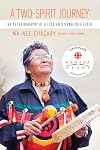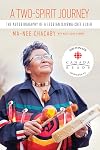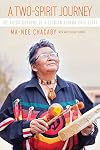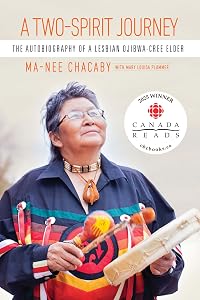
A Two-Spirit Journey: The Autobiography of a Lesbian Ojibwa-Cree Elder
by Ma-Nee Chacaby
Critical Studies in Native History (18)
On This Page
Description
A Two-Spirit Journey is Ma-Nee Chacaby's extraordinary account of her life as an Ojibwa-Cree lesbian. From her early, often harrowing memories of life and abuse in a remote Ojibwa community riven by poverty and alcoholism, Chacaby's story is one of enduring and ultimately overcoming the social, economic, and health legacies of colonialism. As a child, Chacaby learned spiritual and cultural traditions from her Cree grandmother and trapping, hunting, and bush survival skills from her Ojibwa show more stepfather. She also suffered physical and sexual abuse by different adults, and in her teen years became alcoholic herself. At twenty, Chacaby moved to Thunder Bay with her children to escape an abusive marriage. Abuse, compounded by racism, continued, but Chacaby found supports to help herself and others. Over the following decades, she achieved sobriety; trained and worked as an alcoholism counsellor; raised her children and fostered many others; learned to live with visual impairment; and came out as a lesbian. In 2013, Chacaby led the first gay pride parade in Thunder Bay. Ma-Nee Chacaby has emerged from hardship grounded in faith, compassion, humour, and resilience. Her memoir provides unprecedented insights into the challenges still faced by many Indigenous people. show lessTags
Recommendations











Member Reviews
In spite of this being an inspirational story, it is at times hard to read because of the amount of violence the author experienced as a woman and as a homosexual person.
This book looks at Ma-Nee Chacaby's life from early childhood, when she was born to a single mom in a sanitarium, put up for adoption, but subsequently claimed and raised by her maternal grandmother. It follows her through periods of addiction, an abusive marriage, becoming a mother, getting sober, coming out and working to help other addicts and street people. She is a remarkable woman.
What I like abut this book is its brutal honesty. Things are never sugar coated or exaggerated. The author demonstrated great courage in telling her story. And great generosity by show more telling it as it may help other two-spirited people.
Although she worked with a non-indigenous person to write the book, I like the way that collaboration let the author's voice come through. So, at times it isn't great writing in literary terms, but it is always great writing in terms of authenticity. show less
This book looks at Ma-Nee Chacaby's life from early childhood, when she was born to a single mom in a sanitarium, put up for adoption, but subsequently claimed and raised by her maternal grandmother. It follows her through periods of addiction, an abusive marriage, becoming a mother, getting sober, coming out and working to help other addicts and street people. She is a remarkable woman.
What I like abut this book is its brutal honesty. Things are never sugar coated or exaggerated. The author demonstrated great courage in telling her story. And great generosity by show more telling it as it may help other two-spirited people.
Although she worked with a non-indigenous person to write the book, I like the way that collaboration let the author's voice come through. So, at times it isn't great writing in literary terms, but it is always great writing in terms of authenticity. show less
I purchased this book after it was the winner of Canada Reads 2025. Since the 2026 short list has just been announced I figured I should clear this off Mount TBR in order to make room for the new contenders (of which I have read exactly none).
Ma-nee grew up in a small community in North-West Ontario. Her mother, Deborah, had given birth to her in a tuberculosis sanatorium and then let a local French couple adopt her. Ma-nee was never completely sure who her father was but he could have been a man named Philip. When Ma-nee's grandmother learned of her existence she went and brought her home to live with her. Some years later her mother returned to live in the same community and she married Gabe. While her stepfather was quite good to show more her, Deborah was often physically abusive. Alcoholism may have had something to do with those bouts of physical abuse. Her grandmother told Ma-nee that she had two spirits and sometimes her female spirit would predominate but at other times the male spirit would. Ojibwe was the language Ma-nee learned from birth and she also spoke Cree. She had very little schooling but unlike many other Indigenous children she was never sent to residential schools. Alcohol and drugs were readily available and Ma-nee was an alcoholic until she started AA when she was living in Thunder Bay. There was also sexual abuse but Ma-nee was technically a virgin when she married Gus by an arranged marriage. Gus was the father of her two children, Martin and Sarah, but Ma-nee left him because he was violently abusive to her. In Thunder Bay she slowly started turning her life around, getting sober, learning to read and write in English, getting employment, raising her kids and also taking in foster kids. Then she married Nate and they moved to Winnipeg where Nate had been offered a job. Ma-Nee had slowly been coming to terms with her sexuality, realizing that she was attracted to women, so she left Nate and returned to Thunder Bay. She had two serious lesbian relationships but was living alone at the time of writing the book. Since she was legally blind, she was assisted in the writing Mary Louisa Plummer, a long time friend. The hardships this woman endured in her life would have flattened many other poeple. If there was a portrait that exemplifies resilience, I think Ma-nee Chacaby would be the perfect model.
In the initial parts of the book when she was describing the physical abuse and hardships she suffered, her wording seems almost mechanical and not emotional. Later she describes how she went through therapy to help her deal with this trauma and then her descriptions have much more emotion. I think she must have locked away the negative emotions from those earlier years until she found how to deal with it. This woman has established herself as a loving, caring, resourceful human being. We, the readers of this book, are privileged to experience her journey. show less
Ma-nee grew up in a small community in North-West Ontario. Her mother, Deborah, had given birth to her in a tuberculosis sanatorium and then let a local French couple adopt her. Ma-nee was never completely sure who her father was but he could have been a man named Philip. When Ma-nee's grandmother learned of her existence she went and brought her home to live with her. Some years later her mother returned to live in the same community and she married Gabe. While her stepfather was quite good to show more her, Deborah was often physically abusive. Alcoholism may have had something to do with those bouts of physical abuse. Her grandmother told Ma-nee that she had two spirits and sometimes her female spirit would predominate but at other times the male spirit would. Ojibwe was the language Ma-nee learned from birth and she also spoke Cree. She had very little schooling but unlike many other Indigenous children she was never sent to residential schools. Alcohol and drugs were readily available and Ma-nee was an alcoholic until she started AA when she was living in Thunder Bay. There was also sexual abuse but Ma-nee was technically a virgin when she married Gus by an arranged marriage. Gus was the father of her two children, Martin and Sarah, but Ma-nee left him because he was violently abusive to her. In Thunder Bay she slowly started turning her life around, getting sober, learning to read and write in English, getting employment, raising her kids and also taking in foster kids. Then she married Nate and they moved to Winnipeg where Nate had been offered a job. Ma-Nee had slowly been coming to terms with her sexuality, realizing that she was attracted to women, so she left Nate and returned to Thunder Bay. She had two serious lesbian relationships but was living alone at the time of writing the book. Since she was legally blind, she was assisted in the writing Mary Louisa Plummer, a long time friend. The hardships this woman endured in her life would have flattened many other poeple. If there was a portrait that exemplifies resilience, I think Ma-nee Chacaby would be the perfect model.
In the initial parts of the book when she was describing the physical abuse and hardships she suffered, her wording seems almost mechanical and not emotional. Later she describes how she went through therapy to help her deal with this trauma and then her descriptions have much more emotion. I think she must have locked away the negative emotions from those earlier years until she found how to deal with it. This woman has established herself as a loving, caring, resourceful human being. We, the readers of this book, are privileged to experience her journey. show less
Wow. I really had to take my time with this book bc it is such heavy subject matter but I loved it beyond words. I highly recommend this book but please check the content warnings ahead of time. Ma-Nee’s story is beautiful, tragic and unfortunately wildly underrepresented. I don’t know if I’ll ever be able to reread just bc it is so weighted but it will live in my head and heart forever, especially bc my girlfriend is Indigenous. Her story must be told❤️
she sets such an incredible example, i wish i could be a even a fraction of the person that she is
topics: alcohol addiction, abuse/trauma/ptsd recovery, houselessness, fostering community, love and relationships, sexuality, disability
topics: alcohol addiction, abuse/trauma/ptsd recovery, houselessness, fostering community, love and relationships, sexuality, disability
Included in a blog post and resource list at https://booksbeyondbinaries.blog/2019/06/10/non-fiction-about-gender-and-trans-e...
Ratings
Members
- Recently Added By
Lists

Indigenous America Reader
145 works; 12 members

Canada Reads Winners and Nominees
129 works; 9 members

Globe and Mail | Canadian Non-Fiction: March 22, 2025
10 works; 1 member
Globe and Mail | Canadian Non-Fiction: March 29, 2025
10 works; 1 member
Globe and Mail | Canadian Non-Fiction: April 5, 2025
10 works; 1 member
Globe and Mail | Canadian Non-Fiction: April 12, 2025
10 works; 1 member
Globe and Mail | Canadian Non-Fiction: April 19, 2025
10 works; 1 member
Globe and Mail | Canadian Non-Fiction: April 26, 2025
10 works; 1 member

Queer Nonfiction (Owned TBR)
25 works; 1 member

The Best LGBTQ Nonfiction
210 works; 69 members
Author Information
1 Work 161 Members
Awards and Honors
Series

Common Knowledge
- Canonical title
- A Two-Spirit Journey: The Autobiography of a Lesbian Ojibwa-Cree Elder
- People/Characters
- Ma-Nee Chacaby; Liliilah; Deborah; Gabe; Barry; Matilda (show all 13); Andy; Gus; Sarah; Martin; Leah; Grace; Jane
- Important places
- Ontario, Canada
- First words
- My name is Ma-Nee Chacaby.
- Last words
- (Click to show. Warning: May contain spoilers.)And I hope my love with stay with them and give them warmth and strength throughout their lives, as my kokum's love still does for me.
Classifications
- Genres
- Sexuality and Gender Studies, LGBTQ+, Biography & Memoir, Nonfiction, General Nonfiction
- DDC/MDS
- 306.76 — Society, government, & culture Social sciences, sociology & anthropology Social Behavior - Dating, Marriage, Divorce Sexual relations Sexual orientation, transgender identity, intersexuality
- LCC
- HQ75.4 .C43 .A3 — Social sciences The family. Marriage, Women and Sexuality The Family. Marriage. Women Sexual life Homosexuality. Lesbianism
- BISAC
Statistics
- Members
- 161
- Popularity
- 203,625
- Reviews
- 5
- Rating
- (4.36)
- Languages
- English, French
- Media
- Paper, Audiobook, Ebook
- ISBNs
- 7
- ASINs
- 3