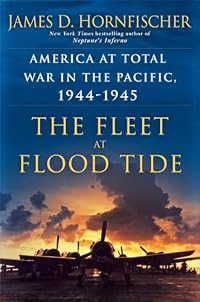
The Fleet at Flood Tide: America at Total War in the Pacific, 1944-1945
by James D. Hornfischer
On This Page
Description
"Timed to coincide with the 75th anniversary of the attack on Pearl Harbor, here is an unprecedented account of the extraordinary World War II air, land, and sea campaign that brought the U.S. Navy to the apex of its strength and marked the rise of the United States as a global superpower,"--Amazon.com. The extraordinary story of the World War II air, land, and sea campaign that brought the U.S. Navy to the apex of its strength and marked the rise of the United States as a global superpower. show more One of America's preeminent military historians, James D. Hornfischer has written his most expansive and ambitious book to date. Drawing on new primary sources and personal accounts by Americans and Japanese alike, here is a thrilling narrative of the climactic end stage of the Pacific War, focusing on the U.S. invasion of the Mariana Islands in June 1944 and the momentous events that it triggered. With its thunderous assault into Japan's inner defensive perimeter, America crossed the threshold of total war. From the seaborne invasion of Saipan to the stunning aerial battles of the Great Marianas Turkey Shoot, to the largest banzai attack of the war and the strategic bombing effort that led to Hiroshima and Nagasaki, the Marianas became the fulcrum of the drive to compel Tokyo to surrender--with consequences that forever changed modern war. These unprecedented operations saw the first large-scale use of Navy Underwater Demolition Teams; a revolution in the fleet's ability to sustain cross-hemispheric expeditionary warfare; the struggle of American troops facing not only a suicidal enemy garrison but desperate Japanese civilians; and the rise of the U.S. Navy as the greatest of grand fleets. From the Marianas, B-29 Superfortresses would finally unleash nuclear fire on an enemy resolved to fight to the end. Hornfischer casts this clash of nations and cultures with cinematic scope and penetrating insight, focusing closely on the people who rose to the challenge under fire: Raymond Spruance, the brilliant, coolly calculating commander of the Fifth Fleet; Kelly Turner, whose amphibious forces delivered Marine General Holland "Howlin' Mad" Smith's troops to the beaches of Saipan and Tinian; Draper Kauffman, founder of the Navy unit that predated today's SEALs; Paul Tibbets, who created history's first atomic striking force and flew the Enola Gay to Hiroshima; and Japanese warriors and civilians who saw the specter of defeat as the ultimate test of the spirit. From the seas of the Central Pacific to the shores of Japan itself, The Fleet at Flood Tide is a stirring and deeply humane account of World War II's world-changing finale. -- show lessTags
Recommendations








Member Reviews
James Hornfischer was justly esteemed as a naval historian and his analysis of the Marianas Campaign is up to his best work. Where I think this book is somewhat less successful is when Hornfischer decides to address the end game in the Pacific War, which the campaign was fought to facilitate, and examine the American strategic bombing assault against Japan, culminating in the use of atomic weapons.
Hornfischer concludes that the psychological mindset of the Japanese leadership was the ultimate center of gravity in the war, justifying the use of the worst weapons we had available to break the deadlock that paralyzed the Japanese government's power of decision. In some ways I'm more convinced of this argument than I might have been, say, show more ten years ago, as I've become much more aware of weaknesses of the Meiji State that allowed the Japanese military to arrogate too much authority. Still, there are times when Hornfischer doesn't seem like he convinces himself with his own argument, as accepting the principles of Total War is an acceptance of the overthrow of all the restrains that aim to maintain proportionality; sometimes ugly is just ugly.
However, I also think those who argued that Hiroshima was really the opening shot of the Soviet-American Cold War, and that this foreclosed a better relationship with Stalin were/are kidding themselves; though that's an argument for another day. Still, to give those folks their due, I have to accept that there's an element of the U.S. government sleep-walking their own way through the decision making process which sticks with me from all that I've read about it. The American choice to use atomic weapons was as riddled with second guessing, sloppy thinking, and self-serving careerism as the Japanese process of avoiding national suicide. This is a long-winded way of saying that FDR was derelict in preparing Truman to preside over the final decision, and even if the right decision was ultimately made, it is not very satisfying. Overall, I still prefer Richard Frank's "Downfall" as an examination of the 1945 endgame, though Hornfischer takes into account Harold Bix's "Hirohito and the Making of Modern Japan," which ascribed much more political culpability to the Japanese sovereign than had been done previously. I suppose I'm arguing that another parallel examination of American and Japanese decision-making processes might be in order; hopefully Richard Frank completes his new trilogy about World War II viewed through the filter of the Sino-Japanese war. show less
Hornfischer concludes that the psychological mindset of the Japanese leadership was the ultimate center of gravity in the war, justifying the use of the worst weapons we had available to break the deadlock that paralyzed the Japanese government's power of decision. In some ways I'm more convinced of this argument than I might have been, say, show more ten years ago, as I've become much more aware of weaknesses of the Meiji State that allowed the Japanese military to arrogate too much authority. Still, there are times when Hornfischer doesn't seem like he convinces himself with his own argument, as accepting the principles of Total War is an acceptance of the overthrow of all the restrains that aim to maintain proportionality; sometimes ugly is just ugly.
However, I also think those who argued that Hiroshima was really the opening shot of the Soviet-American Cold War, and that this foreclosed a better relationship with Stalin were/are kidding themselves; though that's an argument for another day. Still, to give those folks their due, I have to accept that there's an element of the U.S. government sleep-walking their own way through the decision making process which sticks with me from all that I've read about it. The American choice to use atomic weapons was as riddled with second guessing, sloppy thinking, and self-serving careerism as the Japanese process of avoiding national suicide. This is a long-winded way of saying that FDR was derelict in preparing Truman to preside over the final decision, and even if the right decision was ultimately made, it is not very satisfying. Overall, I still prefer Richard Frank's "Downfall" as an examination of the 1945 endgame, though Hornfischer takes into account Harold Bix's "Hirohito and the Making of Modern Japan," which ascribed much more political culpability to the Japanese sovereign than had been done previously. I suppose I'm arguing that another parallel examination of American and Japanese decision-making processes might be in order; hopefully Richard Frank completes his new trilogy about World War II viewed through the filter of the Sino-Japanese war. show less
Hornfischer excels at smaller, more intimate history, Last Stand of the Tin Can Sailors being a shining example of what books can do. So how does his style translate to the massive undertaking that was the Allied victory in the Pacific?
Well, Hornfischer cheats. He focuses on three main characters, Admiral Spruance, who's Fifth Fleet was the decisive naval arm, Draper Kauffman, a naval officer who organized Underwater Demolition Teams to prepare the beach for invasion, and Paul W. Tibbetts, who dropped the first atomic bomb. Secondary characters, Marines, pilots, and Japanese soldiers and civilians, round out the history, providing a personal touch on great events.
The meat of the book focuses on the invasion of Saipan, a grinding show more campaign to force tenacious defenders out of a network of caves and bunkers. Saipan also served as the catalyst for the Great Marianas Turkey Shoot, where skilled American pilots in F6F Hellcats tore the guts out of the IJN's naval aviation wing. From then on, kamikaze attacks were the best that the IJN could mount, but these desperate measures could still exact a terribly high cost.
Saipan dominates the book, getting over 20 chapters to something like 2 pages on Iwo Jima, and a similar slighting of the invasion of Okinawa. The big show was the planned invasion of Japan, Operation Downfall. Causalities were expected to be immense, exceeding over 100,000 deaths on the Allied side, and millions on the Japanese side. Chemical weapons were expected to be used. It would have been horrific.
Here, Hornfischer launches into his second major theme of the book, justifying the use of the atomic bomb. This is a subject of unending historical debate, and Hornfischer hews close to conventional wisdom. While Hiroshima and Nagasaki may not have been strictly military targets, the object was the dysfunctional psychology around Emperor Hirohito. Despite a hopeless military position, including blockade and regular firebombing attacks, Japan was unwilling to surrender. The overwhelming force of the bombs provided an impetus to end the war. It was atrocious, yes, but a final atrocity in a decade of horrors.
So with the caveats that this book is really about Saipan, with a long digression on the ethics of the atom bomb, it is still really excellent. Hornfischer is top notch as a storyteller, humanizing a powerful military facing a determined opponent. Well worth the read! show less
Well, Hornfischer cheats. He focuses on three main characters, Admiral Spruance, who's Fifth Fleet was the decisive naval arm, Draper Kauffman, a naval officer who organized Underwater Demolition Teams to prepare the beach for invasion, and Paul W. Tibbetts, who dropped the first atomic bomb. Secondary characters, Marines, pilots, and Japanese soldiers and civilians, round out the history, providing a personal touch on great events.
The meat of the book focuses on the invasion of Saipan, a grinding show more campaign to force tenacious defenders out of a network of caves and bunkers. Saipan also served as the catalyst for the Great Marianas Turkey Shoot, where skilled American pilots in F6F Hellcats tore the guts out of the IJN's naval aviation wing. From then on, kamikaze attacks were the best that the IJN could mount, but these desperate measures could still exact a terribly high cost.
Saipan dominates the book, getting over 20 chapters to something like 2 pages on Iwo Jima, and a similar slighting of the invasion of Okinawa. The big show was the planned invasion of Japan, Operation Downfall. Causalities were expected to be immense, exceeding over 100,000 deaths on the Allied side, and millions on the Japanese side. Chemical weapons were expected to be used. It would have been horrific.
Here, Hornfischer launches into his second major theme of the book, justifying the use of the atomic bomb. This is a subject of unending historical debate, and Hornfischer hews close to conventional wisdom. While Hiroshima and Nagasaki may not have been strictly military targets, the object was the dysfunctional psychology around Emperor Hirohito. Despite a hopeless military position, including blockade and regular firebombing attacks, Japan was unwilling to surrender. The overwhelming force of the bombs provided an impetus to end the war. It was atrocious, yes, but a final atrocity in a decade of horrors.
So with the caveats that this book is really about Saipan, with a long digression on the ethics of the atom bomb, it is still really excellent. Hornfischer is top notch as a storyteller, humanizing a powerful military facing a determined opponent. Well worth the read! show less
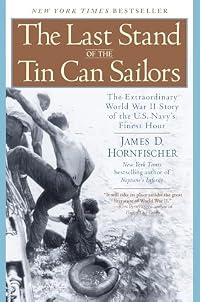
Full disclosure: James D. Hornfischer’s first book, The Last Stand of the Tin Can Sailors: The Extraordinary World War II Story of the U.S. Navy's Finest Hour is my all-time favorite book about World War II or any war fought at sea. His thrilling narrative focuses on a small yet vital engagement of the Battle of Leyte Gulf and spins a story that makes the defense of the Alamo look tepid in comparison. But being able to tell the story of a battle does not automatically qualify one to tell the story of a war. So it is with great interest that I picked up a copy of Hornfischer’s latest book, ‘The Fleet at Flood Tide: America at Total War in the Pacific, 1944-1945’, which covers the Pacific Campaign starting with the U.S. Navy’s show more air assault on the Japanese base at Truk Lagoon and running through to the end of the war, focusing largely on the amphibious assaults on the Marianas Islands; Saipan, Tinian and Guam. The conquest of these islands gave the Allies airfields from which long-range bombers could reach the Japanese mainland, unleashing a reign of destruction unparalleled in history. Hornfischer focuses on linking the occupation of the Marianas with the war’s final chapter, the bombing of Hiroshima by Col. Paul Tibbets and the crew of the Enola Gay, which took off from Tinian. While this is not the most exhaustive account of Tibbet’s career and mission, it is considerably more comprehensive than description of the mission given by the colonel on his return from Hiroshima. “We sighted a Japanese city and destroyed it; further details will be released from Washington.”
Other campaigns and battles, such as Iwo Jima and Leyte Gulf are given less attention than one would expect. In his defense, though, these battles have received a lot of attention from historians. Flags of Our Fathers (James Bradley) and The Heart of Hell: The Untold Story of Courage and Sacrifice in the Shadow of Iwo Jima (Weiss) are creditable accounts of Iwo Jima and Sea of Thunder: Four Commanders and the Last Great Naval Campaign 1941-1945 (Evan Thomas) and the aforementioned The Last Stand of the Tin Can Sailors are excellent accounts of the Battle of Leyte Gulf.
Hornfischer is as adept at describing an expanded war as he is a single battle. His extensive research relies heavily on primary sources ranging from government officials in Washington and Tokyo, officers in Navy wardrooms, pilots in their cockpits, Marines on the beach and even, despite the extreme paucity or survivors, from Japanese soldiers and civilians on Saipan.
Bottom line: Hornfischer’s books read more like a Tom Clancy thriller than a history book. His skill at stitching together a story that contains all the horror and tragedy, sacrifice and heroism is unparalleled. I cannot recommend his books enough.
*Quotations are cited from an advanced reading copy and may not be the same as appears in the final published edition. The review was based on an advanced reading copy obtained at no cost from the publisher in exchange for an unbiased review. While this does take any ‘not worth what I paid for it’ statements out of my review, it otherwise has no impact on the content of my review.
FYI: On a 5-point scale I assign stars based on my assessment of what the book needs in the way of improvements:
*5 Stars – Nothing at all. If it ain’t broke, don’t fix it.
*4 Stars – It could stand for a few tweaks here and there but it’s pretty good as it is.
*3 Stars – A solid C grade. Some serious rewriting would be needed in order for this book to be considered great or memorable.
*2 Stars – This book needs a lot of work. A good start would be to change the plot, the character development, the writing style and the ending.
*1 Star - The only thing that would improve this book is a good bonfire. show less
Other campaigns and battles, such as Iwo Jima and Leyte Gulf are given less attention than one would expect. In his defense, though, these battles have received a lot of attention from historians. Flags of Our Fathers (James Bradley) and The Heart of Hell: The Untold Story of Courage and Sacrifice in the Shadow of Iwo Jima (Weiss) are creditable accounts of Iwo Jima and Sea of Thunder: Four Commanders and the Last Great Naval Campaign 1941-1945 (Evan Thomas) and the aforementioned The Last Stand of the Tin Can Sailors are excellent accounts of the Battle of Leyte Gulf.
Hornfischer is as adept at describing an expanded war as he is a single battle. His extensive research relies heavily on primary sources ranging from government officials in Washington and Tokyo, officers in Navy wardrooms, pilots in their cockpits, Marines on the beach and even, despite the extreme paucity or survivors, from Japanese soldiers and civilians on Saipan.
Bottom line: Hornfischer’s books read more like a Tom Clancy thriller than a history book. His skill at stitching together a story that contains all the horror and tragedy, sacrifice and heroism is unparalleled. I cannot recommend his books enough.
*Quotations are cited from an advanced reading copy and may not be the same as appears in the final published edition. The review was based on an advanced reading copy obtained at no cost from the publisher in exchange for an unbiased review. While this does take any ‘not worth what I paid for it’ statements out of my review, it otherwise has no impact on the content of my review.
FYI: On a 5-point scale I assign stars based on my assessment of what the book needs in the way of improvements:
*5 Stars – Nothing at all. If it ain’t broke, don’t fix it.
*4 Stars – It could stand for a few tweaks here and there but it’s pretty good as it is.
*3 Stars – A solid C grade. Some serious rewriting would be needed in order for this book to be considered great or memorable.
*2 Stars – This book needs a lot of work. A good start would be to change the plot, the character development, the writing style and the ending.
*1 Star - The only thing that would improve this book is a good bonfire. show less
James Hornfischer may be the outstanding historian of the U.S. Navy's Pacific war in World War II. With this volume he takes the reader from the conquest of the Mariana Islands through the atomic bombings and the end of the war. His writing style reads like a novel and his attention to detail, when necessary, is breathtaking. Although the title was indicates that the book is dedicated to documenting the USN, it is much more. Throughout the narrative, he weaves in the story of Paul Tibbets and the B-29'bombing campaign in general. His admiration of Raymond Spruance is clear and, in truth, Spruance deserves greater acclaim than his more flamboyant colleague, William Halsey. Finally, better than any author I have read, he explains the show more psychological impact of the Japanese determination to die, even if it meant the end of the nation. To this degree, his narrative of the end of the war is superior to Richard Frank's book "Downfall." He does a better job of explaining why it was necessary to use the atomic bombs than virtually any other author who has covered the same material. show less
Let me just start with this probably being Hornfischer’s best book so far. I have been fairly critical of his previous books, and I’m not totally going to let go but I find this a good improvement.
This book covers 1944-1946, when the American military had the upper hand in the war in the Pacific, but every step was risky, a single bomb could kill thousands, and island invasions cost life for every meter gained on a map.
My criticism in the past has been that books that portray themselves as historical books have neglected to look at the events and actions from multiple angles and instead seemingly decided to go on a non-critical path where very little is second guessed. They have also seemingly relied heavily on a few sources, of show more which few, or none, were Japanese.
This book is better. It actually mixes the story of how Americans attack pacific islands with commentary from people, Japanese, civilians and military who occupied those islands at the time. This greatly enhances the narration from a historical point of view. There is still, in my mind, too little of letting multiple angles show in questions where there is no black or white answer, but this is a clear improvement.
Not mixing in disagreeing voices in the narration probably makes the book easier to read and follow, but I, who cares less about heroism and more about the ethical dilemmas and the hard choices, would have liked a little bit more of a deep analysis.
The biggest question is, and will probably always be, was it right to explode two atomic weapons over Japan, killing between 130,000 and 230,000 people, mostly civilians. In this question the book comes down strongly on the ”yes, it was the best for everyone involved” side. With some merit it claims that the alternative would have resulted in more dead Japanese and more dead Americans. We will never know but the argument in the book is persuasive.
The book follows a handful of characters more closely. Raymond Spruance, the admiral who oversaw most of the action on the spot, Paul Tibbets, the commander of Enola Gay and the division of B-29:s who was going to deliver nuclear weapons. Draper Kauffman, the man who headed UDT, the group that is the precursor of the navy SEALs.
Of the three main characters Spruance is the most interesting, but also the most secretive. To him the war seemed to be an intellectual exercise rather than a physical or emotional exercise. He was clearly overshadowed by people with much large egos and much more aware of their public image. Douglas MacArthur, Halsey, Mitchell, Nimitz, King, and so on. It is easy to feel like Spruance didn’t get all the credit he deserved, but on the other hand, he didn’t seem bitter in any way about it.
The book also talks about the cultural clash between the marine corps and the army. Not in any depth, and to an outsider, having two “armies” seems a bit strange so I would not have minded some background to why the US military has more than one. In the end, the Pacific war became good PR for the marine corps. Nobody could throw themselves on a meat grinder as effectively as a marine corps solder.
All in all, of James D. Hornfischer's books, this is not the most interesting story, but it's the best told story. show less
This book covers 1944-1946, when the American military had the upper hand in the war in the Pacific, but every step was risky, a single bomb could kill thousands, and island invasions cost life for every meter gained on a map.
My criticism in the past has been that books that portray themselves as historical books have neglected to look at the events and actions from multiple angles and instead seemingly decided to go on a non-critical path where very little is second guessed. They have also seemingly relied heavily on a few sources, of show more which few, or none, were Japanese.
This book is better. It actually mixes the story of how Americans attack pacific islands with commentary from people, Japanese, civilians and military who occupied those islands at the time. This greatly enhances the narration from a historical point of view. There is still, in my mind, too little of letting multiple angles show in questions where there is no black or white answer, but this is a clear improvement.
Not mixing in disagreeing voices in the narration probably makes the book easier to read and follow, but I, who cares less about heroism and more about the ethical dilemmas and the hard choices, would have liked a little bit more of a deep analysis.
The biggest question is, and will probably always be, was it right to explode two atomic weapons over Japan, killing between 130,000 and 230,000 people, mostly civilians. In this question the book comes down strongly on the ”yes, it was the best for everyone involved” side. With some merit it claims that the alternative would have resulted in more dead Japanese and more dead Americans. We will never know but the argument in the book is persuasive.
The book follows a handful of characters more closely. Raymond Spruance, the admiral who oversaw most of the action on the spot, Paul Tibbets, the commander of Enola Gay and the division of B-29:s who was going to deliver nuclear weapons. Draper Kauffman, the man who headed UDT, the group that is the precursor of the navy SEALs.
Of the three main characters Spruance is the most interesting, but also the most secretive. To him the war seemed to be an intellectual exercise rather than a physical or emotional exercise. He was clearly overshadowed by people with much large egos and much more aware of their public image. Douglas MacArthur, Halsey, Mitchell, Nimitz, King, and so on. It is easy to feel like Spruance didn’t get all the credit he deserved, but on the other hand, he didn’t seem bitter in any way about it.
The book also talks about the cultural clash between the marine corps and the army. Not in any depth, and to an outsider, having two “armies” seems a bit strange so I would not have minded some background to why the US military has more than one. In the end, the Pacific war became good PR for the marine corps. Nobody could throw themselves on a meat grinder as effectively as a marine corps solder.
All in all, of James D. Hornfischer's books, this is not the most interesting story, but it's the best told story. show less
I've been a fan of James Hornfischer since reading [b:The Last Stand of the Tin Can Sailors|5400|The Last Stand of the Tin Can Sailors The Extraordinary World War II Story of the U.S. Navy's Finest Hour|James D. Hornfischer|https://d2arxad8u2l0g7.cloudfront.net/books/1388202712s/5400.jpg|134539] several years ago. His writing can be a bit dense and often takes me a while to get into it, but it's well worth the effort.
[b:The Fleet at Flood Tide: America at Total War in the Pacific, 1944-1945|28952689|The Fleet at Flood Tide America at Total War in the Pacific, 1944-1945|James D. Hornfischer|https://d2arxad8u2l0g7.cloudfront.net/books/1468516635s/28952689.jpg|49177739] wasn't quite what I was expecting. Although the dates '1944-1945' in show more the subtitle made me think it would be a history of the war for those two years (similar to the way Ian Toll's excellent [b:Pacific Crucible|10955056|Pacific Crucible War at Sea in the Pacific, 1941-1942|Ian W. Toll|https://d2arxad8u2l0g7.cloudfront.net/books/1348797550s/10955056.jpg|15872697] chronicles the beginning of the war) that's not quite the aim here. Instead, he spends a great deal of time detailing the battles in the Marianas (the "Marianas Turkey Shoot" and the invasions of Saipan, Tinian, and Guam), whereas Iwo Jima and Okinawa are handled in a few pages each. His focus is on what he calls "Total War," which is sort of the way the Japanese fought to the last man, woman, and child - including using civilians as decoys and shields. He argues that "the ritual suicides of the Japanese garrisons, and their predatory brainwashing and murder of the innocent unarmed, has been insufficiently considered as a turning point that shaped the war's final year." He shows how this hardened U.S. resolves to obtain "unconditional surrender," and led to the use of incendiary weapons (napalm) and eventually atomic bombs.
Much of the book focuses on Admiral Raymond Spruance, who had charge of the navy, and Col. Paul Tibbetts, who piloted the B-29 that dropped the atomic bomb on Hiroshima. But he also brings in the recollections of many others, both American and Japanese, and both high and low-ranking, and even some non-combatants. It puts a very human face on the narrative and is often unflinching in its portrayal of the suffering endured on both sides. Unlike several other similar histories I've read, Hornfischer doesn't stop with the atomic bombs and surrender, but continues to explain the rebuilding efforts the U.S. exerted in Japan and their treatment of the conquered nation as administered by Gen. Douglas MacArthur.
It's a fairly lengthy book, and as I mentioned, it took me a while to get into it - probably 150 or so pages - but it's a very rewarding read! His argument isn't entirely dissimilar to Max Hastings' in [b:Retribution: The Battle for Japan, 1944-45|1960034|Retribution The Battle for Japan, 1944-45|Max Hastings|https://d2arxad8u2l0g7.cloudfront.net/books/1320531980s/1960034.jpg|1963073], but approaches the argument for atomic weapons from a different angle. Highly recommended for those interested in the history of the Pacific War. (I rec'd an advance copy from the publisher.) show less
[b:The Fleet at Flood Tide: America at Total War in the Pacific, 1944-1945|28952689|The Fleet at Flood Tide America at Total War in the Pacific, 1944-1945|James D. Hornfischer|https://d2arxad8u2l0g7.cloudfront.net/books/1468516635s/28952689.jpg|49177739] wasn't quite what I was expecting. Although the dates '1944-1945' in show more the subtitle made me think it would be a history of the war for those two years (similar to the way Ian Toll's excellent [b:Pacific Crucible|10955056|Pacific Crucible War at Sea in the Pacific, 1941-1942|Ian W. Toll|https://d2arxad8u2l0g7.cloudfront.net/books/1348797550s/10955056.jpg|15872697] chronicles the beginning of the war) that's not quite the aim here. Instead, he spends a great deal of time detailing the battles in the Marianas (the "Marianas Turkey Shoot" and the invasions of Saipan, Tinian, and Guam), whereas Iwo Jima and Okinawa are handled in a few pages each. His focus is on what he calls "Total War," which is sort of the way the Japanese fought to the last man, woman, and child - including using civilians as decoys and shields. He argues that "the ritual suicides of the Japanese garrisons, and their predatory brainwashing and murder of the innocent unarmed, has been insufficiently considered as a turning point that shaped the war's final year." He shows how this hardened U.S. resolves to obtain "unconditional surrender," and led to the use of incendiary weapons (napalm) and eventually atomic bombs.
Much of the book focuses on Admiral Raymond Spruance, who had charge of the navy, and Col. Paul Tibbetts, who piloted the B-29 that dropped the atomic bomb on Hiroshima. But he also brings in the recollections of many others, both American and Japanese, and both high and low-ranking, and even some non-combatants. It puts a very human face on the narrative and is often unflinching in its portrayal of the suffering endured on both sides. Unlike several other similar histories I've read, Hornfischer doesn't stop with the atomic bombs and surrender, but continues to explain the rebuilding efforts the U.S. exerted in Japan and their treatment of the conquered nation as administered by Gen. Douglas MacArthur.
It's a fairly lengthy book, and as I mentioned, it took me a while to get into it - probably 150 or so pages - but it's a very rewarding read! His argument isn't entirely dissimilar to Max Hastings' in [b:Retribution: The Battle for Japan, 1944-45|1960034|Retribution The Battle for Japan, 1944-45|Max Hastings|https://d2arxad8u2l0g7.cloudfront.net/books/1320531980s/1960034.jpg|1963073], but approaches the argument for atomic weapons from a different angle. Highly recommended for those interested in the history of the Pacific War. (I rec'd an advance copy from the publisher.) show less
Hornfischer's place among the better historians of the USN is improved by this large book, that intelligently explores the options facing the USA in its Pacific War. Starting with the conduct of the Battle of the Philippine sea where the USN used its power to defend the landing force rather than going carrier hunting, the book also covers the most discussed action of the war's end, the use of the Atomic Bombs. The issues are explored with an even hand, and a good deal of carful research. There is little description of the Iwo Jima and Okinawa invasions but they are placed in context well. The maps are fine, but one small point is missed. While mentioning again and again the effect that Mt.Tapotchau, the high point of Saipan, had on the show more fighting, the author never gives its height. That is 1555 feet or 474 metres. I told you it was a small point. show less
Members
- Recently Added By
Lists

THE WAR ROOM
813 works; 24 members
Author Information

9+ Works 3,146 Members
James D. Hornfischer, an American literary agent, naval historian and author, was born in Massachusetts in 1965. He attended Colgate University, where he was elected to the Phi Beta Kappa Society, and graduated in 1987. He received his law degree from the University of Texas at Austin in 2001, and is a non-practicing member of the State Bar of show more Texas. Hornfischer, a former editor at HarperCollins, is currently a literary agent, representing non-fiction authors in a myriad of subject areas. Hornfischer's lifelong interest in the Pacific Theater during World War II led to his writing numerous books on the subject. His titles include: Neptune's Inferno: The U.S. Navy at Guadalcanal, The Last Stand of the Tin Can Sailors and Ship of Ghosts. He also co-wrote Service: A Navy Seal at War with Marcus Luttrell, the author of Lone Survivor. Hornfischer's title The Fleet at Flood Tide: America at Total War in the Pacific, 1944-1945 made the New York Times bestseller list in 2016. (Bowker Author Biography) show less
Common Knowledge
- Important events
- World War II, World War II Pacific Theater
Classifications
Statistics
- Members
- 396
- Popularity
- 77,896
- Reviews
- 11
- Rating
- (4.43)
- Languages
- English, Polish
- Media
- Paper, Audiobook, Ebook
- ISBNs
- 8
- ASINs
- 3