
On This Page
Description
Ring of Bright Water is an autobiographical work by Gavin Maxwell. Hailed a masterpiece when it was first published, the story of Gavin Maxwell's life with otters on the remote west coast of Scotland remains one of the most lyrical, moving descriptions of a man's relationship with the natural world.Tags
Recommendations











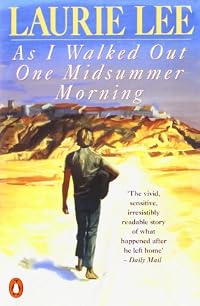
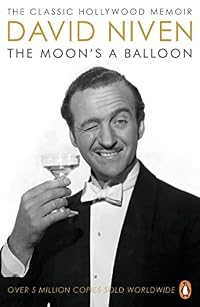
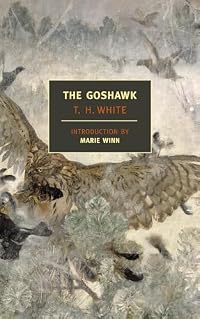
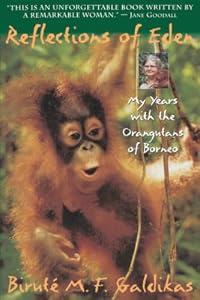




Member Recommendations

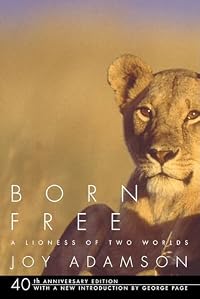
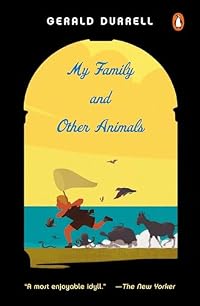
Stbalbach Both pub. in 1960 concerning raising wild animals as pets; they were influential classics that made many readers environmentally aware for first time; the authors had notable character flaws in real life (abusive, mean); the beloved animals die raising criticisms about wild animals as pets; the books are extremely well written and remain popular.
Member Reviews
I loved this book when I read it as a child, and in some ways now that I've spent some time in the Hebrides, I appreciate the parts about the croft house on the shore even more. I love the way Maxwell takes the first 75 pages of the book to set the scene and establish himself in the West Highlands before even mentioning otters.
But rereading the book as an adult, in the 20th century when we tend to think more about human impact on wild animals and responsible attitudes towards nature, I found it saddening to read about the body count of baby otters that resulted from Gavin Maxwell's impulsive and (sorry but it's true) selfish whim to "keep an otter". If only "keeping" an infant otter was as simple as it was to acquire one after another show more in 1950s Iraq.
He clearly respected and loved the animals, as manifested in his accounts of the one he was able to rear almost to maturity before a local yob beat it to death, and of the replacement otter who came to him as a near-adult. Edal's presence among humans was not objectionable in the same way as the Iraqi babies: she was a rescue otter and her humans had brought her through a horrific transportation experience and risked quarantine to get her from Africa to Scotland. When the husband's employer wished him to return to Ghana, not wishing to subject her to such torment again, they sought to rehome her. A chance meeting at Lochalsh led to happiness all round. show less
But rereading the book as an adult, in the 20th century when we tend to think more about human impact on wild animals and responsible attitudes towards nature, I found it saddening to read about the body count of baby otters that resulted from Gavin Maxwell's impulsive and (sorry but it's true) selfish whim to "keep an otter". If only "keeping" an infant otter was as simple as it was to acquire one after another show more in 1950s Iraq.
He clearly respected and loved the animals, as manifested in his accounts of the one he was able to rear almost to maturity before a local yob beat it to death, and of the replacement otter who came to him as a near-adult. Edal's presence among humans was not objectionable in the same way as the Iraqi babies: she was a rescue otter and her humans had brought her through a horrific transportation experience and risked quarantine to get her from Africa to Scotland. When the husband's employer wished him to return to Ghana, not wishing to subject her to such torment again, they sought to rehome her. A chance meeting at Lochalsh led to happiness all round. show less
Originally published in 1959, Ring of Bright Water by Gavin Maxwell is a delightful memoir about the author’s life at a remote house on the coast of Western Scotland near the Hebrides. His descriptions of the location and the bountiful nature he was surrounded by had this reader longing to visit this idyllic place. When he first arrived he was accompanied by his dog, Jonnie, but after the death of his beloved pet, he acquired an otter named Mijbil while on a trip to Iraq.
The author documents Mijbil’s delightful and mischievous behaviour, and many of the hilarious incidents reminded me of trying to contain a toddler. His curiosity was boundless and he had a need to examine everything that came his way. Unfortunately, Mijbil met an show more untimely death and the author was devastated. Although he tried to replace Mijbil, nothing seemed to pan out for him until quite by accident he met a couple who had a young otter that they needed to find a home for. Once again his highland cottage was sanctuary to an otter, this time a female called Edal.
The author’s love of nature brings a richness to the descriptive writing, and his visual images and observations make Ring of Bright Water a memorable read. Although in today’s world the author would be chided for bring these creatures out of their own environment, he was living in a different time and his love and care for these otter companions is both touching and admirable. show less
The author documents Mijbil’s delightful and mischievous behaviour, and many of the hilarious incidents reminded me of trying to contain a toddler. His curiosity was boundless and he had a need to examine everything that came his way. Unfortunately, Mijbil met an show more untimely death and the author was devastated. Although he tried to replace Mijbil, nothing seemed to pan out for him until quite by accident he met a couple who had a young otter that they needed to find a home for. Once again his highland cottage was sanctuary to an otter, this time a female called Edal.
The author’s love of nature brings a richness to the descriptive writing, and his visual images and observations make Ring of Bright Water a memorable read. Although in today’s world the author would be chided for bring these creatures out of their own environment, he was living in a different time and his love and care for these otter companions is both touching and admirable. show less
Maxwell, a naturalist, is a beautiful, lyrical writer - I loved his descriptions of the land and sea around his home at Sandaig where he lived almost as a recluse. After the death of his beloved dog Jonnie he decided he did not want another dog and instead chose an otter as companion. The second part of the book describes how he found Mijbil when working with Wilfred Thesiger in Iraq, the difficulties in getting him back to Britain, installing him in his London flat, taking him on walks through the streets of London, shopping in Harrods, getting him by train to Sandaig... He only had Mij for a year until he met his cruel fate in the shape of a lorry driver called Big Angus (like Maxwell, I would have wanted to bash his skull in ) and show more eventually found, quite by chance, a domesticated female otter to take his place. Life with the otters is delightful, entertaining and endearing; but you feel that tug of anxiety you have with teenage children when you let them have their freedom but lie awake worrying when they are late coming home. Maxwell the man is hard to grasp; I wish he had not killed the fox family at the beginning of the book (or not written about it, or missed it out), and for all the care - the love - he bestowed upon Mij and Edal, I keep thinking they should have been left in their natural habitat. I gave this four stars instead of five because it has left me feeling very sad. show less
Gavin Maxwell published this true-story about wild animal friendship with humans in 1960, and it has remained influential ever since. Readers claim it made them environmentalists, not unlike the phenomenon of Born Free published the same year with similar themes. The Dutton Animal Book Award was created because of its success, which inspired other books in the same vein, such as Rascal (1963) about a boy and his racoon. But this is no children's book. The writing is remarkably well done, the choice of vocabulary, descriptions, economy of words. And it would be even better except Maxwell was something of a weak character in real life ("he was, by literally all accounts, an extremely unpleasant man"). And then the fame of the book show more destroyed him, the contradictions with his true self too much. Afterwards he drank and smoked heavily and was dead at 55, of lung cancer in 1969. Fittingly for a dark nature book that concerns the deaths of beloved animals. But it shouldn't distract from the power of his work, which is as good as any creative non-fiction published today, better in some ways, if you can look past who was responsible for the deaths. A minor classic. show less
Affecting and beautifully written. Warning, the sad death of Maxwell's beloved Mijbil is something you will carry away with you—along with the many superb descriptions of land, animals, people.
The great naturalist writes of his isolated life on the northwest coast of Scotland -- among the bays and cottages scattered throughout the wild sea lochs of the Western Highlands and the Hebrides. For the author, "these places are symbols" of freedom....
"For I am convinced that man has suffered in his separation from the soil and from the other living creatures of the world; the evolution of his intellect has outrun his needs as an animal, and as yet he must still, for security, look long at some portion of the earth as it was before he tampered with it". [Foreword]
In this landscape of rock and waves lushly described, Maxwell shares with us the life lived with two otters and other neighbors, with the stags roaring on the slopes of Skye show more across the Sound, and the wild swans flying low over the lead-grey sea. St. Cuthbert, who we are told was missionary to the remotest hamlets and is the patron saint of otters, would be proud. show less
"For I am convinced that man has suffered in his separation from the soil and from the other living creatures of the world; the evolution of his intellect has outrun his needs as an animal, and as yet he must still, for security, look long at some portion of the earth as it was before he tampered with it". [Foreword]
In this landscape of rock and waves lushly described, Maxwell shares with us the life lived with two otters and other neighbors, with the stags roaring on the slopes of Skye show more across the Sound, and the wild swans flying low over the lead-grey sea. St. Cuthbert, who we are told was missionary to the remotest hamlets and is the patron saint of otters, would be proud. show less
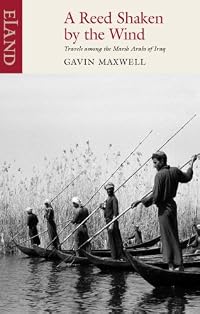
This book has been in my bookcase since 1969, as I recollect. I'd avoided it all that time because it seemed too saccharine and formulaic, remembering this was the time of 'Born Free' and curiously Bill Travers and Virginia McKenna played in movies derived from both of these books. So I've resisted Joy Adamson's and Gavin Maxwell's simple 'pull' but all the while working my way around the flank. The path to Maxwell turned out to be via Wilfred Thesiger, and Maxwell's account of their travelling together in the marshes of Iraq in the 1950's ('A Reed Shaken by the Wind'), where - improbably - Maxwell met his first otter. So taking it up now it is a sacharine story, and also a very dry one. As another reviewer has remarked, possibly the show more most extraordinary creature in this story is not found amongst the otters, but is Maxwell himself. Even in 'A Reed Shaken by the Wind' he doesn't reveal much, but there are tantalising hints between the lines. In the end I'd recommend this book very highly, but not for the undeniable attraction of the otters or the beauty of the scenes he paints with words, but for the glimpse into an extraordinary life which deserves (and will reward) further exploration. show less
Members
- Recently Added By
Lists

Best Books About Animals
143 works; 48 members

Recommended Nature Writing
346 works; 180 members

Nature Writing
33 works; 3 members

Mustich's 1000 Books to Read Before You Die: A Life Changing List
1,001 works; 18 members

Publisher's Weekly NON-Fiction list - 1912 - 1975
486 works; 4 members

Favorite Book Titles
35 works; 1 member

Favorite Animal Non-Fiction
293 works; 144 members

Books We Love to Reread
688 works; 296 members

Our Favorite Comfort Reads
334 works; 200 members

Books We Loved As Children
603 works; 252 members
Author Information

17+ Works 2,163 Members
Gavin Maxwell (1914-1969) was born at the House of Elrig in Wigtownshire, Scotland, and educated at Oxford. He is the author of Ring of Bright Water, the international bestseller about raising pet otters near his cottage in the Highlands. For years, he ran a shark fishery in the Hebrides. He is also the author of God Protect Me From My Friends, a show more biography of a Sicilian outlaw. He traveled extensively throughout North Africa and the Middle East. show less
Some Editions
Awards and Honors
Series

Belongs to Publisher Series
Little Toller (2)
Work Relationships
Is contained in
Has the adaptation
Is abridged in
Kirjavaliot - Kohtalokas diagnoosi (Error of judgment ∙ The key to Rebecca ∙ Ring of bright water ∙ The Aviator) by Valitut Palat
Reader's Digest Condensed Books 1961 v04: Ring of Bright Water / The Judas Tree / The Edge of Sadness / A Fall of Moondust / A Christmas Carol / Summer of Pride by Reader's Digest
Reader's Digest Best Sellers 1962: Devil Water | Dearly Beloved | Ring of Bright Water | The Devil's Advocate by Reader's Digest
Common Knowledge
- Canonical title*
- Mijn huis heeft vensters op zee
- Original title
- Ring of bright water
- Original publication date
- 1960
- People/Characters
- Mij (otter); Mijbil (as Mij otter); Odal (otter); Gavin Maxwell; Jimmy Watt
- Important places
- Glenelg, Inverness-shire, Scotland (Sandaig, as Camusfeàrna); Ross and Cromarty, Scotland, UK (historic county); Highland, Scotland, UK
- Related movies
- Ring of Bright Water (1969 | IMDb)
- Dedication
- For John Donald
and Mary MacLeod of Tormor - First words
- THE RING
He has married me with a ring, a ring of bright water
Whose ripples travel from the heart of the sea,
He has married me with a ring of light, the glitter
Broadcast on the swift river. ...
Chapter One
I sit in a pitch-pine panelled kitchen-living-room, with an otter asleep upon its back among the cushions on the sofa, forepaws in the air, and with the expression of tightly shut concentration that ... (show all)very small babies wear in sleep. - Last words
- (Click to show. Warning: May contain spoilers.)Yet while there is time there is the certainty of return.
Camusfeàrna
October 1959
(Click to show. Warning: May contain spoilers.)And thank you for the abandon of your giving,
For seeing in the dark, for making this life worth living. - Original language
- English
*Some information comes from Common Knowledge in other languages. Click "Edit" for more information.
Classifications
Statistics
- Members
- 1,030
- Popularity
- 24,979
- Reviews
- 27
- Rating
- (3.98)
- Languages
- 11 — Czech, Danish, Dutch, English, Finnish, French, German, Italian, Norwegian (Bokmål), Spanish, Swedish
- Media
- Paper, Audiobook, Ebook
- ISBNs
- 34
- ASINs
- 42