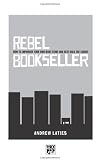
Rebel Bookseller: How to Improvise Your Own Indie Store and Beat Back the Chains
by Andrew Laties
On This Page
Description
Renowned bookseller Andrew Laties offers a radical and creative new paradigm for independent booksellers on all sides of the cash register, written to inspire a revival of community bookselling. In his 20 years of revolutionary retail, Latie's ideas were adapted by Barnes & Noble, Zany Brainy and scores of independents. Rebel Bookseller challenges today's bookstore workers to improvise the wildly imaginative indie bookstores of tomorrow, and includes a behind-the-scenes history of the book show more industry, humorous anecdotes and bittersweet lessons, ten interlacing Rants, and three Rough Rules of Rebel Bookselling Blending adventurous memoir, satire and sharp-tongued jibe, the author dares the chains to sell this revolutionary book. show lessTags
Recommendations



































Member Reviews
Andrew Laties and his wife Christine Bluhm ran The Children’s Bookstore in Chicago from 1985 to 2002. People who work in bookstores have to make a living wage and “have direct input into [their] stores’ book-selection processes,” writes Laties, which the chains don’t understand. But they do catch on to the special events and publicity programs that Laties thinks he invented and that he describes throughout the book and in “Showcasing Your Store,” an appendix here, which originally appeared in several issues of American Bookseller. Laties criticizes the proportional weakness in such special events; he ran as many as the huge chains per year. And he blames them for the “inadequacy of their presence in the community.” He show more criticizes the publishers, whose policy of allowing book returns favors the huge chains, who order huge quantities and then return them, forcing the publishers to raise prices.
He organizes the book in the form of ten “rants,” each followed by a chapter of his own experience. His own story involves more than one failed business, including The Children’s Bookstore itself in 2002, although Laties and Bluhm cushioned their fall with the Children’s Museum Store they had taken over earlier.
Laties does not downplay the difficulty, perhaps even the impossibility, of competing for long with large chains. Even shipping conspires against the Indies: “a book with a retail price of $10 often arrived in a little envelope with a bill from the publisher that listed $6 as the wholesale cost of the book plus a $4 charge for shipping.”
If you want to make $100K a year, you have to sell a million dollars worth of books. This is one of Laties’ rules of thumb. Others are the 80/20 rule and the 50/5 rule: 80 per cent of revenues from 20 per cent of titles; fifty per cent of sales come from 5 per cent of titles. These are part of the principle, Sell More of What’s Selling, which means you need to pay attention to what customers are doing (not what they’re saying) and you have to be able to track sales and reorder every title that sells as well as order titles that complement it.
In one of his rants, Laties says the huge chains, by limiting their orders to fewer titles they think will sell, force publishers to rethink even publishing the titles the big stores won’t stock. Well, yes, but Laties elsewhere points out that they do have larger inventories than indies can manage—and why shouldn’t THEY sell more of what’s selling? Publishers need both chains and indies.
Laties writes that in the late 80s and early 90s publishers raised suggested retail prices from five times production cost to ten times. Laties argues that this happened because of the pressure from chains. Meanwhile the chains were advertising ten, twenty, and thirty per cent discounts.
Laties takes credit for ideas Amazon.com used—having customers write reviews, suggesting complementary titles, and donating a portion of purchase price to worthy causes. show less
He organizes the book in the form of ten “rants,” each followed by a chapter of his own experience. His own story involves more than one failed business, including The Children’s Bookstore itself in 2002, although Laties and Bluhm cushioned their fall with the Children’s Museum Store they had taken over earlier.
Laties does not downplay the difficulty, perhaps even the impossibility, of competing for long with large chains. Even shipping conspires against the Indies: “a book with a retail price of $10 often arrived in a little envelope with a bill from the publisher that listed $6 as the wholesale cost of the book plus a $4 charge for shipping.”
If you want to make $100K a year, you have to sell a million dollars worth of books. This is one of Laties’ rules of thumb. Others are the 80/20 rule and the 50/5 rule: 80 per cent of revenues from 20 per cent of titles; fifty per cent of sales come from 5 per cent of titles. These are part of the principle, Sell More of What’s Selling, which means you need to pay attention to what customers are doing (not what they’re saying) and you have to be able to track sales and reorder every title that sells as well as order titles that complement it.
In one of his rants, Laties says the huge chains, by limiting their orders to fewer titles they think will sell, force publishers to rethink even publishing the titles the big stores won’t stock. Well, yes, but Laties elsewhere points out that they do have larger inventories than indies can manage—and why shouldn’t THEY sell more of what’s selling? Publishers need both chains and indies.
Laties writes that in the late 80s and early 90s publishers raised suggested retail prices from five times production cost to ten times. Laties argues that this happened because of the pressure from chains. Meanwhile the chains were advertising ten, twenty, and thirty per cent discounts.
Laties takes credit for ideas Amazon.com used—having customers write reviews, suggesting complementary titles, and donating a portion of purchase price to worthy causes. show less
Ratings
Members
- Recently Added By
Author Information

3 Works 200 Members
Andrew Laties cofounded The Children's Bookstore, Children's Bookfair Company, The Children's Museum Store, PovertyFighters, the Eric Carle Museum Bookshop, and Vox Pop. He shared the 1987 Women's National Book Association Pannell Award for bringing children and books together.
Awards and Honors
Awards
Classifications
- Genres
- Nonfiction, Business, General Nonfiction, Literature Studies and Criticism, Biography & Memoir
- DDC/MDS
- 381.45002 — Society, government, & culture Commerce, communications & transportation regulations Domestic Trade (Commerce) Specific products and services Books
- LCC
- Z278 .L38 — Bibliography, Library Science and Information Resources Book industries and trade Bookselling and publishing
- BISAC
Statistics
- Members
- 122
- Popularity
- 262,255
- Reviews
- 1
- Rating
- (3.44)
- Languages
- English
- Media
- Paper
- ISBNs
- 1