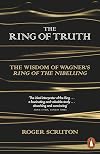
The Ring of Truth: The Wisdom of Wagner's Ring of the Nibelung
by Roger Scruton
On This Page
Description
"Richard Wagner's Ring of the Nibelungis one of the greatest works of art created in modern times, and has fascinated both critics and devotees for over a century and a half. No recent study has examined the meaning of Wagner's masterpiece with the attention to detail and intellectual power that Roger Scruton brings to it in this inspiring account. The Ring of Truthis an exploration of the drama, music, symbolism and philosophy of the Ring from a writer whose knowledge and understanding of show more the Western musical tradition are the equal of his capacities as a philosopher. Scruton shows how, through musical connections and brilliant dramatic strokes, Wagner is able to express truths about the human condition which few other creative artists have been able to convey so convincingly. For Wagner, writes Scruton, the task of art is to 'show us freedom in its immediate, contingent, human form, reminding us of what it means to us. Even if we live in a world from which gods and heroes have disappeared we can, by imagining them, dramatize the deep truths of our condition and renew our faith in what we are.' Love, death, sacrifice and the liberation that we win through sacrifice - these are the great themes of The Ring, as they are of this book. Scruton's passionate and moving interpretation allows us to understand more fully than ever how Wagner conveys his ideas about who we are, and why The Ringcontinues to be such a hypnotically absorbing work." show lessTags
Recommendations




Member Reviews
No composer of operas is easier to dislike or mock than Wagner, and few works of art set themselves up to be misunderstood and parodied as does his Ring Cycle, four long, intense and very noisy operas full of substantial maidens in horned helmets singing German alliterative verse. Wagner’s dodgy political reputation — which was only partly his own fault — also means that modern directors feel compelled to stage his work in austere post-industrial settings, which doesn’t necessarily make it easier to relax and enjoy the show.
But Wagner‘s operas are also very compelling works of art, once you can suspend your prejudices and listen properly to the music and words. And, once you get past his bad behaviour towards friends and show more patrons and the ill-advised way he generalised a feud with Meyerbeer into musical antisemitism, he was clearly a radical and innovative musician and dramatist, whose ideas had a lot of influence on the future direction of western classical music. So it is probably worth asking what happens if you take his greatest work entirely seriously as an intellectual project. That’s what Roger Scruton does here, taking everything apart into small pieces and putting it back together in the context of Wagner’s background as a reader — like his contemporary Karl Marx, whom Scruton doesn’t entirely approve of — of Hegel, Feuerbach and Schopenhauer.
Scruton is perhaps a bit too serious about all this: he doesn’t take prisoners, and he certainly doesn’t have much time for those who question Wagner’s artistic judgment, batting away alleged plot holes and inconsistencies with barely a glance. But he does present us with what feel like coherent and comprehensive explanations for why Wagner’s epic makes musical and dramatic sense to us as an exploration of religion, myth, and humanity’s place in a world where we can no longer look to gods as a source of authority. But also, of course, since this is Wagner, it’s all about (hetero-)sexual love, and about law, property and power.
I think I learnt a few things, even if my eyes glazed over at the flood of abstract nouns from time to time. Particularly about the way the Leitmotifs work with each other. I was interested by Scruton’s ideas about how the numerous recapitulations of “the story so far” that Wagner inserts along the way actually add to our understanding of the characters and their situations, rather than just spinning things out even longer. Also about the odd ways that time works during the cycle.
I’m still not quite at the point where I agree that the plot of Götterdämmerung makes sense, but I’ve definitely got some intensive listening sessions lined up for the next few days. Including that old Deryck Cooke “Introduction to the Ring” LP that came with the Solti recordings, if I still have it somewhere. show less
But Wagner‘s operas are also very compelling works of art, once you can suspend your prejudices and listen properly to the music and words. And, once you get past his bad behaviour towards friends and show more patrons and the ill-advised way he generalised a feud with Meyerbeer into musical antisemitism, he was clearly a radical and innovative musician and dramatist, whose ideas had a lot of influence on the future direction of western classical music. So it is probably worth asking what happens if you take his greatest work entirely seriously as an intellectual project. That’s what Roger Scruton does here, taking everything apart into small pieces and putting it back together in the context of Wagner’s background as a reader — like his contemporary Karl Marx, whom Scruton doesn’t entirely approve of — of Hegel, Feuerbach and Schopenhauer.
Scruton is perhaps a bit too serious about all this: he doesn’t take prisoners, and he certainly doesn’t have much time for those who question Wagner’s artistic judgment, batting away alleged plot holes and inconsistencies with barely a glance. But he does present us with what feel like coherent and comprehensive explanations for why Wagner’s epic makes musical and dramatic sense to us as an exploration of religion, myth, and humanity’s place in a world where we can no longer look to gods as a source of authority. But also, of course, since this is Wagner, it’s all about (hetero-)sexual love, and about law, property and power.
I think I learnt a few things, even if my eyes glazed over at the flood of abstract nouns from time to time. Particularly about the way the Leitmotifs work with each other. I was interested by Scruton’s ideas about how the numerous recapitulations of “the story so far” that Wagner inserts along the way actually add to our understanding of the characters and their situations, rather than just spinning things out even longer. Also about the odd ways that time works during the cycle.
I’m still not quite at the point where I agree that the plot of Götterdämmerung makes sense, but I’ve definitely got some intensive listening sessions lined up for the next few days. Including that old Deryck Cooke “Introduction to the Ring” LP that came with the Solti recordings, if I still have it somewhere. show less
Ratings
Members
- Recently Added By
Author Information

125+ Works 9,871 Members
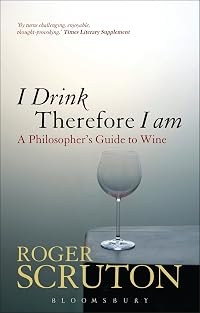
Sir Roger Scruton (1944-2020), the distinguished philosopher and public intellectual, taught at many institutions on both sides of the Atlantic including Birkbeck College, Boston University, and the University of Buckingham. He was the author of more than forty books. In his work as a philosopher he specialized in aesthetics, giving particular show more attention to music and architecture. He also wrote several novels, as well as memoirs and essays on topics of general interest. He engaged in contemporary political and cultural debates from the standpoint of a conservative thinker and was well known as a powerful polemicist. He was a fellow of the Royal Society of Literature and the British Academy and was officially honoured by the Czech Republic, by the City of Plzen, and by Virginia's General Assembly. In 2004 he received the Ingersoll Weaver Prize for Scholarly Letters. In 2016 he was recipient of the Polish Lech Kaczynski Foundation's Medal for Courage and Integrity, was awarded the Italian Masi Prize for the Culture of Wine in recognition of his book I Drink Therefore I Am, and was knighted in the Queen's Birthday Honours List. show less
Awards and Honors
Notable Lists
Common Knowledge
- People/Characters
- Richard Wagner
- First words
- Wagner's Ring of the Nibelung is one of the greatest works of art produced in modern times, and in this book I interpret it in terms that I hope will show its relevance to the world in which we live.
- Last words
- (Click to show. Warning: May contain spoilers.)In The Ring that deep truth is conveyed as in no other work conceived in modern times.
Classifications
- Genres
- Music, Philosophy, Nonfiction, General Nonfiction
- DDC/MDS
- 782.1092 — Arts & recreation Music Vocal music Operas and related dramatic vocal forms; concert versions modified standard subdivisions History, geographic treatment, biography Biography
- LCC
- ML410 .W15 .S37 — Music Literature on music Literature on music History and criticism Biography
- BISAC
Statistics
- Members
- 138
- Popularity
- 237,169
- Reviews
- 1
- Rating
- (4.06)
- Languages
- English, Spanish
- Media
- Paper, Ebook
- ISBNs
- 6
- ASINs
- 2