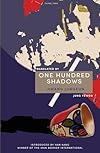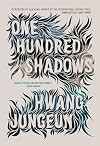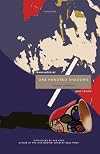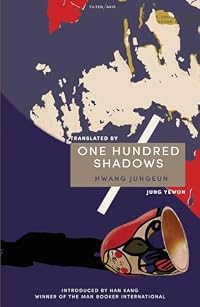
One Hundred Shadows
by Hwang Jung-eun
On This Page
Description
INTERNATIONAL BESTSELLER! "There is an unforgettable, curious beauty to be found here." -Han Kang, Winner of the Man Booker International Prize for The Vegetarian Han Kang's Human Acts meets Y?ko Ogawa's The Memory Police in this understated South Korean novella in translation: a restrained yet emotional magical realist examination of futility in a capitalist society written in response to the 2009 Yongsan Disaster. In a Seoul slum marked for demolition, residents' shadows have begun to show more rise. No one knows how or why-but, they warn each other, do not follow your shadow if it wanders away. As the landscape of their lives is torn apart, building by building, electronics-repair-shop employees Eungyo and Mujae can only watch as their community begins to fade. Their growing connection with one another provides solace, but against an uncaring ruling class and the inevitability of the rising shadows, their relationship may not be enough. Winner of the Hankook Ilbo Literary Award and the Korean Bookseller's Award, One Hundred Shadows is a tender working-class perspective with subtle and affecting social commentary. This edition features an introduction by Man Booker Prize-winning author of The Vegetarian, Han Kang, a historical note about the Yongsan tragedy that inspired One Hundred Shadows, and an exclusive interview with the author. show lessTags
Recommendations








Member Reviews
Okay, Hwang Jungeun is an author I'm going to be on the lookout for because, wow, this was something special.
One Hundred Shadows deals in large part with people on the fringes of a consumerist society. It is also about two people in a fledgling relationship, both of whom are barely managing to scrape by in their own inner worlds.
So, meaty subject matter. But still, it is a short read. And the author uses this very limited space to create something deceptively complex, something original. It isn't only about the effect of being mired down in an impossible financial situation. It is also about the knock-on effect of emotional turmoil on the people around you. About being overburdened, about becoming numb. About scraping by. At times it's show more about a combination of it all, and about moving between the different states. In short, there is a lot to unpack.
And wow, what an effective use of magic realism! Its strangeness comes across as completely natural. It feels real, and sad, and somewhat detached. And the social isolation, the depression, the futility - it all strikes home in a big way.
I suppose, to sum it all up, there's an authenticity to One Hundred Shadows that feels pretty rare. It also has a lot of interesting things to say. Five stars all the way. show less
One Hundred Shadows deals in large part with people on the fringes of a consumerist society. It is also about two people in a fledgling relationship, both of whom are barely managing to scrape by in their own inner worlds.
So, meaty subject matter. But still, it is a short read. And the author uses this very limited space to create something deceptively complex, something original. It isn't only about the effect of being mired down in an impossible financial situation. It is also about the knock-on effect of emotional turmoil on the people around you. About being overburdened, about becoming numb. About scraping by. At times it's show more about a combination of it all, and about moving between the different states. In short, there is a lot to unpack.
And wow, what an effective use of magic realism! Its strangeness comes across as completely natural. It feels real, and sad, and somewhat detached. And the social isolation, the depression, the futility - it all strikes home in a big way.
I suppose, to sum it all up, there's an authenticity to One Hundred Shadows that feels pretty rare. It also has a lot of interesting things to say. Five stars all the way. show less
I saw a reviewer on GR said that the author was partially propelled to write this book after the Yongsan Disaster in 2009.
This is a slim, quiet book that really packs a punch. It's one with heavy topics, dealing to a large extent with the marginalization of the poor, those who live & work in areas that often end up being gentrified. But the focus of the book is on two young people who work in the area, Eungyo and Mujae, and their friendship, perhaps a budding romance. It's a lovely little book, in spite of the heavy topics, looking at people who are so often overlooked & overrun in society, people who often have no voices. It's also an examination of sorts of a rapidly expanding, capitalistic economy and the debts incurred as a society, show more seen through the lens of the lives of a few characters. Understated & yet spot on, light but with heavy topics -- conveying all that beautifully in a short novel takes real skill.
I saw some references in reviews to magical realism, but that term doesn't feel quite right to me. It is referencing occurrences in the story (multiple times with various characters) where a person's shadow "rises" -- which seems to be when a person is teetering on the edge of giving in (to despair, depression, fear, etc.). The characters try to help each other, reminding them not to follow their shadows when that does happen. Again, this didn't feel quite like magical realism to me (even though the shadows almost detached from the people, lured them to darker places, etc.), maybe more like cultural/folklore references. It was an incredibly effective metaphor, imo.
Bittersweet & small with a powerful punch.
This book was published by Tilted Axis, a non-profit that publishes mostly Asian works in translation. So glad they translated this one. Great book. show less
This is a slim, quiet book that really packs a punch. It's one with heavy topics, dealing to a large extent with the marginalization of the poor, those who live & work in areas that often end up being gentrified. But the focus of the book is on two young people who work in the area, Eungyo and Mujae, and their friendship, perhaps a budding romance. It's a lovely little book, in spite of the heavy topics, looking at people who are so often overlooked & overrun in society, people who often have no voices. It's also an examination of sorts of a rapidly expanding, capitalistic economy and the debts incurred as a society, show more seen through the lens of the lives of a few characters. Understated & yet spot on, light but with heavy topics -- conveying all that beautifully in a short novel takes real skill.
I saw some references in reviews to magical realism, but that term doesn't feel quite right to me. It is referencing occurrences in the story (multiple times with various characters) where a person's shadow "rises" -- which seems to be when a person is teetering on the edge of giving in (to despair, depression, fear, etc.). The characters try to help each other, reminding them not to follow their shadows when that does happen. Again, this didn't feel quite like magical realism to me (even though the shadows almost detached from the people, lured them to darker places, etc.), maybe more like cultural/folklore references. It was an incredibly effective metaphor, imo.
Bittersweet & small with a powerful punch.
This book was published by Tilted Axis, a non-profit that publishes mostly Asian works in translation. So glad they translated this one. Great book. show less
One Hundred Shadows by Hwang Jungeun is the story of two people trying to make their way on the edges of society in Korea. They are young, undereducated, poor, and live in what others call a slum.
Although the two lead characters work in repair shops in a loud, crowded area, the story has a very dreamlike quality. Scenes seem to focus in on very small, sharp details and then spin off into a gauzy, out-of-focus meandering. This short novel uses fantastical elements of shadows being able to detach from their people and lead them off into the unknowable. Meanwhile, the Eungyo and Mujae spend time together getting to know each other and observing the often unfair world around them. It is amazing how much is learned about these character’s show more perspectives in such a subtle and short work. Interestingly, I was unsure how I felt about this novel as soon as I finished it. It was only after thinking about the beautiful and unique writing, reflecting on the social commentary, and letting it sink in a bit, that I found that I really liked it.
This was an advance reader’s copy. Hopefully when this is published, it will include a glossary, and some information on major Korean culture and history points. I looked some things up as I was reading, and that background was very helpful to me.
Thank you to NetGalley and Kensington Books for providing the digital ARC. show less
Although the two lead characters work in repair shops in a loud, crowded area, the story has a very dreamlike quality. Scenes seem to focus in on very small, sharp details and then spin off into a gauzy, out-of-focus meandering. This short novel uses fantastical elements of shadows being able to detach from their people and lead them off into the unknowable. Meanwhile, the Eungyo and Mujae spend time together getting to know each other and observing the often unfair world around them. It is amazing how much is learned about these character’s show more perspectives in such a subtle and short work. Interestingly, I was unsure how I felt about this novel as soon as I finished it. It was only after thinking about the beautiful and unique writing, reflecting on the social commentary, and letting it sink in a bit, that I found that I really liked it.
This was an advance reader’s copy. Hopefully when this is published, it will include a glossary, and some information on major Korean culture and history points. I looked some things up as I was reading, and that background was very helpful to me.
Thank you to NetGalley and Kensington Books for providing the digital ARC. show less
I find it hard to evaluate this novella. I know I'll read it again. This is a haunting, hesitant narrative, about a real world of working class labour in an electronics market is threatened with destruction for the purposes of gentrification. It is shot through with a miasma of personal shadows with their own life force. This is the world in which a friendship between Eungo and Mujae tentatively develops. They share soups, they sing to one another, they wonder at the power of words, though they themselves speak little.
This is eloquent, spare prose which got under my skin, though sometimes I hardly understood why.
This is eloquent, spare prose which got under my skin, though sometimes I hardly understood why.
In the aftermath of the 2009 Yongsan Disaster, a Seoul slum marked for demolition witnesses the inexplicable rise of residents' shadows. Electronics-repair-shop duo Eungyo and Mujae, amidst the crumbling landscape, can only watch as their community dissolves, shadow by shadow. The novel dances with understated yet emotional magical realism, exploring futility in a capitalist society. Against the uncaring ruling class and the enigmatic shadows, Eungyo and Mujae find solace in their growing connection, but it may not be enough to fend off the impending shadowscape.
Pros:
Pros:
A bittersweet and hesitant romance in the age of estranged labour. Haunting, mysterious, and strange. The kind of book that gets under your skin without you noticing; a stripped-down, bare-bones prose style, and characters sketched out over the pages with great emotional restraint. The build-up is in the small, banal details of everyday life contrasted with the heightened menace/emotion as the central relationship develops alongside the plague of rising shadows.
This is a slight and somewhat confusing book, but one that creates an atmosphere and mood wonderfully. There are elements of magic realism in the unexplained rising shadows. There is a touching, developing romance between the two central characters. And there is the spectre of gentrification threatening to take away their workplace, which also functions as a second home and community for most of the characters. It started some interesting discussions at my book group, and was a quick yet memorable read.
Members
- Recently Added By
Author Information
6 Works 225 Members
Some Editions
Awards and Honors
Series
Belongs to Publisher Series
Tilted Axis (2)
Common Knowledge
- Original title
- 백의 그림자
- Original publication date
- 2010
- Original language
- Korean
Classifications
- Genres
- Fiction and Literature, General Fiction
- DDC/MDS
- 895.735 — Literature & rhetoric Asian Literature Literatures of East and Southeast Asia Korean Korean fiction 2000–
- LCC
- PL994.29 .C48 .P3413 — Language and Literature Languages and literatures of Eastern Asia, Africa, Oceania Languages of Eastern Asia, Africa, Oceania Korean language and literature Korean literature Individual authors and works
- BISAC
Statistics
- Members
- 137
- Popularity
- 237,582
- Reviews
- 10
- Rating
- (3.75)
- Languages
- English, French, Spanish
- Media
- Paper, Ebook
- ISBNs
- 6
- ASINs
- 2