Gods In Everyman
by Jean Shinoda Bolen
On This Page
Description
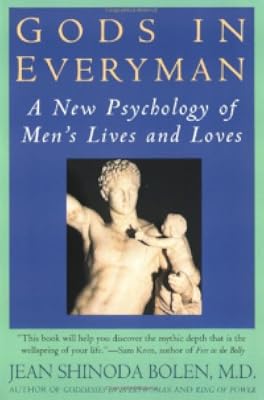
Using the Greek gods as cultural images of the various male archetypes, this insightful study seeks to establish a lucid yet compassionate and sensitive framework for male psychology. Whether a Hermes-like communicator, a Hephaestian loner, or a wanderer and lover in the mold of Dionysus, men are encouraged to become familiar with the gods most active within them in order to choose the most satisfying options and directions in their lives. The book is of use to women, too, in determining show more which archetypes they are most attracted to and which show lessTags
Recommendations

























Member Reviews
I have a shelf of books that I have labeled “personal mythology.” By that I mean, books that apply insights from ancient mythology and folklore to today, to the psychology of individuals. Several of them let you classify yourself as to type. For example, there are the series by Robert Moore and Douglas Gillette dealing with the warrior, king, lover, and magician (or shaman) within, those mature masculine archetypes. Then there are titles like these: The Maiden King by Robert Bly and Marion Woodman; Men and the Water of Life by Michael Meade; Women Who Run with the Wolves by Clarissa P. Estés; The Hero Within: Six Archetypes We Live By by Carol Pearson; and the like.
Probably my favorite among these books, however, is Gods in show more Everyman (Harper, 1988) by the psychiatrist, Dr. Jean Shinoda Bolen. (Her previous books had been The Tao of Psychology and Goddesses in Everywoman, but the one I discovered first turned out to be the most meaningful one to me.) Using the pantheon of Greek gods, she explores the relationships between fathers and sons and identifies eight male types still prominent in human affairs today. Perhaps her most important chapter, of course, is the one entitled “Finding our Myths—Remembering Ourselves.” But before she arrives at that point, she works up the meanings of each of the eight gods. There are the three father archetypes: Zeus, god of the sky, who represents the realm of will and power; Poseidon, god of the sea, the realm of emotion and instinct; and Hades, god of the underworld, realm of the soul and the unconscious. Of course, there is a bit of all three in all men, especially those of us who become fathers ourselves and take on leadership or managerial roles.
But I must admit that it’s what she calls the “generation of the sons” that first captured my attention. Of course, I had always wanted to be an Apollo-type, god of the sun, hero and favorite son. I knew from early on that I was not cut out for that nor to be an Ares, god of war, that is a warrior, dancer, and womanizer. My father himself, I recognized, had been an Hephaestes, god of the forge, a craftsman, inventor, and loner, but he had always been frustrated in achieving fulfillment of his inner nature. I had inherited none of those genes at all. I knew that I might be a Hermes, the messenger god. In fact, I had done my best to become a communicator and traveler, even a trickster if the truth be known. But to my shock (and, at first, to my dismay), I discovered that in Dr. Bolen’s schemata, I fit better the Dionysus role, god of wine and revelry—the mystic, lover, wanderer.
The author devotes a chapter to each god/type. First, she tells the Olympian’s story; then she explores his archetypal patterns. Then she defines the male type associated with the god, from his early years and parents through adolescence and young adulthood, including such topics as work, relationships with women and with other men, sexuality, marriage, and fatherhood. She proceeds through the middle years and old age, always relating the type to stories of the Greek god. Finally, she concludes with psychological difficulties associated with the type and suggests ways for him to grow. For example, the Zeus character may be subject to a “might makes right mentality,” may fear the usurper, may maintain an emotional distance from others, and even become subject to images of grandiosity (“the emperor’s new clothes”).
She always develops interesting ways for the god/type to grow. For the Zeus man, for example, she says it is often a heart attack that fells him. “To save his life he needs to come down from the summit . . . . This man may finally get the message that [a heart condition] isn’t just a physical problem, but a physical expression of an emotional problem.” Even more interesting, she concludes the Zeus chapter with the unhealed wound of the Grail legend. “As long as his wound remains unhealed his kingdom will stay a wasteland.”
OK, OK, you say, this may all be too pat. On one level, I think of it as a kind of parlor game, not unlike the daily horoscope. You can read yourself into any one of the god types. But I recommend the book, especially to teachers and family men, for two reasons: it gives a fascinating new way to study and understand those old familiar stories we tell our children, and introduces new stories that we may not have heard before. Furthermore, it provides an engaging way to think about one’s own nature and one’s relations with others. I’ve learned to enjoy being a Bacchus; I’ve even learned to see his positive side and, more or less. control his weaknesses. And I was fortunate enough to marry a Demeter, but that’s another story. (Demeters raise Venus and Athena both to a new level! To me, Demeter is the ideal woman, but that’s a Bacchus speaking, you understand.)
By the way, I read placemats in Chinese restaurants too. I’m a rat. Rats do well to marry dragons. But Dr. Bolen’s books are a good bit more scientific than you might guess from my description. I rank her work well above the popular Men Are from Mars, Women Are from Venus. At least for my own personal mythology. show less
Probably my favorite among these books, however, is Gods in show more Everyman (Harper, 1988) by the psychiatrist, Dr. Jean Shinoda Bolen. (Her previous books had been The Tao of Psychology and Goddesses in Everywoman, but the one I discovered first turned out to be the most meaningful one to me.) Using the pantheon of Greek gods, she explores the relationships between fathers and sons and identifies eight male types still prominent in human affairs today. Perhaps her most important chapter, of course, is the one entitled “Finding our Myths—Remembering Ourselves.” But before she arrives at that point, she works up the meanings of each of the eight gods. There are the three father archetypes: Zeus, god of the sky, who represents the realm of will and power; Poseidon, god of the sea, the realm of emotion and instinct; and Hades, god of the underworld, realm of the soul and the unconscious. Of course, there is a bit of all three in all men, especially those of us who become fathers ourselves and take on leadership or managerial roles.
But I must admit that it’s what she calls the “generation of the sons” that first captured my attention. Of course, I had always wanted to be an Apollo-type, god of the sun, hero and favorite son. I knew from early on that I was not cut out for that nor to be an Ares, god of war, that is a warrior, dancer, and womanizer. My father himself, I recognized, had been an Hephaestes, god of the forge, a craftsman, inventor, and loner, but he had always been frustrated in achieving fulfillment of his inner nature. I had inherited none of those genes at all. I knew that I might be a Hermes, the messenger god. In fact, I had done my best to become a communicator and traveler, even a trickster if the truth be known. But to my shock (and, at first, to my dismay), I discovered that in Dr. Bolen’s schemata, I fit better the Dionysus role, god of wine and revelry—the mystic, lover, wanderer.
The author devotes a chapter to each god/type. First, she tells the Olympian’s story; then she explores his archetypal patterns. Then she defines the male type associated with the god, from his early years and parents through adolescence and young adulthood, including such topics as work, relationships with women and with other men, sexuality, marriage, and fatherhood. She proceeds through the middle years and old age, always relating the type to stories of the Greek god. Finally, she concludes with psychological difficulties associated with the type and suggests ways for him to grow. For example, the Zeus character may be subject to a “might makes right mentality,” may fear the usurper, may maintain an emotional distance from others, and even become subject to images of grandiosity (“the emperor’s new clothes”).
She always develops interesting ways for the god/type to grow. For the Zeus man, for example, she says it is often a heart attack that fells him. “To save his life he needs to come down from the summit . . . . This man may finally get the message that [a heart condition] isn’t just a physical problem, but a physical expression of an emotional problem.” Even more interesting, she concludes the Zeus chapter with the unhealed wound of the Grail legend. “As long as his wound remains unhealed his kingdom will stay a wasteland.”
OK, OK, you say, this may all be too pat. On one level, I think of it as a kind of parlor game, not unlike the daily horoscope. You can read yourself into any one of the god types. But I recommend the book, especially to teachers and family men, for two reasons: it gives a fascinating new way to study and understand those old familiar stories we tell our children, and introduces new stories that we may not have heard before. Furthermore, it provides an engaging way to think about one’s own nature and one’s relations with others. I’ve learned to enjoy being a Bacchus; I’ve even learned to see his positive side and, more or less. control his weaknesses. And I was fortunate enough to marry a Demeter, but that’s another story. (Demeters raise Venus and Athena both to a new level! To me, Demeter is the ideal woman, but that’s a Bacchus speaking, you understand.)
By the way, I read placemats in Chinese restaurants too. I’m a rat. Rats do well to marry dragons. But Dr. Bolen’s books are a good bit more scientific than you might guess from my description. I rank her work well above the popular Men Are from Mars, Women Are from Venus. At least for my own personal mythology. show less
"Archetypes are a powerful tool for self-knowledge because they tap into the universal collective language we all share. Learning to become more aware of your own archetypes can help you see yourself, the bigger picture and is a good place to start creating solutions for yourself and others. This book is for men."
Wow! Jungian psychology and Greek mythology in one clearly-written package. Couldn't put it down.
Greek gods as Jungian archetypes
Greek Gods as archetypes for male personality
De Griekse mythologie kent een schat aan verhalen over menselijke karaktereigenschappen: het leiderschap van Zeus, de creativiteit van Hephaistos en de extase van Dyonisos zijn er slechts een paar. Jean S. Bolen is er uitstekend in geslaagd om deze rijkdom op een toegankelijke manier te koppelen aan een hedendaagse psychologie van de man. Goden in elke man is daardoor een inspirerende gids op de weg naar zelfinzicht en zelfontplooiing. Het boek is de pendant van Godinnen in elke vrouw. [www.rainbow.nl]
Aug 28, 2009Dutch
Ratings
Members
- Recently Added By
Author Information

49+ Works 3,879 Members
Jean Shinoda Bolen, MD, is a psychiastrist, a Jungian analyst, and an internationally known author and speaker. Her books include Goddesses in Everywoman, Goddesses in Older Women, and many others. She is a distinguished life fellow of the American Psychiatric Association and was a clinical professor of psychiatry at the University of California show more at San Francisco. She lives in Marin County, California. show less
Series
Belongs to Publisher Series
Common Knowledge
- Original title
- Gods in everyman : a new psychology of men's lives and loves.
- Alternate titles
- Gods in everyman : archetypes that shape men's lives
- Original publication date
- 1989
- First words
- This book is about the gods in Everyman, the innate patterns—or archetypes—that lie deep within the psyche, shaping men from within.
- Last words
- (Click to show. Warning: May contain spoilers.)Love to you.
- Publisher's editor
- Carlson, Clayton
Classifications
Statistics
- Members
- 527
- Popularity
- 56,705
- Reviews
- 6
- Rating
- (3.76)
- Languages
- 8 — Dutch, English, German, Hungarian, Italian, Portuguese, Spanish, Swedish
- Media
- Paper, Ebook
- ISBNs
- 18
- ASINs
- 4