Quozl
by Alan Dean Foster
On This Page
Description
Rabbitlike aliens from outer space colonize Earth during humankind's Second World War in a delightfully funny and thought-provoking science fiction adventure The Quozl just need somewhere to call home. A gentle race of extraterrestrial rabbits, they have a propensity for reproduction that has left their home planet, Quozlene, dangerously overpopulated, and in their search for greener and less-crowded pastures, they have discovered the perfect place to start over: the third planet away from a show more healthy, warming sun. What they don't realize is that this world they call Shiraz is already inhabited by a species of violent sentient creatures known as humans. But there's no going back now. In the midst of the brutal and helpfully distracting global conflict the Shirazians call World War II, the colony ship lands undetected, and the space rabbits immediately go into hiding. But a secret like the Quozl can be concealed for only so long, especially when their numbers start to increase and certain rebellious members of the long-eared society decide the time is ripe to claim their place in a world they believe is rightfully theirs. One of the most admired and prolific authors in the science fiction arena, Alan Dean Foster will delight readers who hunger for something different with this funny, thoughtful, and wildly inventive novel of first contact and coexistence. Once you meet the Quozl, you will never forget them. show lessTags
Recommendations












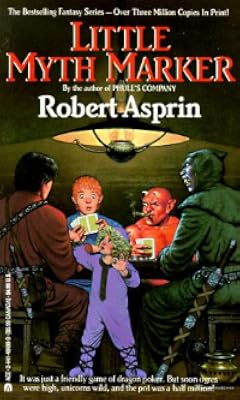
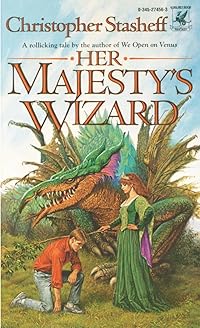


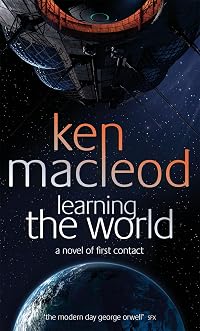
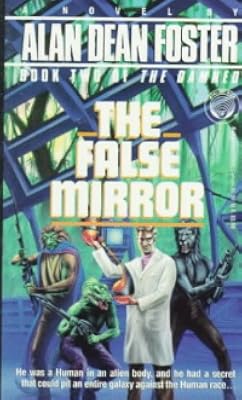



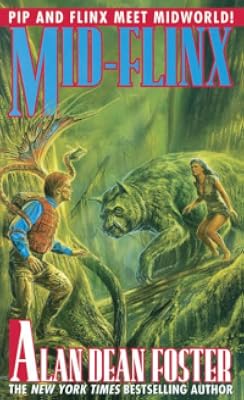





Member Recommendations

Member Reviews
Quozl, by Alan Dean Foster, is a deceptively simple story of first human/alien contact. It takes place as aliens, the Quozl, looking for a new homeworld, run out of fuel in their spaceship and decide they must settle on Earth, even though the natives appear dangerous and uncivilized, what with their constant warring. The Quozl, on the other hand, in a rejection of their own aggressive tendencies, have developed over many generations a peaceful culture that places great value upon exceptional politeness and courtesy with each other.
Introducing and following a pair of youths, a warm and fuzzy alien and an innocent human child, the story at first exudes a sunny and bright point of view that my cynical adult mind interpreted as, "Oh, this show more is going to be just another 'lived happily ever after' story." Additionally, the story's timeline did exhibit some jarring discontinuities. It occasionally jumped ahead anywhere from several days to several years without warning, from one paragraph to the next. Each time this left me disappointed because the storyline, now interrupted, seemed to have been developing and the characters were just getting interesting
What kept me reading, however, was not the plot but the memories of my own adolescence. I (and I suspect, most others) had faced similar desires for freedom and independence and the resultant conflicts with the wishes of authorities, public and familial. I wanted to see how the story's characters resolved them, particularly on the alien's side! As I kept reading, I was surprised to find simple conflicts morphing into meditations on trust and betrayal, sexual mores, and explorations of the capability of entertainment (possibly including this novel) to address serious matters. It was a redeeming discovery, one that made reading the book worthwhile.
I received a free copy of this book from the publisher in exchange for an honest review. show less
Introducing and following a pair of youths, a warm and fuzzy alien and an innocent human child, the story at first exudes a sunny and bright point of view that my cynical adult mind interpreted as, "Oh, this show more is going to be just another 'lived happily ever after' story." Additionally, the story's timeline did exhibit some jarring discontinuities. It occasionally jumped ahead anywhere from several days to several years without warning, from one paragraph to the next. Each time this left me disappointed because the storyline, now interrupted, seemed to have been developing and the characters were just getting interesting
What kept me reading, however, was not the plot but the memories of my own adolescence. I (and I suspect, most others) had faced similar desires for freedom and independence and the resultant conflicts with the wishes of authorities, public and familial. I wanted to see how the story's characters resolved them, particularly on the alien's side! As I kept reading, I was surprised to find simple conflicts morphing into meditations on trust and betrayal, sexual mores, and explorations of the capability of entertainment (possibly including this novel) to address serious matters. It was a redeeming discovery, one that made reading the book worthwhile.
I received a free copy of this book from the publisher in exchange for an honest review. show less
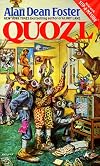
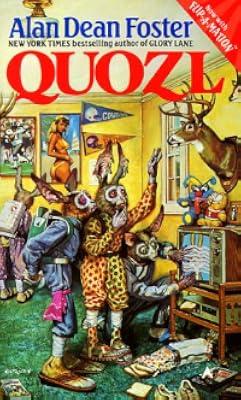
This particular paperback edition of 'Quozl' is a prime example of "You Can't Judge a Book by Its Cover". Jim Gurney's zany cover art and Foster's own reputation as being able to handle humor in a genre that sometimes takes itself way too seriously combine to suggest this first-contact tale will be a screwball comedy.
It's not, and the quicker the reader can re-align expectations, the better. Because the real star of this novel is Foster's carefully-realized alien culture, with its own biology, history, social structure, and technology, and a genuine life-or-death need to locate and colonize planets beyond its homeworld due to explosive population growth.
The plot is set in motion once their generation-ship makes its irreversible decision show more to make landfall on a planet they realize, too late, is already inhabited by intelligent, but violent, life forms. Making the best of a bad situation, they opt for a landing site in the most remote and unpopulated area they can identify, which turns out to be north central Idaho's Sawtooth Wilderness Area. There they literally burrow into a remote mountain canyon and create an underground habitat, using historical precedent and advanced technology to establish and maintain a thriving, hidden colony.
Several generations on, the inevitable contact with a local sets off a chain of events which will ultimately threaten to destroy the colony completely.
Foster sets a leisurely pace here, establishing a plausible scenario both for the long-sustained concealment and for the initial human-to-Quozl meeting, and keeps those interchanges moving in minuscule increments. The emphasis for most of the first half of the book is firmly on the Quozl characters and on their adaptations to or struggles with the restrictions of their hidden community.
Eventually, of course, the secret gets out, as virtually all secrets will, but even here Foster has developed a plausible scenario that puts both Quozl and their human contacts on the spot as all attempt to control and manage the biggest news ever to hit the human race. show less
It's not, and the quicker the reader can re-align expectations, the better. Because the real star of this novel is Foster's carefully-realized alien culture, with its own biology, history, social structure, and technology, and a genuine life-or-death need to locate and colonize planets beyond its homeworld due to explosive population growth.
The plot is set in motion once their generation-ship makes its irreversible decision show more to make landfall on a planet they realize, too late, is already inhabited by intelligent, but violent, life forms. Making the best of a bad situation, they opt for a landing site in the most remote and unpopulated area they can identify, which turns out to be north central Idaho's Sawtooth Wilderness Area. There they literally burrow into a remote mountain canyon and create an underground habitat, using historical precedent and advanced technology to establish and maintain a thriving, hidden colony.
Several generations on, the inevitable contact with a local sets off a chain of events which will ultimately threaten to destroy the colony completely.
Foster sets a leisurely pace here, establishing a plausible scenario both for the long-sustained concealment and for the initial human-to-Quozl meeting, and keeps those interchanges moving in minuscule increments. The emphasis for most of the first half of the book is firmly on the Quozl characters and on their adaptations to or struggles with the restrictions of their hidden community.
Eventually, of course, the secret gets out, as virtually all secrets will, but even here Foster has developed a plausible scenario that puts both Quozl and their human contacts on the spot as all attempt to control and manage the biggest news ever to hit the human race. show less
A ship of sentient (and slightly humanoid) space rabbits land on earth, only to realise it is already inhabited by another (violent) sentient species - humans. They decide to live underground for a few generations, establishing themselves before making contact, all while monitoring human transmissions (e.g. what is playing on tv) and making careful explorative trips to the surface in the remote area in which they landed. Unfortuanatley for the rest of the Quozl contact is made early when Runs Red Rising runs into a boy, whom he forms a friendship with.
The concept of this book intrigued me - I mean, what scifi loving nature nerd doesn't want to read about space rabbits? The book gets off to a bit of a slow start, but I started to really show more enjoy it once the world/community building aspect had been somewhat established. I loved learning about the Quozl and their culture, although I wasn't a big fan of their constant insistence that humans would be less violent and stop warring if only they had more sex. I completely disagree with the premise (I mean, look at all the violence DRIVEN by sex. I do wonder if the fact I'm asexual made it hit harder but I don't think it's that important.) But overall the Quozl were delightful characters and I enjoyed their curiosity and intelligence. I would love to learn more about them. The humans on the other hand... Let's just say I don't think that the reaction to discovering an alien species was particularly accurate. People and governments, especially those who would like to experiment would not immediately just shrug it off because greater society was aware. I also think there would be a far greater pushback against their immediate acceptance, no matter how cute they may be. Honestly, I was with the scientists. You can't just introduce a new species that breeds like rabbits anywhere - you need to understand the impacts. Sentience doesn't take that need away - environmental impact assessments are also required before humans are allowed to move into a new area. They also felt less developed than the Quozl and the main human characters kind of felt like their sole purpose was to facilitate the discovery of the Quozl. But I do think that the Quozl do largely make up for this. The parts that focussed on the Quozl were the strongest in my opinion, and the story unfortunately no longer felt as strong when humans became fully involved.
I think you will probably have a good time with this one if you are looking for a fun first contact story and/or you love rabbits. I did have to suspend my disbelief a bit at times and it had a few moments I didn't like as much, but overall I had a great time with this book! And if you enjoy audiobooks, I can definitely recommend the version narrated by Paul Bellantoni. I feel like his talented narration enhanced the experience.
I received a free copy of this book in exchange for an honest review. As always, all views are my own. show less
The concept of this book intrigued me - I mean, what scifi loving nature nerd doesn't want to read about space rabbits? The book gets off to a bit of a slow start, but I started to really show more enjoy it once the world/community building aspect had been somewhat established. I loved learning about the Quozl and their culture, although I wasn't a big fan of their constant insistence that humans would be less violent and stop warring if only they had more sex. I completely disagree with the premise (I mean, look at all the violence DRIVEN by sex. I do wonder if the fact I'm asexual made it hit harder but I don't think it's that important.) But overall the Quozl were delightful characters and I enjoyed their curiosity and intelligence. I would love to learn more about them. The humans on the other hand... Let's just say I don't think that the reaction to discovering an alien species was particularly accurate.
I think you will probably have a good time with this one if you are looking for a fun first contact story and/or you love rabbits. I did have to suspend my disbelief a bit at times and it had a few moments I didn't like as much, but overall I had a great time with this book! And if you enjoy audiobooks, I can definitely recommend the version narrated by Paul Bellantoni. I feel like his talented narration enhanced the experience.
I received a free copy of this book in exchange for an honest review. As always, all views are my own. show less
A race of rabbit-like aliens colonizes Earth during World War II, hiding in the American Appalachian mountains. Faced with overpopulation, the pacifist, highly sexual, and intellectually articulate Quozl secretly settle, only for their young to eventually force first contact with humanity.
They are furry, rabbit-like creatures who communicate with complex eloquence but are driven by high fertility and frequent sexual activity, often 20-60 times a day. Finding Earth already inhabited by humans, the generation ship lands in the wilderness to avoid conflict, operating in secret for generations.
Younger, rebellious Quozl, curious about the human world and influenced by media, break the strict rules of non-interference and seek to live in the show more open, leading to unexpected contact. show less
They are furry, rabbit-like creatures who communicate with complex eloquence but are driven by high fertility and frequent sexual activity, often 20-60 times a day. Finding Earth already inhabited by humans, the generation ship lands in the wilderness to avoid conflict, operating in secret for generations.
Younger, rebellious Quozl, curious about the human world and influenced by media, break the strict rules of non-interference and seek to live in the show more open, leading to unexpected contact. show less
Quozl is at least 100 pages too long. The plot doesn't really start until page 100. This first hundred drags along as combination of hippies in space and Watership Down. There are pages and pages and pages and pages of idiotic descriptions of their sandles, their earings, their grooming habbits, to the point of mind numbing boredom.
So future readers, just skip to page 101. Once Runs-red-Talking meets Chad the story finally picks up but it's no where as interesting or compelling as Foster's much shorter and better written Nor Crystal Tears (which I highly recommend).
So future readers, just skip to page 101. Once Runs-red-Talking meets Chad the story finally picks up but it's no where as interesting or compelling as Foster's much shorter and better written Nor Crystal Tears (which I highly recommend).
Wonderful quirky scifi story that makes me think a bit about human nature. I don't know if the way the Quozl view humans in this story is how a superior alien race would view us, but I suspect it does contain some truth. Fun to read and thought-provoking.
A post on "Query Shark" reminded me of "QUOZL" so I decided to reread it. The book has been in my library since 1991. I think this is the third time I've read it. Each time, I read it from a different perspective. This time, I read it as an emerging writer.
Writing styles have changed in the ensuing twenty years. The story was slow and while the plot covered about 100 years, it didn't go very far. This time, I came away recognizing how cynical Alan Dean Foster sees our culture. We may be as naive as he portrays humanity, but I doubt it. The story would have been much more interesting if the tension had been greater.
Writing styles have changed in the ensuing twenty years. The story was slow and while the plot covered about 100 years, it didn't go very far. This time, I came away recognizing how cynical Alan Dean Foster sees our culture. We may be as naive as he portrays humanity, but I doubt it. The story would have been much more interesting if the tension had been greater.
Members
- Recently Added By
Lists

Read-alike - Ready Player One
11 works; 1 member
Author Information

Bestselling science fiction writer Alan Dean Foster was born in New York City in 1946, but raised mainly in California. He received a B.A. in Political Science from UCLA in 1968, and a M.F.A. in 1969. Foster enjoys traveling because it gives him opportunities to meet new people and explore new places and cultures. This interest is carried over to show more his writing, but with a twist: the new places encountered in his books are likely to be on another planet, and the people may belong to an alien race. Foster began his career as an author when a letter he sent to Arkham Collection was purchased by the editor and published in the magazine in 1968. His first novel, The Tar-Aiym Krang, introduced the Humanx Commonwealth, a galactic alliance between humans and an insectlike race called Thranx. Several other novels, including the Icerigger trilogy, are also set in the world of the Commonwealth. The Tar-Aiym Krang also marked the first appearance of Flinx, a young man with paranormal abilities, who reappears in other books, including Orphan Star, For Love of Mother-Not, and Flinx in Flux. Foster has also written The Damned series and the Spellsinger series, which includes The Hour of the Gate, The Moment of the Magician, The Paths of the Perambulator, and Son of Spellsinger, among others. Other books include novelizations of science fiction movies and television shows such as Star Trek, The Black Hole, Starman, Star Wars, and the Alien movies. Splinter of the Mind's Eye, a bestselling novel based on the Star Wars movies, received the Galaxy Award in 1979. The book Cyber Way won the Southwest Book Award for Fiction in 1990. His novel Our Lady of the Machine won him the UPC Award (Spain) in 1993. He also won the Ignotus Award (Spain) in 1994 and the Stannik Award (Russia) in 2000. He is the recipient of the Faust, the IAMTW Lifetime achievement award. Alan Dean Foster's Star Wars: The Force Awakens, was a 2015 New York Times bestseller. (Bowker Author Biography) show less
Some Editions
Awards and Honors
Common Knowledge
- Original publication date
- 1989
- Dedication
- This one's for Susan Allison,
who already has a title.
With affection. - First words
- Something was wrong.
Classifications
Statistics
- Members
- 812
- Popularity
- 34,237
- Reviews
- 16
- Rating
- (3.43)
- Languages
- English, Malay
- Media
- Paper, Audiobook, Ebook
- ISBNs
- 7
- ASINs
- 8