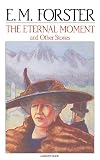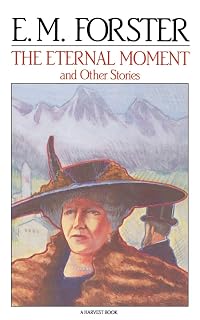
The Eternal Moment, and Other Stories
by E. M. Forster
On This Page
Description
Six short stories explore the human spirit and life-altering epiphanies, prompting transformations from within. Includes "Co-Ordination," "The Eternal Moment," "Mr. Andrews," "The Machine Stops," "The Point of It," and "The Story of the Siren.".Tags
Recommendations












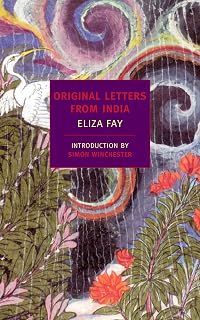


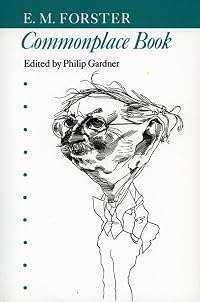
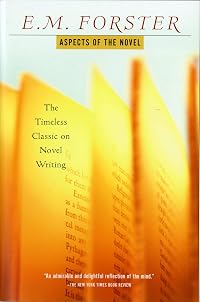






Member Recommendations

Member Reviews
"The Machine Stops", the first story in the book, is the best S.F. story I know - from 1909! “Civilisation” lives underground in a system of tunnels and cells entirely controlled by machine.
Ratings
Members
- Recently Added By
Lists

Recommended Reading : 600 Classics Reviewed, Editors of Salem Press, 2015
634 works; 6 members
Author Information

185+ Works 56,923 Members
Edward Morgan Forster was born on January 1, 1879, in London, England. He never knew his father, who died when Forster was an infant. Forster graduated from King's College, Cambridge, with B.A. degrees in classics (1900) and history (1901), as well as an M.A. (1910). In the mid-1940s he returned to Cambridge as a professor, living quietly there show more until his death in 1970. Forster was named to the Order of Companions of Honor to the Queen in 1953. Forster's writing was extensively influenced by the traveling he did in the earlier part of his life. After graduating from Cambridge, he lived in both Greece and Italy, and used the latter as the setting for the novels Where Angels Fear to Tread (1905) and A Room with a View (1908). The Longest Journey was published in 1907. Howard's End was modeled on the house he lived in with his mother during his childhood. During World War I, he worked as a Red Cross Volunteer in Alexandria, aiding in the search for missing soldiers; he later wrote about these experiences in the nonfiction works Alexandria: A History and Guide and Pharos and Pharillon. His two journeys to India, in 1912 and 1922, resulted in A Passage to India (1924), which many consider to be Forster's best work; this title earned the James Tait Black Memorial Prize. Forster wrote only six novels, all prior to 1925 (although Maurice was not published until 1971, a year after Forster's death, probably because of its homosexual theme). For much of the rest of his life, he wrote literary criticism (Aspects of the Novel) and nonfiction, including biographies (Goldsworthy Lowes Dickinson), histories, political pieces, and radio broadcasts. Howard's End, A Room with a View, and A Passage to India have all been made into successful films. (Bowker Author Biography) show less
Series
Belongs to Publisher Series
Work Relationships
Is contained in
Contains
Common Knowledge
- Canonical title
- The Eternal Moment, and Other Stories
- Original publication date
- 1928
- First words
- Imagine, if you can, a small room, hexagonal in shape, like the cell of a bee.
- Quotations
- For a moment they saw the nations of the dead, and, before they joined them, scraps of the untainted sky.
She knew several thousand people ... "But I can see you! What more do you want?" "I want to see you not through the machine."
Those funny old days, when men went for change of air instead of changing the air in their rooms!
Vashti was seized with the terrors of direct experience.
The forests had been destroyed during the literature epoch for the purpose of making newspaper-pulp.
Each infant was examined at birth, and all who promised undue strength were destroyed. Humanitarians may protest, but it would have been no true kindness to let an athlete live; he would never have been happy in that state o ... (show all)life to which the Machine had called him ... Man must be adapted to his surroundings, must he not? - Last words
- (Click to show. Warning: May contain spoilers.)"Exactly, Sir", whispered the concierge. "Of course we understand -- Oh, thank you, sir, thank you very much: thank you very much indeed!"
Classifications
Statistics
- Members
- 161
- Popularity
- 203,564
- Reviews
- 1
- Rating
- (3.82)
- Languages
- English, French, German, Greek
- Media
- Paper, Ebook
- ISBNs
- 10
- ASINs
- 5