On This Page
Description
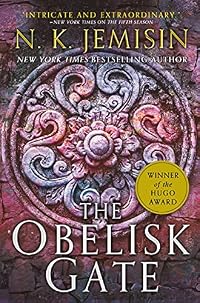
Essun's missing daughter grows more powerful every day, and her choices may destroy the world in this "magnificent" Hugo Award winner and NYT Notable Book. (NPR)The season of endings grows darker, as civilization fades into the long cold night.
Essun — once Damaya, once Syenite, now avenger — has found shelter, but not her daughter. Instead there is Alabaster Tenring, destroyer of the world, with a request. But if Essun does what he asks, it would seal the fate of the Stillness forever.
show more Far away, her daughter Nassun is growing in power — and her choices will break the world.
N. K. Jemisin's award winning trilogy continues in the sequel to The Fifth Season.. show less
Tags
Recommendations





Member Recommendations
Member Reviews
This series is simultaneously epic AF, and totally focused on the personal. It's an amazing combination, and packs a string of big emotional punches. While this second book lacks the big damn reveal awesome of the first, it follows through on the actions, the systems, their consequences. The result is deep and challenging and heart-breaking.
I was particularly struck by how this book shows - and shows with loving, brutal care - how those the system has broken will break in turn. How scars cause scars. How deep the pain goes. The emotional and personal strata of this world are at least as important as the geological, and that thematic work is so damn impressive.
I was particularly struck by how this book shows - and shows with loving, brutal care - how those the system has broken will break in turn. How scars cause scars. How deep the pain goes. The emotional and personal strata of this world are at least as important as the geological, and that thematic work is so damn impressive.
I was late to the party on this series, but I'm so glad I fit it into my pile this year! In a post-apocalyptical future, some humans have developed the power to manipulate stone, and of course there's a political power structure in place to control those humans. This second book in the trilogy follows our protagonist as she searches for her daughter, and resists incorporating herself into a society who values her abilities instead of fearing them. The daughter's experiences are also followed as she grows into her inherited power with very different messaging about what it means and how it can be used.
This was a great follow-up to the first in the series. Jemisin unclouds a few mysteries she set up in the first book and builds tension toward both the big conflict within this installation and toward what's to come in the closing book of the trilogy. The stone eaters are more fully realized in this book and are really neat, unlike anything I've read about before, and vividly portrayed -- I can see them and their inscrutable movements in my mind's eye more clearly than I can recall seeing anything I've read in years.
(Maybe a minor spoiler follows if you haven't read at least the first book.) It's hard not to get a little choked up fairly late in the book as Essun raves and rages against the injustices against orogene children in show more particular, as this sadly maps pretty well to injustices perpetrated against children of color. Jemisin is writing engaging fantasy here, but she's also not writing "just" fantasy.
The narrative tics I didn't love in the first book persist in this one, and I'm happy enough to look past them (or perhaps to figure that Jemisin is doing her own thing by putting some personality into the narrative voice rather than sticking to dry or stodgy straighter narrative, and that this is worth paying attention to and valuing even if it's not to my particular taste) because the story itself is grabbing me so forcefully. show less
(Maybe a minor spoiler follows if you haven't read at least the first book.) It's hard not to get a little choked up fairly late in the book as Essun raves and rages against the injustices against orogene children in show more particular, as this sadly maps pretty well to injustices perpetrated against children of color. Jemisin is writing engaging fantasy here, but she's also not writing "just" fantasy.
The narrative tics I didn't love in the first book persist in this one, and I'm happy enough to look past them (or perhaps to figure that Jemisin is doing her own thing by putting some personality into the narrative voice rather than sticking to dry or stodgy straighter narrative, and that this is worth paying attention to and valuing even if it's not to my particular taste) because the story itself is grabbing me so forcefully. show less
(Originally reviewed at thelibraryladies.com.)
“The Obelisk Gate” holds the dubious position of needing to tell the middle of the story. The scene has been set. The characters have been introduced (or, in this case, most of the characters are now realized to be the same person). But we can’t get to the finale yet. Many series in many different media formats have struggled with how to tell this portion of the story. But, as we’ve recently seen with its win of a second consecutive Hugo for the series, “The Obelisk Gate” falls into none of these traps.
And the biggest factor contributing to the avoidance of this “mid series slump” is Jemisin’s decision to double down on her characters. We now have Essun’s full story, show more knowing her to be the woman at the center of all three storylines in the previous book. With this knowledge, Essun’s struggles to make a life for herself in yet another comm hit that much closer to home. We’ve seen her try and fail, try and fail, always defined and burdened by her own power and the fear and hatred that she and other orogenes inspire in others. Having found Alabaster once again, only to know that she is losing him slowly to strange process in which his body is changing to stone, Essun’s journey in this book is one of self-acceptance. Whether it is wanted or not, Alabaster’s grand mission, to return the Moon to its regular orbit, is falling on her shoulders, the only orogene now living with the power and training to take up this mantle.
Through Essun, and Hoa (our recently discovered narrator and stone eater companion to Essun), the mysteries behind the obelisks, their connection to orogenes, and the history of the long-fought battle between Earth, stone eaters, orogenes, and humans slowly unravels. As I mentioned in the last review, Jemisin is a master at revealing answers to questions slowly and steadily, all too often bringing with these tidbits of information even more questions. This story is not for the impatient. It is for those who wish to bask in an immense, complicated world with a fully-realized, and half-forgotten, history, alongside characters who are often still just as much in the dark as we are.
Further, in this book we are given the added perspectives of Nassun, Essun’s lost daughter, and even a few chapters from Schaffa, the Guardian who tormented and tracked Damaya/Syenite/Essun all those years ago.
Nassun’s story takes us back to the beginning of the first book, with her discovery of her father standing over the body of her little brother whom he had just finished beating to death after discovering his powers. Through Nassun’s eyes, we see a child trying to re-align a world that has fallen into chaos, confusion and fear. To survive, she learns to manipulate those around her (most tragically, her own father), and struggles to understand her own abilities and why she is so hated. Is she a monster? And if she is, is it wrong that she loves what makes her monstrous? Through Nassun, we see what life is like for “undiscovered” roggas, those who must do whatever it takes to simply survive, without the so-called protection of the Folcrum that Damaya/Syenite/Essun grew up within. But Nassun does have Guardian: Schaffa.
But this is not the Schaffa we knew. To survive the reign of destruction that Syenite brought down around her in grief and rage at the loss of her little family so many years ago, Schaffa commits the sin that no Guardian is ever meant to: a closer deal with Evil Earth himself. Through this process, however, Schaffa both loses pieces of himself but also gains a new sense of self through this loss. This new self fights against the horrors that his kind are meant to inflict on the orogenes, and when he meets a young girl who looks achingly familiar, and whose father is in the midst of slowly rejecting her, he takes her under his wing.
This is at true testament of steady, sure-handed characterization, to take a character as hated as Schaffa was in the first book and to make him sympathetic, even a hero (antihero?) in his own way. Through Schaffa, we see the role that the Guardians could or perhaps more importantly, should have played in the lives of their young charges. He teaches and guides Nassun, and, most importantly, provides the one sure place that she feels safety as her complete self.
As I briefly mentioned above, now that Hoa has become a more fully-understood character in his own right, we also begin to unbury the many layers of stone eater culture and history. Surprising no one, it is all much more complicated than anyone had thought. The fight for the future (the fight for whether there will even be a future) is one that involves many factions, all working to gather support for their own cause. There is a reason that powerful orogenes attract stone eaters…
It is almost impossible to review this book as its own work. In many ways, this series is reading like three long chapters in one book. To discuss this story is to discuss the first and to predict the third. And while this presents a challenges for analyzing this book in the traditional sense (with a beginning, middle, and end), it makes for a sort of comfort going into the last book in the series. After all, the first two chapters has been rock solid (ha!), why on earth (ha!) wouldn’t the last? We’ll find out soon enough! And what’s more, I’ll be giving away a copy of “The Stone Sky” alongside my review so keep an eye out for that coming up soon! show less
“The Obelisk Gate” holds the dubious position of needing to tell the middle of the story. The scene has been set. The characters have been introduced (or, in this case, most of the characters are now realized to be the same person). But we can’t get to the finale yet. Many series in many different media formats have struggled with how to tell this portion of the story. But, as we’ve recently seen with its win of a second consecutive Hugo for the series, “The Obelisk Gate” falls into none of these traps.
And the biggest factor contributing to the avoidance of this “mid series slump” is Jemisin’s decision to double down on her characters. We now have Essun’s full story, show more knowing her to be the woman at the center of all three storylines in the previous book. With this knowledge, Essun’s struggles to make a life for herself in yet another comm hit that much closer to home. We’ve seen her try and fail, try and fail, always defined and burdened by her own power and the fear and hatred that she and other orogenes inspire in others. Having found Alabaster once again, only to know that she is losing him slowly to strange process in which his body is changing to stone, Essun’s journey in this book is one of self-acceptance. Whether it is wanted or not, Alabaster’s grand mission, to return the Moon to its regular orbit, is falling on her shoulders, the only orogene now living with the power and training to take up this mantle.
Through Essun, and Hoa (our recently discovered narrator and stone eater companion to Essun), the mysteries behind the obelisks, their connection to orogenes, and the history of the long-fought battle between Earth, stone eaters, orogenes, and humans slowly unravels. As I mentioned in the last review, Jemisin is a master at revealing answers to questions slowly and steadily, all too often bringing with these tidbits of information even more questions. This story is not for the impatient. It is for those who wish to bask in an immense, complicated world with a fully-realized, and half-forgotten, history, alongside characters who are often still just as much in the dark as we are.
Further, in this book we are given the added perspectives of Nassun, Essun’s lost daughter, and even a few chapters from Schaffa, the Guardian who tormented and tracked Damaya/Syenite/Essun all those years ago.
Nassun’s story takes us back to the beginning of the first book, with her discovery of her father standing over the body of her little brother whom he had just finished beating to death after discovering his powers. Through Nassun’s eyes, we see a child trying to re-align a world that has fallen into chaos, confusion and fear. To survive, she learns to manipulate those around her (most tragically, her own father), and struggles to understand her own abilities and why she is so hated. Is she a monster? And if she is, is it wrong that she loves what makes her monstrous? Through Nassun, we see what life is like for “undiscovered” roggas, those who must do whatever it takes to simply survive, without the so-called protection of the Folcrum that Damaya/Syenite/Essun grew up within. But Nassun does have Guardian: Schaffa.
But this is not the Schaffa we knew. To survive the reign of destruction that Syenite brought down around her in grief and rage at the loss of her little family so many years ago, Schaffa commits the sin that no Guardian is ever meant to: a closer deal with Evil Earth himself. Through this process, however, Schaffa both loses pieces of himself but also gains a new sense of self through this loss. This new self fights against the horrors that his kind are meant to inflict on the orogenes, and when he meets a young girl who looks achingly familiar, and whose father is in the midst of slowly rejecting her, he takes her under his wing.
This is at true testament of steady, sure-handed characterization, to take a character as hated as Schaffa was in the first book and to make him sympathetic, even a hero (antihero?) in his own way. Through Schaffa, we see the role that the Guardians could or perhaps more importantly, should have played in the lives of their young charges. He teaches and guides Nassun, and, most importantly, provides the one sure place that she feels safety as her complete self.
As I briefly mentioned above, now that Hoa has become a more fully-understood character in his own right, we also begin to unbury the many layers of stone eater culture and history. Surprising no one, it is all much more complicated than anyone had thought. The fight for the future (the fight for whether there will even be a future) is one that involves many factions, all working to gather support for their own cause. There is a reason that powerful orogenes attract stone eaters…
It is almost impossible to review this book as its own work. In many ways, this series is reading like three long chapters in one book. To discuss this story is to discuss the first and to predict the third. And while this presents a challenges for analyzing this book in the traditional sense (with a beginning, middle, and end), it makes for a sort of comfort going into the last book in the series. After all, the first two chapters has been rock solid (ha!), why on earth (ha!) wouldn’t the last? We’ll find out soon enough! And what’s more, I’ll be giving away a copy of “The Stone Sky” alongside my review so keep an eye out for that coming up soon! show less
This is the second of the Broken Earth trilogy. Although each of the three books won the Hugo award in their respective year, I would not call this a stand alone. Start with the first one, [The Fifth Season].
The Obelisk Gate continues the stories of Essun and her daughter Nassun. Each have become part of very different communities. Essun is in an underground community that attracts Orogenes, including Alabaster. Nassun has been taken by her father to a place that is rumored to ‘fix’ Orogenes, although the guardian Shaffa living there seems to have a very different agenda. Outside these communities, the season of death deepens, crops fail in the faded sunlight and people turn to cannibalism.
The world and the relationships are show more incredibly rich. I was not surprised to find that the author, N. K Jemison, is a psychologist, a she brings to bear her insights into these beautifully rounded characters.
I couldn’t put it down. I can’t wait to get to the third of the series, The Stone Sky. show less
The Obelisk Gate continues the stories of Essun and her daughter Nassun. Each have become part of very different communities. Essun is in an underground community that attracts Orogenes, including Alabaster. Nassun has been taken by her father to a place that is rumored to ‘fix’ Orogenes, although the guardian Shaffa living there seems to have a very different agenda. Outside these communities, the season of death deepens, crops fail in the faded sunlight and people turn to cannibalism.
The world and the relationships are show more incredibly rich. I was not surprised to find that the author, N. K Jemison, is a psychologist, a she brings to bear her insights into these beautifully rounded characters.
I couldn’t put it down. I can’t wait to get to the third of the series, The Stone Sky. show less
All in all, this book was a continuation of all the good parts of the former and a bit of the bad ones too, but those are quite negligible. To start, the prose in second person is still weeeeird and a huge risk. If done by a writer less talented than Jemisin, this wouldn't work out nearly as well. But in this case it doesn't bother me much.
The characters are, once again, one of the strongest suits of the books. Most of them were pretty awesome and interesting enough that whenever they were in a scene, I wanted to see what else they would do. Essun keeps playing her part very well: a tough and obstinate mother that wants to find her kid in a world that's ending. Nassun is a bit less likeable, but understandable nonetheless. Just a kid in show more an awful, dangerous world that's clinging to any sort of meaning she can find. Alabaster is back and he's still incredibly fun and charismatic, even in his less than optimal state.
The fact that Essun's story for this book was mostly exposition, training and smaller conflict was interesting and didn't bother me much. I'm not sure if Alabaster being "turned" into a stone eater will have lasting impact in the next entry, but I sure hope so. Hoa is still cool, even if a bit weird. As I mentioned before, Nassun felt kinda tiresome. I could see where she was coming from, but she still feels waaaay more messed up than her mother. Now she's on the side of a literal world ending-threat just to purge the world of the evilness of human life. So yeah, not a fan. I think she'll be something akin to the main villlain of the next book.
All in all, this was a really good entry in a really good series. Almost makes me sad that there's only one more book in the series, but I'm also hyped to see the developments the third entry holds for me. show less
The characters are, once again, one of the strongest suits of the books. Most of them were pretty awesome and interesting enough that whenever they were in a scene, I wanted to see what else they would do. Essun keeps playing her part very well: a tough and obstinate mother that wants to find her kid in a world that's ending. Nassun is a bit less likeable, but understandable nonetheless. Just a kid in show more an awful, dangerous world that's clinging to any sort of meaning she can find. Alabaster is back and he's still incredibly fun and charismatic, even in his less than optimal state.
All in all, this was a really good entry in a really good series. Almost makes me sad that there's only one more book in the series, but I'm also hyped to see the developments the third entry holds for me. show less
I finished the Obelisk Gate by N.K. Jemisin last night at 3 am and it ripped me in half.
Alabaster is not supposed to die. But their son was also not supposed to die. Tonkee is cool but annoying and needs to be a better listener. The complexities of the relationships and how they are impacted by the war, factions, preconceived ideas, and the fact that these people decided to dig a hole in the ocean and live in there?! Excuse me?!
Also, DIAMOND BONES. How creative can you get? The GORE in this book was so much too. WHO TAKES A BITE OUT OF SOMEONE ELSE’S SKULL? HOW DO YOU SURVIVE THAT?!
Feeling grateful for the moon and having a lot of complex emotions.
Anyone who has not read this is missing out.
Also, DIAMOND BONES. How creative can you get? The GORE in this book was so much too. WHO TAKES A BITE OUT OF SOMEONE ELSE’S SKULL? HOW DO YOU SURVIVE THAT?!
Feeling grateful for the moon and having a lot of complex emotions.
Anyone who has not read this is missing out.
Members
- Recently Added By
Lists

Best Science Fiction Novels
816 works; 430 members

Favorite Science Fiction by Women Authors
737 works; 202 members

2017 Hugo Eligible Novels
145 works; 14 members

Hugo Awards - Best Novel
69 works; 10 members

Diversity in Fantasy and Science Fiction
219 works; 32 members

Female Protagonist
1,056 works; 56 members

2016 Science Fiction and Fantasy Books I'm Looking Forward To.
54 works; 6 members
Female Author
1,235 works; 67 members

Black Authors
381 works; 32 members

Top Five Books of 2021
604 works; 181 members
top 10 books read in 2017
5 works; 1 member

Top Five Books of 2017
757 works; 230 members
Top Five Books of 2018
802 works; 264 members

Books Read in 2023
5,547 works; 144 members

Speculative Fiction to Read
706 works; 32 members

Plan to Listen Audiobooks
63 works; 1 member

2020
21 works; 1 member
Speculative Fiction: The Award Winners
27 works; 5 members

Books Read in 2022
5,164 works; 113 members

Reading Glasses Podcast
410 works; 3 members

Wishlist
99 works; 1 member

Books Read in 2020
4,379 works; 123 members

Overdue Podcast
803 works; 9 members

Books Read in 2021
5,361 works; 114 members

Books Read in 2019
4,052 works; 110 members
Books Read in 2018
4,360 works; 110 members

Carole's List
445 works; 13 members

Books Read in 2017
4,249 works; 130 members

Books Read in 2016
4,666 works; 197 members

READ 2025
190 works; 1 member
Author Information

67+ Works 45,113 Members
N. K. Jemisin is an American author and blogger, born in 1972, and based in Brooklyn, New York. She earned a B.S. in Psychology from Tulane University and her Masters of Education from the University of Maryland College Park. Her work includes numerous short stories, a novella, a triptych, The Inheritance trilogy, Dreamblood series, and The Broken show more Earth trilogy. The Fifth Season is a book in The Inheritance trilogy for which she won the 2016 Hugo Award for Best Novel. Her other awards include Romantic Times Reviewers' Choice, Fantasy (for The Shadowed Sun); Sense of Gender Award, 2011 (for The Hundred Thousand Kingdoms, Japanese version); Romantic Times Reviewers' Choice, Fantasy (for The Broken Kingdoms); and the Locus Award, 2010 (First Novel, for The Hundred Thousand Kingdoms). She won the 2017 Nebula Award and the 2018 Hugo Award, Best Novel category for The Stone Sky. (Bowker Author Biography) show less

N. K. Jemisin is a LibraryThing Author, an author who lists their personal library on LibraryThing.
Some Editions
Awards and Honors
Awards
Distinctions
Series

Work Relationships
Common Knowledge
- Canonical title
- The Obelisk Gate
- Original title
- The Obelisk Gate
- Original publication date
- 2016-08
- People/Characters
- Essun; Nassun; Alabaster; Ykka; Hoa; Lerna (show all 17); Renthree; Jija; Antimony; Hjarka; Cutter Strongback; Schaffa; Tonkee; Esni; Eitz; Nida; Umber
- Important places
- Castrima
- Dedication
- To those who have no choice but to prepare their children for the battlefield
- First words
- Hmm. No, I'm telling this wrong.
- Last words
- (Click to show. Warning: May contain spoilers.)So Nassun turns them, to Steel, and says, "Tell me how to bring the Moon home."
- Original language
- English
Classifications
Statistics
- Members
- 5,693
- Popularity
- 2,296
- Reviews
- 223
- Rating
- (4.21)
- Languages
- 16 — Catalan, Chinese, Czech, Dutch, English, Estonian, Finnish, French, German, Hungarian, Italian, Polish, Spanish, Swedish, Turkish, Portuguese (Portugal)
- Media
- Paper, Audiobook, Ebook
- ISBNs
- 37
- ASINs
- 16