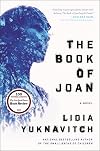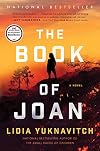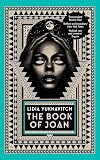
The Book of Joan: A Novel
by Lidia Yuknavitch
On This Page
Description
"In the near future, world wars have transformed the earth into a battleground. Fleeing the unending violence and the planet's now-radioactive surface, humans have regrouped to a mysterious platform known as CIEL, hovering over their erstwhile home. The changed world has turned evolution on its head: the surviving humans have become sexless, hairless, pale-white creatures floating in isolation, inscribing stories upon their skin. Out of the ranks of the endless wars rises Jean de Men, a show more charismatic and bloodthirsty cult leader who turns CIEL into a quasi-corporate police state. A group of rebels unite to dismantle his iron rule--galvanized by the heroic song of Joan, a child-warrior who possesses a mysterious force that lives within her and communes with the earth. When de Men and his armies turn Joan into a martyr, the consequences are astonishing. And no one--not the rebels, Jean de Men, or even Joan herself--can foresee the way her story and unique gift will forge the destiny of an entire world for generations" -- provided by publisher. show lessTags
Recommendations









Member Recommendations
g33kgrrl In short: social consequences in space.
Member Reviews
Yesterday I had a completely screen-free Saturday, which took me back to my teenage years. It was very restful and I read 650 pages of three books. This was the first, a novel I’d been very much looking forward to. The concept is so seductive: dystopian future Joan of Arc. I enjoyed it quite a bit, however would caution those intending to read it that the body horror is at times brutally intense. The whole narrative is visceral (sometimes very literally) and raw, even frenzied, with a great intensity of feeling. This gives it a mythic quality, as befits a Joan of Arc retelling, rather than the more measured traditional science fiction tone. The setup is as follows: Earth has been ruined and the rich have departed to an orbital space show more station called CIEL, ruled by a maniac called Jean le Men. Everyone who couldn’t afford it died or is dying in the bombed-out remains of the planet. The only means of survival seems to be hiding in caves.
Unusually for a post-apocalyptic tale, Yuknavitch centres the narrative on women and on bodies. The rich in their orbiting haven are unable to reproduce, having lost all apparent sexual characteristics. They occupy their time with aesthetic masochism: burning and cutting stories into their skin. When Joan appears in the story as an avatar of resistance, the reader is always very aware of her embodiment. She’s often in pain, all her emotions seem to be expressed through her body. A strong parallel is drawn between human bodies and the Earth as body, with soil as the bridge between them. Joan’s full title is Joan of Dirt and she is the last hope for reviving the dying Earth.
‘The Book of Joan’ reminded me of [a:Richard Calder|253327|Richard Calder|https://images.gr-assets.com/authors/1328816963p2/253327.jpg]’s novels, particularly [b:Frenzetta|1455326|Frenzetta|Richard Calder|https://images.gr-assets.com/books/1387708625s/1455326.jpg|1446098]. There is a similar fixation on thwarted sexual passions, on warped bodies, on transgression of the barrier between life and death, and on decay. Both books are memorably strange to read, in part due to hauntingly disgusting imagery. (If you can cope with the artisanal gore in the Hannibal TV series you’ll be OK. If not, tread carefully.) Neither is distinguished by plot coherence, but that isn’t the point. ‘The Book of Joan’ alternates between info-dumps and florid dialogue in a manner that is sometimes a little awkward. Nonetheless, the vividness and originality of the writing shine through. I consider it a postapocalyptic rather than dystopian novel as it has a similar message to Snowpiercer (book & film): everything must be destroyed so that something better might emerge. show less
Unusually for a post-apocalyptic tale, Yuknavitch centres the narrative on women and on bodies. The rich in their orbiting haven are unable to reproduce, having lost all apparent sexual characteristics. They occupy their time with aesthetic masochism: burning and cutting stories into their skin. When Joan appears in the story as an avatar of resistance, the reader is always very aware of her embodiment. She’s often in pain, all her emotions seem to be expressed through her body. A strong parallel is drawn between human bodies and the Earth as body, with soil as the bridge between them. Joan’s full title is Joan of Dirt and she is the last hope for reviving the dying Earth.
‘The Book of Joan’ reminded me of [a:Richard Calder|253327|Richard Calder|https://images.gr-assets.com/authors/1328816963p2/253327.jpg]’s novels, particularly [b:Frenzetta|1455326|Frenzetta|Richard Calder|https://images.gr-assets.com/books/1387708625s/1455326.jpg|1446098]. There is a similar fixation on thwarted sexual passions, on warped bodies, on transgression of the barrier between life and death, and on decay. Both books are memorably strange to read, in part due to hauntingly disgusting imagery. (If you can cope with the artisanal gore in the Hannibal TV series you’ll be OK. If not, tread carefully.) Neither is distinguished by plot coherence, but that isn’t the point. ‘The Book of Joan’ alternates between info-dumps and florid dialogue in a manner that is sometimes a little awkward. Nonetheless, the vividness and originality of the writing shine through. I consider it a postapocalyptic rather than dystopian novel as it has a similar message to Snowpiercer (book & film): everything must be destroyed so that something better might emerge. show less
Joan of Arc Reimagined
The Hundreds Years’ War, a conflict between a French faction supported by England and the House of Valois, was notable for its length, spanning generations, for the scorched earth tactics employed by the Burgundians/English, and for the myth arising around a young child savior, Joan of Arc. In Lidia Yuknavitch’s dystopian novel, Joan finds herself resurrected in the person of a girl who rather than deriving her powers from religious visions obtains them as a result of her oneness with dirt, that is the Earth, encompassing all its powers of creation.
In the beginning, Joan misuses her power as she wages a war of total destruction again an evil, insane, charismatic Jean de Men. As the mythic Joan fell into the show more hands of Burgundians, so Jean de Men captures Joan. Similar to Joan of Arc, de Men puts her on a showy trial and executes her by fire at the stake. The result, of course, is the opposite of his intension and Joan becomes both legend and hope encapsulated in a book engraved by electrocautery on the skin of Christine Pizan. Christine knows a secret, that Joan did not perish, and it’s Christine’s mission to defeat de Men and allow Joan to use her powers of fecundity to restore the world, much as it was those supporting Joan of Arc to use her to produce an independent France.
Yuknavitch conjures some pretty striking images, particularly of Jean de Men’s domaine, a suborbital city, CIEL, in the sky populated by a class of horribly mutated humans, white hairless beings devoid of sexuality, unable to reproduce themselves, who exit to exit, and who scribe their existence on their skin and skin graphs that hang from them like robes. CIEL hovers above a burned over world, one denuded of vegetation, a ball of brown dirt. Underneath that bare surface, ragtag groups of survivors exist, many of them awaiting a savior they know will return with the power to make things whole again.
Now, to enjoy Yuknavitch’s novel, readers have to put logic aside, because her world is quite fantastical. It defies logic, much in the way destroying your own planet by polluting it and ravaging it with wars does, and by restricting, subjugating, and punishing those who give and nurture life does. In this regard, Yuknavitch makes a dramatic point. Unfortunately, if things get too out of hand, too much like she envisions here, there will be no savior at the ready to put things right again, at least not for millions of years. show less
The Hundreds Years’ War, a conflict between a French faction supported by England and the House of Valois, was notable for its length, spanning generations, for the scorched earth tactics employed by the Burgundians/English, and for the myth arising around a young child savior, Joan of Arc. In Lidia Yuknavitch’s dystopian novel, Joan finds herself resurrected in the person of a girl who rather than deriving her powers from religious visions obtains them as a result of her oneness with dirt, that is the Earth, encompassing all its powers of creation.
In the beginning, Joan misuses her power as she wages a war of total destruction again an evil, insane, charismatic Jean de Men. As the mythic Joan fell into the show more hands of Burgundians, so Jean de Men captures Joan. Similar to Joan of Arc, de Men puts her on a showy trial and executes her by fire at the stake. The result, of course, is the opposite of his intension and Joan becomes both legend and hope encapsulated in a book engraved by electrocautery on the skin of Christine Pizan. Christine knows a secret, that Joan did not perish, and it’s Christine’s mission to defeat de Men and allow Joan to use her powers of fecundity to restore the world, much as it was those supporting Joan of Arc to use her to produce an independent France.
Yuknavitch conjures some pretty striking images, particularly of Jean de Men’s domaine, a suborbital city, CIEL, in the sky populated by a class of horribly mutated humans, white hairless beings devoid of sexuality, unable to reproduce themselves, who exit to exit, and who scribe their existence on their skin and skin graphs that hang from them like robes. CIEL hovers above a burned over world, one denuded of vegetation, a ball of brown dirt. Underneath that bare surface, ragtag groups of survivors exist, many of them awaiting a savior they know will return with the power to make things whole again.
Now, to enjoy Yuknavitch’s novel, readers have to put logic aside, because her world is quite fantastical. It defies logic, much in the way destroying your own planet by polluting it and ravaging it with wars does, and by restricting, subjugating, and punishing those who give and nurture life does. In this regard, Yuknavitch makes a dramatic point. Unfortunately, if things get too out of hand, too much like she envisions here, there will be no savior at the ready to put things right again, at least not for millions of years. show less
Joan of Arc Reimagined
The Hundreds Years’ War, a conflict between a French faction supported by England and the House of Valois, was notable for its length, spanning generations, for the scorched earth tactics employed by the Burgundians/English, and for the myth arising around a young child savior, Joan of Arc. In Lidia Yuknavitch’s dystopian novel, Joan finds herself resurrected in the person of a girl who rather than deriving her powers from religious visions obtains them as a result of her oneness with dirt, that is the Earth, encompassing all its powers of creation.
In the beginning, Joan misuses her power as she wages a war of total destruction again an evil, insane, charismatic Jean de Men. As the mythic Joan fell into the show more hands of Burgundians, so Jean de Men captures Joan. Similar to Joan of Arc, de Men puts her on a showy trial and executes her by fire at the stake. The result, of course, is the opposite of his intension and Joan becomes both legend and hope encapsulated in a book engraved by electrocautery on the skin of Christine Pizan. Christine knows a secret, that Joan did not perish, and it’s Christine’s mission to defeat de Men and allow Joan to use her powers of fecundity to restore the world, much as it was those supporting Joan of Arc to use her to produce an independent France.
Yuknavitch conjures some pretty striking images, particularly of Jean de Men’s domaine, a suborbital city, CIEL, in the sky populated by a class of horribly mutated humans, white hairless beings devoid of sexuality, unable to reproduce themselves, who exit to exit, and who scribe their existence on their skin and skin graphs that hang from them like robes. CIEL hovers above a burned over world, one denuded of vegetation, a ball of brown dirt. Underneath that bare surface, ragtag groups of survivors exist, many of them awaiting a savior they know will return with the power to make things whole again.
Now, to enjoy Yuknavitch’s novel, readers have to put logic aside, because her world is quite fantastical. It defies logic, much in the way destroying your own planet by polluting it and ravaging it with wars does, and by restricting, subjugating, and punishing those who give and nurture life does. In this regard, Yuknavitch makes a dramatic point. Unfortunately, if things get too out of hand, too much like she envisions here, there will be no savior at the ready to put things right again, at least not for millions of years. show less
The Hundreds Years’ War, a conflict between a French faction supported by England and the House of Valois, was notable for its length, spanning generations, for the scorched earth tactics employed by the Burgundians/English, and for the myth arising around a young child savior, Joan of Arc. In Lidia Yuknavitch’s dystopian novel, Joan finds herself resurrected in the person of a girl who rather than deriving her powers from religious visions obtains them as a result of her oneness with dirt, that is the Earth, encompassing all its powers of creation.
In the beginning, Joan misuses her power as she wages a war of total destruction again an evil, insane, charismatic Jean de Men. As the mythic Joan fell into the show more hands of Burgundians, so Jean de Men captures Joan. Similar to Joan of Arc, de Men puts her on a showy trial and executes her by fire at the stake. The result, of course, is the opposite of his intension and Joan becomes both legend and hope encapsulated in a book engraved by electrocautery on the skin of Christine Pizan. Christine knows a secret, that Joan did not perish, and it’s Christine’s mission to defeat de Men and allow Joan to use her powers of fecundity to restore the world, much as it was those supporting Joan of Arc to use her to produce an independent France.
Yuknavitch conjures some pretty striking images, particularly of Jean de Men’s domaine, a suborbital city, CIEL, in the sky populated by a class of horribly mutated humans, white hairless beings devoid of sexuality, unable to reproduce themselves, who exit to exit, and who scribe their existence on their skin and skin graphs that hang from them like robes. CIEL hovers above a burned over world, one denuded of vegetation, a ball of brown dirt. Underneath that bare surface, ragtag groups of survivors exist, many of them awaiting a savior they know will return with the power to make things whole again.
Now, to enjoy Yuknavitch’s novel, readers have to put logic aside, because her world is quite fantastical. It defies logic, much in the way destroying your own planet by polluting it and ravaging it with wars does, and by restricting, subjugating, and punishing those who give and nurture life does. In this regard, Yuknavitch makes a dramatic point. Unfortunately, if things get too out of hand, too much like she envisions here, there will be no savior at the ready to put things right again, at least not for millions of years. show less
Strong stuff! Not for the faint of heart, but it's as amazing and fresh as N. K. Jemisin's Broken Earth trilogy, which for me is high praise indeed. I especially admire the economical (and often poetic) prose that serves to build a world, flesh out characters (!), and propel an ambitious/fascinating/timely plot. Many "literary novels" can't do this at twice the length and still remain relevant to an early 21st-century reader.
I plan to let this one simmer subconsciously for a few weeks, and then read it again. I've already checked out several of the author's other works from the library, in anticipation of more brilliant, well-crafted prose.
I plan to let this one simmer subconsciously for a few weeks, and then read it again. I've already checked out several of the author's other works from the library, in anticipation of more brilliant, well-crafted prose.
The Book of Joan by Lidia Yuknavitch is a highly recommended literary post-apocalyptic reimagined Joan of Arc story.
It is 2049. The Earth is a burned-out, lifeless husk due to world wars, global geological catastrophes, and solar flares. Wealthy humans, or what they have evolved into, are living on CIEL, a suborbital complex hovering above the Earth. Human are currently all sexless, hairless, and completely white. Christine Pizan, 49, remembers life on earth before CIEL, but now she resembles the other inhabitants. The residents of CIEL are not allowed to live past age 50, to save resources. They also practice body modification and cover themselves in scars and skin grafts. Christine specializes in skin stories, an electrosurgical show more branding of words on skin grafts. On her body, Christine is telling the story of Joan of Dark, a child and echo-terrorist who had a mysterious power and communicated directly with the Earth. When Christine dies, Joan's story, as branded/written on her skin, will continue
Joan fought against Jean de Men for the Earth. He is a charismatic and bloodthirsty cult leader who waged war against Joan and currently rules CIEL as a quasi-corporate police state. De Men turned Joan into a martyr, putting her execution on display - but her story is not over. Christine is planning a rebellion with others to seize control from de Men and she also learns that Joan is still alive on Earth. She is also hoping she can save her beloved friend, Trinculo.
This speculative fiction novel is told in three books, the first narrative is through Christine's point-of-view, the second is Joan's story, and the third concludes the story. The writing is incredible - literary, poetic. Yuknavitch is a wordsmith who delights in language and the passion and horror words can communicate. The Book of Joan is firmly a feminist point-of-view and confronts the questions of sexuality, love, and the fluidity of genders, along with the need to rebel against tyrannical leaders with no compassion or humanity. It begs the question: What does it mean to be human? To love?
I delighted in some of the wording Yuknavitch used in The Book of Joan. While the poetic, literary, and lyrical wording was extraordinary, and is its own literary achievement, the actual plot needed a little bit of clarification, additional explanation, more story. No one will question the quality of the writing; it is the context that became perplexing at times. In some ways this novel is almost too ambitious for the goals set before it. In the end I took great delight in the writing but felt dissatisfied by the actual flow of the narrative. While the characters are developed and there is change and growth, the notion of character development doesn't seem to directly apply to The Book of Joan - except for Joan.
The Book of Joan is highly recommended, but for a specific audience. If you like literary novels with a science fiction setting and take delight in words and their usage, it's a good choice. If you like a good epic, post-apocalyptic science fiction story, you might feel let down by the lack of a fluid, well-appointed plot.
Disclosure: My review copy was courtesy of HarperCollins.
on 4/13/17: http://www.shetreadssoftly.com/
https://www.goodreads.com/review/show/1969705592 show less
It is 2049. The Earth is a burned-out, lifeless husk due to world wars, global geological catastrophes, and solar flares. Wealthy humans, or what they have evolved into, are living on CIEL, a suborbital complex hovering above the Earth. Human are currently all sexless, hairless, and completely white. Christine Pizan, 49, remembers life on earth before CIEL, but now she resembles the other inhabitants. The residents of CIEL are not allowed to live past age 50, to save resources. They also practice body modification and cover themselves in scars and skin grafts. Christine specializes in skin stories, an electrosurgical show more branding of words on skin grafts. On her body, Christine is telling the story of Joan of Dark, a child and echo-terrorist who had a mysterious power and communicated directly with the Earth. When Christine dies, Joan's story, as branded/written on her skin, will continue
Joan fought against Jean de Men for the Earth. He is a charismatic and bloodthirsty cult leader who waged war against Joan and currently rules CIEL as a quasi-corporate police state. De Men turned Joan into a martyr, putting her execution on display - but her story is not over. Christine is planning a rebellion with others to seize control from de Men and she also learns that Joan is still alive on Earth. She is also hoping she can save her beloved friend, Trinculo.
This speculative fiction novel is told in three books, the first narrative is through Christine's point-of-view, the second is Joan's story, and the third concludes the story. The writing is incredible - literary, poetic. Yuknavitch is a wordsmith who delights in language and the passion and horror words can communicate. The Book of Joan is firmly a feminist point-of-view and confronts the questions of sexuality, love, and the fluidity of genders, along with the need to rebel against tyrannical leaders with no compassion or humanity. It begs the question: What does it mean to be human? To love?
I delighted in some of the wording Yuknavitch used in The Book of Joan. While the poetic, literary, and lyrical wording was extraordinary, and is its own literary achievement, the actual plot needed a little bit of clarification, additional explanation, more story. No one will question the quality of the writing; it is the context that became perplexing at times. In some ways this novel is almost too ambitious for the goals set before it. In the end I took great delight in the writing but felt dissatisfied by the actual flow of the narrative. While the characters are developed and there is change and growth, the notion of character development doesn't seem to directly apply to The Book of Joan - except for Joan.
The Book of Joan is highly recommended, but for a specific audience. If you like literary novels with a science fiction setting and take delight in words and their usage, it's a good choice. If you like a good epic, post-apocalyptic science fiction story, you might feel let down by the lack of a fluid, well-appointed plot.
Disclosure: My review copy was courtesy of HarperCollins.
on 4/13/17: http://www.shetreadssoftly.com/
https://www.goodreads.com/review/show/1969705592 show less
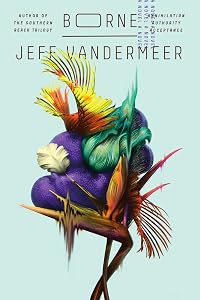
A futuristic-dystopian-feminist retelling of the Joan of Arc story, yes, but also so much more: a meditation on creation and destruction, nature and technology, gender and the body, politics and mythmaking. Put this on your literary scifi shelf with Atwood's The Handmaid's Tale and Oryx & Crake, Children of Men, and Jeff Vandermeer's Area X/Southern Reach trilogy. Bold, bruising, visceral, psychologically shocking, and philosophically searching.
The Book of Joan starts off as one of the most prophetic, imaginative, and thought-provoking novels of the social media era. It ends far away, a genre-bending, weird thriller that at least remains thought provoking. Throughout it all, the language is rich and the story is compelling. Although the incongruous final acts managed to alienate me as a reader, I was pulled in for so much of the story and enjoyed the experience.
A reimagining of sorts of Joan of Arc, The Book of Joan is a dystopian tale of what happens when a madman becomes the world's most powerful leader. As decisions to plunder the world for a profit turn disastrous, the earth chooses a hero, Joan. Really, does this future seem so far fetched? And do these characters' show more reflections on the dictator Jean de Men sound the least bit foreign?
And again:
In the first two parts of the novel, this is the story we get. It is a constant condemnation of many things, including commonly held notions of power, sexuality, and art, all told in vividly stunning passages. In this future, humans have begun a process of de-evolution. As humanity veers toward extinction, many of the remaining asexual population have become hypersexualized. They seek to recreate themselves through intricate grafts. Through two-thirds of this novel, the story is language driven, and characters and plot are merely devices to give body to the words. This is the creation story in reverse as told through the intricate weaving of words.
In the final part of The Book of Joan, the story got a bit messy for me, as I'm sure it will with many readers not so accustomed to hard sci-fi. The action is turned up and the threads become so knotted with one another and with techno-babble that it's difficult to discern what is going on. Add to that the final scenes, where oddity becomes normality and a particular plot device I've never been a fan of makes an appearance.The big revelation is that a character (who in this review shall remain unnamed) is not who they have purported to be. The mask is removed and we're all suppose to gasp. Personally, I've never seen this done well in any novel and my reaction is to throw the book across the room.
What would've been a solid review for this novel was hurt some by this conclusion. What drew me into this book originally was the nearness of the events and the construction of language, but as everything drifted from what was familiar, I myself became untethered. And though I recognize that the story ends with the same strong commentary on power, sexuality, and art that it began with, it was a commentary addressed to a much different audience. show less
A reimagining of sorts of Joan of Arc, The Book of Joan is a dystopian tale of what happens when a madman becomes the world's most powerful leader. As decisions to plunder the world for a profit turn disastrous, the earth chooses a hero, Joan. Really, does this future seem so far fetched? And do these characters' show more reflections on the dictator Jean de Men sound the least bit foreign?
...he overtook lives, his performances increasingly more violent in form. His is a journey from opportunistic showman, to worshiped celebrity, to billionaire, to fascistic power monger. What was left? When the Wars broke out, his transformation to sadistic military leader came as no surprise.
We are what happens when the seemingly unthinkable celebrity rises to power.
And again:
If we look at history—those of us who study it, who can remember it—we understand the reason why those who come to power swiftly, amid extreme national crises, are so dangerous: during such crises, we all turn into children aching for a good father. And the truth is, in our fear and despair, we'll take any father. Even if his furor is dangerous. It's as if humans can't understand how to function without a father. Perhaps especially then, we mistake heroic agency for its dark other.
In the first two parts of the novel, this is the story we get. It is a constant condemnation of many things, including commonly held notions of power, sexuality, and art, all told in vividly stunning passages. In this future, humans have begun a process of de-evolution. As humanity veers toward extinction, many of the remaining asexual population have become hypersexualized. They seek to recreate themselves through intricate grafts. Through two-thirds of this novel, the story is language driven, and characters and plot are merely devices to give body to the words. This is the creation story in reverse as told through the intricate weaving of words.
In the final part of The Book of Joan, the story got a bit messy for me, as I'm sure it will with many readers not so accustomed to hard sci-fi. The action is turned up and the threads become so knotted with one another and with techno-babble that it's difficult to discern what is going on. Add to that the final scenes, where oddity becomes normality and a particular plot device I've never been a fan of makes an appearance.
What would've been a solid review for this novel was hurt some by this conclusion. What drew me into this book originally was the nearness of the events and the construction of language, but as everything drifted from what was familiar, I myself became untethered. And though I recognize that the story ends with the same strong commentary on power, sexuality, and art that it began with, it was a commentary addressed to a much different audience. show less
Members
- Recently Added By
Lists

2018 Tournament of Books
18 works; 12 members

Best Feminist Science Fiction
188 works; 35 members

Books Read in 2017
4,249 works; 129 members

Review 2
36 works; 1 member

2017 Science Fiction and Fantasy I'm Looking Forward To
46 works; 6 members

Brooklyn Public Library Literary Prize 2017
16 works; 1 member

2018 Hugo Eligible Novels
170 works; 16 members
Author Information

24+ Works 2,483 Members
Lidia Yuknavitch teaches fiction writing and literature in Oregon
Some Editions
Awards and Honors
Awards
Common Knowledge
- Original publication date
- 2017
- Dedication
- This book is for Brigid.
- First words
- Prologue:
In the hundreds of thousands of years before the Chicxulub asteroid impact that led to the mass extinction of dinosaurs on earth, volcanoes in a region of India known as the Deccan Traps erupted repeatedly.
Chapter One:
Burning is an art. - Last words
- (Click to show. Warning: May contain spoilers.)What is the word for her body?
- Blurbers
- Tamblyn, Amber; Strayed, Cheryl; Gay, Roxane; Cain, Chelsea; Veselka, Vanessa
Classifications
Statistics
- Members
- 675
- Popularity
- 42,580
- Reviews
- 42
- Rating
- (3.14)
- Languages
- 6 — Dutch, English, French, German, Italian, Spanish
- Media
- Paper, Audiobook, Ebook
- ISBNs
- 25
- ASINs
- 3