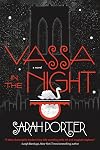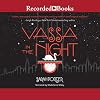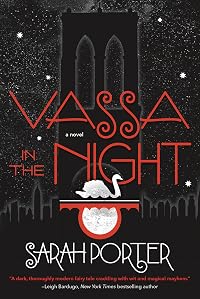
Vassa in the Night
by Sarah Porter
On This Page
Description
In the enchanted kingdom of Brooklyn, Vassa uses a magical gift from her dead mother to take on Babs Yaga, the witch who owns the local convenience store. Inspired by the Russian folktale Vassilissa the Beautiful.Tags
Recommendations



Member Recommendations
Member Reviews
This has to be one of the strangest books I've ever read. A retelling of a Baba Yaga story, this version is set in contemporary Brooklyn as the nights stretch longer. Vassa is a young woman who's lost her mother and been abandoned by her father, left to live with a stepmom and two stepsisters. She ends up venturing to the local BY's in part because of an adversarial stepsister and in part due to her own stubbornness. Once there, however, Vassa is trapped and must find a way to free everyone trapped by BY's dark magic or else. An interesting read, but not one I can summon much enthusiasm for.
In this Baba Yaga retelling, Vassa is caught in a Brooklyn where the nights seem to be stretching longer and longer, and when she has to run an errand to BY's, the only store open 24 hours, she is caught in a bargain with the owner whereby she must work for three nights without going home in between shifts. During her three nights, she must complete impossible tasks -- but she has a few magical helpers. By the third night, it's clear that her quest is not just to survive the three nights, but to bring an end to the lengthening nights and the cruel machinations of Babs, the shop's owner.
I am the audience for retold fairy tales, especially Russian ones, but this book didn't work for me. The dialogue was clunky, and the attempt at merging show more the magical aspects of the book with present-day life just stretched my credulity a little too far. I also wanted Vassa to be able to solve some of her problems herself, but she always had magical help and could not have succeeded without it. There's a whole lot of weirdness in this book, so I can see readers who enjoy a book that continually throws them off-balance liking this, but it wasn't for me. show less
I am the audience for retold fairy tales, especially Russian ones, but this book didn't work for me. The dialogue was clunky, and the attempt at merging show more the magical aspects of the book with present-day life just stretched my credulity a little too far. I also wanted Vassa to be able to solve some of her problems herself, but she always had magical help and could not have succeeded without it. There's a whole lot of weirdness in this book, so I can see readers who enjoy a book that continually throws them off-balance liking this, but it wasn't for me. show less
oh Vasilisa...I mean Vassa Lisa Lowenstein. You poor lost girl. You forgotten child of parents who didn't want you but couldn't allow you to be hurt either.
A fine re-imagining of a Magical Brooklyn where Baba Yaga is a business owner and the night stretches for so long because how can you tally grief?
A fine re-imagining of a Magical Brooklyn where Baba Yaga is a business owner and the night stretches for so long because how can you tally grief?
People live here on purpose; that’s what I’ve heard. They even cross the country deliberately and move in to the neighborhoods near the river, and suddenly their shoes are cuter than they are, and very possibly smarter and more articulate as well, and their lives are covered in sequins and they tell themselves they’ve arrived.
---
Well that was a whole lot of what.
Vassa lives in a Brooklyn slum with her stepmother, stepsister, half-sister, and the talking kleptomaniac doll her dead mother left her. Vassa’s life is lousy but dull until she goes out one night to buy lightbulbs from the notorious corner store BY’s, which dances on chicken legs and likes to behead shoplifters.
Magical realism is a genre that modern fiction show more doesn’t play around with enough. I can think of a few attempts beyond the classic Latin and South American literature that defined the genre. But to be honest, I didn’t enjoy those attempts that much. When you compare the modern attempts to the giants of the genre, from House of the Spirits to Autumn of the Patriarch, the modern versions come off rather try-hard and awkward, hitting the wrong notes and always off-rhythm. The only truly excellent modern magical realism book I can think of off-hand is The Brief and Wondrous Life of Oscar Wao.
So I was pretty excited to read a magical realism take on the classic Russian fairytale of Vassilissa and Baba Yaga, especially a magical realism story that isn’t related to Latin or South America. Vassa’s Brooklyn is painfully real and yet offhandedly magical, from the murderous corner store to the ever-lengthening night that stretches hours too long.
But once Vassa enters BY’s, the story goes off the rails. The story drags, often taking pointless loops and interludes. The writing and narration grow increasingly confusing as Vassa dips from bizarre reality to trippy dreams and back.
Part of the issue is that Vassa is a rather unresolved protagonist. She is cruel, childish, and unreasonably kind by turns, showing sympathy and mercy to the murderous Babs one minute and then floundering about like a headless chicken (sorry) the next. Vassa and her choices are so frequently wrong that it becomes difficult not to be frustrated at her inability to do anything right by herself. No, seriously. I can’t think of a single time Vassa succeeds at her task without extreme outside assistance.
Part of the issue is that the crux of the story rests on the relationship between Vassa and her doll, Erg. Vassa and Erg are meant to have a complex relationship that is at turns antagonistic, loving, and co-dependent. Instead, their relationship is simply confusing. Neither seems to particularly like the other and is rather resigned to being saddled with her companion. And since their friendship is meant to be the backbone of the book, the whole story seems rather spineless and floppy as a result.
But the real issue is that Vassa in the Night, first chapter aside, isn’t well-written or well-plotted. It is a slow book, and I found myself frequently checking the pages remaining and wondering how it could possibly take that long to wrap the story up.
I badly want more magical realism in my books. When done right, the genre sings. But Vassa in the Night is not that book. show less
---
Well that was a whole lot of what.
Vassa lives in a Brooklyn slum with her stepmother, stepsister, half-sister, and the talking kleptomaniac doll her dead mother left her. Vassa’s life is lousy but dull until she goes out one night to buy lightbulbs from the notorious corner store BY’s, which dances on chicken legs and likes to behead shoplifters.
Magical realism is a genre that modern fiction show more doesn’t play around with enough. I can think of a few attempts beyond the classic Latin and South American literature that defined the genre. But to be honest, I didn’t enjoy those attempts that much. When you compare the modern attempts to the giants of the genre, from House of the Spirits to Autumn of the Patriarch, the modern versions come off rather try-hard and awkward, hitting the wrong notes and always off-rhythm. The only truly excellent modern magical realism book I can think of off-hand is The Brief and Wondrous Life of Oscar Wao.
So I was pretty excited to read a magical realism take on the classic Russian fairytale of Vassilissa and Baba Yaga, especially a magical realism story that isn’t related to Latin or South America. Vassa’s Brooklyn is painfully real and yet offhandedly magical, from the murderous corner store to the ever-lengthening night that stretches hours too long.
But once Vassa enters BY’s, the story goes off the rails. The story drags, often taking pointless loops and interludes. The writing and narration grow increasingly confusing as Vassa dips from bizarre reality to trippy dreams and back.
Part of the issue is that Vassa is a rather unresolved protagonist. She is cruel, childish, and unreasonably kind by turns, showing sympathy and mercy to the murderous Babs one minute and then floundering about like a headless chicken (sorry) the next. Vassa and her choices are so frequently wrong that it becomes difficult not to be frustrated at her inability to do anything right by herself. No, seriously. I can’t think of a single time Vassa succeeds at her task without extreme outside assistance.
Part of the issue is that the crux of the story rests on the relationship between Vassa and her doll, Erg. Vassa and Erg are meant to have a complex relationship that is at turns antagonistic, loving, and co-dependent. Instead, their relationship is simply confusing. Neither seems to particularly like the other and is rather resigned to being saddled with her companion. And since their friendship is meant to be the backbone of the book, the whole story seems rather spineless and floppy as a result.
But the real issue is that Vassa in the Night, first chapter aside, isn’t well-written or well-plotted. It is a slow book, and I found myself frequently checking the pages remaining and wondering how it could possibly take that long to wrap the story up.
I badly want more magical realism in my books. When done right, the genre sings. But Vassa in the Night is not that book. show less
Dark and magical. Vassa takes us to a world of talking dolls, murderous disembodied hands, and a motorcyclist with stars in his eyes. Where the night is long and the local convenience store dances on chicken legs and is ringed with stakes holding the heads of shoplifters. Vassa in the Night weaves a Baba Yaga tale with hints of Alice in Wonderland and Persephone for a delightful shivery adventure.
Vassa decides to go on a midnight run to Babs Yagg’s convenience store, even though it is surrounded with pikes bearing the heads of supposed shoplifters. Once she enters, will she be able to leave with her head?
I started this novel really in love with the imagery of a magical Brooklyn filled with creatures and characters from Russian folklore. Porter does a magnificent job of balancing the fantastic with the real, the horrific with the light. The book is bloody and violent, and also funny and original. I didn’t really emotionally connect with Vassa until the very end of the story, when the fairytale became real for her and sacrifices had to be made. Quite unexpectedly, I was so wrapped up in the story by then, I was in tears show more through the final quarter. It was beautiful. show less
I started this novel really in love with the imagery of a magical Brooklyn filled with creatures and characters from Russian folklore. Porter does a magnificent job of balancing the fantastic with the real, the horrific with the light. The book is bloody and violent, and also funny and original. I didn’t really emotionally connect with Vassa until the very end of the story, when the fairytale became real for her and sacrifices had to be made. Quite unexpectedly, I was so wrapped up in the story by then, I was in tears show more through the final quarter. It was beautiful. show less
This is a contemporary retelling of Baba Yaga and Vasalisa the Beautiful (though I always heard it as Vasalisa the Brave, which I like much better) set in a Brooklyn where magic is real and pretty much taken for granted. It's set in an all-night convenience store that sells such things as lagoon-flavored toaster pastries and strawberry marshmallow fluff and which I would like to visit if a visit didn't also carry with it a 99.9% chance of decapitation. The story is dark and funny and darkly funny and Vassa herself is both brave and terrified, selfless and selfish, clever and not-so-much—just as all the best heroines are. The prose alternates between "High Fairy Tale" and contemporary snark, which perfectly suits the book itself. Like show more all fairy tales, too, the supporting cast are less fully fleshed than Vassa herself. (And Erg, with whom I occasionally got annoyed. But, given Erg's origins, both her dimensionality and annoying tendencies completely made sense in the end.) Babs Yagg is, of course, an archetype, so she never really becomes more than the Baba Yaga of folklore, which is fine. Dex and Sin are "hired hands", one of whom begins to grow a conscience and ends up sacrificed. (And, I'm a righty, but I noticed what felt like some prejudice against lefties. You are not evil, my left-handed friends, no matter what this story may imply.) Picnic and Pangolin, though, are probably my favorite characters. They feel as if they were created by Lewis Carroll, had their dialogue re-written by Neil Gaiman, and then decided to go off on an adventure in Porter's Brooklyn.
And, sorry, this is totally disjointed, but I hope it at least gives you a sense of the feeling of this book, which is dreamy (or nightmare-y) and fantastical and fresh and contemporary and just all around wonder-full. show less
And, sorry, this is totally disjointed, but I hope it at least gives you a sense of the feeling of this book, which is dreamy (or nightmare-y) and fantastical and fresh and contemporary and just all around wonder-full. show less
Members
- Recently Added By
Lists

Mythical Monsters of the World
199 works; 79 members

Top Five Books of 2017
757 works; 231 members

Witchy Fiction
253 works; 126 members

Favorite Fairy Tales
269 works; 103 members
Author Information

8 Works 1,747 Members
Awards and Honors
Distinctions
Common Knowledge
- Canonical title
- Vassa in the Night
- Original publication date
- 2016-09-20
- Important places
- Brooklyn, New York, USA
- First words
- People live here on purpose; that’s what I’ve heard.
- Last words
- (Click to show. Warning: May contain spoilers.)No matter who I’ve lost in my life, Chelsea is here now and I’m grateful to have her. “Yes, Chelsea, I’m ready to go home.”
- Blurbers
- Bardugo, Leigh; Blake, Kendare
- Original language
- English
Classifications
- Genres
- Teen, Fiction and Literature, Fantasy, Young Adult
- DDC/MDS
- 813.6 — Literature & rhetoric American literature in English American fiction in English 2000-
- LCC
- PZ7 .P8303 .V — Language and Literature Fiction and juvenile belles lettres Fiction and juvenile belles lettres Juvenile belles lettres
- BISAC
Statistics
- Members
- 740
- Popularity
- 38,020
- Reviews
- 24
- Rating
- (3.50)
- Languages
- English
- Media
- Paper, Audiobook, Ebook
- ISBNs
- 11
- ASINs
- 2