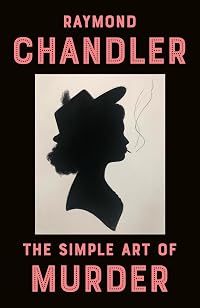
The Simple Art of Murder
by Raymond Chandler
On This Page
Description
In The Simple Art of Murder, Raymond Chandler, a master of hard-boiled detective fiction, presents a collection of his most gripping short stories along with his seminal essay on crime writing. The collection highlights Chandler's signature style-sharp dialogue, complex characters, and gritty realism-that helped shape the noir genre. Through stories like Finger Man and Trouble Is My Business, Chandler's iconic detective, Philip Marlowe, navigates the dark underbelly of Los Angeles, where show more corruption and moral ambiguity reign. At the heart of the collection is the essay The Simple Art of Murder, where Chandler critiques traditional detective fiction and lays out his philosophy for writing a new kind of crime story-one grounded in the harsh realities of life and driven by flawed but morally driven detectives. His essay has become a defining statement for the noir genre, emphasizing the importance of style, character, and authenticity. This book is essential for fans of crime fiction, providing not only thrilling detective stories but also a glimpse into Chandler's vision of the genre he helped revolutionize. show lessTags
Recommendations









Member Recommendations

by anonymous user
by anonymous user
by anonymous user
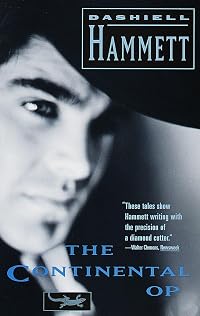
uncultured In the 1930’s, Frederick Nebel was just as big a draw as Dashiell Hammett and Raymond Chandler—but because he never transitioned to novels, his works were lost to history...until Altus Press came along. And even if his prose doesn’t quite reach the heights Chandler’s does, over the course of this series starrring hard-boiled police chief MacBride, and hard-drinking newshound Kennedy, his fictional Richmond City feels every bit so real as Chandler’s Los Angeles.
Member Reviews
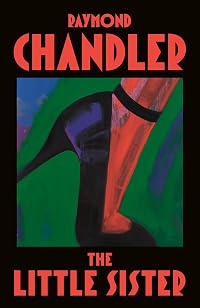
Hey, I got rooked! There’s a version of this that has 8 stories -I only got 4. Oh well, all good, this is what I had, and this is what I remember reading years ago. I pulled it out of the TBR pile after reading “Little Sister”, expressly to reread the essay. The essay starts off a little grumpy, but when he gets around to taking shots at the “Col Mustard in the Drawing Room with the Candlestick” crowd, he’s on the money and pretty funny. And there’s a few notable quotables on the nature of reading in general that are all true.
The 4 stories in this PB -Spanish Blood, I’ll Be Waiting, The King in Yellow and Pearls are a Nuisance, are all good stuff, Spanish Blood is the strongest. Pearls are a Nuisance keeps on being show more compared in online reviews to PG Wodehouse. I sure don’t see that past the fact that the central protagonist is rich. It’s more of a bromance between a pair of gorillas in suits, and a reverent hymn to unrepentant hard drinking.
There is a jewelry robbery in a Wodehouse story - I think it's a Jeeves story where Aunt Agatha thinks she's been robbed in a hotel room. Can't remember the name of the story... show less
The 4 stories in this PB -Spanish Blood, I’ll Be Waiting, The King in Yellow and Pearls are a Nuisance, are all good stuff, Spanish Blood is the strongest. Pearls are a Nuisance keeps on being show more compared in online reviews to PG Wodehouse. I sure don’t see that past the fact that the central protagonist is rich. It’s more of a bromance between a pair of gorillas in suits, and a reverent hymn to unrepentant hard drinking.
There is a jewelry robbery in a Wodehouse story - I think it's a Jeeves story where Aunt Agatha thinks she's been robbed in a hotel room. Can't remember the name of the story... show less
Unlike many, I was absolutely delighted by the title essay of this collection; unfortunately, thus far the rest of the stories have yet to follow suit, and it is ironic that I could identify the murderer immediately after their initial appearance in "Spanish Blood" after the entire previous essay was spent railing against the formulaic. This is, I suppose, simply a good example of how an author's prejudices can shoot holes in their talent. Most of the other stories fell into the same category, except (perhaps also ironically) the last one, Pearls are a Nuisance, which was delightfully sharp.
Chandler's in my top 3 or 4 crime fiction authors. Who the other 2 or 3 are will become obvious as I continue thru the mysteries that I've read (not that I expect anyone to care!). This is a collection of short stories & I prefer novels - hence the "3". Chandler's one of the few mystery writers to really impress me w/ his prose, w/ his turns of phrase. Sometimes the writing jogs my mind much more than pulp usually does. The writing gets outside of clichés w/ stunning placement of slang & a deep feeling for character. My only criticism of Chandler is that he praised himself over Hammett. Hammett, for me, will probably always be the 'best' writer in this genre (although Ellroy is a recent prime contender).
Worth owning for the opening essay; his closing words on the detective hero are unexpectedly moving. The rest of this collection is composed of short stories pre-dating Marlowe, a fascinating glimpse into the development of both Chandler as an author and Marlowe as a character.
Four great mysteries and a wonderful essay on mystery writing by Raymond Chandler. Pearls are a Nuisance,, the last story is great. It's humorous and mysterious and literary...a tough combination in my book.
Raymond Chandler's The Simple Art of Murder is a collection of short stories that he submitted over the years to pulp magazines and is prefaced with an essay he wrote for the Atlantic Monthly about mystery and detective stories. Almost all of the stories are "private eye" tales that take place in the Los Angeles area. They are chock-full of seedy musicians, sly broads, crooked cops and indecipherable slang -- and guns ... lots and lots of guns. Any reader would be hard-pressed to find a truly honest or wholesome character in one of these stories.
However, one story stood out -- Pearls Are a Nuisance -- in that the main character is quite different from any other of Chandler's creations. Walter Gage is an upstanding if somewhat show more trust-fundish citizen with an upper-crust vocabulary and a trusting nature. This is the one story with a true twist and a bit of heart and, frankly, the only one without a murder.
http://webereading.com/2009/11/simple-art-of-short-detective-stories.html show less
However, one story stood out -- Pearls Are a Nuisance -- in that the main character is quite different from any other of Chandler's creations. Walter Gage is an upstanding if somewhat show more trust-fundish citizen with an upper-crust vocabulary and a trusting nature. This is the one story with a true twist and a bit of heart and, frankly, the only one without a murder.
http://webereading.com/2009/11/simple-art-of-short-detective-stories.html show less
This book takes its title from the first of five entries. Rather than a short story, it is an essay by Raymond Chandler giving his defining opinion on the art of the myster. Chandler critiques some well k own mysteries and characters: “The Red House Mystery: by A.A. Milne (Milne’s only mystery), Dorothy Sayer’s “Busman’s Holiday,” authors Agatha Christie, Dashiell Hammett and others of the genre. It is an interesting read with the comparisons and his perspective of the subject of mystery writers and their books.
The next three stories are along the usual lines that Chandler is known for: a cop who is set up in a frame and finds he has to be the one to untangle the net around him. Two stories take place in hotels, involving show more the hotel detectives and some questionable guests.
The fourth one is more along the lines of P.G. Wodehouse. Walter, the main character, speaks in in a very educated manner, seems to have pots of money and time to spare. He receives a call, one morning, from Ellen Macintosh, his fianceé. She is nurse to Mrs. Penruddock, a very wealthy widow.
It seems Mrs. Penruddock’s pearl necklace has been stolen and the suspect is a chauffeur who worked for Mrs. Penruddock for a few months and suddenly left. Ellen feels that Walter should be able to find the suspect and get the pearls back and not involve the police. It seems the pearls are fake and Ellen doesn’t want it known and embarrass Mrs. Penruddock.
Walter manages to locate the chauffeur, one Mr. Henry Eichelberger. His excuse for looking Eichelberger up is that Eichelberger tried to kiss Ellen and Walter plans to make sure it doesn’t happen again. This meeting is the start of a madcap series of events as the two men work together to recover the stolen pearls. Shades of Bertie and Jeeves! show less
The next three stories are along the usual lines that Chandler is known for: a cop who is set up in a frame and finds he has to be the one to untangle the net around him. Two stories take place in hotels, involving show more the hotel detectives and some questionable guests.
The fourth one is more along the lines of P.G. Wodehouse. Walter, the main character, speaks in in a very educated manner, seems to have pots of money and time to spare. He receives a call, one morning, from Ellen Macintosh, his fianceé. She is nurse to Mrs. Penruddock, a very wealthy widow.
It seems Mrs. Penruddock’s pearl necklace has been stolen and the suspect is a chauffeur who worked for Mrs. Penruddock for a few months and suddenly left. Ellen feels that Walter should be able to find the suspect and get the pearls back and not involve the police. It seems the pearls are fake and Ellen doesn’t want it known and embarrass Mrs. Penruddock.
Walter manages to locate the chauffeur, one Mr. Henry Eichelberger. His excuse for looking Eichelberger up is that Eichelberger tried to kiss Ellen and Walter plans to make sure it doesn’t happen again. This meeting is the start of a madcap series of events as the two men work together to recover the stolen pearls. Shades of Bertie and Jeeves! show less
Members
- Recently Added By
Lists

Anthony Boucher's Best Crime Fiction of the Year
115 works; 5 members

Haycraft Queen Cornerstones
181 works; 3 members
Author Information

278+ Works 47,969 Members
Raymond Chandler was born in Chicago, Illinois on July 23, 1888. Before becoming a professional writer in 1933, he worked as a reporter, an accountant, bookkeeper, and auditor. He wrote several novels featuring private detective Philip Marlowe including The Big Sleep, The High Window, The Lady in the Lake, The Little Sister, and The Long Goodbye. show more In addition to novels and short stories, he wrote screenplays. He won two academy awards, for Double Indemnity (1944) and The Blue Dahlia (1946). He died on March 26, 1959. (Bowker Author Biography) show less
Awards and Honors
Distinctions
Notable Lists
Series
Belongs to Publisher Series
Work Relationships
Is contained in
Contains
Common Knowledge
- Canonical title
- The Simple Art of Murder
- Original title
- Pearls Are a Nuisance/Finger Man/The King in Yellow/The Simple Art of Murder
- Original publication date
- 1939/1933/1938/1950
- First words
- Fiction in any form has always intended to be realistic.
- Last words
- (Click to show. Warning: May contain spoilers.)She sat very still and watched him, her face cupped in her long delicate hands with the cherry-colored nails.
- Blurbers
- McDonald, Ross
- Original language
- English
- Disambiguation notice
- This work is the collection which includes twelve short stories and the essay "The Simple Art of Murder"; please do not combine with the essay.
Classifications
Statistics
- Members
- 1,533
- Popularity
- 15,029
- Reviews
- 17
- Rating
- (3.87)
- Languages
- 8 — Czech, Dutch, English, German, Italian, Portuguese, Spanish, Swedish
- Media
- Paper, Ebook
- ISBNs
- 22
- ASINs
- 24