On This Page
Description
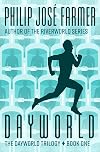
"Every bit as appealing as the Riverworld saga," this brilliant high-concept dystopian novel features an overpopulated Earth under strict government control (Booklist).Only by being watched may you become free.
It's 3414 AD, the rise of the New Era, and Earth has become massively overpopulated. The worldwide government has recently implemented a system that allows human civilization to continue: Each person lives only one day a week. For the other six he or she is "stoned"—placed in show more suspended animation. To keep everyone to their particular day, the activities of all citizens of the Organic Commonwealth of Earth are closely monitored.
Jeff Caird is an "immer," one of the rebels secretly working to infiltrate the government to gain influence and loosen the surveillance on citizens. He's also a "daybreaker," avoiding stoning and thereby conscious all seven days a week. He operates under a different identity every day, delivering sensitive messages between rebels.
Jeff is dedicated to his cause, but maintaining seven separate identities, including jobs, families, and friends, is no small feat, and when the juggling finally begins to take its toll, the immers determine that Jeff is a liability who must be eliminated. Now, he's fighting for survival and on the run from both his fellow rebels and the authoritarian government that considers his mental state incurable and punishable by death.
From the Hugo Award–winning author of the Riverworld and World of Tiers series, Dayworld is "an excellent novel, set in a constructed society that is unique and fascinating" (Science Fiction Chronicle).
. show less
Tags
Recommendations
















Member Reviews
Dayworld – Philip Jose Farmer (1986, my Edition 1986 1st Edition Paperback)
Dayworld is an expansion of Philip Jose Farmers 1971 short story The Sliced-Crosswise Only-On-Tuesday World, which I personally would have loved for the title of this book. The story is set in a future where people only live one day out of seven and for the other 6 days they are in hibernation (or stoned). This situation occurred due to over population and use of resources.
This was a reread, but I’d not read it since publication (1985), therefore I could only remember the brief outline of the ideas within the story.
The plot follows Jefferson Caird an Organic (policeman) who is in fact a Daybreaker, someone who lives illegally across multiple days. He also show more belongs to a group called the Immers that are a secret organisation that are secretly working to create a better government. We follow him as he struggles to balance 7 lives with 7 families and 7 jobs.
One thing Philip Jose Farmer is always good at is creating a believable world, no matter how bizarre it may seem (Read the Riverworld books for the Ultimate in this), The world shown in Dayworld feels fully realised.
The book starts of with the feeling of a detective story with Caird’s investigation in his position as an Organic policeman. We then go on to explore his ‘personalities’ as he moves from day to day whilst he juggles his lives. As the story develops, he has more involvement with the Immers and his life as a Daybreaker is threatened.
Philip Jose Farmers Dayworld is not as strange as some he has created in his fiction, it does though feel so believable and developed. There is a foreword in the book in which he explains the differing Calendars (one for the days lived awake and one for real time). He also mentions that names do not necessarily define someone’s Sex, just because someone has what we see as a Female name does not mean they are female, as he states ‘Customs change’
The world created within the novel comes back to a subject a lot of Science Fiction explored from the late 60’s to the 80’s that of overpopulation. One of the most notable in this sub-genre is Harry Harrison’s Make Room! Make Room! (you need to read it). Farmer shows a much different world to Harrisons, in some ways the extreme controls are more severe than in Harrison’s story and the Sociological ideas in the control of the population explored. Farmer manages to show how different a world would be with these controls in place. What is interesting about both books is they start by using a detective story as the basis to explore the world. This is because a Policeman investigating crimes can explore all levels of society giving the reader a way to see the world the author has created.
I really enjoy this sort of Dystopian world and I really like the way the use of aa Detective procedural slowly uncovers far more within the world. I don’t think it’s farmers best work, but it is a highly enjoyable book with a great and inventive take on the problems of over population. I’m looking forward to following on by reading the sequels that I have never read before.
Goodreads ratings are pretty limiting, my benchmark using those ratings are anything 3 or above is a good strong recommendation that I would happily reread at some point
My Blog http://www.backawayfromthedonkey.co.uk/ show less
Dayworld is an expansion of Philip Jose Farmers 1971 short story The Sliced-Crosswise Only-On-Tuesday World, which I personally would have loved for the title of this book. The story is set in a future where people only live one day out of seven and for the other 6 days they are in hibernation (or stoned). This situation occurred due to over population and use of resources.
This was a reread, but I’d not read it since publication (1985), therefore I could only remember the brief outline of the ideas within the story.
The plot follows Jefferson Caird an Organic (policeman) who is in fact a Daybreaker, someone who lives illegally across multiple days. He also show more belongs to a group called the Immers that are a secret organisation that are secretly working to create a better government. We follow him as he struggles to balance 7 lives with 7 families and 7 jobs.
One thing Philip Jose Farmer is always good at is creating a believable world, no matter how bizarre it may seem (Read the Riverworld books for the Ultimate in this), The world shown in Dayworld feels fully realised.
The book starts of with the feeling of a detective story with Caird’s investigation in his position as an Organic policeman. We then go on to explore his ‘personalities’ as he moves from day to day whilst he juggles his lives. As the story develops, he has more involvement with the Immers and his life as a Daybreaker is threatened.
Philip Jose Farmers Dayworld is not as strange as some he has created in his fiction, it does though feel so believable and developed. There is a foreword in the book in which he explains the differing Calendars (one for the days lived awake and one for real time). He also mentions that names do not necessarily define someone’s Sex, just because someone has what we see as a Female name does not mean they are female, as he states ‘Customs change’
The world created within the novel comes back to a subject a lot of Science Fiction explored from the late 60’s to the 80’s that of overpopulation. One of the most notable in this sub-genre is Harry Harrison’s Make Room! Make Room! (you need to read it). Farmer shows a much different world to Harrisons, in some ways the extreme controls are more severe than in Harrison’s story and the Sociological ideas in the control of the population explored. Farmer manages to show how different a world would be with these controls in place. What is interesting about both books is they start by using a detective story as the basis to explore the world. This is because a Policeman investigating crimes can explore all levels of society giving the reader a way to see the world the author has created.
I really enjoy this sort of Dystopian world and I really like the way the use of aa Detective procedural slowly uncovers far more within the world. I don’t think it’s farmers best work, but it is a highly enjoyable book with a great and inventive take on the problems of over population. I’m looking forward to following on by reading the sequels that I have never read before.
Goodreads ratings are pretty limiting, my benchmark using those ratings are anything 3 or above is a good strong recommendation that I would happily reread at some point
My Blog http://www.backawayfromthedonkey.co.uk/ show less
The premise of this book is that there are so many people living on Earth that everyone only gets one day a week. The rest of the time they are frozen solid and someone else lives in their apartment and works their job. However, some people are Daybreakers which means they assume 7 different identities and stay unfrozen. Great writing to support a great idea.
In this future world, everyone lives on one day. Some people live on Monday, some live on Tuesday, etc. They are “stoned” or put into a type of hibernation that makes their bodies stiff and impervious to harm during the rest of the week. Caird doesn’t live on only one day; he lives seven different lives on seven different days. He is an immer, the children of Immerson, a group that hopes to take over the present government.
This new way of living makes life seem like a utopia with no over- crowding or pollution. The government takes care of everything; food, clothing, housing, just as long as you comply with the laws. Everyone is stoned at the same time each night and revived at the same time each day. Each person has been show more conditioned against violence and slovenly behavior. Everyone looks alike: tall, thin, healthy, dark skinned. Each day has its own culture and fashion. Religions are aloud as long as they don’t state they are the only true belief system. The scary part is that the government has such firm control over its people and everyone is accustomed to accepting everything the government does or says. The rulers can stone a person and put them out of the way forever if they become a problem.
This is an intelligent science fiction novel with spy thriller elements. Caird isn’t just threatened by the authorities; a homicidal maniac has targeted him and his wives in each day. The author muses on the freedoms of individuals. One daybreaker that appears throughout the book, but never is found by the organics, the name used for police, is an orthodox Jew named Gril. When Caird finally asks him why he has become a daybreaker he states that the laws of God out way the laws of the ruling government.
I enjoyed reading this novel and will be on the lookout for more installments in the Dayworld series. show less
This new way of living makes life seem like a utopia with no over- crowding or pollution. The government takes care of everything; food, clothing, housing, just as long as you comply with the laws. Everyone is stoned at the same time each night and revived at the same time each day. Each person has been show more conditioned against violence and slovenly behavior. Everyone looks alike: tall, thin, healthy, dark skinned. Each day has its own culture and fashion. Religions are aloud as long as they don’t state they are the only true belief system. The scary part is that the government has such firm control over its people and everyone is accustomed to accepting everything the government does or says. The rulers can stone a person and put them out of the way forever if they become a problem.
This is an intelligent science fiction novel with spy thriller elements. Caird isn’t just threatened by the authorities; a homicidal maniac has targeted him and his wives in each day. The author muses on the freedoms of individuals. One daybreaker that appears throughout the book, but never is found by the organics, the name used for police, is an orthodox Jew named Gril. When Caird finally asks him why he has become a daybreaker he states that the laws of God out way the laws of the ruling government.
I enjoyed reading this novel and will be on the lookout for more installments in the Dayworld series. show less
An overpopulated 35th-century world where people are stoned, suspended animation, for six days and live only one day a week. Jeff Caird, a daybreaker, belongs to a rebel group called the Immers, who illegally live every day of the week by assuming seven different personalities, jobs, and lives to evade authorities.
A benevolent but proscriptive world government manages overpopulation by putting 6/7ths of the world's population into stasis. People live their lives by a 'vertical calendar', where they are unfrozen for a single day a week. Millions of people only ever know Tuesday, or Wednesday.
This scenario sets the scene for a new type of criminal. A 'daybreaker' who moves from one day to the next, maintaining different identities in a society that has evolved so that each day has a different culture.
Dayworld's central idea is breathtakingly imaginative, and it was a real pleasure to encounter such a new idea. Unfortunately, the exotic set up is let down by the plot which was basically a fairly standard thriller. The world created by the author was show more underexploited, leaving the reader feeling a little dissatisfied by the end of the book.
The forward was strange. In an unusual act for the genre, the author speaks directly to the reader explaining some of the conventions of the world before the story starts. It seemed unnecessary, as the blurb on the back of the book established the scenario and the details unfolded quite clearly during the course of the book.
Despite the shortcomings, the book was easy to digest, delightful in concept, and worth the hours it took to read. show less
This scenario sets the scene for a new type of criminal. A 'daybreaker' who moves from one day to the next, maintaining different identities in a society that has evolved so that each day has a different culture.
Dayworld's central idea is breathtakingly imaginative, and it was a real pleasure to encounter such a new idea. Unfortunately, the exotic set up is let down by the plot which was basically a fairly standard thriller. The world created by the author was show more underexploited, leaving the reader feeling a little dissatisfied by the end of the book.
The forward was strange. In an unusual act for the genre, the author speaks directly to the reader explaining some of the conventions of the world before the story starts. It seemed unnecessary, as the blurb on the back of the book established the scenario and the details unfolded quite clearly during the course of the book.
Despite the shortcomings, the book was easy to digest, delightful in concept, and worth the hours it took to read. show less
Today won't miss her. They'll think she's off on her own chase, if they think about her at all. Castor's kept them pretty busy. And what happens tomorrow? Will Snick appear at organics HQ with her visa and her orders from Sunday? No, she won't. So how will Friday know that she's supposed to appear? It won't, and the following days won't know about her, either. Nobody will know that she's missing until Sunday comes and she doesn't report to her superiors. Sunday can do nothing about it except to leave inquiries for the following days. When Sunday comes again, it will get the news that Snick disappeared on Thursday.
In a future where everyone is awake 1 day out of 7 and in suspended animation for the other 6 days, a few people illegally show more avoid suspended animation and live a different life on each day of the week. The original Tuesday identity of this novel's hero is Jeff Cairns, an organic (police officer), while on the other days he has different names, careers and even families. Everything is going smoothly until an insane man with a grudge against him becomes a daybreaker in his attempts to kill Jeff, which threatens to bring Jeff's illegal activities to the attention of the authorities.
I read and enjoyed this book a long time ago, so I was very happy when I found a copy for 50p in a charity shop. show less
In a future where everyone is awake 1 day out of 7 and in suspended animation for the other 6 days, a few people illegally show more avoid suspended animation and live a different life on each day of the week. The original Tuesday identity of this novel's hero is Jeff Cairns, an organic (police officer), while on the other days he has different names, careers and even families. Everything is going smoothly until an insane man with a grudge against him becomes a daybreaker in his attempts to kill Jeff, which threatens to bring Jeff's illegal activities to the attention of the authorities.
I read and enjoyed this book a long time ago, so I was very happy when I found a copy for 50p in a charity shop. show less
It’s an average book. The plot is decently well placed. I had a hard time getting into caring for Caird because of the multiple personality thing. Partially because each personality was so different and so I never had the requisite ink to care for them. Partially because each personality was so different and violated common sense in that he subsumed the others so totally he couldn’t remember other days. And partially because toward the end of the book he becomes a complete multiple personality disorder nutcase, with his personalities fragmenting and talking to each other in his head.
(Full review at my blog)
(Full review at my blog)
Members
- Recently Added By
Author Information

366+ Works 36,046 Members
Philip José Farmer was born in North Terre Haute, Indiana on January 26, 1918. He worked in a steel mill while attending Bradley University at night and writing in his spare time. In 1952, his story The Lovers, in which a human has sex with an alien, was published in a pulp magazine called Startling Stories and won him the Hugo Award in 1953 for show more most promising new author. He quit his job to become a full-time writer, but a string of misfortunes eventually forced him to take jobs as a manual laborer. He worked as a technical writer from 1956 to 1970, but continued writing science fiction. He finally found success in the 1960's with the Riverworld series. He wrote more than 75 books throughout his lifetime including the Dayworld series and the World of Tiers series. He also wrote short stories. He won the Hugo award for best novella in 1968 for Riders of the Purple Wage and for best novel in 1972 for To Your Scattered Bodies Go. In 1988, he was the recipient of the Writers of the Past Award and the Nova for best book for Riverworld. In 2001 he was awarded the Grand Master Award and the World Fantasy Life Achievement Award. He died on February 25, 2009 at the age of 91. (Bowker Author Biography) show less
Some Editions
Series

Belongs to Publisher Series
Etiqueta Futura (5)
Common Knowledge
- Original title
- Dayworld
- Original publication date
- 1985
- People/Characters
- Jeff Caird
- Dedication
- To my latest grandchild, Thomas Jose Josephsohn, born March 25, 1983. May he live to be old and be always as bright, friendly, outgoing, cheeful, curious, and healthy as he is now.
- First words
- When the hounds bay, the fox and the hare are brothers.
- Last words
- (Click to show. Warning: May contain spoilers.)The thing, which had become a man, would not be the prisoner known as Jefferson Cervantes Caird.
- Original language*
- English
*Some information comes from Common Knowledge in other languages. Click "Edit" for more information.
Classifications
Statistics
- Members
- 886
- Popularity
- 30,436
- Reviews
- 9
- Rating
- (3.52)
- Languages
- 8 — Dutch, English, German, Italian, Japanese, Portuguese, Romanian, Spanish
- Media
- Paper, Ebook
- ISBNs
- 19
- ASINs
- 13