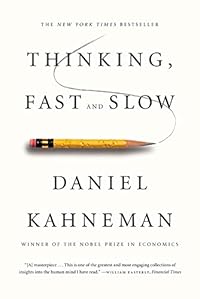
Thinking, Fast and Slow
by Daniel Kahneman
On This Page
Description
In this work the author, a recipient of the Nobel Prize in Economic Sciences for his seminal work in psychology that challenged the rational model of judgment and decision making, has brought together his many years of research and thinking in one book. He explains the two systems that drive the way we think. System 1 is fast, intuitive, and emotional; System 2 is slower, more deliberative, and more logical. He exposes the extraordinary capabilities, and also the faults and biases, of fast show more thinking, and reveals the pervasive influence of intuitive impressions on our thoughts and behavior. He reveals where we can and cannot trust our intuitions and how we can tap into the benefits of slow thinking. He offers practical and enlightening insights into how choices are made in both our business and our personal lives, and how we can use different techniques to guard against the mental glitches that often get us into trouble. This author's work has transformed cognitive psychology and launched the new fields of behavioral economics and happiness studies. In this book, he takes us on a tour of the mind and explains the two systems that drive the way we think and the way we make choices. show lessTags
Recommendations





Member Recommendations
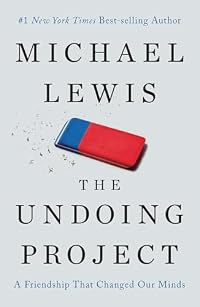
RagnarOlafson Referenced numerous times in this book. An entertaining read by itself.
91
hipdeep Recommended because it's also a loving tribute to a scholarly collaborator, even though the areas of psychology discussed (and the style) are deeply different.
Member Reviews
Riddle me this:
"If it takes 5 machines 5 minutes to make 5 widgets, how long would it take 100 machines to make 100 widgets"—100 minutes or 5 minutes (65)?
If you answered "100 minutes," you're not alone ... and you're dead wrong. Think about it. In Thinking, Fast and Slow, Kahneman explains why.
We have two types of thinking systems (thus, the title of the book). System one is intuitive and answers quickly. System two requires more thought and answers slowly. Both systems are valuable and necessary. Kahneman's spent his lifetime studying these systems and has developed and published many experiments over the years (including the one above) which exploit the flaws in our systems.
In Thinking, Fast and Slow, Kahneman helps us to recognize show more when our minds let us down (i.e. narrative fallacies, planning fallacies, WYSIATI, etc.) and gives us the tools to recognize our own errors.
This book is detailed, thorough, and absolutely fascinating. Kahneman walks the reader through many of the test scenarios he developed over the years. Even if you prepare yourself for the "trick" and try to answer correctly, human nature wins out. It's certainly a good dose of humility!
Many of these experiments were carried out with his friend and colleague, Amos Tversky, to whom the book is dedicated. The friendship between them and their mutual fascination with how the mind works makes this book on sociology border on memoir at times.
Read and be fascinated at your incredibly powerful and deeply flawed mind! show less
"If it takes 5 machines 5 minutes to make 5 widgets, how long would it take 100 machines to make 100 widgets"—100 minutes or 5 minutes (65)?
If you answered "100 minutes," you're not alone ... and you're dead wrong. Think about it. In Thinking, Fast and Slow, Kahneman explains why.
We have two types of thinking systems (thus, the title of the book). System one is intuitive and answers quickly. System two requires more thought and answers slowly. Both systems are valuable and necessary. Kahneman's spent his lifetime studying these systems and has developed and published many experiments over the years (including the one above) which exploit the flaws in our systems.
In Thinking, Fast and Slow, Kahneman helps us to recognize show more when our minds let us down (i.e. narrative fallacies, planning fallacies, WYSIATI, etc.) and gives us the tools to recognize our own errors.
This book is detailed, thorough, and absolutely fascinating. Kahneman walks the reader through many of the test scenarios he developed over the years. Even if you prepare yourself for the "trick" and try to answer correctly, human nature wins out. It's certainly a good dose of humility!
Many of these experiments were carried out with his friend and colleague, Amos Tversky, to whom the book is dedicated. The friendship between them and their mutual fascination with how the mind works makes this book on sociology border on memoir at times.
Read and be fascinated at your incredibly powerful and deeply flawed mind! show less
I was prompted to read this for the sole reason that it gets referenced in so many other books. It lived up to the expectation. Kahneman was a pioneer in the space where human psychology confounds traditional economic theory. Now he's a venerable storyteller about that same space. The main point of the book is that the human mind uses two systems of thinking. One is fast, instinctual, and automatic. The other is slow, logical, and conceptual. Much of our behavior and later evaluation of it can be described by how those two systems are used under varying amounts of time pressure. The book is comprised of thirty-eight short chapters covering key concepts like regression to the mean, illusions of validity, and the importance of framing show more when evaluating options. I found his coverage of prospect theory especially complete and understandable compared to other descriptions I've encountered. show less
The qualities of human nature described in Thinking, Fast and Slow are already known to all of us at some level. We are all taught in society to believe in the rational, thinking human being as distinct from his animal peers, yet as this book excellently details, there are plenty of ways in which our seemingly rational decisions can be bent and perverted by various forms of bias. Daniel Kahneman details these two seemingly incongruous facets of our nature as two 'distinct' halves: System 1 represents our autonomous, unthinking, reflex and subconscious reactions, whereas System 2 is that logical, calculating being we consider ourselves to be. Much of the relevant research covered in this volume was pioneered and conducted by Kahneman and show more his late colleague Amos Tversky, to whom this volume is dedicated.
At root, the interplay between System 1 and System 2 rests upon the fact that we are naturally adapted to choose the path of least resistance, i.e. we make decisions which require the least amount of effort. Whilst this does not necessarily mean that we (or our System 2s) are not making the decisions, it does sometimes result in our System 2s acting merely as auditors of the information being passed on by System 1. If that information appears to fit the facts, it is taken at face value, unchanged and unedited. As a result, this 'quick thinking' leads to errors and biases of which we are almost entirely unaware.
As a summary of decades of research, the book deals with a lot of extremely interesting aspects of these decision-making processes. Each of these is handled in turn and alone, although many of them are linked and could in some ways represent different impressions of the same phenomenon. For example, an issue known as 'anchoring' is investigated, a truly staggering anomaly in which a decision can be influenced by an entirely unrelated and random suggestion placed before us: Kahneman provides us with the example of a set of experienced judges whose sentencing decisions were seen to be tilted by the results of a dice roll.
There is a lot of ground to summarise within these pages, and Kahneman does an excellent job of presenting some fairly mundane experimental data in a way in which it becomes clear to the layman, how insightful and potent the results truly are. The first half of the book in particular is an extremely fluid read, the experimental data plays second fiddle to clear evaluations of both experiments and their results. Whilst some aspects are dealt with purely theoretically, others are highlighted in terms of their effect on certain people in society, and Kahneman makes no bones about pointing out the absurd decisions of stock brokers, businessmen, or even his own psychology students. Another nice feature of the book is that many of the chapters start with a little test which readers themselves can do, becoming a part of the experiments, easily the best way to highlight precisely how 'un-rational' our minds can truly function.
The overarching irony of this book is that it seems to want to prove one of the theories explored between its very covers, that of our 'experiencing' and 'remembering' selves. The evidence suggests that even if the vast majority of an experience was born with enjoyment, if the end was tainted, our memory of the positive experience will be overridden by the negative. Unfortunately, this book is guilty of the very same: it opens beautifully with some lucid and unhampered prose, plenty of example tests and real world extrapolations, occasional anecdotes and witty asides. Yet the latter half of the book feels like it was written by a different Kahneman or for a different reader; it is turgid, almost lethargic, sticky with academic language, no longer peppered with as many human insights, and devoid of example tests for the reader to take part in.
Despite this impression of it being a book of two halves, it is nevertheless highly recommendable to anyone with even a passing interest in psychology or the human mind. One needn't take away any lessons from the book's insights, but it would still be nice to think that by giving this book five stars, I'm successfully overcoming the biassed suggestions of System 1 and my 'remembering self', and basing my judgement on the rational observations of System 2 and my 'experiencing self'. Or perhaps I'm being swayed by some anchoring I'm still unaware of... show less
At root, the interplay between System 1 and System 2 rests upon the fact that we are naturally adapted to choose the path of least resistance, i.e. we make decisions which require the least amount of effort. Whilst this does not necessarily mean that we (or our System 2s) are not making the decisions, it does sometimes result in our System 2s acting merely as auditors of the information being passed on by System 1. If that information appears to fit the facts, it is taken at face value, unchanged and unedited. As a result, this 'quick thinking' leads to errors and biases of which we are almost entirely unaware.
As a summary of decades of research, the book deals with a lot of extremely interesting aspects of these decision-making processes. Each of these is handled in turn and alone, although many of them are linked and could in some ways represent different impressions of the same phenomenon. For example, an issue known as 'anchoring' is investigated, a truly staggering anomaly in which a decision can be influenced by an entirely unrelated and random suggestion placed before us: Kahneman provides us with the example of a set of experienced judges whose sentencing decisions were seen to be tilted by the results of a dice roll.
There is a lot of ground to summarise within these pages, and Kahneman does an excellent job of presenting some fairly mundane experimental data in a way in which it becomes clear to the layman, how insightful and potent the results truly are. The first half of the book in particular is an extremely fluid read, the experimental data plays second fiddle to clear evaluations of both experiments and their results. Whilst some aspects are dealt with purely theoretically, others are highlighted in terms of their effect on certain people in society, and Kahneman makes no bones about pointing out the absurd decisions of stock brokers, businessmen, or even his own psychology students. Another nice feature of the book is that many of the chapters start with a little test which readers themselves can do, becoming a part of the experiments, easily the best way to highlight precisely how 'un-rational' our minds can truly function.
The overarching irony of this book is that it seems to want to prove one of the theories explored between its very covers, that of our 'experiencing' and 'remembering' selves. The evidence suggests that even if the vast majority of an experience was born with enjoyment, if the end was tainted, our memory of the positive experience will be overridden by the negative. Unfortunately, this book is guilty of the very same: it opens beautifully with some lucid and unhampered prose, plenty of example tests and real world extrapolations, occasional anecdotes and witty asides. Yet the latter half of the book feels like it was written by a different Kahneman or for a different reader; it is turgid, almost lethargic, sticky with academic language, no longer peppered with as many human insights, and devoid of example tests for the reader to take part in.
Despite this impression of it being a book of two halves, it is nevertheless highly recommendable to anyone with even a passing interest in psychology or the human mind. One needn't take away any lessons from the book's insights, but it would still be nice to think that by giving this book five stars, I'm successfully overcoming the biassed suggestions of System 1 and my 'remembering self', and basing my judgement on the rational observations of System 2 and my 'experiencing self'. Or perhaps I'm being swayed by some anchoring I'm still unaware of... show less
In order to write these comments I must set aside my natural system 1 mode of being (lazily automatic) and enter the far more arduous mode, System 2, and THINK for MYSELF. We don't spend as much time actually thinking in this mode as we would like to believe we do (which is itself a non-rational and emotionally based stance of System 1). Thinking is HARD WORK. Our brains and bodies are programmed to conserve energy as well as to protect us from . . . well . . . ourselves as THINKING not only uses a lot of energy but is often bewilderingly difficult and overwhelming. (As in, having to change your mind, admit you have no idea what to do, etcetera.) You know the difference between 1 and 2. The former tends to work smoothly and show more automatically and you like best being in that mode. Anything you prefer to put off or avoid doing altogether is probably a System 2 activity, from balancing your checkbook to deciding who to vote for or choosing the right school for your child or evaluating care for your grandmother. All of these choices most of you (including me) would love to leave to others. (And all too often do.)
Possibly the most crucial takeaway is accepting that we are not capable, not a single one of us, of making rational decisions all the time. Some may succeed more often than others, but really, no one. In fact, those who insist on rationality as the basis for all human endeavor are likely to be the most deluded of all. They want to believe themselves purely rational, but belief is emotionally based and not rational. Sorry.
Are you aware that the way a question is put to you affects how you answer it? (The researches call this 'focalism'.) So if you are asked to put a check in a box to donate your organs (on yr driver's license renewal) you are less likely to check that box. However, if you are asked to check that box if you DON'T want to donate your organs you leave the box blank. Why? Didn't you immediately have an ugh feeling for the former? I did. And pretty much no feeling at all at the second choice? I'm fine with that. You have to overcome an instinctive reluctance (System 1) to make the rational (System 2) choice. Or how about this. Are you aware that all unconsciously your answer to an unrelated question is affected by very recent luck or loss (literally, like finding a dime before someone asks you how you are feeling generally about almost anything, if it is a nice day or whatever.) Or that the way the Experiencing self, moment to moment, is supplanted by the story the Remembered self (which is a System 2 creation) has put together. (Official word is Duration Neglect and you add to it Peak-End Rule-that the most recent thing, the last thing in an experience is what you remember the most, both from System 1). System 1 is a mighty broth of basic instincts, deeply learned skills (driving would be one most of us share), habits that allow us all to make instant decisions, choices, opinions. Usually for the best, but not always. A useful acronym is WYSIATI (What You See Is What There Is) -- what you don't know or see before you, you don't (can't) include in your decisions. (Food labelling is fiendishly clever in this regard. As are many media outlets.) The reality of how we think and decide what to do with our lives is a complicated dance between the two and the better you are at recognizing which mode is needed, the better off you will be.
Much of the research involves having people choose between types of bets -- often bets that appear to be weighted one way or another because of the wording, but are either the same in outcome or biased the opposite of what your System 1 tends to be attracted to. System 2 has to be engaged to make the 'right' choice. I had difficulties with ALL of these questions as my instinct is to recoil (and I mean that) as I find betting and gambling so pointless (losing is the only outcome for the majority, duh) I couldn't wrap my head around any of it. I would likely have been dismissed by the researchers.
An intriguing find in the research is that as regards overall happiness or satisfaction our lives appear to depend on two foundations: Enough money for needs to be met -- curiously, more than that provides nothing, happiness and satisfaction flatten right out. The second piece is having goals and ambitions that are achievable (for some it is making money, btw). This fits in well with the (more philosophical) book on agency that I read not so long ago, by [[Agnes Caillard]]. Another undeniable factor is luck. Good or bad. Although the likelihood is, given the fact that this erratic thing, while beyond our control, tends to affect us all rather evenly--although in greater and lesser degrees depending on what risks a person takes, I would imagine. We must all take some, of course.
Another gem is that we tend to expect happiness from acquisition of material objects rather than from friendships and doing things with others. The officialese for this is using 'affective forecasting' that results in 'miswanting' (oh how I love that word!). Things never win out over fellowship. Take that to heart.
The end of each chapter has a kind of 'summary' in the form of statements that illustrate the points Kahneman just made and they are really helpful. He's a good writer, the clarity is stunning. I cannot recommend [Thinking Fast and Slow] more highly. It is a thoroughly System 2 read from beginning to end, so be patient with yourself if you do take it on. And please do.
***** and then some. show less
Possibly the most crucial takeaway is accepting that we are not capable, not a single one of us, of making rational decisions all the time. Some may succeed more often than others, but really, no one. In fact, those who insist on rationality as the basis for all human endeavor are likely to be the most deluded of all. They want to believe themselves purely rational, but belief is emotionally based and not rational. Sorry.
Are you aware that the way a question is put to you affects how you answer it? (The researches call this 'focalism'.) So if you are asked to put a check in a box to donate your organs (on yr driver's license renewal) you are less likely to check that box. However, if you are asked to check that box if you DON'T want to donate your organs you leave the box blank. Why? Didn't you immediately have an ugh feeling for the former? I did. And pretty much no feeling at all at the second choice? I'm fine with that. You have to overcome an instinctive reluctance (System 1) to make the rational (System 2) choice. Or how about this. Are you aware that all unconsciously your answer to an unrelated question is affected by very recent luck or loss (literally, like finding a dime before someone asks you how you are feeling generally about almost anything, if it is a nice day or whatever.) Or that the way the Experiencing self, moment to moment, is supplanted by the story the Remembered self (which is a System 2 creation) has put together. (Official word is Duration Neglect and you add to it Peak-End Rule-that the most recent thing, the last thing in an experience is what you remember the most, both from System 1). System 1 is a mighty broth of basic instincts, deeply learned skills (driving would be one most of us share), habits that allow us all to make instant decisions, choices, opinions. Usually for the best, but not always. A useful acronym is WYSIATI (What You See Is What There Is) -- what you don't know or see before you, you don't (can't) include in your decisions. (Food labelling is fiendishly clever in this regard. As are many media outlets.) The reality of how we think and decide what to do with our lives is a complicated dance between the two and the better you are at recognizing which mode is needed, the better off you will be.
Much of the research involves having people choose between types of bets -- often bets that appear to be weighted one way or another because of the wording, but are either the same in outcome or biased the opposite of what your System 1 tends to be attracted to. System 2 has to be engaged to make the 'right' choice. I had difficulties with ALL of these questions as my instinct is to recoil (and I mean that) as I find betting and gambling so pointless (losing is the only outcome for the majority, duh) I couldn't wrap my head around any of it. I would likely have been dismissed by the researchers.
An intriguing find in the research is that as regards overall happiness or satisfaction our lives appear to depend on two foundations: Enough money for needs to be met -- curiously, more than that provides nothing, happiness and satisfaction flatten right out. The second piece is having goals and ambitions that are achievable (for some it is making money, btw). This fits in well with the (more philosophical) book on agency that I read not so long ago, by [[Agnes Caillard]]. Another undeniable factor is luck. Good or bad. Although the likelihood is, given the fact that this erratic thing, while beyond our control, tends to affect us all rather evenly--although in greater and lesser degrees depending on what risks a person takes, I would imagine. We must all take some, of course.
Another gem is that we tend to expect happiness from acquisition of material objects rather than from friendships and doing things with others. The officialese for this is using 'affective forecasting' that results in 'miswanting' (oh how I love that word!). Things never win out over fellowship. Take that to heart.
The end of each chapter has a kind of 'summary' in the form of statements that illustrate the points Kahneman just made and they are really helpful. He's a good writer, the clarity is stunning. I cannot recommend [Thinking Fast and Slow] more highly. It is a thoroughly System 2 read from beginning to end, so be patient with yourself if you do take it on. And please do.
***** and then some. show less
I have so long loved and used in my teaching Kahneman's bat and ball puzzle that I have long wanted to read this book. My take on it -- which is not the author's main thrust -- is that learning even relatively basic, first-year college mathematical techniques is a tool to training the mind to get off the System 1 gut reaction launched by the amygdala and bring the prefrontal cortex (PFC) online for the slower but more accurate System 2. For this reason, I wish more of the actual math was taught here. Instead it is glossed over where I think some techniques relating to regression, probability, and Bayes Theorem could be given detailed examples, at least in appendices. Of course, others have stepped in and I found a good step-by-step show more explanation of the blue and green cars example. This would be the better to support "the power of simple statistics to outdo world-renowned experts."
More stuff that struck me:
If I could wave a wand and make all cars self-driving on the best available tech, tens of thousands of American lives would be saved annually, but still people would not be happy because:
I believe using chess (and I suppose math) to self-teach intuition-like patter recognition is a gateway to attaining flow-state mental acuity:
The potentially life-saving System 1 "gut reaction" can delude us:
The author makes political observations which I am sure will make this book divisive:
More stuff that struck me:
If I could wave a wand and make all cars self-driving on the best available tech, tens of thousands of American lives would be saved annually, but still people would not be happy because:
The story of a child dying because an algorithm made a mistake is more poignant than the story of the same tragedy occurring as a result of human error, and the difference in emotional intensity is readily translated into a moral preference.
I believe using chess (and I suppose math) to self-teach intuition-like patter recognition is a gateway to attaining flow-state mental acuity:
They could draw on the repertoire of patterns that they had compiled during more than a decade of both real and virtual experience to identify a plausible option...
Klein elaborated this description into a theory of decision making that he called the recognition-primed decision (RPD) model, which applies to firefighters but also describes expertise in other domains, including chess. The process involves both System 1 and System 2. In the first phase, a tentative plan comes to mind by an automatic function of associative memory—System 1. The next phase is a deliberate process in which the plan is mentally simulated to check if it will work—an operation of System 2. The model of intuitive decision making as pattern recognition develops ideas presented some time ago by Herbert Simon, perhaps the only scholar who is recognized and admired as a hero and founding figure by all the competing clans and tribes in the study of decision making.
...
I quoted Herbert Simon’s definition of intuition in the introduction, but it will make more sense when I repeat it now: “The situation has provided a cue; this cue has given the expert access to
information stored in memory, and the information provides the answer. Intuition is nothing more and nothing less than recognition.” This strong statement reduces the apparent magic of intuition to the everyday experience of memory. We marvel at the story of the firefighter who has a sudden urge to escape a burning house just before it collapses, because the firefighter knows the danger intuitively, “without knowing how he knows.”
The potentially life-saving System 1 "gut reaction" can delude us:
Unless there is an obvious reason to do otherwise, most of us passively accept decision problems as they are framed and therefore rarely have an opportunity to discover the extent to which our preferences are frame-bound rather than reality-bound.
....
Nothing in life is as important as you think it is when you are thinking about it.
Daniel Gilbert and Timothy Wilson introduced the word miswanting to describe bad choices that arise from errors of affective forecasting. This word deserves to be in everyday language. The focusing illusion (which Gilbert and Wilson call focalism) is a rich source of miswanting. In particular, it makes us prone to exaggerate the effect of significant purchases or changed circumstances on our future well-being.
The author makes political observations which I am sure will make this book divisive:
show less
A remarkable feature of libertarian paternalism is its appeal across a broad political spectrum. The flagship example of behavioral policy, called Save More Tomorrow, was sponsored in Congress by an unusual coalition that included extreme conservatives as well as liberals. Save More Tomorrow is a financial plan that firms can offer their employees. Those who sign on allow the employer to increase their contribution to their saving plan by a fixed proportion whenever they receive a raise. The increased saving rate is implemented automatically until the employee gives notice that she wants to opt out of it.
If you walk in the woods at night and see a line across the path, might it be a snake? Luckily your System 1 thought process warns you of danger and you stop. Then System 2 takes over, analyses the situation and realizes the line is just a stick. System 1 is fast, and system 2 is slow. And the problem arises when we imagine our system 1 cnoclusion doesn’t need any further thought.
Optical illusions are familiar illustrations of fast and slow thinking. When we’ve been fooled before, we recognize the illusion and immediately jump to looking with system 2. But logical illusions, emotional illusions and cultural illusions can leave us existing in a world that’s not quite as solid and real as we imagine.
Are law courts fair? Are show more inoculations safe? Is the stock market as risky as the gambling table? And what do advertising and politics have in common? The examples of Daniel Kahneman’s book, Thinking Fast and Slow, are simple and easy to understand but pack an intriguing punch. Each could be “framed” with a list of excuses, explaining away the proof. But together they form a convincing argument for conscious thought, for “reframing” the data on which we make decisions, and for practicing logical thinking.
We’d be embarrassed to be fooled by a five-year-old’s optical illusion. We should probably be equally embarrassed to be fooled by our lazy thought processes, but this book offers a chance to catch our errors before they grow. I enjoyed the read—it’s long and fairly dense, but it tells the human story of an investigator, the scientific story of hypothesis and experiment, and the economical story of illogic’s consequences.
Disclosure: We read it for our book group. Some of us were impressed, others less so. But we didn’t divide along subject lines. There were artists and scientists in both camps. I’d recommend you try it for yourself. show less
Optical illusions are familiar illustrations of fast and slow thinking. When we’ve been fooled before, we recognize the illusion and immediately jump to looking with system 2. But logical illusions, emotional illusions and cultural illusions can leave us existing in a world that’s not quite as solid and real as we imagine.
Are law courts fair? Are show more inoculations safe? Is the stock market as risky as the gambling table? And what do advertising and politics have in common? The examples of Daniel Kahneman’s book, Thinking Fast and Slow, are simple and easy to understand but pack an intriguing punch. Each could be “framed” with a list of excuses, explaining away the proof. But together they form a convincing argument for conscious thought, for “reframing” the data on which we make decisions, and for practicing logical thinking.
We’d be embarrassed to be fooled by a five-year-old’s optical illusion. We should probably be equally embarrassed to be fooled by our lazy thought processes, but this book offers a chance to catch our errors before they grow. I enjoyed the read—it’s long and fairly dense, but it tells the human story of an investigator, the scientific story of hypothesis and experiment, and the economical story of illogic’s consequences.
Disclosure: We read it for our book group. Some of us were impressed, others less so. But we didn’t divide along subject lines. There were artists and scientists in both camps. I’d recommend you try it for yourself. show less
Daniel Kahneman is a psychology professor and the winner of a Nobel Prize in economics. In this book he delves into how the human mind works when we're evaluating situations, solving problems, and making decisions. In particular, he talks about two kinds of mental processing we employ. One, which he refers to as "System 1" (a phrase he emphasizes is simply a convenient label for a particular kind of thinking, not a physical thing that exists in your brain), works quickly, draws on associations between the problem before us and things we've seen before, simplifies complex problems to make them easier to handle, and produces results that just feel right. It's what we might like to call intuition. "System 2," on the other hand, proceeds show more slowly, logically, and analytically, for instance, when you're solving a complicated math problem. System 2 can be used to double-check on the intuitions provided by System 1, but it can also accept the conclusions System 1 feeds it and use those in its analysis. Or it can simply leave things to System 1 and never kick in at all.
Both systems are useful, even crucial, in their proper domains. Without System 2, we'd never pass calculus, and without System 1, we'd be like the proverbial centipede who couldn't walk because he couldn't keep track of what all his legs were doing. But relying on System 1 can lead us astray in all kinds of ways. And Kahneman shows us many of the ways it does that, as well as exploring the difference between real people and the idealized economists' model of human beings as perfectly rational agents invariably acting in their own best self-interest.
I thought most of this book was just really fantastic. I'd read a fair bit about this sort of topic before, and was a little afraid that it'd just hash over a lot of familiar ground for me, but, while I did get to be smug at having already developed the critical thinking skills not to fall for some of the trick questions designed to expose our irrationality, there was a lot here that I found really worthwhile and interesting, either because I was learning new things or because the already familiar concepts were just so wonderfully expressed.
I will say that there was one multi-chapter section of the book I felt slightly less satisfied with. Mostly, that involved a lot of examination of how people say they would respond to an offered gamble or deal, and whether their responses are rational or not. There was definitely some good stuff in these chapters, but I found them much less interesting, and somewhat harder to get through than the others. In part, that's probably because the way economics types approach these kinds of problems always kind of irritates me. Even when they're trying really hard, they always seem to me to fail to appreciate how real people feel about real money, treating it as some kind of contextless shiny thing that's just abstractly nice to have. It tends to leave me wanting to grab them by the lapels and say things like, "Of course the possibility of losing money that you already have feels more significant than the possibility of winning the same amount. People fear losing money for the same reason they fear losing blood. You have a limited amount of it, can only replenish it so fast, and you need that stuff to live." I mean, come on, guys.
Still, that may just be a personal quirk. Overall, it's an extremely valuable book, one that teaches some important, perhaps even utterly critical, lessons on the ways in which we can all be very, very wrong about things while being convinced we're completely, unquestionably right. Which is a perspective and a level of self-awareness that we desperately need more of in the world right now. I'd certainly like to force every politician to read it. show less
Both systems are useful, even crucial, in their proper domains. Without System 2, we'd never pass calculus, and without System 1, we'd be like the proverbial centipede who couldn't walk because he couldn't keep track of what all his legs were doing. But relying on System 1 can lead us astray in all kinds of ways. And Kahneman shows us many of the ways it does that, as well as exploring the difference between real people and the idealized economists' model of human beings as perfectly rational agents invariably acting in their own best self-interest.
I thought most of this book was just really fantastic. I'd read a fair bit about this sort of topic before, and was a little afraid that it'd just hash over a lot of familiar ground for me, but, while I did get to be smug at having already developed the critical thinking skills not to fall for some of the trick questions designed to expose our irrationality, there was a lot here that I found really worthwhile and interesting, either because I was learning new things or because the already familiar concepts were just so wonderfully expressed.
I will say that there was one multi-chapter section of the book I felt slightly less satisfied with. Mostly, that involved a lot of examination of how people say they would respond to an offered gamble or deal, and whether their responses are rational or not. There was definitely some good stuff in these chapters, but I found them much less interesting, and somewhat harder to get through than the others. In part, that's probably because the way economics types approach these kinds of problems always kind of irritates me. Even when they're trying really hard, they always seem to me to fail to appreciate how real people feel about real money, treating it as some kind of contextless shiny thing that's just abstractly nice to have. It tends to leave me wanting to grab them by the lapels and say things like, "Of course the possibility of losing money that you already have feels more significant than the possibility of winning the same amount. People fear losing money for the same reason they fear losing blood. You have a limited amount of it, can only replenish it so fast, and you need that stuff to live." I mean, come on, guys.
Still, that may just be a personal quirk. Overall, it's an extremely valuable book, one that teaches some important, perhaps even utterly critical, lessons on the ways in which we can all be very, very wrong about things while being convinced we're completely, unquestionably right. Which is a perspective and a level of self-awareness that we desperately need more of in the world right now. I'd certainly like to force every politician to read it. show less
Members
- Recently Added By
Published Reviews
ThingScore 75
The replication crisis in psychology does not extend to every line of inquiry, and just a portion of the work described in Thinking, Fast and Slow has been cast in shadows. Kahneman and Tversky’s own research, for example, turns out to be resilient. Large-scale efforts to recreate their classic findings have so far been successful. One bias they discovered—people’s tendency to overvalue show more the first piece of information that they get, in what is known as the “anchoring effect”—not only passed a replication test, but turned out to be much stronger than Kahneman and Tversky thought.
Still, entire chapters of Kahneman’s book may need to be rewritten. show less
Still, entire chapters of Kahneman’s book may need to be rewritten. show less
added by elenchus
"It is an astonishingly rich book: lucid, profound, full of intellectual surprises and self-help value. It is consistently entertaining and frequently touching..."
added by melmore
Thinking, Fast and Slow is nonetheless rife with lessons on how to overcome bias in daily life.
added by mercure
Lists

Top Five Books of 2013
1,564 works; 722 members

Non-Fiction Worth Reading
1,015 works; 260 members

The Guardian's 100 best books of the 21st century
100 works; 21 members

Recommend the 20 best books you've read in the last five years
2,167 works; 606 members

Make it Stick's Suggested Books Reading
19 works; 2 members

Books recommended by Barack Obama
295 works; 28 members

Secular Ethics
11 works; 2 members

Top Five Books of 2014
1,064 works; 397 members

Books read in 2016
5 works; 1 member

Books read in 2015
13 works; 2 members

Investing and Business
17 works; 2 members

How Humans Work
18 works; 1 member

Books read in 2014
11 works; 1 member

Phi Beta Kappa reading list
260 works; 8 members

Obama Reads
181 works; 3 members

2008-2012 Notable Books for Adults
127 works; 10 members

Psicología - Clásicos
165 works; 2 members

.
184 works; 1 member

Biblioteca de não ficção
41 works; 1 member

Wishlist
99 works; 1 member

Non-Fiction
68 works; 1 member

The Venus Project Recommended Books - Contemporary sources
53 works; 2 members
Audio Books
29 works; 3 members

Books recommended by Calgary Public Library staff
1,588 works; 4 members

Best 21st Century Books (So Far)
670 works; 86 members

My List
302 works; 1 member

The r/AskScience Reading List
159 works; 3 members

Mind Expanding Books by hackerkid
581 works; 8 members
21 Books for a Better You
21 works; 4 members
The Great Courses: Your Deceptive Mind
60 works; 1 member
The Great Courses: Brain Myths Exploded
7 works; 1 member

Books Read in 2019
4,052 works; 110 members

Books Read in 2016
4,666 works; 199 members

Nobel Price Winners
222 works; 20 members

Men's healing resources
727 works; 1 member
Author Information

Daniel Kahneman received the 2002 Nobel Prize in Economic Sciences for his pioneering work with Amos Tversky on decision-making. (Bowker Author Biography)
Some Editions
Awards and Honors
Awards
Distinctions
Notable Lists
Series
Belongs to Publisher Series
Work Relationships
Was inspired by
Common Knowledge
- Canonical title
- Thinking, Fast and Slow
- Original title
- Thinking, Fast and Slow
- Original publication date
- 2011
- People/Characters
- Amos Tversky; Daniel Bernoulli; Richard Thaler
- Dedication
- In memory of Amos Tversky
- First words
- Every author, I suppose, has in mind a setting in which readers of his or her work could benefit from having read it.
- Quotations
- extreme outcomes (both high and low) are more likely to be found in small than in large samples. This explanation is not causal. The small population of a county neither causes nor prevents cancer; it merely allows the incide... (show all)nce of cancer to be much higher (or much lower) than it is in the larger population. The deeper truth is that there is nothing to explain. The incidence of cancer is not truly lower or higher than normal in a county with a small population, it just appears to be so in a particular year because of an accident of sampling. If we repeat the analysis next year, we will observe the same general pattern of extreme results in the small samples, but the counties where cancer was common last year will not necessarily have a high incidence this year. If this is the case, the differences between dense and rural counties do not really count as facts: they are what scientists call artifacts, observations that are produced entirely by some aspect of the method of research - in this case, by differences in sample size. p 111
Even now, you must exert some mental effort to see that the following two statements mean exactly the same thing: Large samples are more precise than small samples. Small samples yield extreme results more often than large sa... (show all)mples do. p 111
When experts and the public disagree on their priorities, [Paul Slovic] says, 'Each side must respect the insights and intelligence of the other.' p 140
You can also take precautions that will inoculate you against regret. Perhaps the most useful is to b explicit about the anticipation of regret. If you can remember when things go badly that you considered the possibility of ... (show all)regret carefully before deciding, you are likely to experience less of it. You should also know that regret and hindsight bias will come together, so anything you can do to preclude hindsight is likely to be helpful. My personal hindsight-avoiding policy is to be either very thorough or completely casual when making a decision with long-term consequences. Hindsight is worse when you think a little, just enough to tell yourself later, 'I almost made a better choice.' Daniel Gilbert and his colleagues provocatively claim that people generally anticipate more regret than they will actually experience, because they underestimate the efficacy of the psychological defenses they will deploy - which they label the 'psychological immune system.' Their recommendation is that you should not put too much weight on regret; even if you have some, it will hurt less than you now think.p 352
Unless there is an obvious reason to do otherwise, most of us passively accept decision problems as they are framed and therefore rarely have an opportunity to discover the extent to which our preferences are frame-bound rath... (show all)er than reality-bound. p 367
Peak-end rule: The global retrospective rating was well predicted by the average o the level of pain reported at the worst moment of he experience and at its end....If the objective is to reduce patients' memory of pain, lowe... (show all)ring the peak intensity of pain could be more important than minimizing the duration of the procedure. By the same reasoning, gradual relief may be preferable to abrupt relief if patients retain a better memory when the pain at the end of the procedure is relatively mild. p 380
In normal circumstances, however, we draw pleasure and pain from what is happening at the moment, if we attend to it. We found that French and American women spent about the same amount of time eating, but for Frenchwomen, ea... (show all)ting was twice as likely to be focal as it was for American women. The Americans were far more prone to combine eating with other activities, and their pleasure from eating was correspondingly diluted.... it is only a slight exaggeration to say that happiness is the experience of spending time with people you love and who love you. p 395
You [will inevitably use] the limited information you have as if it were all there is to know. You build the best possible story from the information available to you, and if it is a good story, you will believe it. Paradoxic... (show all)ally, it is easier to construct a coherent story when you know little, when there are fewer pieces to fit into the puzzle. Our comforting conviction that the world makes sense rests on a secure foundation: our almost unlimited ability to ignore our ignorance. p 201
Experts who acknowledge the full extent of their ignorance may expect to be replaced by more confident competitors, who are better able to gain the trust of clients. An unbiased appreciation of uncertainty is a cornerstone of... (show all) rationality -- but it is not what people and organizations want. p 263
I have always believed that scientific research is another domain where a form of optimism is essential to success: I have yet to meet a successful scientist who lacks the ability to exaggerate the importance of what he or sh... (show all)e is doing, and I believe that someone who lacks a delusional sense of significance will wilt in the face of repeated experiences of multiple small failures and rare successes, the fate of most researchers. p 264 - Last words
- (Click to show. Warning: May contain spoilers.)They will make better choices when they trust their critics to be sophisticated and fair, and when they expect their decision to be judged by how it was made, not only by how it turned out.
- Blurbers
- Lanier, Jason; Levitt, Steven D.; Gilbert, Daniel; Thaler, Richard; Taleb, Nassim Nicholas; Pinker, Steven (show all 14); Holt, Jim; Easterly, William; Lowenstein, Roger; Lewis, Michael; Popova, Maria; Chabris, Christopher F.; Brooks, David; Lehrer, Jonah
- Original language*
- Englisch
*Some information comes from Common Knowledge in other languages. Click "Edit" for more information.
Classifications
- Genres
- Economics, General Nonfiction, Nonfiction, Science & Nature, Philosophy
- DDC/MDS
- 153.4 — Philosophy and Psychology Psychology Conscious mental processes and intelligence Thought, thinking, reasoning, intuition, value, judgment
- LCC
- BF441 .K238 — Philosophy, Psychology and Religion Psychology Psychology Consciousness. Cognition
- BISAC
Statistics
- Members
- 14,852
- Popularity
- 484
- Reviews
- 265
- Rating
- (4.12)
- Languages
- 22 — Czech, Danish, Dutch, English, Estonian, Finnish, French, German, Hungarian, Italian, Korean, Norwegian (Bokmål), Polish, Portuguese, Romanian, Russian, Croatian, Spanish, Swedish, Turkish, Ukrainian, Chinese, traditional
- Media
- Paper, Audiobook, Ebook
- ISBNs
- 95
- ASINs
- 42