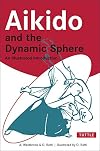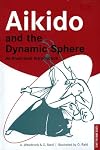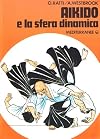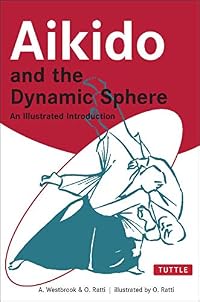
Aikido and the Dynamic Sphere: An Illustrated Introduction
by Adele Westbrook, Oscar Ratti
On This Page
Description
Aikido and the Dynamic Sphere: An Illustrated Introduction provides a complete foundation in the practice of one of the most distinctive and useful Japanese martial arts. Aikido was created in Japan in the 1920's by Morihei Ueshiba, also known as Osensei. To possess the skills, techniques and attitude of the faithful practitioner of aikido, one must achieve a very high level of integration of the powers of mind and body, the harmonious combination of physical means and ethical motives. By show more controlling body position and learning how to harmonize important physical and mental abilities, anyone (regardless of size, strength or weight) can fend off attacks usingthis sophisticated martial art. Written and illustrated by husband/wife team, Oscar Ratti and Adele Westbrook,Aikido and the Dynamic Sphere, with over 1,200 illustrations, includes many Aikido techniques in chapters such as: What is Aikido? The Foundations of Aikido The Practice of Aikido The Basic Techniques of Neutralization Advanced Practice And more! show lessTags
Recommendations














Member Reviews
I have been training in aikido more than 35 years, both in the US and Japan, and have met and learned from some very good teachers (also many mediocre ones). I hold what you might call "mid-level" Hombu dan rank. I have founded a dojo. Speaking Japanese fluently, I have live-interpreted several times for Hombu shihan at seminars outside Japan, and once at a seminar in Japan attended by many visiting foreign students.
I have never owned, or tried to read "Aikido and the Dynamic Sphere", although I have always known about it. Recently I checked it out from a library, and I have to say that it really raises my hackles. Not because anything written here is "wrong", necessarily (I have almost no desire to do more than skim it). But simply show more because of the absolutely breathtaking arrogance of the authors. They don't hide the fact that it had only been 8 years since they were rank beginners, fresh off the streets of NYC, knowing nothing, without even experience of another martial art. At the time of publishing they held only the first-degree black belt rank each, and had reached that stage being taught mostly by a Japanese man named Ohara who (no shade on him though) held only 2nd degree. For the non-martial artist reading this, these ranks may sound impressive, but I assure you, they are not. At this level, you are considered a serious beginner. Just to give you the sense of things, Mr. Ohara was also relatively young, was not a formal representative instructor of the Hombu, and I'm going to guess that he had acquired his rank in his university club, before moving to the United States to get an MBA.
The world knew almost nothing of aikido yet. Even in the Japan of 1970, the community practicing it was tiny compared to older arts like judo and kendo, at very few dojo, and the average person on the street had not yet heard the name "aikido", let alone had people in any other countries. The two authors were apparently graduate students at Columbia University in New York City, where Mr. Ohara was also a student, and the initial group that formed around him seems to have centered on the university. Because of the direct connection to Japan, they seem to have enjoyed a special advantage in this "brave new world" of a cool new, unknown martial art, especially because Hombu was just beginning its push to spread the art overseas, and so it was receptive to them. It sounds like they had the great fun and fortune to travel to Tokyo for their shodan (1st-degree) tests, and to spend a little time training there, where they surely met the Founder, who was still alive. And though everyone and his grandmother travels to Japan to train nowadays (usually by the time they hit brown belt), and many millions more people travel there for tourism, at this time when Japan was still a very exotic place on the far side of the globe, that might as well have been Mars to the average American, it must have been quite a heady experience for them.
Still, you need to keep your head on straight. The word that just screams through my brain reading this book is "pretentious". I'm pretty sure I would not have had the guts to even think to write it, had I been in their shoes. I would have been too busy learning and training (and being a graduate student in some academic field!)
Maybe they made enough money from this book to take the rest of their lives easy - if so, good for them. I note that after publishing this book, the authors went on to publish another book or two on Japanese martial arts, but otherwise seem to have fallen off the edge of the martial arts world, or indeed any other world. They never went on to distinguish themselves as aikido instructors, or apparently even in the academic fields they were studying in the 1960s, from what I can google. They don't appear in Stanley Pranin's 1991 Encyclopedia (a book that has its own issues, but that's another review). I can't even tell for certain if they ever earned their 2nd-degree black belts.
Bottom line: if you have this book, and have gotten some value out of it - Great. If you are an aikidoist (not "aikidoka" - don't get me started :eyeroll:) and want to have it on your shelf just because it's considered a "classic" in the English literature of the art - Fine. The illustrations certainly are attractive, and have become quite iconic.
It is not my purpose here to tell you that the content of "Aikido and the Dynamic Sphere" is wrong, in general (although some of it _is_). It certainly is overly wordy and pretentiously written (I mean, we can start with the title...). I suppose my purpose with this review is just to vent my indignation that some privileged young white folks with limited life experience overall, as beginners in an art form deriving from an ancient foreign culture they had practically no understanding of, somehow thought they were qualified to produce a tome like this, "preaching" about the philosophical underpinnings of aikido, and of course going on at great length on the "correct" way to perform its many techniques (I wonder if they noticed while training at Hombu how much the technical styles of the various teachers there differed!)
Westbrook and Ratti appear to have been enthralled by aikido (as so many are), saw an opportunity, and took advantage of it, lucky enough to be in the right place at the right time, and having just enough chutzpah. I guess I can't blame them TOO much for that. But let's keep the right perspective on the ultimate value of this book. show less
I have never owned, or tried to read "Aikido and the Dynamic Sphere", although I have always known about it. Recently I checked it out from a library, and I have to say that it really raises my hackles. Not because anything written here is "wrong", necessarily (I have almost no desire to do more than skim it). But simply show more because of the absolutely breathtaking arrogance of the authors. They don't hide the fact that it had only been 8 years since they were rank beginners, fresh off the streets of NYC, knowing nothing, without even experience of another martial art. At the time of publishing they held only the first-degree black belt rank each, and had reached that stage being taught mostly by a Japanese man named Ohara who (no shade on him though) held only 2nd degree. For the non-martial artist reading this, these ranks may sound impressive, but I assure you, they are not. At this level, you are considered a serious beginner. Just to give you the sense of things, Mr. Ohara was also relatively young, was not a formal representative instructor of the Hombu, and I'm going to guess that he had acquired his rank in his university club, before moving to the United States to get an MBA.
The world knew almost nothing of aikido yet. Even in the Japan of 1970, the community practicing it was tiny compared to older arts like judo and kendo, at very few dojo, and the average person on the street had not yet heard the name "aikido", let alone had people in any other countries. The two authors were apparently graduate students at Columbia University in New York City, where Mr. Ohara was also a student, and the initial group that formed around him seems to have centered on the university. Because of the direct connection to Japan, they seem to have enjoyed a special advantage in this "brave new world" of a cool new, unknown martial art, especially because Hombu was just beginning its push to spread the art overseas, and so it was receptive to them. It sounds like they had the great fun and fortune to travel to Tokyo for their shodan (1st-degree) tests, and to spend a little time training there, where they surely met the Founder, who was still alive. And though everyone and his grandmother travels to Japan to train nowadays (usually by the time they hit brown belt), and many millions more people travel there for tourism, at this time when Japan was still a very exotic place on the far side of the globe, that might as well have been Mars to the average American, it must have been quite a heady experience for them.
Still, you need to keep your head on straight. The word that just screams through my brain reading this book is "pretentious". I'm pretty sure I would not have had the guts to even think to write it, had I been in their shoes. I would have been too busy learning and training (and being a graduate student in some academic field!)
Maybe they made enough money from this book to take the rest of their lives easy - if so, good for them. I note that after publishing this book, the authors went on to publish another book or two on Japanese martial arts, but otherwise seem to have fallen off the edge of the martial arts world, or indeed any other world. They never went on to distinguish themselves as aikido instructors, or apparently even in the academic fields they were studying in the 1960s, from what I can google. They don't appear in Stanley Pranin's 1991 Encyclopedia (a book that has its own issues, but that's another review). I can't even tell for certain if they ever earned their 2nd-degree black belts.
Bottom line: if you have this book, and have gotten some value out of it - Great. If you are an aikidoist (not "aikidoka" - don't get me started :eyeroll:) and want to have it on your shelf just because it's considered a "classic" in the English literature of the art - Fine. The illustrations certainly are attractive, and have become quite iconic.
It is not my purpose here to tell you that the content of "Aikido and the Dynamic Sphere" is wrong, in general (although some of it _is_). It certainly is overly wordy and pretentiously written (I mean, we can start with the title...). I suppose my purpose with this review is just to vent my indignation that some privileged young white folks with limited life experience overall, as beginners in an art form deriving from an ancient foreign culture they had practically no understanding of, somehow thought they were qualified to produce a tome like this, "preaching" about the philosophical underpinnings of aikido, and of course going on at great length on the "correct" way to perform its many techniques (I wonder if they noticed while training at Hombu how much the technical styles of the various teachers there differed!)
Westbrook and Ratti appear to have been enthralled by aikido (as so many are), saw an opportunity, and took advantage of it, lucky enough to be in the right place at the right time, and having just enough chutzpah. I guess I can't blame them TOO much for that. But let's keep the right perspective on the ultimate value of this book. show less
If you wish to learn the art of Aikido and could only have one book; this would be it. It is effectively illustrated, better than photos. From history and theory, dojo etiquette and fundamental techniques of defense...all is covered. This book will give you broad overview of the mental and spiritual underpinnings of Aikido as a whole.
Having studied Aikido in Guam for 4 years under Sensei Ben Galarpe I had some exposure to what the authors were saying before reading the book. This is a great introduction to Aikido and its background philosophy with the authors doing a good job of introducing the art to a broader audience. The illustrations also help tremendously.
Excellent explanation of the theory behind Aikido
I don't like this book at all. I don't like the concept and I don't even like the title. Aikido and the dynamic line or aikido and the dynamic curve would have just the same meaning or lack of meaning and aikido is not necessarily based on a sphere. Probably a lot of the people who gave this book positive reviews don't do aikido.
The first problem is that the authors quite arbitrarily rename all the techniques with numbers so that for beginners it is incomprehensible. Literally incomprehensible. It's like for a book on tennis instead of saying forehand volley you say: do the number one stroke against the number three ball. And for anyone who is not a beginner it is superficial and of limited interest. So I've got no idea who the book is show more for.
One star because the illustrations are charming but if you want to learn aikido this book is worse than no book. Seriously. But Secrets of the Samurai by the same authors is quite interesting although again the title is misleading and poorly chosen. show less
The first problem is that the authors quite arbitrarily rename all the techniques with numbers so that for beginners it is incomprehensible. Literally incomprehensible. It's like for a book on tennis instead of saying forehand volley you say: do the number one stroke against the number three ball. And for anyone who is not a beginner it is superficial and of limited interest. So I've got no idea who the book is show more for.
One star because the illustrations are charming but if you want to learn aikido this book is worse than no book. Seriously. But Secrets of the Samurai by the same authors is quite interesting although again the title is misleading and poorly chosen. show less
Excellent illustrations and explanation of history. Every aikidoka should have this in their collection.
from dust jacket
Aikido has ofter been referred to as the gentleman's fighting art. Though it is not an unfamiliar word, few outside the world of the martial arts can distinguish it from various other 'methods of self-defense.' Its trademark, however, lies partly in its sophisticatied style and particularly in its esential motivations.
Aikido is a method of self-defense which can be used against any form of attack and-at its highest levels-a Discipline of Coordination, a 'way' of harmonizing all of man's vital powers. There is no attack in aikido; i.e., its goal is merely to neutralize an aggression and render the attacker harmless, without causing him any serious injury if at all possible. To do this requires skill, but even more, it show more requires an ethical intention. The very word aikido, in fact, cotains the three elements which comrpise the art: (ai), harmony or coordination; (ki), spirit or energy; (do), the method, the 'way.'
A man who studies and practices aikido correctly desires only to defend himself without hurting others. To possess this attitude, one must achieve a very high level of integration of the powers of mind and body, the harmonious combination of physical means and ethical motives.
Adele Westbrook, who works for one of the largest advertising agencies in the world, studied philosophy at Columbia University at the same time co-author Oscar Tatti was doing graduate work in classical languages. They began to practice aikido together, and while studying under a variety of instructors in the United States and Europe, started the collection of notes and sketches which finally developed into this illustrated introduction to the art of aikido.
Oscar Ratti, now a commercial illustrator, received his degree in classical studies and law from the University of Naples where he was intercollegiate Greek-Roman wrestling champion and a member of the championship judo team. He later came to the United States and began to study aikido with Yasuo Ohara, one of the first instructors to teach in New York. In addition to being co-author of the book, Mr. Ratti provided all the excellent drawings that apear in this volume.
Miss Westbrook and Mr. Ratti also taught aikido in New York, working with youth groups at Centers affiliated with the Y.M.C.A.
Contents
Acknowledgments; Preface; List of Charts
I What is Aikido?-Defense in Aikido; The 'Centre' and 'Ki'; The Strategy of Neutralization; The Potential of Aikido
II The Foundation of Aikido-The Founder; Main Sources of Formation and Inspiration; The Martial Arts; The 'Ethics' of Defense
III Organization-The Hierarchy; Promotion; The Uniform; The Practice Hall ; The Mat; Etiquette and Classes
IV The Practice of Aikido-The Theory of Attack; Physical Factors; Dynamic Factors; Technical Factors; The Unified Power of Attack
V The Theory of Defense-The Process of Defense and Its Factors; The Inner Factors: the Role of the Mind; The Principle of Centralization; The Principle of Extension; The Principle of Leading Control; The Principle of Sphericity; Circuits of Neutralization; Spirals and Semi-Spirals of Neutralization; The Dynamic Sphere; Fusion and Special Exercises
VI The Physical Preparation-Preliminary Exercises: Suppleness; Basic Exercises: Coordination; Rolls and Somersaults
VII The Posture and mOtion of Defense-Stages and Unity of the Akido Process of Defense; The Posture; The Motion
VIII The Basic Techniques of Neutralization-General; Recommendatons; Immobilizations; Projections; Combinations
IX Advanced Practice-'Mat' or Kneeling Aikido; The Stave Exercises; The Techniques of Neutralization Applied Against an Armed Attack; The Techniques of Neutralization Applied Against a Multiple Attack; Free Style
X Conclusion
Glossary; Selected Bibliography; Index show less
Aikido has ofter been referred to as the gentleman's fighting art. Though it is not an unfamiliar word, few outside the world of the martial arts can distinguish it from various other 'methods of self-defense.' Its trademark, however, lies partly in its sophisticatied style and particularly in its esential motivations.
Aikido is a method of self-defense which can be used against any form of attack and-at its highest levels-a Discipline of Coordination, a 'way' of harmonizing all of man's vital powers. There is no attack in aikido; i.e., its goal is merely to neutralize an aggression and render the attacker harmless, without causing him any serious injury if at all possible. To do this requires skill, but even more, it show more requires an ethical intention. The very word aikido, in fact, cotains the three elements which comrpise the art: (ai), harmony or coordination; (ki), spirit or energy; (do), the method, the 'way.'
A man who studies and practices aikido correctly desires only to defend himself without hurting others. To possess this attitude, one must achieve a very high level of integration of the powers of mind and body, the harmonious combination of physical means and ethical motives.
Adele Westbrook, who works for one of the largest advertising agencies in the world, studied philosophy at Columbia University at the same time co-author Oscar Tatti was doing graduate work in classical languages. They began to practice aikido together, and while studying under a variety of instructors in the United States and Europe, started the collection of notes and sketches which finally developed into this illustrated introduction to the art of aikido.
Oscar Ratti, now a commercial illustrator, received his degree in classical studies and law from the University of Naples where he was intercollegiate Greek-Roman wrestling champion and a member of the championship judo team. He later came to the United States and began to study aikido with Yasuo Ohara, one of the first instructors to teach in New York. In addition to being co-author of the book, Mr. Ratti provided all the excellent drawings that apear in this volume.
Miss Westbrook and Mr. Ratti also taught aikido in New York, working with youth groups at Centers affiliated with the Y.M.C.A.
Contents
Acknowledgments; Preface; List of Charts
I What is Aikido?-Defense in Aikido; The 'Centre' and 'Ki'; The Strategy of Neutralization; The Potential of Aikido
II The Foundation of Aikido-The Founder; Main Sources of Formation and Inspiration; The Martial Arts; The 'Ethics' of Defense
III Organization-The Hierarchy; Promotion; The Uniform; The Practice Hall ; The Mat; Etiquette and Classes
IV The Practice of Aikido-The Theory of Attack; Physical Factors; Dynamic Factors; Technical Factors; The Unified Power of Attack
V The Theory of Defense-The Process of Defense and Its Factors; The Inner Factors: the Role of the Mind; The Principle of Centralization; The Principle of Extension; The Principle of Leading Control; The Principle of Sphericity; Circuits of Neutralization; Spirals and Semi-Spirals of Neutralization; The Dynamic Sphere; Fusion and Special Exercises
VI The Physical Preparation-Preliminary Exercises: Suppleness; Basic Exercises: Coordination; Rolls and Somersaults
VII The Posture and mOtion of Defense-Stages and Unity of the Akido Process of Defense; The Posture; The Motion
VIII The Basic Techniques of Neutralization-General; Recommendatons; Immobilizations; Projections; Combinations
IX Advanced Practice-'Mat' or Kneeling Aikido; The Stave Exercises; The Techniques of Neutralization Applied Against an Armed Attack; The Techniques of Neutralization Applied Against a Multiple Attack; Free Style
X Conclusion
Glossary; Selected Bibliography; Index show less
Members
- Recently Added By
Author Information
5 Works 1,156 Members

5+ Works 1,146 Members
Series
Belongs to Publisher Series
Common Knowledge
- People/Characters
- Morihei Uyeshiba
- Important places
- Japan
- First words
- Emerging from a long period of obscurity in the east - during which time it was familiar only to relatively restricted circles - aikido has been called one of the most subtle and sophisticated of the martial arts, and - at it... (show all)s higher levels - an effective discipline for the development, integration, and utilization of all man's powers, physical and mental (spiritual).
- Last words
- (Click to show. Warning: May contain spoilers.)The improved physical/mental health, the deeper understanding and awareness of the problems facing every man, the essential unity and identification
of all men, their integration with and necessity to one another, as well as a sense of "belonging" to their times and their world - this is the potential that the theory and practice of the art of aikido can offer all men, wherever they may be. - Canonical DDC/MDS
- 796.8154
Classifications
- Genres
- Sports and Leisure, Nonfiction, General Nonfiction
- DDC/MDS
- 796.8154 — Arts & recreation Recreation, sports, and performing arts Sports Wrestling / Martial Arts, Judo, Karate Martial arts Asian martial arts Aikido
- LCC
- GV1111 .W42 — Geography, Anthropology and Recreation Recreation. Leisure Recreation. Leisure Sports Fighting sports: Bullfighting, boxing, fencing, etc.
- BISAC
Statistics
- Members
- 540
- Popularity
- 54,783
- Reviews
- 8
- Rating
- (4.12)
- Languages
- 7 — Czech, Dutch, English, French, German, Hungarian, Italian
- Media
- Paper, Ebook
- ISBNs
- 10
- UPCs
- 1
- ASINs
- 10