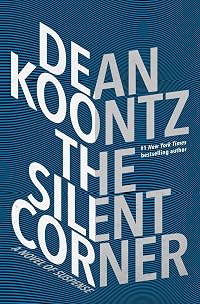
On This Page
Description
A dazzling new series debuts with a remarkable heroine certain to become a new icon of suspense, propelled by the singular narrative genius of #1 New York Times bestselling author Dean Koontz. "I very much need to be dead." These are the chilling words left behind by a man who had everything to live for-but took his own life. In the void that remains stands his widow, Jane, surrounded by questions destined to go unanswered . . . unless she does what all the grief, fear, confusion, and fury show more inside of her demand: find the truth, no matter what. There is no one else to speak for Jane's husband-or the others who have followed him into death at their own hands. Although people of talent and accomplishment, people admired and happy and sound of mind, have recently been committing suicide in surprising numbers, no one else is willing to give up everything, just to seek, to find, to know. No one except Jane. But ahead lies only risk. Because those arrayed against her are legion . . . and dangerously devoted to protecting something profoundly important-or terrifying-enough to exterminate any and all in their way. Too many have already died, and those responsible will learn that all their malevolent power may not be enough to stop a woman as clever as they are cold-blooded, as relentless as they are ruthless-and who is driven by a righteous rage they can never comprehend. Because it is born of love.. show less
Tags
Recommendations



Member Reviews
The Silent Corner is Dean Koontz's version of a hard-boiled detective thriller: an off-the-books FBI detective on a personal mission, a rash of mysterious suicides, a cabal of men wielding a genuinely terrifying new technology. As always, Koontz renders his characters ably and the plot is perfectly paced. This is a tense, taut, and foreboding novel to kick off a new series.
I didn't enjoy it at all.
There are two reasons why I didn't enjoy this book. The first problem I have is his writing style.
I've been a fan of Mr. Koontz since I read through most of his classic works, what I refer to as his Watchers era. Dark Rivers of the Heart blew me away when I read it in college. His writing style in those days was robust and tight, concise and show more economical. He rarely engaged in literary ornamentation.
In more recent years, his writing style has changed: he's gotten much wordier, more self-indulgent and self-consciously literary, more prone to using ornamental words where simpler ones would suffice.
There's nothing wrong with that—it's merely a different style. I respect that his writing style evolved and he remains a masterful storyteller. Still, I miss the precision and restraint of his older works.
His sentence structure has become more complex, as well. He writes with more clauses, arranged in more complicated ways, with liberal use of commas to keep everything in order. His writing has become notably more convoluted.
And it's a problem: this kind of self-consciously literary style interferes with the pace of the plot in The Silent Corner—indulgent language and complex sentences are at odds with the quick momentum. The story beats are perfectly paced but there are sections which feel like they're dragging because the writing style trips me up. It's jarring. It doesn't work for a thriller novel.
A more economical style asserts itself toward the end, as the plot builds to the concluding crisis and climax. Sentences get shorter, tighter, there are fewer show-off words. The last fifty pages or so are the only section in the entire book where the language swept me along in pace with the story.
I couldn't get into a comfortable flow with the text for most of the novel. It should have taken me two or three days to read—instead it took me six. For all the rewards of the story and the characters, actually reading this book was unexpectedly frustrating.
My other problem with this book is personal. What I want to address now isn't an objective criticism of Mr. Koontz's writing but it's something I couldn't get past:
There's an explicitly judgmental vein running through this work that I don't recall encountering in his books before. Commentary which serves no purpose for character or plot, merely Mr. Koontz editorializing on various aspects of the world. It's any author's right to offer judgment regarding the world around them but the commentary in this book is shallow and dismissive.
It's alienating. Quite a lot of it is highly polarizing, too.
To illustrate what I'm talking about, I'll detail a relatively harmless, non-polarizing example:
There's a scene about two-thirds of the way through where the main character visits a veterinarian's office. Mr. Koontz makes a point of describing the Kandinsky art prints on the wall: specifically, he describes them as "fashion—rather than fine—art" and later goes out of his way to label the shapes depicted in these works as "meaningless." These are throwaway lines which offer no substantive argument to support his opinion.
It's perfectly fine if Mr. Koontz doesn't like Kandinsky but he's wrong on both counts. Kandinsky's work contains deep meaning, regardless of whether Mr. Koontz understands it. Fine art isn't a matter of personal opinion but consensus and historical importance, and it's widely agreed that Kandinsky qualifies. Just because Mr. Koontz doesn't like it doesn't make it any less influential or important. To deny any meaning or value in the work just makes him sound ignorant and petty.
Worse: Adding Kandinsky prints to the scene adds nothing meaningful to the plot. His ill-informed critiques of them aren't presented as a character's opinion so they play no role in character development. He hung Kandinskys on the wall for no other reason than to give himself an excuse to make these snarky comments.
It serves no purpose for the story. It's unnecessary and distracting, and shows an inexplicable disregard for the needs of his own work.
There are several such unnecessary, throwaway editorializations throughout the novel, and several of them display a disturbing lack of regard for some of the deepest and most complex problems we face in our society today. He applies this same shallow, easy dismissiveness to the rise of conflicts between communities and law enforcement, and to the culture of political correctness. He discounts any possibility of legitimacy for those with whom he disagrees on these issues, and he displays no understanding of their opposing positions. He evinces utterly no curiosity as to why other people might feel differently than he does. He just dismisses them out-of-hand.
It's as though his empathy exhausts itself with his individual characters and can't be extended to larger groups of actual people with actual grievances in the real world.
Applied to works of modern art, this all comes across as needlessly judgmental: harmless but still a bit alienating. Applied to real and significant social issues, it's reactionary, intellectually calcified, and needlessly confrontational. These throwaway editorializations are all black and white, there's no nuance, no awareness of the complex reality of the issues. It appears as though Mr. Koontz has lost his ability to cope with nuance and complexity. It’s clear, too, that he has no interest in conducting a substantive exploration of these issues—he just wants to complain.
It's a problem. It tells me he doesn't understand what's happening in the world today and worse—he has no desire to try to understand it. For all his desire to make this commentary topical, it only makes the novel feel irrelevant.
Maybe Mr. Koontz wanted to adopt a tough-as-nails tone for his version of a hard-boiled detective thriller. Maybe these aren't his own personal beliefs on display. I hope so but that's not how it read to me. To me, he reads like a crabby old man who doesn't understand the world anymore and who can no longer be bothered to try.
The story in The Silent Corner is excellent: the conflict is massive and terrifying in its implications, the characters are believable and compelling, the action is satisfying. It's a fantastic set up for a new series. I should have enjoyed this book tremendously. I wanted to enjoy it.
Instead, reading it felt like witnessing the intellectual decline of a favorite uncle—once sharp and curious, now befuddled and peevish. It makes me sad.
I think this is the last I'll read from Mr. Koontz. I'm sure he won't be at all sad to see me go. show less
I didn't enjoy it at all.
There are two reasons why I didn't enjoy this book. The first problem I have is his writing style.
I've been a fan of Mr. Koontz since I read through most of his classic works, what I refer to as his Watchers era. Dark Rivers of the Heart blew me away when I read it in college. His writing style in those days was robust and tight, concise and show more economical. He rarely engaged in literary ornamentation.
In more recent years, his writing style has changed: he's gotten much wordier, more self-indulgent and self-consciously literary, more prone to using ornamental words where simpler ones would suffice.
There's nothing wrong with that—it's merely a different style. I respect that his writing style evolved and he remains a masterful storyteller. Still, I miss the precision and restraint of his older works.
His sentence structure has become more complex, as well. He writes with more clauses, arranged in more complicated ways, with liberal use of commas to keep everything in order. His writing has become notably more convoluted.
And it's a problem: this kind of self-consciously literary style interferes with the pace of the plot in The Silent Corner—indulgent language and complex sentences are at odds with the quick momentum. The story beats are perfectly paced but there are sections which feel like they're dragging because the writing style trips me up. It's jarring. It doesn't work for a thriller novel.
A more economical style asserts itself toward the end, as the plot builds to the concluding crisis and climax. Sentences get shorter, tighter, there are fewer show-off words. The last fifty pages or so are the only section in the entire book where the language swept me along in pace with the story.
I couldn't get into a comfortable flow with the text for most of the novel. It should have taken me two or three days to read—instead it took me six. For all the rewards of the story and the characters, actually reading this book was unexpectedly frustrating.
My other problem with this book is personal. What I want to address now isn't an objective criticism of Mr. Koontz's writing but it's something I couldn't get past:
There's an explicitly judgmental vein running through this work that I don't recall encountering in his books before. Commentary which serves no purpose for character or plot, merely Mr. Koontz editorializing on various aspects of the world. It's any author's right to offer judgment regarding the world around them but the commentary in this book is shallow and dismissive.
It's alienating. Quite a lot of it is highly polarizing, too.
To illustrate what I'm talking about, I'll detail a relatively harmless, non-polarizing example:
There's a scene about two-thirds of the way through where the main character visits a veterinarian's office. Mr. Koontz makes a point of describing the Kandinsky art prints on the wall: specifically, he describes them as "fashion—rather than fine—art" and later goes out of his way to label the shapes depicted in these works as "meaningless." These are throwaway lines which offer no substantive argument to support his opinion.
It's perfectly fine if Mr. Koontz doesn't like Kandinsky but he's wrong on both counts. Kandinsky's work contains deep meaning, regardless of whether Mr. Koontz understands it. Fine art isn't a matter of personal opinion but consensus and historical importance, and it's widely agreed that Kandinsky qualifies. Just because Mr. Koontz doesn't like it doesn't make it any less influential or important. To deny any meaning or value in the work just makes him sound ignorant and petty.
Worse: Adding Kandinsky prints to the scene adds nothing meaningful to the plot. His ill-informed critiques of them aren't presented as a character's opinion so they play no role in character development. He hung Kandinskys on the wall for no other reason than to give himself an excuse to make these snarky comments.
It serves no purpose for the story. It's unnecessary and distracting, and shows an inexplicable disregard for the needs of his own work.
There are several such unnecessary, throwaway editorializations throughout the novel, and several of them display a disturbing lack of regard for some of the deepest and most complex problems we face in our society today. He applies this same shallow, easy dismissiveness to the rise of conflicts between communities and law enforcement, and to the culture of political correctness. He discounts any possibility of legitimacy for those with whom he disagrees on these issues, and he displays no understanding of their opposing positions. He evinces utterly no curiosity as to why other people might feel differently than he does. He just dismisses them out-of-hand.
It's as though his empathy exhausts itself with his individual characters and can't be extended to larger groups of actual people with actual grievances in the real world.
Applied to works of modern art, this all comes across as needlessly judgmental: harmless but still a bit alienating. Applied to real and significant social issues, it's reactionary, intellectually calcified, and needlessly confrontational. These throwaway editorializations are all black and white, there's no nuance, no awareness of the complex reality of the issues. It appears as though Mr. Koontz has lost his ability to cope with nuance and complexity. It’s clear, too, that he has no interest in conducting a substantive exploration of these issues—he just wants to complain.
It's a problem. It tells me he doesn't understand what's happening in the world today and worse—he has no desire to try to understand it. For all his desire to make this commentary topical, it only makes the novel feel irrelevant.
Maybe Mr. Koontz wanted to adopt a tough-as-nails tone for his version of a hard-boiled detective thriller. Maybe these aren't his own personal beliefs on display. I hope so but that's not how it read to me. To me, he reads like a crabby old man who doesn't understand the world anymore and who can no longer be bothered to try.
The story in The Silent Corner is excellent: the conflict is massive and terrifying in its implications, the characters are believable and compelling, the action is satisfying. It's a fantastic set up for a new series. I should have enjoyed this book tremendously. I wanted to enjoy it.
Instead, reading it felt like witnessing the intellectual decline of a favorite uncle—once sharp and curious, now befuddled and peevish. It makes me sad.
I think this is the last I'll read from Mr. Koontz. I'm sure he won't be at all sad to see me go. show less
"Ideas shouldn't matter more than people." Wow. When you take an evil mind, it's followers, technology mixed with humanity, or lack thereof, big problems arise. Jane Hawk is fighting an enemy that is unfathomable, yet her courage, confidence and savvy keep her alive and kept me reading. Hawk has a strength and underlying vulnerability that speaks to you as a person, and endears you to her. (It doesn't hurt that she drinks my drink, either!) The plot is something out of today's headlines, yet it's nothing you would ever want to imagine. It's brilliant.
It's not often that I'm impressed by the intelligence of the written word as presented by Koontz, but here I am. His quick wit and expert prose had me laughing and cheering for both the show more characters and he as the author. There were many notes taken and quotable lines, but Perhaps my favorite piece of genius came from chapter 22 , which I stopped, reread, then read aloud to my husband. ".....what might have looked like courage proved to be a deficit of common sense and an excess of self importance, too strong a faith in his genius and superiority- not courage at all, but the rash actions of an ordinary narcissist incapable of imagining he might fail." Bravo, you received a standing ovation on that one; the parallels to today's world are blinding, and I thank you for that little nugget of truth.
The Silent Corner is alive with humanity, evil and terrifying brilliance.
*I received an arc from NetGalley for an honest review show less
It's not often that I'm impressed by the intelligence of the written word as presented by Koontz, but here I am. His quick wit and expert prose had me laughing and cheering for both the show more characters and he as the author. There were many notes taken and quotable lines, but Perhaps my favorite piece of genius came from chapter 22 , which I stopped, reread, then read aloud to my husband. ".....what might have looked like courage proved to be a deficit of common sense and an excess of self importance, too strong a faith in his genius and superiority- not courage at all, but the rash actions of an ordinary narcissist incapable of imagining he might fail." Bravo, you received a standing ovation on that one; the parallels to today's world are blinding, and I thank you for that little nugget of truth.
The Silent Corner is alive with humanity, evil and terrifying brilliance.
*I received an arc from NetGalley for an honest review show less
After 450 pages, I had hoped for more resolution at the end of The Silent Corner, the most recent offering from long-time author Dean Koontz. Instead, I was left wondering if the hanging plot lines meant that I had unknowingly dozed during those parts, if there was going to be a sequel, or if they were merely abandoned. This “novel of suspense” introduces Jane, the main character, right in the middle of some ambiguous mission without any provided background or context. Through initial dialog, the reader learns that she is an FBI agent who has taken a leave of absence to investigate the recent loss of her husband and fellow agent. Jane does not believe that her husband could have committed suicide as had been suggested, and she has show more gone off on her own seeking answers. She is being pursued by an unknown powerful group that has been trying to threaten her away from digging into the truth. She has hidden her young son away with friends and is frequently tormented by guilt at having to be separated from him while she risks everything to uncover a secret nefarious plot. The story is driven by a series of discoveries that Jane makes by combining some surreptitious library research with the torture of various villains. I was reminded several times while reading this book of the Jason Bourne movies and the Stepford Wives. The book is definitely packed with fast-paced action and some scientific detail, but I found it to be too derivative and one-dimensional for my tastes. show less
The Silent Corner by Dean Koontz is a very highly recommended conspiracy thriller and starts a new series. This is a perfect summer novel of suspense!
FBI agent Jane Hawk's husband, Nick, committed suicide, leaving behind a note that said, "I very much need to be dead." Jane knows that this is not her husband, a decorated Marine, a full colonel, on a career path to becoming a general. She needs to find out the truth behind his suicide and that of other capable, talented people. In fact, Jane knows that the suicide rate is dramatically increasing across the country. What is alarming is that these are people of accomplishment, of excellence. These are people who will make a difference or are making a difference. Why would these show more intelligent, proficient people be committing suicide?
After taking a leave of absence from the Bureau, Jane tries to find out the answer to the increasing suicide rate. When the life of her son is threatened, Jane knows they are a target. She hides her son and Jane goes rogue and underground. Clearly she is the target of powerful people who will do anything to stop her and there is no one she can trust. She has to rely on her skills to find the answers she needs. Who is behind the increasing suicide rate? How are they controlling people? More importantly, why? As she gets closer to the truth, the danger increases.
It is truly frightening to know how easily our every move can be tracked today. Koontz takes real life technology and shows how the features built into it can be used to track people. It is frightening to realize how easily our every step and movement can be watched without us even realizing it. It's not the stuff of science fiction, it is fact.
The Silent Corner is an extremely well written, excellent thriller with incredible characterization and fast paced action. Jane Hawk is a fully realized, compelling character, full of depth, growth, and intelligence. It's good to know that this is the start of a series featuring her. It's also challenging. Because it is the start of a series there isn't complete closure or answers to all the questions.
There are terrific, nail-biting action scenes and narrow escapes. The suspense and threats grow but Jane narrowly manages to keep a clear head and a step ahead. And it's a great story.
Thriller/suspense fans: read this book. You won't regret it. After that you will be relieved to know that the second book in the Jane Hawk series, The Whispering Room, has a tentative release date of January 9, 2018.
Disclosure: My review copy was courtesy of Penguin Random House.
http://www.shetreadssoftly.com/2017/06/the-silent-corner.html
https://www.goodreads.com/review/show/2026717397 show less
FBI agent Jane Hawk's husband, Nick, committed suicide, leaving behind a note that said, "I very much need to be dead." Jane knows that this is not her husband, a decorated Marine, a full colonel, on a career path to becoming a general. She needs to find out the truth behind his suicide and that of other capable, talented people. In fact, Jane knows that the suicide rate is dramatically increasing across the country. What is alarming is that these are people of accomplishment, of excellence. These are people who will make a difference or are making a difference. Why would these show more intelligent, proficient people be committing suicide?
After taking a leave of absence from the Bureau, Jane tries to find out the answer to the increasing suicide rate. When the life of her son is threatened, Jane knows they are a target. She hides her son and Jane goes rogue and underground. Clearly she is the target of powerful people who will do anything to stop her and there is no one she can trust. She has to rely on her skills to find the answers she needs. Who is behind the increasing suicide rate? How are they controlling people? More importantly, why? As she gets closer to the truth, the danger increases.
It is truly frightening to know how easily our every move can be tracked today. Koontz takes real life technology and shows how the features built into it can be used to track people. It is frightening to realize how easily our every step and movement can be watched without us even realizing it. It's not the stuff of science fiction, it is fact.
The Silent Corner is an extremely well written, excellent thriller with incredible characterization and fast paced action. Jane Hawk is a fully realized, compelling character, full of depth, growth, and intelligence. It's good to know that this is the start of a series featuring her. It's also challenging. Because it is the start of a series there isn't complete closure or answers to all the questions.
There are terrific, nail-biting action scenes and narrow escapes. The suspense and threats grow but Jane narrowly manages to keep a clear head and a step ahead. And it's a great story.
Thriller/suspense fans: read this book. You won't regret it. After that you will be relieved to know that the second book in the Jane Hawk series, The Whispering Room, has a tentative release date of January 9, 2018.
Disclosure: My review copy was courtesy of Penguin Random House.
http://www.shetreadssoftly.com/2017/06/the-silent-corner.html
https://www.goodreads.com/review/show/2026717397 show less
Get ready to boo me Koontz fans. I was disappointed by this book.
I'll start with the good stuff. There is no question that Dean Koontz is a gifted storyteller. He has a way of capturing a scene and igniting all our senses. I not only saw the story playing out, I heard the noise and smelled the odors.
Jane's character immediately hooked me. I felt compassion for her situation and I wanted her to kick ass.
Then, as the story goes along and other viewpoint characters are introduced, Koontz does something I occasionally see that irks me to no end: He switches tenses. Jane's part and a few others are in the traditional third person past tense. But we also have a handful of characters written in third person present tense. The tense switch show more constantly throws me off, with the present tense making me rethink the order of things, as if those parts are more immediate. They aren't. There is no difference in the timeline of events, and these tense switches are irritating, pointless distractions.
But, okay. I grumbled and got on with it, adjusting, somewhat to those pointless tense changes.
Despite the fast pacing of the story, the plot unfolds slowly. We are hundreds of pages in before pieces start to click together, although there are subtle clues along the way. This is a complex conspiracy-based plot. I can't tell you much without giving away spoilers, so I'll just say we venture into the dark realm of the power science could offer.
What totally ruined this book for me is that there is no ending. None. We spend 464 pages with this story, and at the end we find we've only rattled the hornets' nest and now we're left standing in the mist of the chaos without even a hint of resolution. Honestly, I felt like the book was missing the final chapter.
Yes, this is the first book in a new series. But this is not a short book, by any stretch of the imagination. All those pages, and absolutely nothing about the plot is resolved. If you want to know what happens you have no choice but to wait for and purchase the next book in this series. It feels a little like extortion.
So... this is a complex plot that is going to take at least one more book to resolve. If you want to read this one, I recommend waiting until the next book is released so you're not left swinging in the breeze.
*I was provided with an advance copy by the publisher, via NetGalley, in exchange for my honest review.* show less
I'll start with the good stuff. There is no question that Dean Koontz is a gifted storyteller. He has a way of capturing a scene and igniting all our senses. I not only saw the story playing out, I heard the noise and smelled the odors.
Jane's character immediately hooked me. I felt compassion for her situation and I wanted her to kick ass.
Then, as the story goes along and other viewpoint characters are introduced, Koontz does something I occasionally see that irks me to no end: He switches tenses. Jane's part and a few others are in the traditional third person past tense. But we also have a handful of characters written in third person present tense. The tense switch show more constantly throws me off, with the present tense making me rethink the order of things, as if those parts are more immediate. They aren't. There is no difference in the timeline of events, and these tense switches are irritating, pointless distractions.
But, okay. I grumbled and got on with it, adjusting, somewhat to those pointless tense changes.
Despite the fast pacing of the story, the plot unfolds slowly. We are hundreds of pages in before pieces start to click together, although there are subtle clues along the way. This is a complex conspiracy-based plot. I can't tell you much without giving away spoilers, so I'll just say we venture into the dark realm of the power science could offer.
What totally ruined this book for me is that there is no ending. None. We spend 464 pages with this story, and at the end we find we've only rattled the hornets' nest and now we're left standing in the mist of the chaos without even a hint of resolution. Honestly, I felt like the book was missing the final chapter.
Yes, this is the first book in a new series. But this is not a short book, by any stretch of the imagination. All those pages, and absolutely nothing about the plot is resolved. If you want to know what happens you have no choice but to wait for and purchase the next book in this series. It feels a little like extortion.
So... this is a complex plot that is going to take at least one more book to resolve. If you want to read this one, I recommend waiting until the next book is released so you're not left swinging in the breeze.
*I was provided with an advance copy by the publisher, via NetGalley, in exchange for my honest review.* show less
What's It About?
“I very much need to be dead.”
These are the chilling words left behind by a man who had everything to live for—but took his own life. In the aftermath, his widow, Jane Hawk, does what all her grief, fear, and fury demand: find the truth, no matter what. People of talent and accomplishment, people admired and happy and sound of mind, have been committing suicide in surprising numbers. When Jane seeks to learn why, she becomes the most-wanted fugitive in America. Her powerful enemies are protecting a secret so important—so terrifying—that they will exterminate anyone in their way.
But all their power and viciousness may not be enough to stop a woman as clever as they are cold-blooded, as relentless as they are show more ruthless—and who is driven by a righteous rage they can never comprehend. Because it is born of love.
What Did I Think?
I loved Dean Koontz in his early years of writing, but it seemed that in the past few years he had started to write what I would call "tamer" stuff. The stories just didn't have the same feeling that all of his earlier works did. They were still good...just not AS good. It was with some hesitation that I picked up "The Silent Corner'...the first book in his new Jane Hawk series. If all the rest books are like this one then Mr. Koontz has a diffident winner.
Jane is not your usual FBI agent. In this opening book she's fighting a huge bio-tech corporation that plants the idea of suicide and murder into previously innocent, happy, well adjusted individuals...one that just happened to be Jane's Marine Corp husband. The plot is scary but very believable...the character of Jane Hawk is a likable everyday mother and wife that just happens to be able to out think and out shoot the bad guys while remaining smart and appealing. I can't wait to see where Dean Koontz takes Jane next. show less
“I very much need to be dead.”
These are the chilling words left behind by a man who had everything to live for—but took his own life. In the aftermath, his widow, Jane Hawk, does what all her grief, fear, and fury demand: find the truth, no matter what. People of talent and accomplishment, people admired and happy and sound of mind, have been committing suicide in surprising numbers. When Jane seeks to learn why, she becomes the most-wanted fugitive in America. Her powerful enemies are protecting a secret so important—so terrifying—that they will exterminate anyone in their way.
But all their power and viciousness may not be enough to stop a woman as clever as they are cold-blooded, as relentless as they are show more ruthless—and who is driven by a righteous rage they can never comprehend. Because it is born of love.
What Did I Think?
I loved Dean Koontz in his early years of writing, but it seemed that in the past few years he had started to write what I would call "tamer" stuff. The stories just didn't have the same feeling that all of his earlier works did. They were still good...just not AS good. It was with some hesitation that I picked up "The Silent Corner'...the first book in his new Jane Hawk series. If all the rest books are like this one then Mr. Koontz has a diffident winner.
Jane is not your usual FBI agent. In this opening book she's fighting a huge bio-tech corporation that plants the idea of suicide and murder into previously innocent, happy, well adjusted individuals...one that just happened to be Jane's Marine Corp husband. The plot is scary but very believable...the character of Jane Hawk is a likable everyday mother and wife that just happens to be able to out think and out shoot the bad guys while remaining smart and appealing. I can't wait to see where Dean Koontz takes Jane next. show less
I'm a huge Dean Koontz fan. I've read every book he's ever written, from his horror novels to his Odd Thomas series. So I was very excited when he came out with the Jane Hawk series.
I must admit that I had trouble getting settled into "The Silent Corner." I found Jane and the book's premise intriguing but felt that Koontz took too long setting up the book for all the action that was to come. Once Jane started searching for specific people, the pace picked up and I found myself not willing to put the book down, eager to see the book to its end. This book was a different writing style from what I'm accustomed to from Koontz. It still had moments of luminous prose that I love and expect from Koontz, but it was much more oriented like an show more action thriller, less introspective and more plot-oriented. I didn't mind this; the book was riveting, just in a different way from what I would have expected from Koontz.
I stayed up way too late reading this book, so anxious to find out how things get resolved. Imagine my surprise, then, when I unexpectedly reached the end of the book and nothing had been resolved. This was not just a cliffhanger. This was actually an incomplete story that Koontz is apparently planning to spread out over an entire series. How disappointing. In a book series, I expect certain incomplete resolutions because that's what keeps the series going. That's what I was expecting, that this Jane Hawk series would be like Koontz's Odd Thomas series, each book practically a standalone with major plot points resolved and the next book in the series introducing new plot points while carrying over a few from the previous book. This was not the case with "The Silent Corner." The story simply stopped, unfinished. I actually said out loud, "Wait, that's the end?" when I finished.
Suffice it to say that I will read "The Whispering Room" (Jane Hawk #2) because I really want to know how things get resolved! But I'm a little apprehensive that the story will continue to be incomplete until Koontz decides to end the series. Perhaps it's not possible to resolve things and then send Jane on new adventures because the whole gist of "The Silent Corner" is that what's happening is so intensely personal for Jane. Ah, well, on to book #2 anyway! I've no doubt I will be satisfactorily entertained nonetheless. show less
I must admit that I had trouble getting settled into "The Silent Corner." I found Jane and the book's premise intriguing but felt that Koontz took too long setting up the book for all the action that was to come. Once Jane started searching for specific people, the pace picked up and I found myself not willing to put the book down, eager to see the book to its end. This book was a different writing style from what I'm accustomed to from Koontz. It still had moments of luminous prose that I love and expect from Koontz, but it was much more oriented like an show more action thriller, less introspective and more plot-oriented. I didn't mind this; the book was riveting, just in a different way from what I would have expected from Koontz.
I stayed up way too late reading this book, so anxious to find out how things get resolved. Imagine my surprise, then, when I unexpectedly reached the end of the book and nothing had been resolved. This was not just a cliffhanger. This was actually an incomplete story that Koontz is apparently planning to spread out over an entire series. How disappointing. In a book series, I expect certain incomplete resolutions because that's what keeps the series going. That's what I was expecting, that this Jane Hawk series would be like Koontz's Odd Thomas series, each book practically a standalone with major plot points resolved and the next book in the series introducing new plot points while carrying over a few from the previous book. This was not the case with "The Silent Corner." The story simply stopped, unfinished. I actually said out loud, "Wait, that's the end?" when I finished.
Suffice it to say that I will read "The Whispering Room" (Jane Hawk #2) because I really want to know how things get resolved! But I'm a little apprehensive that the story will continue to be incomplete until Koontz decides to end the series. Perhaps it's not possible to resolve things and then send Jane on new adventures because the whole gist of "The Silent Corner" is that what's happening is so intensely personal for Jane. Ah, well, on to book #2 anyway! I've no doubt I will be satisfactorily entertained nonetheless. show less
Members
- Recently Added By
Lists

Kirkus Starred Fiction Reviews of Books Published in 2017
412 works; 7 members

Lit Lattes Ep 003
22 works; 1 member
Author Information

532+ Works 228,685 Members
Dean Koontz was born on July 9, 1945 in Everett, Pennsylvania. He received a degree in education from Shippensburg State College in 1967. A former high school English teacher as well as a teacher-counselor with the Appalachian Poverty Program, he began writing as a child to escape an ugly home life caused by his alcoholic father. A prolific writer show more at a young age, he had sold a dozen novels by the age of 25. Early in his career, he wrote under numerous pen names including David Axton, Brian Coffey, K. R. Dwyer, Leigh Nichols, Richard Paige, and Owen West. He is best known for the books written under his own name, many of which are bestsellers, including Midnight, Cold Fire, The Bad Place, Hideaway, The Husband, Odd Hours, 77 Shadow Street, Innocence, The City, Saint Odd, and The Silent Corner. (Bowker Author Biography) show less
Some Editions
Series

Common Knowledge
- Canonical title
- The Silent Corner
- Original title
- The Silent Corner
- Original publication date
- 2017-06-07
- People/Characters
- Jane Hawk
- Epigraph
- The major advances in civilization... all but wreck the societies in which they occur. - Alfred North Whitehead
I look down into all that wasp-nest or bee-hive... and witness their wax-laying and honey-making, and poison-brewing, and choking by sulphur. - Thomas Carlyle, Sartor Resartus - Dedication
- To Gerda. You rock me.
- First words
- Jane Hawk woke in the cool dark and for a moment could not remember where she had gone to sleep, only that as always she was in a queen- or king-size bed and that her pistol lay under the pillow on which the head of a compani... (show all)on would have rested had she not been traveling alone.
- Last words
- (Click to show. Warning: May contain spoilers.)But whatever might be coming, she would meet the threat, for it had fallen to her, through no choice of her own, to fashion the millstones and hang them around the necks of the damned.
Classifications
Statistics
- Members
- 1,349
- Popularity
- 17,742
- Reviews
- 62
- Rating
- (3.76)
- Languages
- 7 — Chinese, Danish, English, German, Greek, Italian, Swedish
- Media
- Paper, Audiobook, Ebook
- ISBNs
- 43
- UPCs
- 1
- ASINs
- 9