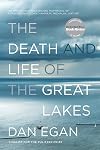
The Death and Life of the Great Lakes
by Dan Egan
On This Page
Description
"The Great Lakes--Erie, Huron, Michigan, Ontario and Superior--hold 20 percent of the world's supply of surface fresh water and provide sustenance, work and recreation for tens of millions of Americans. But they are under threat as never before, and their problems are spreading across the continent. The Death and Life of the Great Lakes is prize-winning reporter Dan Egan's compulsively readable portrait of an ecological catastrophe happening right before our eyes, blending the epic story of show more the lakes with an examination of the perils they face and the ways we can restore and preserve them for generations to come. For thousands of years the pristine Great Lakes were separated from the Atlantic Ocean by the roaring Niagara Falls and from the Mississippi River basin by a "sub-continental divide." Beginning in the late 1800s, these barriers were circumvented to attract oceangoing freighters from the Atlantic and to allow Chicago's sewage to float out to the Mississippi. These were engineering marvels in their time--and the changes in Chicago arrested a deadly cycle of waterborne illnesses--but they have had horrendous unforeseen consequences. Egan provides a chilling account of how sea lamprey, zebra and quagga mussels and other invaders have made their way into the lakes, decimating native species and largely destroying the age-old ecosystem. And because the lakes are no longer isolated, the invaders now threaten water intake pipes, hydroelectric dams and other infrastructure across the country. Egan also explores why outbreaks of toxic algae stemming from the overapplication of farm fertilizer have left massive biological "dead zones" that threaten the supply of fresh water. He examines fluctuations in the levels of the lakes caused by manmade climate change and overzealous dredging of shipping channels. And he reports on the chronic threats to siphon off Great Lakes water to slake drier regions of America or to be sold abroad. In an age when dire problems like the Flint water crisis or the California drought bring ever more attention to the indispensability of safe, clean, easily available Water, The Death and Life of the Great Lakes is a powerful paean to what is arguably our most precious resource, an urgent examination of what threatens it and a convincing call to arms about the relatively simple things we need to do to protect it."--Dust jacket. show lessTags
Recommendations
























Member Reviews
Not since I discovered the entire Nancy Drew and Hardy Boys collections of books in the attic of a house my family briefly rented when I was in third grade, have I been so grateful for being introduced to a literary work. Take every fun, interesting moment I ever had watching Mr. Wizard, Jules Bergman's reports on the space race, Bill Nye the Science Guy, PBS's Miles O'Brien present day science reporting, and the efforts of many others, and it will just barely scrape the consistent and persistent enjoyment I received from this book. It is not lost on me, that the title of the book does very little to get the average reader excited. At the risk of losing your interest, let me offer a crude analogy. Imagine a man in his home, looking out show more the window on a summer day. He sees the breeze rustling the tree leaves and can faintly hear the birds singing. Anxious to feel the soft breeze and hear the bird songs more clearly, he opens the window wide. He does this forgetting the air conditioning is on full blast due to the heat, so now he's trying to cool the entire outside, raising utility costs for an already stretched family budget. The house-bound family cat promptly jumps out the window, never to be seen again, but rodents find their way in, and memorize for eternity the location of the cat food left behind. Flies swarm in; even a few wasps, which sting a family member, highly allergic and requiring immediate medical attention. And on and on. All of this happening because the man wanted to improve his day. This book is not about that house but about the largest source of fresh water in the world: the Great Lakes. In telling it's story, the author is a true master in getting the reader to fully understand each concept presented with bulls-eye comparisons to facts well within the average reader's experiences. Plus, he writes with a lively, engaging style. My own favorite example, among very many, involves comparing the discriminating tastes of a multitude of invasive mussels avoiding eating toxic algae with the same ferocity of a toddler spitting out his brussels sprouts. Even the ending to the book was a delight as the author brought his young son into the discussion. Other than this book, the author is mainly a an award winning journalist with a Milwaukee newspaper. Maybe I need to subscribe, just to read more of his work, even if I haven't had any interest in Milwaukee since Hank Aaron, Warren Spahn, and the rest of the Braves were my favorite team as a child. I wonder what he has to say about the Braves moving their team back to Milwaukee? Whatever it may be, I'm sure it will be fascinating. show less
In this age of political polarization, it's refreshing to find an author who can tackle a big environmental subject without frothing at the mouth. Dan Egan takes on one of the biggest--the transformation of the world's largest reserve of fresh water through the multiple assaults of industrial pollution, invasive species, and fertilizer run-off, and he does so with due regard to both the scientific facts and the people who have tried, with mixed results, to manage an ever-changing system.
The Great Lakes hold one-quarter of the liquid fresh water on the surface of the Earth, and for most of their existence they have been an isolated system. Their isolation allowed the evolution of a diverse, unique ecosystem. That isolation was breached show more by the construction of canals, the St. Lawrence Seaway, and the Chicago Sanitary and Ship Canal. Wave after wave of invasive species decimated the native life of the lakes while pollution set the rivers that fed the lakes on fire--time after time after time. (You thought it was just once on the Cuyahoga River in 1969? Wrong!)
Perhaps the most amazing thing about this tale is how it illustrates humanity's overall approach to our relationship with the environment. In the story of the Lakes, we see human beings turning a blind eye time and again until some disaster--sometimes a relatively minor one--finally gets enough attention for people to do something about it. And then complacency sneaks back in, and the story repeats. Over . . . and . . . over. We can see this pattern in relation to any number of local and global issues. It's not just the Lakes. It's everything. But the story of the Lakes is bigger than we might have thought, because their invasion by zebra and quagga mussels, which can literally suck the life out of a body of water, presaged something even larger: these creatures escaped into the Mississipi River system and then, on recreational boats, to other river systems throughout the country. Very few U.S. rivers remain where they have not established a hold, and probably they cannot be stopped from getting into the rest of them.
Egan lays out the human costs of these environmental disasters, both in soft terms and in hard dollar terms. Often the cost to business is cited as a reason to avoid environmental regulation, but the costs to the fishing and recreation industries, and the exorbitant amounts involved in keeping invasive mussels from clogging water intakes and shutting down the water supplies to entire communities, is staggering. The cost to commercial ships found harboring invasive species as they come into the Great Lakes? A rarely-applied $3000 fine. Never applied, actually. That's the maximum. The few fines levied have been on the order of $300.
Egan doesn't point too many fingers, though. He seems to understand that people are complex, that the decisions that led to our modern predicament were made by people dealing with what they knew at the time and trying to balance a variety of needs. If there is any blame here, it is directed only at the federal bureaucracy, which has stubbornly refused to act on solid scientific information to protect the Great Lakes from further assaults. Otherwise, this is more about offering people information on what has happened and what is happening now, so that they can make informed decisions. Couple that with one of the most engaging styles I have read in a nonfiction book recently, and this is an absolutely fantastic book. It's hard to put it down. I recommend that you pick it up. Soon. show less
The Great Lakes hold one-quarter of the liquid fresh water on the surface of the Earth, and for most of their existence they have been an isolated system. Their isolation allowed the evolution of a diverse, unique ecosystem. That isolation was breached show more by the construction of canals, the St. Lawrence Seaway, and the Chicago Sanitary and Ship Canal. Wave after wave of invasive species decimated the native life of the lakes while pollution set the rivers that fed the lakes on fire--time after time after time. (You thought it was just once on the Cuyahoga River in 1969? Wrong!)
Perhaps the most amazing thing about this tale is how it illustrates humanity's overall approach to our relationship with the environment. In the story of the Lakes, we see human beings turning a blind eye time and again until some disaster--sometimes a relatively minor one--finally gets enough attention for people to do something about it. And then complacency sneaks back in, and the story repeats. Over . . . and . . . over. We can see this pattern in relation to any number of local and global issues. It's not just the Lakes. It's everything. But the story of the Lakes is bigger than we might have thought, because their invasion by zebra and quagga mussels, which can literally suck the life out of a body of water, presaged something even larger: these creatures escaped into the Mississipi River system and then, on recreational boats, to other river systems throughout the country. Very few U.S. rivers remain where they have not established a hold, and probably they cannot be stopped from getting into the rest of them.
Egan lays out the human costs of these environmental disasters, both in soft terms and in hard dollar terms. Often the cost to business is cited as a reason to avoid environmental regulation, but the costs to the fishing and recreation industries, and the exorbitant amounts involved in keeping invasive mussels from clogging water intakes and shutting down the water supplies to entire communities, is staggering. The cost to commercial ships found harboring invasive species as they come into the Great Lakes? A rarely-applied $3000 fine. Never applied, actually. That's the maximum. The few fines levied have been on the order of $300.
Egan doesn't point too many fingers, though. He seems to understand that people are complex, that the decisions that led to our modern predicament were made by people dealing with what they knew at the time and trying to balance a variety of needs. If there is any blame here, it is directed only at the federal bureaucracy, which has stubbornly refused to act on solid scientific information to protect the Great Lakes from further assaults. Otherwise, this is more about offering people information on what has happened and what is happening now, so that they can make informed decisions. Couple that with one of the most engaging styles I have read in a nonfiction book recently, and this is an absolutely fantastic book. It's hard to put it down. I recommend that you pick it up. Soon. show less
Okay, what do Asian carp, sea lamprey, homo sapiens, zebra mussels and climate change have in common? They are all destroying the mighty Great Lakes. Ouch! The five Great Lakes are one of the true wonders of the world, but we are continuously throwing wicked curve balls at this amazing water system. A system we all take for granted, much like our great oceans.
Dan Egan, a prize winning journalist, lays it all out here: the history, the canal systems, the invasive species, the various battles, which include the losses and recoveries and finally what can be done to restore and revitalize these national treasures.
Egan is a fine writer and his narrative flow, is smart and informative. At first, I thought this might be just a grim, painful show more look at the destruction of the Great Lakes, but Egan balances it out with some humor and a surprising amount of hope. Highly recommended. show less
Dan Egan, a prize winning journalist, lays it all out here: the history, the canal systems, the invasive species, the various battles, which include the losses and recoveries and finally what can be done to restore and revitalize these national treasures.
Egan is a fine writer and his narrative flow, is smart and informative. At first, I thought this might be just a grim, painful show more look at the destruction of the Great Lakes, but Egan balances it out with some humor and a surprising amount of hope. Highly recommended. show less
The (mis)management of the Great Lakes has been so terrible that they might actually be better off if we'd just stuck to not managing them at all.
If you think I am exaggerating, read this book. If you want to get so angry at some of the players in this tragicomedy, so angry that you will wish you could go back in time and beat them within an inch of their life (or just find them in the present -- some are still alive; handy, eh?), read this. However, after reading this, you might be so depressed by the whole thing you find you lack the energy to beat anyone to within an inch of anything.
At the same time, we have so grossly, evilly, and selfishly mismanaged and polluted all the Earth's waters, you might, as you are reading this, just nod show more and say, "Par for the course," to yourself.
Better though would be that if you care about the Great Lakes and you read this and it does indeed make you angry, channel that anger into contacting your state legislator(s) and governor and tell them that perhaps, just maybe, the primary goal of managing the Lakes ought not to be stocking them with the most exciting fish to catch (something only 10% of Americans do) and hiding behind wildly overblown, decades old estimates of what it would take re-isolate the Lakes from the oceans. show less
If you think I am exaggerating, read this book. If you want to get so angry at some of the players in this tragicomedy, so angry that you will wish you could go back in time and beat them within an inch of their life (or just find them in the present -- some are still alive; handy, eh?), read this. However, after reading this, you might be so depressed by the whole thing you find you lack the energy to beat anyone to within an inch of anything.
At the same time, we have so grossly, evilly, and selfishly mismanaged and polluted all the Earth's waters, you might, as you are reading this, just nod show more and say, "Par for the course," to yourself.
Better though would be that if you care about the Great Lakes and you read this and it does indeed make you angry, channel that anger into contacting your state legislator(s) and governor and tell them that perhaps, just maybe, the primary goal of managing the Lakes ought not to be stocking them with the most exciting fish to catch (something only 10% of Americans do) and hiding behind wildly overblown, decades old estimates of what it would take re-isolate the Lakes from the oceans. show less
A solid, detailed and often depressing history of the use (or misuse) of our Great Lakes, with a surprisingly simple prescription for assuring their survival--cut off the routes invasive species use to get into the lakes, mostly commercial shipping, and let the lakes recover on their own. He compares not doing this to treating a lung cancer patient with chemo but not getting him to stop smoking. The book is full of detailed instances of ignorance and willful stupidity, but still rings with an unmistakable love for this unique ecosystem. I grew up in Michigan, in the very midst of these lakes, and was chagrined to find I didn't know much about them, which of course is a large part of the problem. The book was a finalist for the Pulitzer, show more and it's easy to see why. show less
The Death and Life of the Great Lakes is an environmental history, mostly and at its best about invasive species. That subject may sound a little dry, but it's way more interesting than I ever expected. *The Gulf* won the Pulitzer in 2018, Egan's book is in the same league and makes an excellent book-end. The story of the invasives - zebra mussels to Alewife to Asian carp (and thousands more) - is often told in short journalistic pieces. But when the story of a species is told with context from beginning to end, holy cow, it's like science fiction as species battle it out over decades for mastery of the world's largest fresh water basin. It's epic. A species will rise to the top and take over most of the biological resource, then crash show more and burn as another rises. All the while humans keep introducing more in a hubris attempt to control the uncontrollable. Meanwhile the natives hang on a small isolate pockets, ready to rebound if only humans would stop allowing invasives to return. And the craziest part, an 80' wide canal-lock on the St. Lawrence that allows ocean traffic with infected bilge water could easily be shut down and the cargo transported by train to ships upstream would seal off the lakes from invaders (about 2 ships a day). But for a few 10s of millions of dollars, states spend 10s of billions combating invasives. It's the same insanity of global warming, a precious untouchable industry causes everyone else great harm and cost for lack of political will to change. show less
Dan Egan's book The Death and Life of the Great Lakes was distressing to read. I know these lakes. I have lived near the Great Lakes for almost 50 years. I grew up along the Niagara River and have lived 40 years in Michigan--including seven years living near Lake Michigan, three years so close I heard the sound of the waves day and night.
I have seen the lakes die and become reborn and die again. I remember in the 1970s when the water at the base of Niagara Falls foamed with brown-yellow froth from pollution. I remember when shallow Lake Erie was declared dead; the wonder of its rebirth; now its waters have become poisonous.
We have wrecked havoc with the beautiful and perfect ecosystem. We have made decisions based on capital gain, show more without foresight or thought about our actions' impact on the natural balance. We have altered the landscape to serve our need, heedless of the consequences.
We dug canals, opened the Lakes to world-wide shipping, dumped industrial and agricultural waste into their waters. Non-native species, by accident or intent, were brought in and allowed to become established and alter the ecosystem.
And in the big picture we have contributed to a climate change that threatens the Lakes as their waters remain warm and ice free in winter, promoting evaporation and lowering lake levels.
My husband and son camped in the Upper Peninsula in the late 1990s and early 2000s. They knew the lake levels were dropping. The shipwrecks along the Superior coast between the Hurricane River campground and the Au Sable lighthouse were more exposed every year. The Sitka had been underwater when they first saw it. The next year it was exposed. The cold waters of Lake Superior preserves the shipwrecks; exposure will speed their decay.
*****
Egan's book explains how we got to 'here': a Lake Michigan so devoid of life you can see deep into its waters; a Lake Erie covered in poisonous algae that makes the water undrinkable; lake levels dropping, evaporation increasing. And the whole country itching to get a share of the water. Canada's decisions also impact what happened, or does not happen, to the lakes. Had they closed the 'front door' to allow foreign ships direct access into the Lakes the introduction of alien species would have been stemmed.
The Lakes were a 'closed system', an ecosystem developed and perfected in isolation since the glacial melt created them at the end of the last ice age. In "The Front Door" section Egan explains how the St. Lawrence Seaway, the Welland Canal, and even the Erie Canal opened the door to non-native species. The native Lake Trout were killed off by Sea Lampreys. Alewives found their way into the lakes and flourished, replacing native species, Coho and Chinook Salmon were brought in to feed off the Alewives. The Salmon were chosen over restocking native fish because sportsmen preferred them. For a time the Winter Water Wonderland of Michigan offered some of the best fishing around. Then--the Salmon ate all the Alewives and were left starving.
The next wave of invaders were the Zebra and Quagga Mussels. Inedible to native fish, they flourished in the lakes and quickly covered everything. Literally. Including the inflow pipes that provided drinking water and water for industry. The costs for controlling the mussels is mind boggling.
The second part of the book, "The Back Door," tells how Asian Carp are waiting in the Chicago Canal System to invade Lake Michigan; how mussels were carried from the Great Lakes to invade pristine Western Lakes; and addresses the Toledo Water Crisis, created when the Black Swamp was drained and turned into the lush farmland whose fertilizers are carried into the lake to feed the algae.
In Part Three, "The Future," Egan explains how climate change, the bottling of lake water, and the diversion of the water to 'dry' states will impact the future of the Lakes.
The final chapter addresses ways to move into a sustainable future for the Great Lakes.
My son at Lake Superior near the shipwreck Gale Staples
America already is facing a water crisis as glacial ground water is used up and changing weather patterns bring drought. It is urgent that we address how to protect our most important resource--the Lakes, which comprise 20% of the world's fresh water--before it is truly too late.
Egan's book lays out the history and the problems we have wrought in the past. Can we--will we--preserve and restore the Great Lakes? Our new presidential administration with its ties to business is unfriendly to science. The plan to gut the EPA and defund programs to protect out water will have devastating consequences to our most precious natural resource.
I received an ARC from the publisher in exchange for a fair and unbiased review. show less
I have seen the lakes die and become reborn and die again. I remember in the 1970s when the water at the base of Niagara Falls foamed with brown-yellow froth from pollution. I remember when shallow Lake Erie was declared dead; the wonder of its rebirth; now its waters have become poisonous.
We have wrecked havoc with the beautiful and perfect ecosystem. We have made decisions based on capital gain, show more without foresight or thought about our actions' impact on the natural balance. We have altered the landscape to serve our need, heedless of the consequences.
We dug canals, opened the Lakes to world-wide shipping, dumped industrial and agricultural waste into their waters. Non-native species, by accident or intent, were brought in and allowed to become established and alter the ecosystem.
And in the big picture we have contributed to a climate change that threatens the Lakes as their waters remain warm and ice free in winter, promoting evaporation and lowering lake levels.
My husband and son camped in the Upper Peninsula in the late 1990s and early 2000s. They knew the lake levels were dropping. The shipwrecks along the Superior coast between the Hurricane River campground and the Au Sable lighthouse were more exposed every year. The Sitka had been underwater when they first saw it. The next year it was exposed. The cold waters of Lake Superior preserves the shipwrecks; exposure will speed their decay.
*****
Egan's book explains how we got to 'here': a Lake Michigan so devoid of life you can see deep into its waters; a Lake Erie covered in poisonous algae that makes the water undrinkable; lake levels dropping, evaporation increasing. And the whole country itching to get a share of the water. Canada's decisions also impact what happened, or does not happen, to the lakes. Had they closed the 'front door' to allow foreign ships direct access into the Lakes the introduction of alien species would have been stemmed.
The Lakes were a 'closed system', an ecosystem developed and perfected in isolation since the glacial melt created them at the end of the last ice age. In "The Front Door" section Egan explains how the St. Lawrence Seaway, the Welland Canal, and even the Erie Canal opened the door to non-native species. The native Lake Trout were killed off by Sea Lampreys. Alewives found their way into the lakes and flourished, replacing native species, Coho and Chinook Salmon were brought in to feed off the Alewives. The Salmon were chosen over restocking native fish because sportsmen preferred them. For a time the Winter Water Wonderland of Michigan offered some of the best fishing around. Then--the Salmon ate all the Alewives and were left starving.
The next wave of invaders were the Zebra and Quagga Mussels. Inedible to native fish, they flourished in the lakes and quickly covered everything. Literally. Including the inflow pipes that provided drinking water and water for industry. The costs for controlling the mussels is mind boggling.
The second part of the book, "The Back Door," tells how Asian Carp are waiting in the Chicago Canal System to invade Lake Michigan; how mussels were carried from the Great Lakes to invade pristine Western Lakes; and addresses the Toledo Water Crisis, created when the Black Swamp was drained and turned into the lush farmland whose fertilizers are carried into the lake to feed the algae.
In Part Three, "The Future," Egan explains how climate change, the bottling of lake water, and the diversion of the water to 'dry' states will impact the future of the Lakes.
The final chapter addresses ways to move into a sustainable future for the Great Lakes.
My son at Lake Superior near the shipwreck Gale Staples
America already is facing a water crisis as glacial ground water is used up and changing weather patterns bring drought. It is urgent that we address how to protect our most important resource--the Lakes, which comprise 20% of the world's fresh water--before it is truly too late.
Egan's book lays out the history and the problems we have wrought in the past. Can we--will we--preserve and restore the Great Lakes? Our new presidential administration with its ties to business is unfriendly to science. The plan to gut the EPA and defund programs to protect out water will have devastating consequences to our most precious natural resource.
I received an ARC from the publisher in exchange for a fair and unbiased review. show less
Members
- Recently Added By
Lists

Books Read in 2018
4,360 works; 110 members

Climate Change
39 works; 2 members
Author Information

2+ Works 904 Members
Dan Egan is a reporter for the Milwaukee Journal-Sentinel and a senior water policy fellow at the University of Wisconsin-Milwaukee. He lives in Milwaukee, Wisconsin, with his wife and children.
Some Editions
Awards and Honors
Awards
Common Knowledge
- Original publication date
- 2017
- Important places
- Great Lakes Region; Lake Superior, North America; Lake Michigan, North America; Lake Huron, North America; Lake Erie, North America; Lake Ontario, North America
- Dedication
- In memory of Michael Faricy
- First words
- There are few views that can draw noses to airplane windows like those of the Great Lakes.
- Last words
- (Click to show. Warning: May contain spoilers.)And the hook was set.
- Blurbers
- Blum, Deborah; Kotlowitz, Alex; Weiner, Tim; Zoellner, Tom
- Original language
- English
Classifications
Statistics
- Members
- 765
- Popularity
- 36,724
- Reviews
- 27
- Rating
- (4.27)
- Languages
- English
- Media
- Paper, Audiobook, Ebook
- ISBNs
- 8
- ASINs
- 2