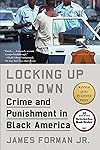
Locking Up Our Own: Crime and Punishment in Black America
by James Forman Jr.
On This Page
Description
"An original and consequential argument about race, crime, and the law Today, Americans are debating our criminal justice system with new urgency. Mass incarceration and aggressive police tactics -- and their impact on people of color -- are feeding outrage and a consensus that something must be done. But what if we only know half the story? In Locking Up Our Own, the Yale legal scholar and former public defender James Forman Jr. weighs the tragic role that some African Americans themselves show more played in escalating the war on crime. As Forman shows, the first substantial cohort of black mayors, judges, and police chiefs took office around the country amid a surge in crime. Many came to believe that tough measures -- such as stringent drug and gun laws and "pretext traffic stops" in poor African American neighborhoods -- were needed to secure a stable future for black communities. Some politicians and activists saw criminals as a "cancer" that had to be cut away from the rest of black America. Others supported harsh measures more reluctantly, believing they had no other choice in the face of a public safety emergency. Drawing on his experience as a public defender and focusing on Washington, D.C., Forman writes with compassion for individuals trapped in terrible dilemmas -- from the young men and women he defended to officials struggling to cope with an impossible situation. The result is an original view of our justice system as well as a moving portrait of the human beings caught in its coils. "-- "Recounts the tragic role that some African Americans--as judges, prosecutors, politicians, police officers, and voters--played in escalating the war on crime"-- show lessTags
Recommendations

Member Reviews
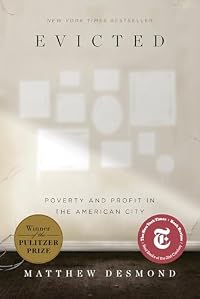
Locking Up Our Own by James Forman Jr. After reading this book and Evicted last year, I'm determined to read more Pulitzer winning non-fiction. This book looks at how our high levels of incarceration got to where they are, specifically in the African American community and how 3-4 decades ago African Americans were often the loudest voice regarding tough on crime and minimum sentences. Forman's main thread through the book is how the complex long-term solutions got left behind (better schools, fighting systemic racism, job training etc) while fighting drugs and violent crime got all the resources both on the local level and national. He puts the decisions in the 70s-90s in historical perspective and shows how the shift has happened over show more time when communities realized the unforeseen repercussions of their policies. show less
How does a majority-black district in the US, with many in positions of power, end up locking up so many of its own? In this concise yet comprehensive book, James Forman Jr thoughtfully and convincingly backs up his hypothesis with both his own experience as a public defender and extensive historical, socio-political research. He manages the impressive task of presenting the statistical data of his research alongside more personal stories of his PD experiences, humanising the individuals caught up in this unfair, overly-punitive system while capturing the enormity of the issue.
We are shown how the vast racist punitive system that the US has come to be known for was not built in one day. How harsher and harsher punishments were show more introduced gradually in response to the crisis of the moment, until now where despite comprising only about five percent of the world's population, the US holds about a quarter of the world's prison population. How racism and classism reinforced and reinforces a systemic (self-)policing amongst the (black) people in power such that black people end up occupying the prisons at a much higher rate disproportional to their white counterparts.
An eye-opening book on the origin of how these discriminatory systems came to be, the consequences (either unforeseen at the time or deemed unimportant in the face of a greater perceived evil), and how these systems could eventually be dismantled even by those not affiliated with law enforcement.
Further readings/viewings as recommended by James Forman Jr. available here. show less
We are shown how the vast racist punitive system that the US has come to be known for was not built in one day. How harsher and harsher punishments were show more introduced gradually in response to the crisis of the moment, until now where despite comprising only about five percent of the world's population, the US holds about a quarter of the world's prison population. How racism and classism reinforced and reinforces a systemic (self-)policing amongst the (black) people in power such that black people end up occupying the prisons at a much higher rate disproportional to their white counterparts.
An eye-opening book on the origin of how these discriminatory systems came to be, the consequences (either unforeseen at the time or deemed unimportant in the face of a greater perceived evil), and how these systems could eventually be dismantled even by those not affiliated with law enforcement.
Further readings/viewings as recommended by James Forman Jr. available here. show less
Interesting history, full of information new to me, showing how African American voters, politicians, judges, police officers and police chiefs tended to advocate for and implement tough-on-crime measures in response to the urban crime wave of the 1960-1990s. This was good detail to fill in one of the arguments in [b:Ghettoside: A True Story of Murder in America|13153693|Ghettoside A True Story of Murder in America|Jill Leovy|https://images.gr-assets.com/books/1417410395s/13153693.jpg|18331880], to wit that African Americans in the inner city have as great a grievance about being under-policed as over-policed: over-policed in terms of harassment and abuse, but under-policed in terms of impunity for serious crimes. Unfortunately these show more communities' hopes that punitive repression of drugs and criminals would improve things proved very wrong. Where they hoped to marry these policies with others to improve opportunities and to rehabilitate addicts and criminals, too often the tough measures alone went into meaningful action. Coupled with the institutional racism demonstrated in [b:The New Jim Crow: Mass Incarceration in the Age of Colorblindness|6792458|The New Jim Crow Mass Incarceration in the Age of Colorblindness|Michelle Alexander|https://images.gr-assets.com/books/1328751532s/6792458.jpg|6996712], these policies have contributed to ruining the lives and livelihoods of millions of young men especially, while doing little to aid them or their communities to prosper. This is a tragic story of unintended consequences and one that complicates our understanding of where these policies came from. show less
It is no small thing that blacks are significantly over-represented in our prison system. I was told once, by a law enforcement officer that, all things being equal, the percentage of any group in prison will match the overall percentage of the area from which the prison population is created. One can conclude, and this books explains why, all things are not equal.
We have created a society which is more interested in punishment than in rehabilitation, where punishment is defined as prevention. And yet there are far more effective methods of prevention that do not have incarceration as a part of the picture. We are less and less willing to consider the individual accused of a crime and look only at the crime, see the facts of the crime show more itself, but ignore the background events and environment that led to the crime occurring.
If we truly want to seriously reduce crime, we need to address the environment that encourages it. We need to leave behind company blanket policies that prevent someone who has been arrested (not even charged, just arrested) from getting a job. Joblessness encourages crime. We need to leave behind company blanket policies that say, although they will hire felons, they won't promote felons to responsible positions or allow them to purchase franchises. Ever. Lack of real opportunity encourages crime.
We claim to be a Christian nation, but the things missing from our system are mercy and forgiveness. We deny these to 99 out of 100 offenders because 1 might not deserve it. show less
We have created a society which is more interested in punishment than in rehabilitation, where punishment is defined as prevention. And yet there are far more effective methods of prevention that do not have incarceration as a part of the picture. We are less and less willing to consider the individual accused of a crime and look only at the crime, see the facts of the crime show more itself, but ignore the background events and environment that led to the crime occurring.
If we truly want to seriously reduce crime, we need to address the environment that encourages it. We need to leave behind company blanket policies that prevent someone who has been arrested (not even charged, just arrested) from getting a job. Joblessness encourages crime. We need to leave behind company blanket policies that say, although they will hire felons, they won't promote felons to responsible positions or allow them to purchase franchises. Ever. Lack of real opportunity encourages crime.
We claim to be a Christian nation, but the things missing from our system are mercy and forgiveness. We deny these to 99 out of 100 offenders because 1 might not deserve it. show less
Forman, as a public defender in DC, shows how the Black community whole heartedly joined in being tough on crime starting with the heroine epidemic and the Black Panthers. He also shows that community becoming aware of this second devastation to itself because of criminalization and incarceration and the unequalness and racist application from the justice system. The author though is not trying to cast blame as to find solutions through insight and compassion and practicality and hard experience. This is an extremely well written and thoughtful book that might engage readers otherwise not interested in “law and order” or “civil rights” issues.
Quotes: (page 143) “On September 14, 1982, a warm, late summer D.C. Day, voters went show more to the polls. It was a blowout. Initiative 9 prevailed in all eight of the city's wards, from the affluent Ward 3, home to the majority of D.C.'s whites (75 percent), to Ward 8 the low income, overwhelmingly black area east of the Anacostia River(75 percent). Overall, the proposal passed with a dominating 73 percent of the vote.
Mandatory minimums also won approval across economic classes. The city's wards further subdivided into voting precincts containing just a few thousand voters each. Initiative 9 was favored by voters in 136 of the city's 137 precincts, reeving its highest vote margins in some of the poorest pockets and those hardest hit b the drug traffic. In fact, the only precinct in which the initiative failed to gain a majority of votes was in the Palisades, a wealthy, mostly white neighborhood bordering Georgetown and the Potomac River.”
(page 182) “'How can you tell us we can be anything if they treat us like we are nothing?'
I did not have good answers to these questions, and I was furious at the police for forcing our students to ask them. Many of the students had felt hopeless before enrolling in our programs, and some continued to struggle. They knew people who were telling them to give up on school, to quit working so hard, even to live like an outlaw. We urged our students not to give in to those voices, but we knew full well that our proposed path was steep.
About half of our teachers and staff were Africa American,some from poor and working class backgrounds. Many had their own stories of police harassment. Our curriculum was full of material on American History of racial discrimination. We were, in effect, walking the same tightrope black parents know to well: we taught the history and persistence of American racism while simultaneously preaching the gospel of hard work and education.
Under the circumstances, it seemed to me that the police officers' conduct was more than just wrong: it was self-defeating. It their mission was to reduce crime, shouldn't they have seen us as allies and gone out of their way to encourage our students success? I thought so. But their raids were having precisely the opposite effect to persuade poor kids of color that society would never let them escape, that their race and class and neighborhood would forever preemptively mark them as guilty.” show less
Quotes: (page 143) “On September 14, 1982, a warm, late summer D.C. Day, voters went show more to the polls. It was a blowout. Initiative 9 prevailed in all eight of the city's wards, from the affluent Ward 3, home to the majority of D.C.'s whites (75 percent), to Ward 8 the low income, overwhelmingly black area east of the Anacostia River(75 percent). Overall, the proposal passed with a dominating 73 percent of the vote.
Mandatory minimums also won approval across economic classes. The city's wards further subdivided into voting precincts containing just a few thousand voters each. Initiative 9 was favored by voters in 136 of the city's 137 precincts, reeving its highest vote margins in some of the poorest pockets and those hardest hit b the drug traffic. In fact, the only precinct in which the initiative failed to gain a majority of votes was in the Palisades, a wealthy, mostly white neighborhood bordering Georgetown and the Potomac River.”
(page 182) “'How can you tell us we can be anything if they treat us like we are nothing?'
I did not have good answers to these questions, and I was furious at the police for forcing our students to ask them. Many of the students had felt hopeless before enrolling in our programs, and some continued to struggle. They knew people who were telling them to give up on school, to quit working so hard, even to live like an outlaw. We urged our students not to give in to those voices, but we knew full well that our proposed path was steep.
About half of our teachers and staff were Africa American,some from poor and working class backgrounds. Many had their own stories of police harassment. Our curriculum was full of material on American History of racial discrimination. We were, in effect, walking the same tightrope black parents know to well: we taught the history and persistence of American racism while simultaneously preaching the gospel of hard work and education.
Under the circumstances, it seemed to me that the police officers' conduct was more than just wrong: it was self-defeating. It their mission was to reduce crime, shouldn't they have seen us as allies and gone out of their way to encourage our students success? I thought so. But their raids were having precisely the opposite effect to persuade poor kids of color that society would never let them escape, that their race and class and neighborhood would forever preemptively mark them as guilty.” show less
Focusing on DC, where Forman lived and worked for a number of years, Forman tells a story that applies in many places in the US: the reasons that African-Americans supported, at least initially, harsh-on-crime policies that produced the New Jim Crow, exploding prison populations and ensuring that huge numbers of young African-Americans were involuntarily involved in the criminal justice system. Forman argues: (1) The pioneers who joined and rose in the police were often looking for good jobs, not to transform policing; you wouldn’t expect a rise in black firefighters to change the way fires were fought. (2) Class divisions in the African-American community made it easier for upper- and middle-class blacks to endorse policies that kept show more poor blacks overpoliced; it’s no accident that the policies they fought the hardest were the ones, like racially motivated traffic stops, that they were likely to experience, while policies that targeted poor neighborhoods got more of a pass. (3) Poor African-Americans were often underpoliced as well; there were huge crime and drug problems in poor communities, and while African-Americans asked for all kinds of resources—including education and economic development along with improved police presence—to fight them, all they got was the police presence. Then policies directed at those neighborhoods, often initially to combat violence, ended up criminalizing a lot of behavior that whites just wouldn’t be caught for, like possession of small amounts of pot. It’s a thought-provoking read. show less
Like The New Jim Crow, this excellent book covers the rise of mass incarceration, but with a narrower focus. The author, once a public defender in Washington, D.C., asks: "How did a majority-black jurisdiction" – with so many black judges, black lawmakers, and black prosecutors – "end up incarcerating so many of its own?" It's "a story about what African Americans thought, said, and did," in the ever-present context of American racism and white supremacy. Chapters cover the last few decades' debates about marijuana decriminalization, gun control, mandatory sentencing, and policing policy. Many viewpoints are represented, always with respect for the humanity of those who hold them. The book interweaves political history, policy, and show more personal experience. And at the end, there is hope. Recommended. show less
Members
- Recently Added By
Published Reviews
ThingScore 100
It is difficult to criticise a bible, particularly one written with as much insight, rhetorical power and moral authority as The New Jim Crow. When James Forman, a law professor at Yale and the son of a prominent civil rights activist, first presented his criticisms of Alexander’s argument, colleagues nervously asked him why he was ‘critiquing a point of view that is so aligned with your show more own’. He agreed with Alexander that mass incarceration had turned convicted criminals into members of a stigmatised caste, condemned to second-class citizenship. He also agreed that one of the most destructive effects of mass incarceration was to lead the wider society to see poor black men as potential threats, social outcasts whose rights could be violated with impunity. But he believed that Alexander’s thesis obscured ‘some important truths’. [...] Locking Up Our Own is a sobering chronicle of how black people, in the hope of saving their communities, contributed to the rise of a system that has undone much of the progress of the civil rights era. But, as Forman knows, they could not have built it by themselves, and they are even less likely to be able to abolish it without influential white allies, and dramatic reforms in the structure of American society. show less
added by elenchus
In the conservative backlash to the Black Lives Matter movement, deflection to “black on black” crime has become a meme. Why, op-eds and pundits sputter, does the black community get so riled about police violence and yet remain silent about the gun and drug crime that savages so many of its own?
James Forman Jr, son of civil rights leader James Forman Sr, knew from his time as a public show more defender in Washington DC that such broadsides are patently wrong. In his new book, Locking Up Our Own, he goes beyond the broader argument – that it’s reasonable to expect more from sworn law enforcement than from street criminals – to make clear that the charge is simply wrong on face value too.
“I think of it as a 239-page rebuttal to the claim that black people and their elected leaders only care about crime when it’s [committed by] the police,” Forman told the Guardian. “If there’s one thing that I hope the book does, it’s demolish that lie.” show less
James Forman Jr, son of civil rights leader James Forman Sr, knew from his time as a public show more defender in Washington DC that such broadsides are patently wrong. In his new book, Locking Up Our Own, he goes beyond the broader argument – that it’s reasonable to expect more from sworn law enforcement than from street criminals – to make clear that the charge is simply wrong on face value too.
“I think of it as a 239-page rebuttal to the claim that black people and their elected leaders only care about crime when it’s [committed by] the police,” Forman told the Guardian. “If there’s one thing that I hope the book does, it’s demolish that lie.” show less
added by kidzdoc
James Forman Jr. divides his superb and shattering first book, “Locking Up Our Own: Crime and Punishment in Black America,” into two parts: “Origins” and “Consequences.” But the temptation is to scribble in, before “Consequences,” a modifier: “Unforeseen.” That is truly what this book is about, and what makes it tragic to the bone: How people, acting with the finest of show more intentions and the largest of hearts, could create a problem even more grievous than the one they were trying to solve. show less
added by kidzdoc
Lists

True Crime
156 works; 1 member
Author Information

2+ Works 617 Members
James Forman Jr. was born on June 22, 1967. He graduated from Brown University and Yale Law School. He was a law clerk for Judge William Norris of the U.S. Court of Appeals for the Ninth Circuit and Justice Sandra Day O'Connor of the United States Supreme Court. Afterward, Forman worked for six years at the Public Defender Service in Washington, show more D.C. In 1997, he and David Domenici started the Maya Angelou Public Charter School, an alternative school for school dropouts and youth who had previously been arrested. Forman taught at Georgetown Law from 2003 to 2011 and then joined the Yale Law School faculty. His first book, Locking Up Our Own: Crime and Punishment in Black America, received the Pulitzer Prize for general nonfiction in 2018. (Bowker Author Biography) show less
Awards and Honors
Awards
Common Knowledge
- Original publication date
- 2017-04-18
- Important places
- Washington, D.C., USA
- Dedication
- To Ify and Emeka,
the loves of my life - First words
- All of us in the public defender's office feared the Martin Luther King speech.
- Blurbers
- Jones, Van; Hayes, Chris; Stevenson, Bryan; Leovy, Jill; Kennedy, Randall
Classifications
- Genres
- Nonfiction, Politics and Government, General Nonfiction
- DDC/MDS
- 364.973089 — Society, Government, and Culture Social problems and social services Crime Biography And History North America United States
- LCC
- HV9950 .F655 — Social sciences Social pathology. Social and public welfare. Criminology Social pathology. Social and public welfare. Criminal justice administration By region or country
- BISAC
Statistics
- Members
- 586
- Popularity
- 49,624
- Reviews
- 15
- Rating
- (4.46)
- Languages
- English
- Media
- Paper, Audiobook, Ebook
- ISBNs
- 9
- ASINs
- 2