On This Page
Description
"The seventh installment in Garry Disher's celebrated Challis and Destry procedural series, set in Australia A pair of hit men working a job for a meth kingpin have a very bad day, and the resulting bushfire draws attention to a drug lab and two burned bodies in a Mercedes. Sergeant Ellen Destry--newly minted head of her department's sex crime unit--and Inspector Hal Challis return in this newest installment of Garry Disher's Peninsula-based crimes series. With meth-related crime on the show more rise, interdepartmental tensions mount, and Challis soon finds himself fighting to keep control of his case. Meanwhile, Destry is hunting for a serial rapist who is extremely adept at not leaving clues. A tense, human, at times darkly funny entry into Disher's celebrated Ned Kelly Award-winning series"-- show lessTags
Recommendations



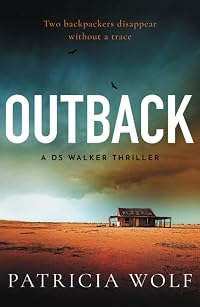
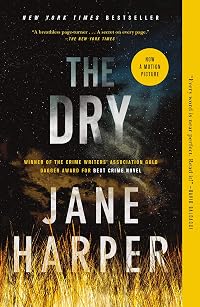







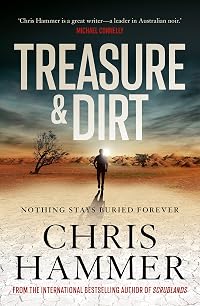


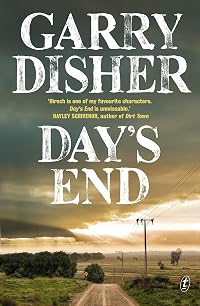







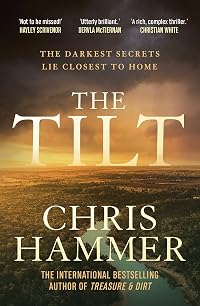


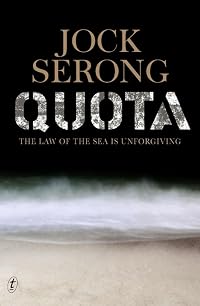


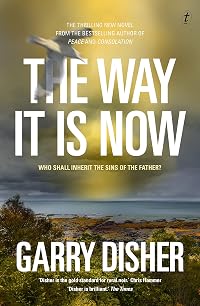



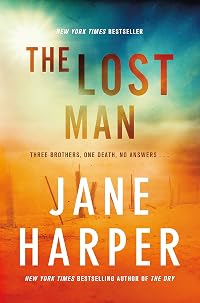









Member Recommendations

Member Reviews
Reprinted with permission from Reviewing the Evidence.
Garry Disher has written a great many books. You'd think he might run out of material, or simply grow tired of collecting Ned Kelly awards and publishing more than fifty books. Many a writer starts phoning it in, but Disher can't seem to help himself. His latest in the Hal Challis and Ellen Destry series, set on Australia's Mornington Peninsula, is as good as it gets if realistic police procedurals are your thing.
As the book opens, we meet two nasty characters who have gone to the countryside to do a job. They're not sure why they're being paid so much to take out a meth head, and they try to get some information out of him, but they're better at their profession than they are at show more interrogation. Job done, they drive off to collect their fee, but it's hot and dry in Australia. A brush fire has turned dangerously large and fast-moving and the two hit men, who don't know the terrain, make a wrong turn.
That leaves Hal Challis and his team with a murder scene and a puzzle: who are the two men whose charred remains are found in a burnt-out Mercedes? Things get more complicated when a drugs investigator arrives from the big city, itching to take over the murder of his small-town meth addict, but that's a problem: Another addict's little girl has disappeared, taken as collateral but likely to end up trafficked if they don't find her fast. Challis doesn't want her fate to slip through the cracks of a major drugs investigation that's more interested in busting a drug ring than in small children and their hapless families.
Challis's former partner at work and current partner in love has a nasty case of her own. At first it simply seems like a series of home invasions, the loss of some televisions and jewelry, a cell phone or two. Then a sharp officer, interviewing a victim, begins to realize there was more lost than property. Someone who may have started out as a burglar has moved on to serial rape. Destry has to revisit old cases and ask difficult questions while worrying about stopping an escalating pattern of sexual violence.
There's a lot going on, but Disher knows when to switch from one story line to another, a foot gently pressed on the accelerator at just the right pace, and the characters are vivid enough there's no chance we'll lose track of them. What really makes this series stand out, though, is Disher's laconic but strikingly evocative prose and pitch-perfect dialogue. No extra words. Lots of sly humor. Moments of grace.
There's no need to read the previous six books in the series to enjoy SIGNAL LOSS. Disher's an old hand who knows how to build a book that can stand on its own. But then - why deny yourself the pleasure? show less
Garry Disher has written a great many books. You'd think he might run out of material, or simply grow tired of collecting Ned Kelly awards and publishing more than fifty books. Many a writer starts phoning it in, but Disher can't seem to help himself. His latest in the Hal Challis and Ellen Destry series, set on Australia's Mornington Peninsula, is as good as it gets if realistic police procedurals are your thing.
As the book opens, we meet two nasty characters who have gone to the countryside to do a job. They're not sure why they're being paid so much to take out a meth head, and they try to get some information out of him, but they're better at their profession than they are at show more interrogation. Job done, they drive off to collect their fee, but it's hot and dry in Australia. A brush fire has turned dangerously large and fast-moving and the two hit men, who don't know the terrain, make a wrong turn.
That leaves Hal Challis and his team with a murder scene and a puzzle: who are the two men whose charred remains are found in a burnt-out Mercedes? Things get more complicated when a drugs investigator arrives from the big city, itching to take over the murder of his small-town meth addict, but that's a problem: Another addict's little girl has disappeared, taken as collateral but likely to end up trafficked if they don't find her fast. Challis doesn't want her fate to slip through the cracks of a major drugs investigation that's more interested in busting a drug ring than in small children and their hapless families.
Challis's former partner at work and current partner in love has a nasty case of her own. At first it simply seems like a series of home invasions, the loss of some televisions and jewelry, a cell phone or two. Then a sharp officer, interviewing a victim, begins to realize there was more lost than property. Someone who may have started out as a burglar has moved on to serial rape. Destry has to revisit old cases and ask difficult questions while worrying about stopping an escalating pattern of sexual violence.
There's a lot going on, but Disher knows when to switch from one story line to another, a foot gently pressed on the accelerator at just the right pace, and the characters are vivid enough there's no chance we'll lose track of them. What really makes this series stand out, though, is Disher's laconic but strikingly evocative prose and pitch-perfect dialogue. No extra words. Lots of sly humor. Moments of grace.
There's no need to read the previous six books in the series to enjoy SIGNAL LOSS. Disher's an old hand who knows how to build a book that can stand on its own. But then - why deny yourself the pleasure? show less
Undoubtedly, the Mornington Peninsula is a very pleasant place to visit. But I have a suspicion that the local Tourist Bureau would prefer that Garry Disher used a fictional name for the location of his series of crime thrillers, as he does for the main town 'Waterloo' instead of its real name 'Hastings'.
This one, the seventh, is probably the best in the series, and possibly the funniest despite the bleakness of the crimes. It starts with an Abbott and Costello pair of contract hit men who actually phone the emergency triple zero number asking for advice on how to revive someone they're torturing for information. And then they're killed in a bushfire one of them started throughing a cigarette butt out of the car window.
This may be a show more crime novel, but there is plenty of humour, much of it quite black. The banter between the characters is entertaining, and there are, perhaps unexpectedly, plenty of laugh-out-loud moments as well as a good dose or two of irony.
While this is the seventh book in the series, it can easily be read as a stand-alone, although that’s unlikely to happen: readers new to the series will be unable to resist seeking out the earlier books; fans of Disher’s work will not be disappointed. Clever and topical, this is Aussie crime fiction at its best. show less
This one, the seventh, is probably the best in the series, and possibly the funniest despite the bleakness of the crimes. It starts with an Abbott and Costello pair of contract hit men who actually phone the emergency triple zero number asking for advice on how to revive someone they're torturing for information. And then they're killed in a bushfire one of them started throughing a cigarette butt out of the car window.
This may be a show more crime novel, but there is plenty of humour, much of it quite black. The banter between the characters is entertaining, and there are, perhaps unexpectedly, plenty of laugh-out-loud moments as well as a good dose or two of irony.
While this is the seventh book in the series, it can easily be read as a stand-alone, although that’s unlikely to happen: readers new to the series will be unable to resist seeking out the earlier books; fans of Disher’s work will not be disappointed. Clever and topical, this is Aussie crime fiction at its best. show less
The opening chapter of Garry Disher's latest Hal Challis investigation, Signal Loss, is tense, very human, and even darkly funny-- and it does what it's supposed to do: grab your attention and make you want to read as quickly as you can all the way to the very last page.
Disher is a master of Australian noir, and although the emphasis in this book is more on the investigations than it is the characters' personal lives, you still know what's happening to them when they're not at work. At work, Challis assigns Pam Murphy a case that zeroes in on one of her personal prejudices, and the young woman realizes that she's got a lot to learn about human nature. There's also a (human) cougar on the prowl. She's head of the drug squad, and when show more she's not after all the glory, she's eyeing some of the men. I would've rolled my eyes, but these women-- and men-- do exist.
The interaction between characters is very good, but the investigations are even better, and readers can learn how things like Facebook are now being used to fight crime. You can also increase your knowledge of Australian slang, and with a smartphone close at hand, it's only a matter of seconds to learn what is being said if the meaning isn't clear in the context (and it usually is).
I haven't managed to read every book in this series, but I didn't feel lost while immersed in Signal Loss. Garry Disher is an excellent writer, and if you haven't read any of his work, I do recommend him. show less
Disher is a master of Australian noir, and although the emphasis in this book is more on the investigations than it is the characters' personal lives, you still know what's happening to them when they're not at work. At work, Challis assigns Pam Murphy a case that zeroes in on one of her personal prejudices, and the young woman realizes that she's got a lot to learn about human nature. There's also a (human) cougar on the prowl. She's head of the drug squad, and when show more she's not after all the glory, she's eyeing some of the men. I would've rolled my eyes, but these women-- and men-- do exist.
The interaction between characters is very good, but the investigations are even better, and readers can learn how things like Facebook are now being used to fight crime. You can also increase your knowledge of Australian slang, and with a smartphone close at hand, it's only a matter of seconds to learn what is being said if the meaning isn't clear in the context (and it usually is).
I haven't managed to read every book in this series, but I didn't feel lost while immersed in Signal Loss. Garry Disher is an excellent writer, and if you haven't read any of his work, I do recommend him. show less
Gritty crime novel!
Set in the Mornington Peninsula region, south-east of Melbourne, Australia, makes this a fascinating read, as I happen to know that region reasonably well. So I was already hooked. But then again Garry Disher is one of my fav. authors. Local knowledge gives solidarity and legs to any reading.
The novel deals with drugs, deals, stolen equipment, and a serial rapist.
Laconic Inspector Hal Challis of the Drug Squad and his girlfriend Sergeant Ellen Destry of the Sex Crimes Unit find their cases merging.
The spread of methane-ice and it's consequences are devastating, the squalor real.
Like a fast-paced, noir criminal journalist, Disher leads us across state lines whilst paying attention to the minutiae that surrounds the show more desolate fate of the addict and the effect on those around them. Disher uses the background of rural Australia as a launching place for the very real issue of drugs on local communities, all the while spinning a mesmerizing story that weaves in and out of criminal, victims and law enforcers lives.
One cannot fault Disher's vivid prose. The situations come to life in that bald, bare way that is so nuanced and yet simultaneously in your face.
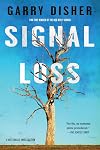
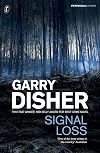
By the way I really like the cover!
A NetGalley ARC show less
Set in the Mornington Peninsula region, south-east of Melbourne, Australia, makes this a fascinating read, as I happen to know that region reasonably well. So I was already hooked. But then again Garry Disher is one of my fav. authors. Local knowledge gives solidarity and legs to any reading.
The novel deals with drugs, deals, stolen equipment, and a serial rapist.
Laconic Inspector Hal Challis of the Drug Squad and his girlfriend Sergeant Ellen Destry of the Sex Crimes Unit find their cases merging.
The spread of methane-ice and it's consequences are devastating, the squalor real.
Like a fast-paced, noir criminal journalist, Disher leads us across state lines whilst paying attention to the minutiae that surrounds the show more desolate fate of the addict and the effect on those around them. Disher uses the background of rural Australia as a launching place for the very real issue of drugs on local communities, all the while spinning a mesmerizing story that weaves in and out of criminal, victims and law enforcers lives.
One cannot fault Disher's vivid prose. The situations come to life in that bald, bare way that is so nuanced and yet simultaneously in your face.
By the way I really like the cover!
A NetGalley ARC show less
I was in the mood for a good police procedural, and this delivered, as Garry Disher novels always do. Also, I have discovered a delightful piece of Australian vocabulary: 'whipper-snipper' for strimmer. I plan to use it myself in future.
The last available entry in the Hal Challis series, as of this writing (May 2021). A lot of characters, a lot of threads in a bit of a tangle, and a rather incomprehensible competition between Challis and Destry's teams and a Senior Sergeant from the drug squad over who's going to "get" the bad guys who are distributing drugs, raping women and putting children at risk. Just a tad too much of everything. This one needed one less complication. I had a lot of trouble buying the Sergeant who would do anything to score an arrest and to hell with the missing six-year-old. Her stupidity got her shot in the end, but she should have been relieved before it went that far.
A couple of hitmen on a job encounter some bad luck and get caught in a bush fire. Not so far away, and somewhat later, a man is found shot dead in his home. A small-time drug dealer and his young daughter have disappeared from their home. Meanwhile very expensive and large farm equipment is being stolen all over the area. Hal Challis and his team take on what will unravel slowly to become a complex and dangerous case. Ellen, now the head of the sex crimes division, will likely end up involved.
This is the 7th installment of the Hal Challis and Ellen Destry series of crime novels. Disher is a busy writer with two ongoing series and much other writing, so, as readers, we often have to be patient for a new Hal Challis novel. Disher writes show more excellent police procedurals: well-developed, complex, and interesting. He does a fabulous job balancing the criminal investigation process and integrating focus on the various individual characters' personal lives. The Challis/Destry novels are some of my favorite police procedurals and sit in good company with those series featuring: Rebus, Banks, Winter, and Erlunder (to name just a few). show less
This is the 7th installment of the Hal Challis and Ellen Destry series of crime novels. Disher is a busy writer with two ongoing series and much other writing, so, as readers, we often have to be patient for a new Hal Challis novel. Disher writes show more excellent police procedurals: well-developed, complex, and interesting. He does a fabulous job balancing the criminal investigation process and integrating focus on the various individual characters' personal lives. The Challis/Destry novels are some of my favorite police procedurals and sit in good company with those series featuring: Rebus, Banks, Winter, and Erlunder (to name just a few). show less
Members
- Recently Added By
Lists

Best Crime Fiction
262 works; 39 members
Author Information

67+ Works 3,681 Members
Series

Common Knowledge
- Canonical title
- Signal Loss
- Original title
- Signal Loss
- Alternate titles
- Signal Loss (Peninsula Crimes) (Peninsula Crimes)
- Original publication date
- 2017
Classifications
Statistics
- Members
- 88
- Popularity
- 363,650
- Reviews
- 10
- Rating
- (4.15)
- Languages
- English, German
- Media
- Paper, Audiobook, Ebook
- ISBNs
- 15
- ASINs
- 4