On This Page
Description
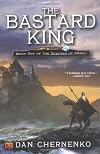
Two rivals must unite to prevent a disgraced malevolent god from attaining a relic of extraordinary power in the first book of alternate history master Harry Turtledove's magnificent fantasy trilogy More than four centuries ago, the Scepter of Mercy was lost to the king of Avornis, and each subsequent liege has promised--and failed--to return the powerful talisman to its rightful home. Now, young Lanius, the only surviving son of King Mergus, rules, though he is considered illegitimate and show more must abide by the decisions of regents. Still, the legacy of the missing scepter ultimately belongs to him. But it is also coveted by the Banished One, an immortal exiled by the other gods, who invades the world of men through their dreams. Lanius, with no talent or heart for battle, must keep those in the sway of the malevolent deity from Avornis's borders. To this end, Lanius requires the help of Grus, a fearless and respected captain of the king's navy. But Grus has a far loftier destiny than his common birth would suggest--and the bastard king's brave, accomplished ally might well turn out to be his most dangerous adversary. Originally published under the pen name Dan Chernenko, The Bastard King is a magnificent foray into epic fantasy by the incomparable Harry Turtledove, the prolific and multi-award-winning master of alternate history science fiction. A tale of courage and destiny, it is alive with action, imagination, and humanity, and populated by richly complex, imperfect heroes and a villain as truly fiendish as any that has ever graced the fantasy genre. show lessTags
Recommendations





























Member Reviews
It wasn't bad, but it wasn't great. This review may contain spoilers (that can be read on the back of the book).
The story starts off with two men who are completely unrelated in the beginning. One is the son of a King (but a bastard child since the laws dictate a King can only have six wives, and the son is of the seventh) and the other is the Captain of a barge in the Royal Navy (nowhere near as prestigious as the army).
Throughout the book, you start to see how they're slowly coming together in times of need. The son of the king, Lanius, has his leadership passed from regent to regent until he is of age to rule. He thinks himself smarter than the rest, but can't deal with battle. Grus, the Captain risen from peasant, slowly becomes show more the Commodore who becomes the country's King. Simultaneous King. And the story proceeds on with Lanius and Grus having to rule together.
I will admit, while reading, I had no clue when Grus actually wanted to take the throne. He has his reasons, but none of them actually seemed plausible. This could be because the first half of the book involves lapses of years from chapter to chapter, and the rest of the pacing of this book is *very* quick.
The second issue I have is that the book has a tendency to repeat itself. The first four times, I understood that Grus's wife was upset that he had a son with another woman (another bastard in the book). I did not need to read it the fifth, sixth or even twelfth time. Just like Lanius's resent for Grus ruling as well...Mr. Chernenko, you got your point across the first time.
The last one, that I may be singularly alone in, is that the first half of the book contained little interaction in a romantic sense. It was only when Lanius weds, and Grus becomes King, that we see a sudden influx of relationship. Also, I understand that Grus's character is meant to be the imperfect man, but there are some things he does that make me go "...what?!"
All in all, I did enjoy reading the book. I will admit to skimming some of the sections that were simple re-wordings of whatever had been said before. The relationship between Grus and Nicator (his First Mate) was entertaining enough to get me through the first 100 or so pages, and the rest of the story took me to the end.
I will finish this series...but not immediately. show less
The story starts off with two men who are completely unrelated in the beginning. One is the son of a King (but a bastard child since the laws dictate a King can only have six wives, and the son is of the seventh) and the other is the Captain of a barge in the Royal Navy (nowhere near as prestigious as the army).
Throughout the book, you start to see how they're slowly coming together in times of need. The son of the king, Lanius, has his leadership passed from regent to regent until he is of age to rule. He thinks himself smarter than the rest, but can't deal with battle. Grus, the Captain risen from peasant, slowly becomes show more the Commodore who becomes the country's King. Simultaneous King. And the story proceeds on with Lanius and Grus having to rule together.
I will admit, while reading, I had no clue when Grus actually wanted to take the throne. He has his reasons, but none of them actually seemed plausible. This could be because the first half of the book involves lapses of years from chapter to chapter, and the rest of the pacing of this book is *very* quick.
The second issue I have is that the book has a tendency to repeat itself. The first four times, I understood that Grus's wife was upset that he had a son with another woman (another bastard in the book). I did not need to read it the fifth, sixth or even twelfth time. Just like Lanius's resent for Grus ruling as well...Mr. Chernenko, you got your point across the first time.
The last one, that I may be singularly alone in, is that the first half of the book contained little interaction in a romantic sense. It was only when Lanius weds, and Grus becomes King, that we see a sudden influx of relationship. Also, I understand that Grus's character is meant to be the imperfect man, but there are some things he does that make me go "...what?!"
All in all, I did enjoy reading the book. I will admit to skimming some of the sections that were simple re-wordings of whatever had been said before. The relationship between Grus and Nicator (his First Mate) was entertaining enough to get me through the first 100 or so pages, and the rest of the story took me to the end.
I will finish this series...but not immediately. show less
Ratings
Members
- Recently Added By
Author Information

279+ Works 43,080 Members
Harry Turtledove was born in Los Angeles, California on June 14, 1949. He received a Ph.D. in Byzantine history from UCLA in 1977. From the late 1970's to the early 1980's, he worked as a technical writer for the Los Angeles County Office of Education. He left in 1991 to become full-time writer. His first two novels, Wereblood and Werenight, were show more published in 1979 under the pseudonym Eric G. Iverson because his editor did not think people would believe that Turtledove was his real name. He used this name until 1985 when he published Herbig-Haro and And So to Bed under his real name. He has received numerous awards including the Homer Award for Short Story for Designated Hitter in 1990, the John Esthen Cook Award for Southern Fiction for Guns of the Southand in 1993, and the Hugo Award for Novella for Down in the Bottomlands in 1994. (Bowker Author Biography) show less
Series

Common Knowledge
- Canonical title
- The Bastard King
- Alternate titles
- The Bastard King: Book One of The Scepter of Mercy
- Original publication date
- 2003
- Important places
- Avornis
- Dedication
- To Lisa, Joshua, and Christine
- First words
- Once upon a time, a long time ago, the Kingdom of Avornis had two kings at the same time. [Prologue]
- Last words
- (Click to show. Warning: May contain spoilers.)Grus nodded.
- Original language
- English
Classifications
Statistics
- Members
- 201
- Popularity
- 163,038
- Reviews
- 2
- Rating
- (3.14)
- Languages
- English
- Media
- Paper, Ebook
- ISBNs
- 4
- ASINs
- 1