On This Page
Description
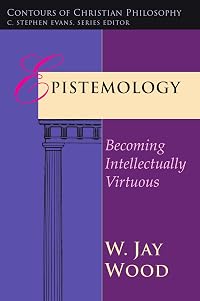
How do we know what we know? What have wisdom, prudence and studiousness to do with justifying our beliefs? Jay Wood begins this introduction to epistemology by taking an extended look at the idea of knowing within the context of the intellectual virtues. He then surveys current views of foundationalism, epistemic justification and reliabilism. Finally he examines the relationship of epistemology to religious belief, and the role of emotions and virtues in proper cognitive functioning show more Professors will find this text, with its many examples drawn from everyday student experience, especially useful in introducing students to the formal study of epistemology. show lessTags
Recommendations















Member Reviews
A highly readable and engaging survey of epistemology along with the author's emphasis on incorporating virtue into epistemology.
The author fully engages with the epistemological theories of the age from Descartes onward. Foundationalism, coherentism, reliabilism, Scottish common sense reasoning are all discussed thoroughly, the reasoning explained, the challenges probed.
The author discusses the ability to have knowledge in terms of religion, relying heavily on Plantinga with some critiques and making space for the power of the virtues in epistemology.
Highly recommended.
The author fully engages with the epistemological theories of the age from Descartes onward. Foundationalism, coherentism, reliabilism, Scottish common sense reasoning are all discussed thoroughly, the reasoning explained, the challenges probed.
The author discusses the ability to have knowledge in terms of religion, relying heavily on Plantinga with some critiques and making space for the power of the virtues in epistemology.
Highly recommended.
Epistemology is something that we all do, not just philosophers. We have beliefs, and we justify them. Or, we change them based upon evidence that seems compelling to us. And, the author argues, our beliefs are informed by intellectual virtue -- or vice.
This book argues for the case that epistemology has a moral and even spiritual dimension that is unavoidable. He reviews the major theories of knowledge, pointing out their strengths and weaknesses. By looking at the problem of justifying the beliefs we hold (religious, political, interpersonal, etc.), he attempts to find a path that avoids the pitfalls of the others.
What we believe depends upon our upbringing, our community that we are a part of, our emotional habits and our moral show more purposes. Epistemology is not just about logic and evidence, although these are foundational (pun intended).
As a Christian, Wood insists that epistemology begin with God's intended purpose for man and his intellectual life. In this, he agrees with Carl F. H. Henry who argues that there are three ways knowing: evidence, logic and revelation. show less
This book argues for the case that epistemology has a moral and even spiritual dimension that is unavoidable. He reviews the major theories of knowledge, pointing out their strengths and weaknesses. By looking at the problem of justifying the beliefs we hold (religious, political, interpersonal, etc.), he attempts to find a path that avoids the pitfalls of the others.
What we believe depends upon our upbringing, our community that we are a part of, our emotional habits and our moral show more purposes. Epistemology is not just about logic and evidence, although these are foundational (pun intended).
As a Christian, Wood insists that epistemology begin with God's intended purpose for man and his intellectual life. In this, he agrees with Carl F. H. Henry who argues that there are three ways knowing: evidence, logic and revelation. show less
recommended by Dyer; more elementary than Bonjour
I've recommended this book in an article titled "Teach Yourself Epistemology" here: http://douggeivett.wordpress.com/2009/06/13/teach-yourself-epistemology/
Ratings
Members
- Recently Added By
Author Information

3+ Works 384 Members
W. Jay Wood is professor of philosophy at Wheaton College, Illinois.
Series

Common Knowledge
- Canonical title
- Epistemology: Becoming Intellectually Virtuous
- Original publication date
- 1998
- Publisher's editor
- Evans, C. Stephen (Series Editor)
Classifications
Statistics
- Members
- 369
- Popularity
- 85,135
- Reviews
- 5
- Rating
- (4.04)
- Languages
- English
- Media
- Paper, Ebook
- ISBNs
- 3
- ASINs
- 1